
‘No manual on how to deal with this.’ Centre County rural schools struggle amid teacher shortage
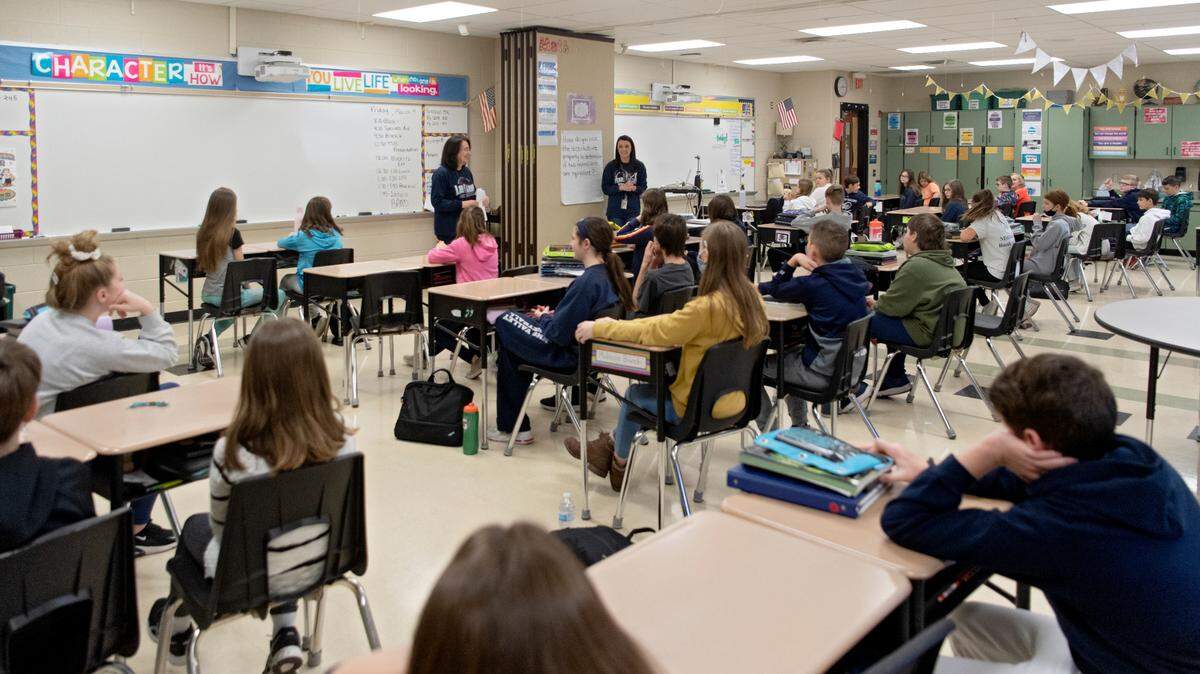
Karen McCaffrey and Michele Shawver are sixth-grade Penns Valley Area School District math teachers who work in neighboring classrooms. Since the onset of the pandemic, they’ve opened the accordion-style doors between them to make one large room, so if one of them is sick the other can teach the class of more than 40 students on her own.
It’s one way a Centre County school district has gotten creative with staffing shortages, though McCaffrey and Shawver said they have seen all sorts of other district personnel step up when positions are open or subs aren’t available. Administrators, special education teachers, tech coaches, math coaches and more are helping fill gaps.
“They would pull specials teachers, they would pull administrators, everybody,” McCaffrey said. “We were all filling in and we still didn’t have enough and we made the decision that specials teachers are such an important part of our school day that we would rather open up and do it ourselves than be pulling people from jobs that are just as important.”
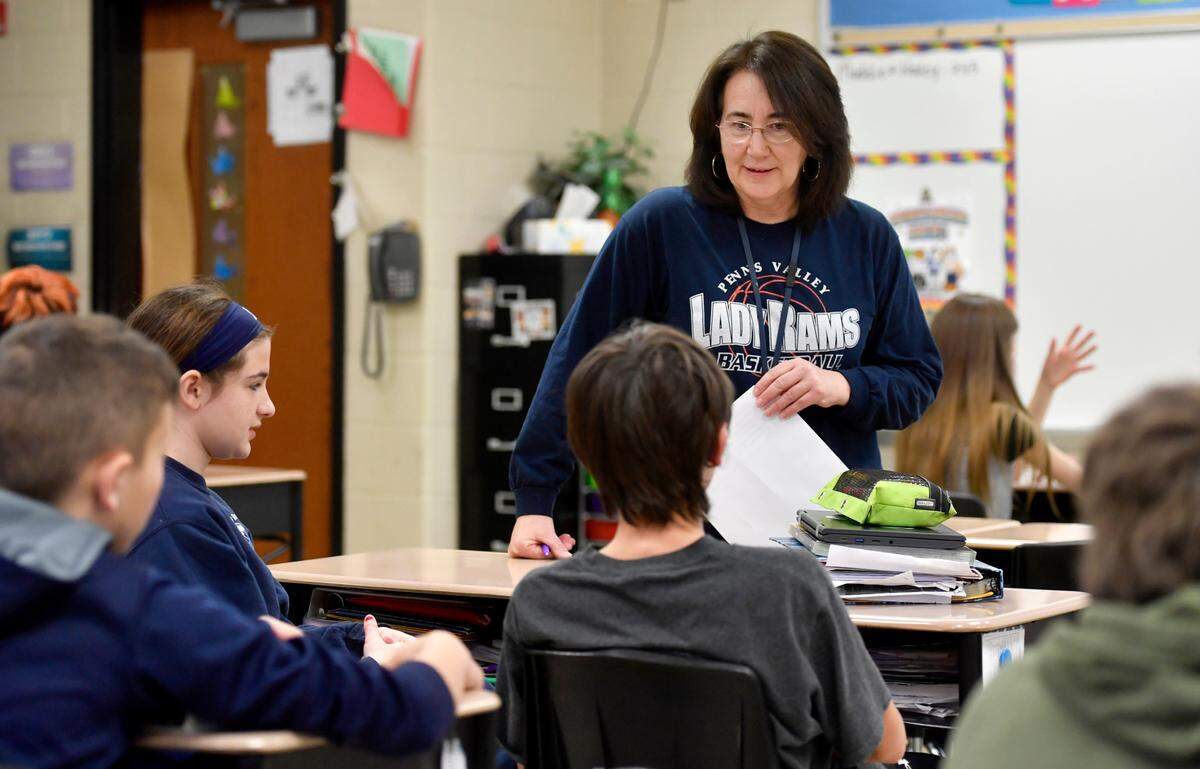
Penns Valley Area School District is not alone. Districts throughout the country are reporting vacancies in positions across the board, attributed to pandemic burnout, early retirement, unequal compensation and falling certification numbers. And leaders of Centre County’s rural school districts say the challenges they’ve long faced in attracting and retaining staff members have reached unsustainable levels.
“If we can’t change, if we don’t alter what we do, I don’t see how the next generation is going to make it,” Gregg Paladina, superintendent of Philipsburg-Osceola Area School District, said.
How do rural schools compete?
Larger districts receive more funds in local property tax, meaning they can often afford to pay teachers more.
In Centre County, the largest school district in terms of tax base is the State College Area School District. When it comes to competing for hiring teachers, Penns Valley Area School District Superintendent Brian Griffith said sometimes they simply can’t.
“Whenever there are one or two districts that are in a particular area that are significant outliers, then those districts can attract and retain employees in those jobs,” Griffith said. “So in our area, State College Area School District outpays the surrounding school districts significantly.”
First-year teachers with a bachelor’s degree in the 2022-2023 school year will earn $51,788 in SCASD schools compared to $46,541 in Penns Valley, according to data provided by the districts.
But State College hasn’t remained unscathed. Superintendent Bob O’Donnell has seen the number of student teachers drop significantly.
“We’ve been able to fill our positions,” O’Donnell said. “However, the pools of candidates have really decreased.”
In October, SCASD’s board of directors approved an increase to the daily rates for substitute teachers to combat a shortage. P-O’s board recently increased substitute nurse pay to help stay competitive with other districts.
Rural schools have always had a harder time finding applicants, especially with new teachers, according to former Bald Eagle Area School District Superintendent Scott Graham. Rural towns have fewer amenities and housing for newcomers, as well as more responsibilities for teachers.
“Especially in smaller districts, you have more preps, you’ll have maybe three or four classes that you have to teach,” Graham said. “Where in a large district, you might be hired to be the Algebra 1 teacher, so you only have one preparation, whereas in our smaller district you might have three or four and so that is negative.”
When Graham recruited candidates, he stressed the many benefits for rural districts, including smaller class sizes and a very tight-knit community. That’s what has kept McCaffrey and Shawver at Penns Valley, where they know students and their families for years as they move through the schools.
“A kiddo comes in at kindergarten and you kind of follow them until they’re in your classroom and you’re like, ‘Hey! I’ve known you since kindergarten,’ ” Shawver said.
‘Dealing with things we’ve never had to deal with before’
This problem has only been exacerbated by teachers struggling with burnout from the pandemic. A National Education Association study shows 55% of educators intend to leave the field sooner than planned due to the pandemic.
“I think for a lot of people it’s taken a toll and teaching has become very difficult especially when you’re trying to teach kids at home and teach them in the classroom at the same time,” said Graham, who announced his April 1 retirement due to chronic migraines made worse by pandemic stress.
Public perception and pushback toward COVID mitigation procedures have also impacted teachers, Paladina said.
“To be a teacher is still a great profession,” he said. “But we’re losing people and, you know, if you turn on cable TV, the profession is under attack all the time. The public sometimes isn’t supportive of it.”
Educators are also noticing a spike in student behavioral problems brought on by the pandemic, adding to faculty stress.
“One of the aspects this year that we’ve seen more than in prior years where we’ve been in person every day is an increase in student behavior challenges, social-emotional issues with our students and that has created more challenges for our faculty,” O’Donnell said.
Teachers are having to help kids relearn social skills they may have neglected during virtual instruction, Shawver said.
“We are dealing with things we’ve never had to deal with before,” McCaffrey said. “I cannot tell you how difficult it was to have kids here in person, plus teach with kids on Zoom.”
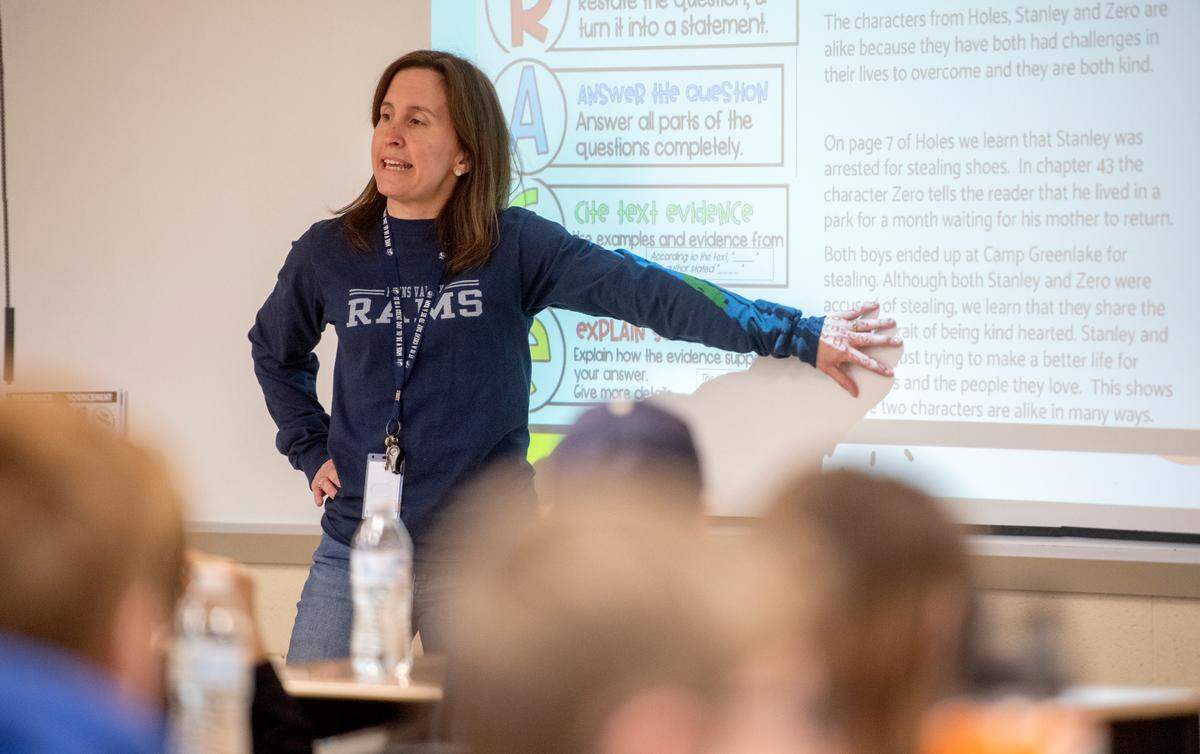
Filling in the gaps
As fewer educators are coming in and more and more are retiring early or leaving the profession, remaining teachers and staff are often having to pick up the slack.
The NEA found that 74% of its members have had to fill in or take on more duties to help with staff shortages.
Bellefonte Area School District asked for faculty volunteers in January to help shovel snow when the district experienced weather delays.
According to a post on the BASD website, the grounds crew was understaffed due to “limited-to-no applicants, nor enough substitutes.”
In January, the Pennsylvania Labor Relations Board found that Penns Valley had violated a code with the Penns Valley Education Association for hiring a school psychologist outside the collective bargaining unit.
Penns Valley had created an administrative position that encompassed the work of a school psychologist, taking the position away from the collective bargaining unit and violating labor laws.
Griffith said the reason is that the district cannot find a school psychologist within the pay scale the bargaining unit has agreed on, creating an administrative position with more responsibilities to fill the role instead.
When positions can’t be filled by other staff, districts are turning to the community instead.
Recently, P-O received six applications for an open position, Paladina said. Only one applicant showed up for an interview.
“English teachers, math teachers, science teachers, they’re just not around right now. You know, we’re lucky to get one or two qualified applicants for the job,” he said.
Districts are compensating for the lack of certified teachers by hiring applicants without teaching degrees and having them become certified. Paladina said local people are stepping in as teachers, paraprofessionals, custodians and janitors.
When P-O needed a Spanish teacher, it turned to a local Puerto Rican resident fluent in the language to teach. She taught students while getting her teaching certification.
“That’s not ideal for anybody because she wasn’t trained as a teacher, but she did very well,” Paladina said. “She had the right personality and some people can flourish like that, but there are others that can’t. That’s not the ideal way to get a certification. That’s what we’re forced to do.”
For some positions, like career and technical education, hiring industry professionals rather than educators can be a benefit for students.
“We have quite a number of highly educated people in our community who don’t have teacher certification,” O’Donnell said. “However, we believe we can help them obtain that and engage them in a professional role with us where we think they could be a wonderful fit for young people in our community.”
Anyone with a four-year degree can become a teacher through an emergency certification permit, which allows someone to teach for one year while they take classes to get their certification.
In order to receive one, a district can apply for a permit when necessary “to fill a vacant position when it is unable to find a fully qualified and properly certified educator,” according to the Department of Education.
In 2015, the state of Pennsylvania issued 962 emergency permits. In 2020, 2,726 were issued.
But teaching is a learned skill and comes with many challenges. Jumping in without professional training or a teaching background can be difficult on instructors and students.
“It’s really tough without professional training,” McCaffrey said. “We’ve gone through so much professional training as teachers and things that come very naturally to us may not come naturally to people who are not trained.”
Why is this happening and what will help?
Griffith, who has been Penns Valley’s superintendent since 2008, traces the problem to about that time.
“I think the economic decline of the 2008 time frame reduced the number of employment opportunities in education,” he said. “And then at the same time, over that same time frame, we have seen retirement obligations on behalf of the districts go up significantly.”
Districts now pay 35 cents to the Pennsylvania retirement system for every dollar in salary. This has decreased what districts can offer teachers in terms of salary.
“The retirement costs to school districts have kept compensation at a lower level than it’s been in a comparable industry standard,” Griffith said. “So although school districts have been increasing their budgets, most of those increases have gone to pay for benefits costs or tuition costs to charter schools.”
The cost of an education degree is also impacting how many people want to go into education. Education programs at colleges across the country have been cut due to lack of enrollment, according to Inside Higher Ed.
“They’re coming out with, you know, $100,000 plus in debt ...” Paladina said. “It takes a while to pay that off when you’re making a teacher salary.”
Those with a passion for teaching will continue to enter the industry, Shawver said, but those on the fence could be swayed by higher-paying careers.
In the short term, acknowledgment and gratitude for teachers go a long way in preventing burnout, McCaffrey said. Taking the time to show support for co-workers and other district personnel who may be filling in for teaching positions helps foster a positive environment.
But both local districts and the state will need to work to raise salaries to be more comparable with higher costs of living, Griffith said. Flexibility in certifications could help draw in more non-education professionals into schools.
Administrators say charter school and benefits costs have been the main reason schools have not been able to significantly raise salaries. Changes to retirement systems or charter school funding could help districts draw more people into education, Griffith said.
Rural districts and their communities are pulling together to make ends meet but say changes are needed on the state level to make meaningful impact on rural schools’ ability to raise salaries and attract teachers.
“There’s no manual on how to deal with this,” Graham said.