
Good Life | Bellefonte native recalls World War II
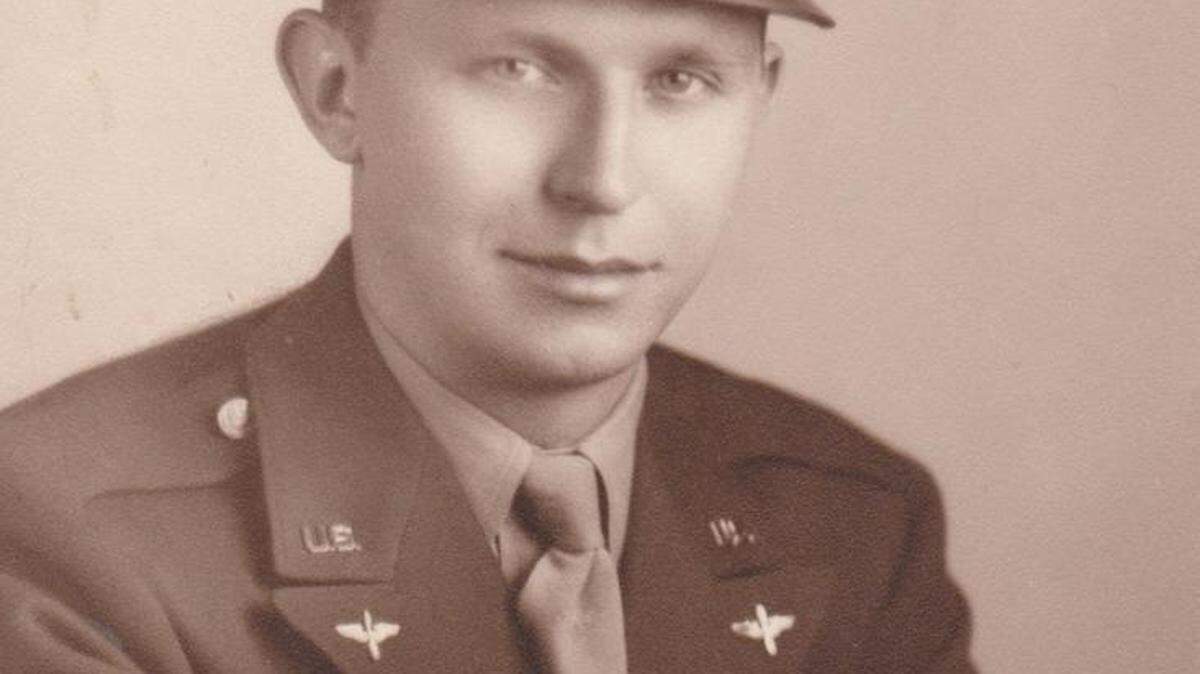
Malcolm Eckley is an eternal optimist — which, by the way, is not always easy.
The Bellefonte native, who resides in Arizona, has a lived a long, full life, with all of the requisite ups and downs present and accounted for. He served in World War II, worked as a photographer at Penn State and raised a brood of children.
At 93 years old, there’s bound to be at least a few aches, pains and general discomforts that make it tempting to not only view the glass as half empty, but to demand a refill with ice and a lemon wedge.
The point is that maintaining a sunny disposition takes work, especially when your Boeing B-17 is on fire.
It was June 1944 and Eckley was nearing the end of his European tour as an Army Air Corps B-17 gunner. He had just 10 more missions to complete before he could return to the United States. This latest operation, lucky No. 20, was supposed to be a “milk run” — an easy supply drop to the French underground forces, which had the unfortunate distinction of being surrounded by a platoon of German soldiers.
“It was not a very dangerous mission,” Eckley said.
Knock on wood.
The Germans had somehow gotten wind of the Allies’ impending arrival and peppered the French skies with anti-aircraft fire that knocked the nose cone off of the plane and set the left wing ablaze.
Eckley and his nine comrades knew that they had to jump from the B-17, but the gap between the general concept of plummeting through the air toward enemy territory and the dawning reality of what they could be facing when — if — they landed, was just large enough to cause a moment’s hesitation.
Fortunately, motivation was not in short supply.
“Once the plane is on fire it’s going to explode,” Eckley said
The three-month span between the moment Eckley jumped and the next time he saw American soil is what forms the spine of “Last Man Out,” a book written and published by his son in-law, Scott Helsom.
While the tome is based entirely on Eckley’s real experiences evading German capture with the help of the French resistance, Helsom took great pains to ensure that its pages didn’t read like a textbook.
“I wrote it more as you would write a story,” Helsom said.
Real life provided more than enough tension and suspense. After Eckley landed, he was separated from the the rest of the plane’s passengers and spent hours searching for shelter or at the very least some kind of cover.
Eventually he was brought into contact with a local doctor, a conduit to a British program operated with aid of the French resistance helping to hide other downed Allied airmen.
They dug a hole and buried Eckley’s flight suit deep in the earth. From that moment on, he was a stranger in a strange land.
After weeks of hiding out in different secluded French locales and more than a few close calls, Eckley was rescued and returned to the United States in August 1944.
Even now that his story is committed to paper, the veteran is wary about glorifying warfare.
“It sounds like an exciting adventure but it wasn’t really. You’re always tense, you’re always afraid of getting captured,” Eckley said.
Helsom believes that those are the experiences that need to be shared for posterity, which has a memory that will last far longer than either of the two men.
“We’re all getting older,” Helsom said.
True to form, Eckley is focusing on the positives. Even after all of the close calls and near misses, he never doubted that he would make it back home.
“I thought if there was only one guy to come out of it, it would be me,” Eckley said.
This story was originally published August 15, 2015 at 9:23 PM with the headline "Good Life | Bellefonte native recalls World War II."