
Review: The enduring relevance of ‘Charming Billy,’ the Centre County Reads 2020 selection
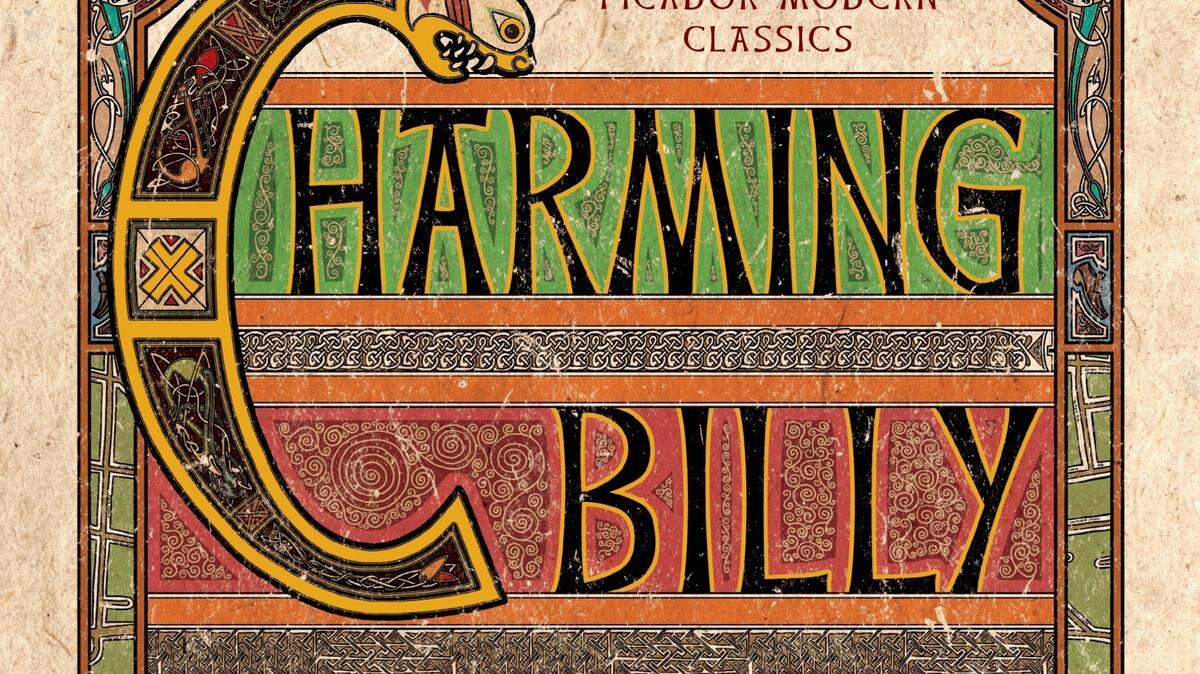
Editor’s note: The following is a review of this year’s Centre County Reads selection, “Charming Billy.” The kickoff for Centre County Reads 2020 is from 2-3 p.m. Saturday at the Green Drake Gallery and Arts Center. Other Centre County Reads events include an author talk and book signing on April 16 in the HUB-Robeson Center and a writing contest, with entries due by March 27. For more information on Centre County Reads, visit www.centrecountyreads.org.
What makes a book relevant over 20 years after it was first published? How does it stand the test of time while other titles fade away? In order to remain relevant, a book may tell a tale that goes beyond the boundaries of the main character, a tale that tells of relatable experiences such as learning the truth of a secret. “Charming Billy” by Alice McDermott does all these things while simultaneously questioning the nature of relevance (and delusions of relevance) through a thematic exploration of the titular character.
Billy Lynch is an alcoholic. That is the unchanging reality that eventually leads him to die alone on the streets of New York City before the book even begins. In the opening chapter, readers meet his family and friends at his funeral, huddled inside a bar and grill ironically drinking the very stuff that fueled Billy’s addiction. It is through their conversation that we learn of Billy’s goodhearted and kind nature. He was willing to help out a friend in any situation, while finding a way to make people feel good about life in general. It is at that very table we meet Billy’s cousin Dennis, who seems to have access to Billy’s life in a way the rest of the family doesn’t.
Dennis is the one to tell Billy’s story, but he isn’t talking to us as readers. Rather, he’s talking to his daughter, who goes unnamed. She is an unknown but knowing character whose relevance goes unrevealed until the very last pages of the book. It’s through her account that we learn about Billy’s life, both before and after the loss of the great love in his life, Eva. Eva was from Ireland, coming to Long Island to visit her sister and babysit for a time. It was love at first conversation. A son of Irish immigrants, Billy fell like a classic lovestruck teen, promising to bring Eva and her family over to the States permanently in the frantic hope that they would be married. But of all the dreams Billy was able to make reality, he could not realize this one. Dennis is the one to tell Billy that Eva died of pneumonia, and Billy is never the same. What Billy doesn’t know and learns later is that Dennis lied and Eva is alive and well in Ireland with a family of her own. Dennis told Billy a devastating lie in order to protect him. It’s this lie that shapes and guides Billy’s life from that moment on, until he finally learns the truth years later.
Despite the separation first of distance and then of Eva’s ostensible death, Billy fights to keep Eva and her influence relevant to his life. He sends her family money to help with expenses, while idolizing his memory of Eva into an image of perfection and beauty. When Billy learns the truth, however, Eva stays relevant in that Billy’s despair over her loss fuels the drinking that creates a world in which she still exists while also serving to get Billy through the day and through his marriage to Maeve, who understands what it takes to care for a drunk, having more than enough practice with her alcoholic father. Billy’s priorities shift based on what he perceives to be relevant. He keeps Eva relevant not only in his memory but also in his heart because she is the embodiment of the young and carefree Billy who felt like he had the world at his fingertips in the form of love for one woman. He spends his life grappling with losing that part of himself and his idyllic vision of the world, while his family and friends must also attempt to reconcile the depth of Billy’s feelings for Eva and what she represented and how his attachment to Eva and his idea of her affected how relevant drinking became to Billy during the rest of his life.
Present-day readers might connect Billy’s Irish “American dream” with the romance and reality underpinning the American dreams of countless immigrants and their descendants today. His pursuit of happiness changes as he faces life’s challenges and what his dream has become. Still other readers might be moved to connect the scourge of alcoholism in the novel to the destructive force of the current opioid epidemic on families and communities across America. Yet, whatever specific interpretation one might choose, ultimately what endures is McDermott’s talented creation of simultaneously quotidian and epic characters and the harnessing of a prismatic point of view from which a community — Irish immigrants and their descendants — strive to connect with one another in shared memory.