
Local music venues may soon see relief amid COVID-19, U.S. Sen. Bob Casey says
Local music may be in for some good news.
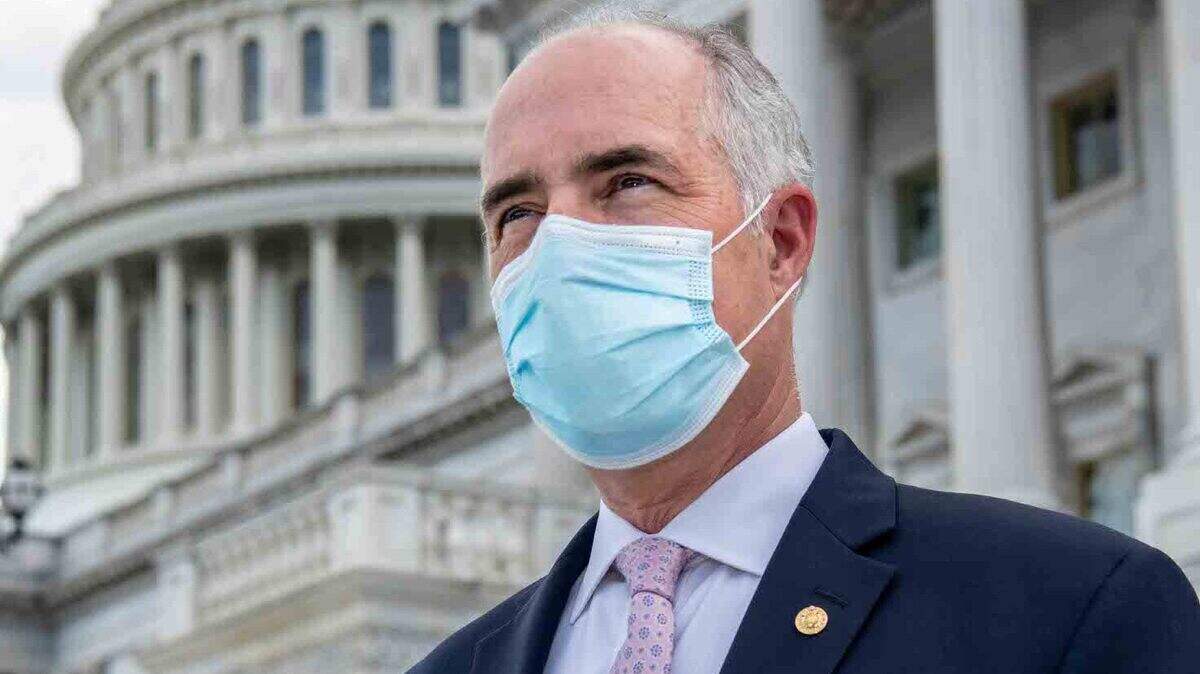
The once vibrant and heartfelt music scene we have right here in Centre County has been significantly impacted by the COVID-19 pandemic, and it looks like even harder times may be ahead now that the fall 2020 Penn State football season has been postponed. But, thanks to the efforts of Pennsylvania’s Sen. Bob Casey and nearly 50 senators throughout America, local music venues may receive some much needed financial assistance.
The relief is proposed in two bills — the RESTART Act and the Prioritized Paycheck Protection (P4) Act. According to Congress.gov, the RESTART Act, led by Sen. Michael F. Bennet (D-CO), extends the Paycheck Protection Program, established to support small businesses in response to COVID-19, and it establishes a loan program whereby the Small Business Administration shall guarantee loan amounts to certain businesses affected by COVID-19.
“The basic proposal here is to extend the eight-week covered period to a 16-week period,” Casey said, “to give additional time to deploy the funds, for businesses that have seen revenue decline by at least 25%.”
The Prioritized Paycheck Protection Program, sponsored by Sen. Benjamin L. Cardin (D-MD), authorizes new lending for specified small businesses that have experienced a significant loss in revenue. To receive relief, businesses must demonstrate a loss of revenue of 50% or more and have either already expended an initial paycheck protection loan or be on pace to exhaust such loan.
“These are businesses that got help but are still reeling for various reasons,” Casey said, ”and are damaged by the impact of the virus and the economy. So, it would extend the application deadline from June 30 to the end of the year. It just makes it more likely businesses can take advantage of it.”
Although the bills offer two separate and quite different benefits, they share commonalities, especially as they impact businesses that are in the live entertainment industry. Both bills are supported by letter signed by dozens of senators.
“When you have that kind of bipartisan cooperation and support,” Casey said, “that happens very rarely over the course of a year. You have Democrats and Republicans, blue states, red states, liberals, moderates, conservatives, every stripe of politician you can imagine.”
The first line of the letter that was sent to the two senate leaders, Casey added, is “we write to bring your attention to the challenges faced by the live entertainment industry.”
“Because of the unique nature of live music entertainment,” Casey said, “this effort was designed to call attention to some of the unique challenges that these companies face. If you add up the letter and the two bills, I’m hoping when we get this bill done. It will give some help to these businesses that can’t gather large crowds for music yet.”
The bills use broad language to describe eligible businesses, a rhetorical feature that is intended to benefit a wide variety of businesses. Therefore, the way it is written, it appears local venues, music stores, recording studios and other businesses that support live performances may be eligible, as long as they can show proof of meeting the requirements indicated in the bills.
“The letter spoke to it more broadly,” Casey said. “There are thousands of independent venues, staffed by hundreds of thousands of employees with their unique challenges.”
The relief comes in the form of loans, and Casey and the other senators who support the bill have taken deliberate steps to make paying back the loans as easy as possible for eligible businesses.
“It’s a new loan program to provide funding to cover six months of payroll benefits (and) operating expenses,” Casey said. “A share of the loan will be forgiven with the remainder of the loan repaid over seven years. No interest payments in the first year, and no principal payments in the first two years.”
Casey was enthusiastic about the two bills and the prospect of supporting local music, citing his love for Bruce Springsteen’s music. It’s a fitting image, because Springsteen is well-known for care-taking his hometown music scene in Asbury Park, New Jersey. Although Casey does not play music, he grew up in a music household, and he remains an avid music fan.
“The best speech ever given by a politician about the arts is John F. Kennedy’s speech (at Amherst College on Oct. 26, 1963),” Casey said. “He talks about how important the arts are to a nation and how you have to make investments in the arts. If we start cutting the arts we’re not going to be the nation we are.”
This story was originally published August 14, 2020 at 8:00 AM.