
After 40 years away from home, this man has returned to the Nittany House with a mission
Since Dan Loerch moved back into the Nittany House — located at the base of the Mount Nittany hiking trail — in April 2018, he said he’s spoken to around 5,000 hikers, asking them all the same question: “Where are you from?”
From those answers, he has filled two guest books, dotted a globe and erected 125 flags on his property.
“It’s not just Penn State students who come here, it’s faculty, visitors, friends and families. Families I’ve met are dropping their students off here at Penn State and it’s their first time in this country,” Loerch said. “The opportunity to share this part of the world as an introduction to our country is so rewarding.”

Sharing the history and beauty of Mount Nittany and spreading a message of conservation has become Loerch’s passion and mission since he moved back to his hometown and into his family’s farmhouse. He lived most of his adult life on the West Coast, where he worked as an air traffic controller.
When he grew up in the house, he said his family lived in complete isolation on the mountain. It wasn’t until he moved back 40 years later that he realized how much everything changed.
“Out here there used to be a single dirt path that no one would follow, but now every weekend I’m able to count over a dozen cars between the house and the first intersection where the road ends,” Loerch said. “Even with the number of people coming here, I’d like to think we can be more proactive with our conservation. I think I found one place on this planet that I’ve run across that I can leave behind better than I found it.”
From farmhouse to museum
Establishing The Nittany House Foundation as a nonprofit organization in honor of his parents, John and Lenore Loerch, he sees an opportunity to preserve the mountain’s ecology as an oasis and save the diversity of life still on the mountain. Loerch wants to show people that all forms of life are thriving on the mountain — plants, trees, reptiles, amphibians, mammals.
“The Nittany House Foundation is an opportunity to educate people on the real, natural world and continue to preserve the geological and cultural history of this mountain,” Loerch said.
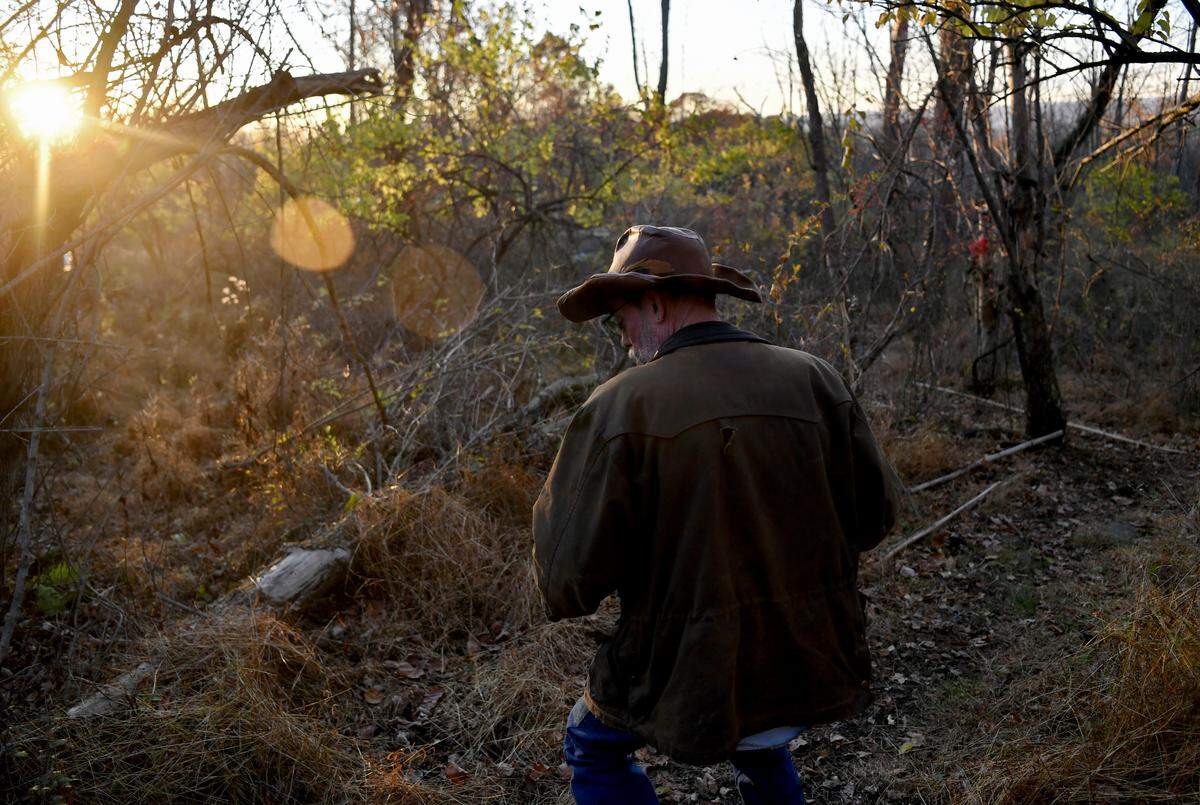
He also hopes to restore the house itself, which is in need of repair after sitting vacant for about 20 years, and transform it into a museum that shows the natural history of the mountain.
“This is a place where you can experience the natural world, hands on,” he said. “Even with all the people here, it hasn’t been destroyed, it hasn’t lost its ‘wild’ feel,” Loerch said. “I can see ways to move it back in time to continue to allow free access to the natural world without over-regulation.”
Preserving Mount Nittany’s history
While Mount Nittany can be seen by Penn Staters as just a mountain they live near, its history dates far before the existence of the university.
According to Faces of Penn State, a publication cited by the Mount Nittany Conservancy, in 1978 doctoral candidate Christopher Stevenson and Penn State regional archaeologist Conran Hay uncovered the remains of an Indian hunting camp that dates back to 8,000 B.C.
Mount Nittany is also known for its mysterious legends, as quoted in the 1916 publication of Penn State’s yearbook, La Vie.
“Legend holds that an old warrior and his squaw, living in the valley, planted crops that were wrested from them by a cantankerous North Wind at harvest time. After several hungry winters, they were rescued by a mysterious Indian maid from the hills who taught them to build shields against the wind,” reads the issue.
This story has been retold time after time and will continue to be, as long as there are people around who are interested in the mountain’s cultural history, Loerch said.
‘This mountain is a spiritual refuge’
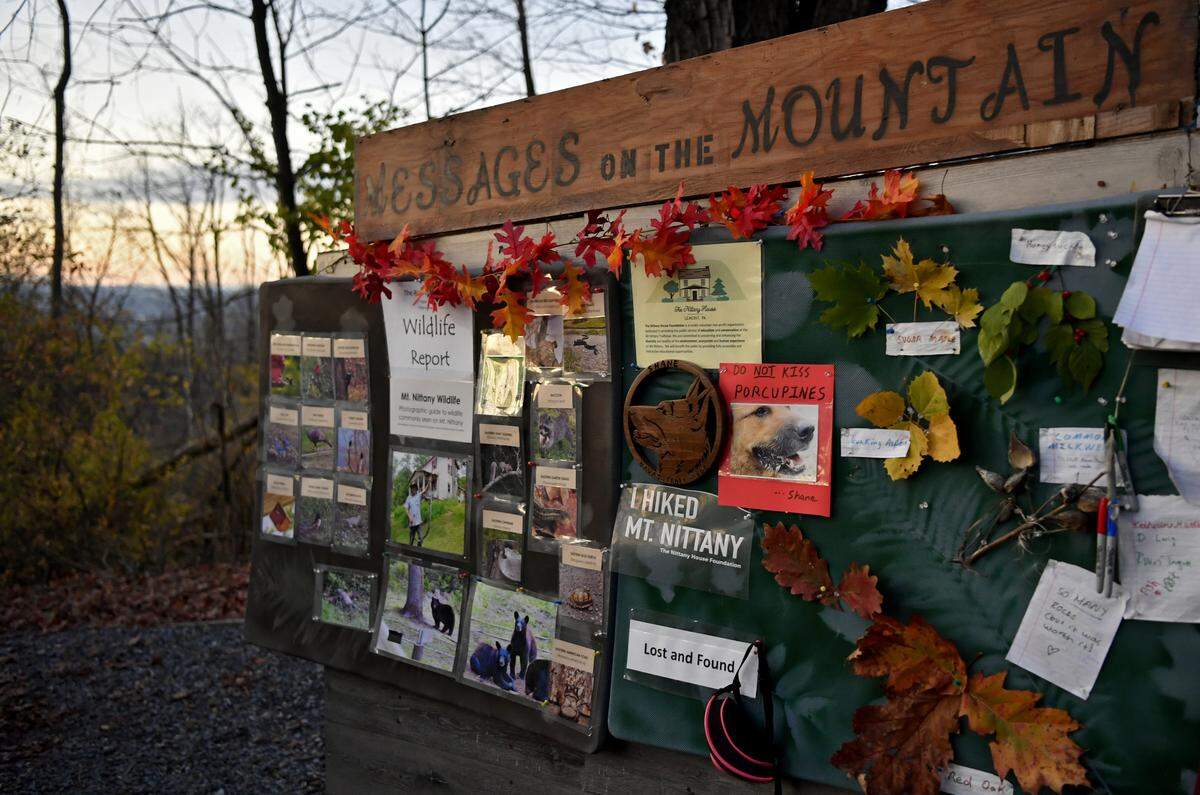
In a further effort to educate hikers and visitors, Loerch has put up a message board for people to leave notes on and has a table with artifacts that guests can interact with. A note that says, “This mountain is a spiritual refuge,” is one of his favorites.
“I’ve also put up a table near the house for visitors to see. I put up fossils, turtle shells, pine cones, you name it. I thought people would take things, but they haven’t. They’ve added things,” he said. “This wouldn’t happen anywhere else I’ve lived; this is amazing.”
Seeking grants and private donations, Loerch hopes to continue efforts to make The Nittany House a fully functional historic museum that accommodates all who want to experience the mountain.
“We need a fully accessible wheelchair entrance and to make The Nittany House a museum providing virtual reality equipment so that people who can’t physically go up on the mountain can experience a virtual reality hike in the house,” he said.
More than funding, Loerch explained that he needs organizational help to run the nonprofit and keep the mountain “wild.”
“I’m not going to be here for that much longer but I’d like to think in 50 or 100 years it will still exist,” Loerch said. “This doesn’t happen anywhere else, what’s going on, on that mountain. I don’t know of another place like this where you can just drive up to the end of a dirt road and just go for a hike on a mountain and be lost in the wild.”
For more information, visit www.thenittanyhouse.org.