
Centre County Pennsylvania Senior Environmental Corps seeks new members — of all ages
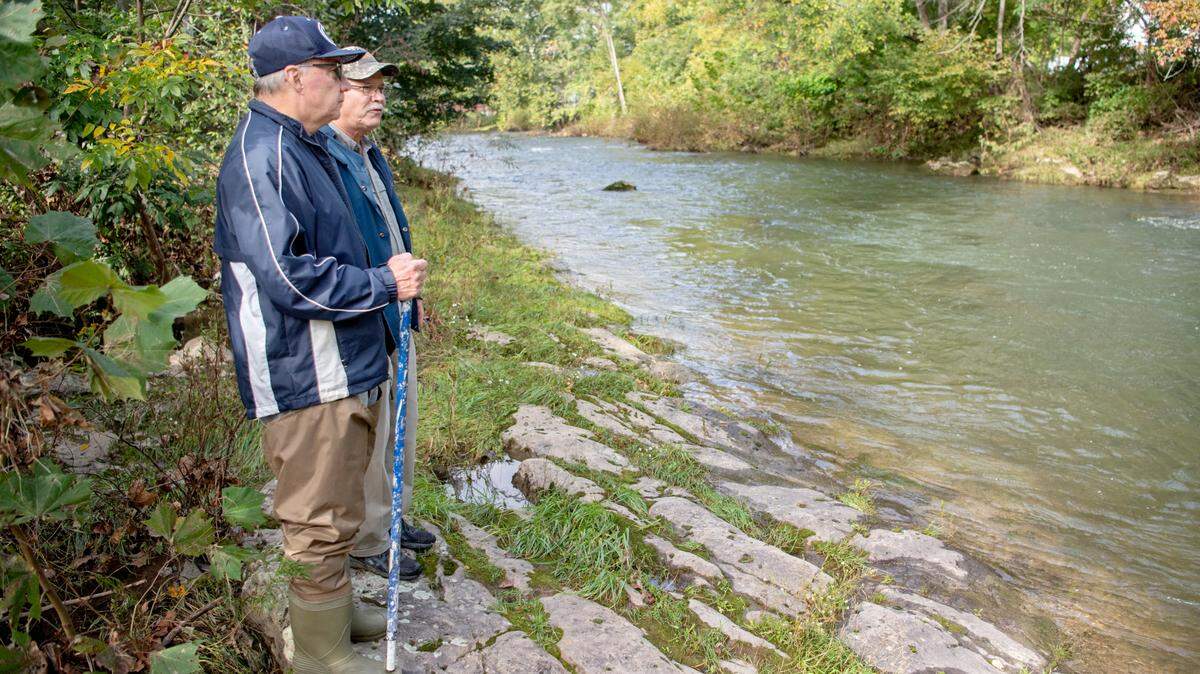
The Centre County Pennsylvania Senior Environmental Corps performs a vital role in Centre County, and recently expanded its membership to include more community volunteers.
The organization’s work, monitoring stream and water health throughout the area, directly impacts residents’ groundwater and drinking water.
“We kind of consider ourselves like the canary in the mines,” organization president Susan Sapp said. “We’re checking the streams to ensure that they are healthy, that there’s nothing wrong with them, and if we see anything, then we can let the proper authorities know so that they can then make sure that they hop on it, because there are too many streams around this area for them to monitor consistently.”
The Corps monitors 13 sites around the region, with monthly site visits to collect data. Each site is monitored by a group of at least five volunteers.
“When we’re out there, we’re checking three different chemicals — like nitrates, phosphorus and sulfates — and we’re checking the water temperature, the water flow, the velocity and the dissolved oxygen,” Sapp said. “You have a couple of people that go into the water and take measurements and a few people sitting on the side to do recordings and testings.”
The organization naturally attracts active seniors thanks to its daytime activities, but, recently, the Corps broadened its membership requirements to accept non-seniors as well. Over the course of the pandemic, Sapp said that membership levels have dropped, limiting the amount of work the Corps can perform. Now, anyone with a current Retired Senior Volunteer Program (RSVP) of Centre County or ClearWater Conservancy membership is eligible for membership within the Centre County Pennsylvania Senior Environmental Corps.
“We couldn’t think of a reason why we wanted to only be for seniors, other than the fact that that’s kind of what (the organization) defaults to,” Sapp said. “I thought it would be nice to be able to start, eventually, bringing other people in or having the option to have a younger group that comes in and helps at some points for certain things.” The group still intends to keep the “senior” in its full name for the time being.
There’s no prior knowledge needed to participate in the organization’s volunteer activities and all volunteer training occurs on-site. Activity requirements differ, so that there are volunteer opportunities for just about every fitness level, whether one’s health requires minimal walking to a data collection site, or a volunteer would enjoy a mile-long hike out to a more remote waterway.
Overall, Sapp said, the Corps makes it easy for new volunteers to join and then get involved. After joining either the ClearWater Conservancy or RSVP and indicating interest in the Corps, a Corps representative reaches out with all the required information. The process is informal and current members are happy to give potential volunteers a look at the work that happens at a data collection site before a commitment.
“We’ve had people just contact a member that they know, who is going out to the streams, and they go out with them and see if they like it,” Sapp said, “and then they end up joining that way… It’s really informal, but really easy to join.”
Members who visit streams for data collection usually only need to commit about three to four hours of volunteer time per month. Members have the option to become more involved with the Corps from there, if desired, with monthly meetings, additional training and other opportunities.
For more information about membership or the Corps in general, visit www.ccpasec.org.