
Centred Outdoors: A walk in the woods in central Pa. showcases diverse trees, forests
Named for its woods, Pennsylvania is clearly well known for its trees. Our state holds about 200 different species of trees and a number of them are under threat due to invasive pests or disease. Many of these iconic woody wonders are the focus of specific conservation efforts that will, hopefully, prevent us from losing their contributions of diversity to our forests.
Pennsylvania has been a changing land for the last 200 years. When Europeans first arrived, they found dense forests dominated by White Pine and Hemlock anywhere there was water, and enormous stands of Chestnuts, Oaks and Maples everywhere else. Then, over the course of colonization almost all these original stands were cut down.
While there were great successes in reforesting our state from complete devastation early on, threats to many of our returned trees became widespread in the 20th century. These threats came along with a shrinking world brought on by more convenient and faster travel opportunities from far off locales, allowing for the quick and easy introduction of invasive species.
For example, the American Chestnut, once so plentiful throughout the state that entire regions were named after it, suffers from one of these introduced species. A fungus, colloquially referred to as chestnuts blight, was accidentally introduced into North America in the early part of the 1900s. The fungus attacks wounds in chestnuts and draws nutrients and energy from the tree. Interestingly the fungus does not kill off the root system, meaning that plenty of “living stools” regularly send out sprouts that grow for a few years before failing.
While the damage done to the American Chestnut has already taken its toll on their populations, the American Ash is currently under threat by a small beetle. The emerald ash borer, appropriately named, bores into the ash’s inner bark where it disrupts the flow of nutrients throughout the tree. The beetle can destroy the entirety of the cambium, or the growing portion of the tree, leaving behind tracks and causing the bark to slough off. Affected trees are almost always killed by the beetle and since its first sightings in 2002, it is widely considered to be the most destructive invasive forest pest in North America.
Another invasive insect is the hemlock woolly adelgid which, like the ash borer, is named after its food source, hemlocks. Our state tree is under considerable threat due to this insect, as the adelgid sucks the sap out of the leaves of the hemlock tree, causing it to defoliate, or lose its leaves. This causes extreme stress on the tree and often kills weakened or at-risk trees. The bug leaves behind small fuzzy balls on the underside of hemlock branches that contain the woolly adelgid’s eggs. The woolly adelgid has spread to cover the entire range of eastern hemlock species and can drastically affect the survivability of hemlocks which grow slowly and make up much of mature forests in Pennsylvania.
Fortunately for Pennsylvania’s trees, there are active control methods for the current threats to our forests. In the cases where control methods are no longer viable, such as the American Chestnut where billions of trees are already gone, rejuvenation efforts are underway to re-introduce the species across our forests.
The American Chestnut Foundation (ACF) is the primary organization driving the return of the once dominant chestnut. Through a process of hybridization, breeding blight-resistant chestnuts with the American varieties, they are slowly creating a cultivar of the original American Chestnut that is resistant to the blight that is still dormant across our forests. Locally the ACF has partnered with the Arboretum at Penn State and other local landowners to plant hundreds of hopeful seedlings, many on land conserved by ClearWater Conservancy. This new generation, while only about 50% viable, makes up the beginning of a comeback for the effectively extinct trees.
Many of our threatened trees continue to thrive due to ongoing conservation efforts. There are many areas where you can find these tree species across our region.
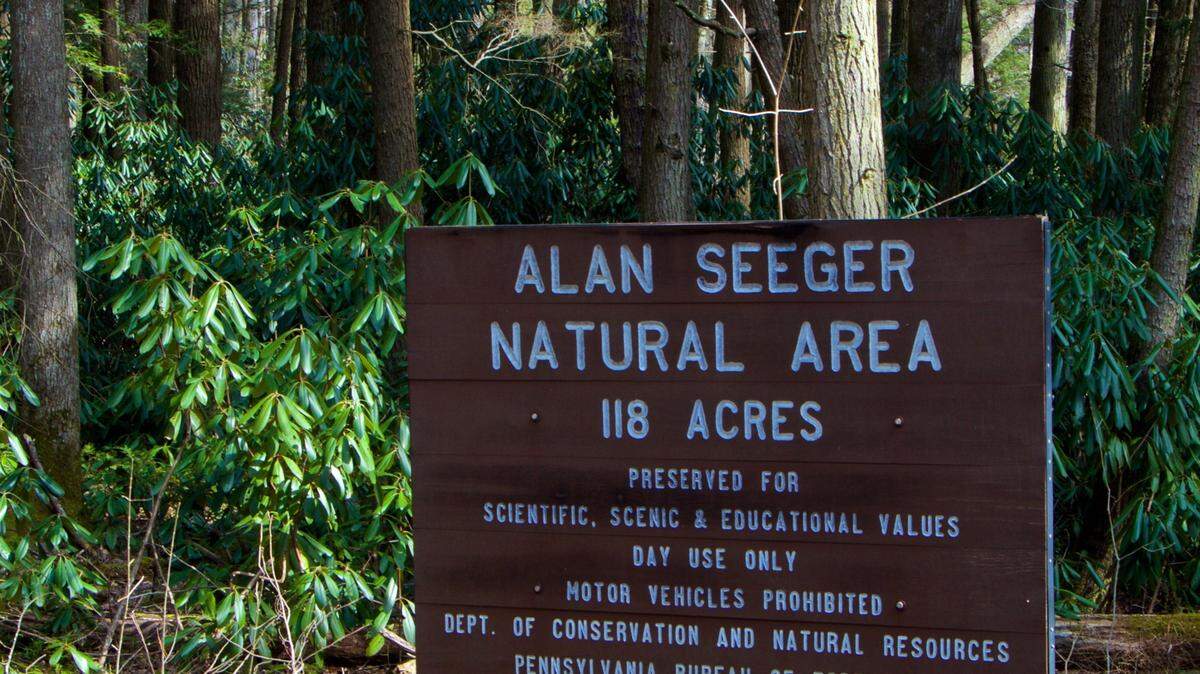
Alan Seeger offers a glimpse into the past. Many of the trees in the protected natural area are over 200 years old and represent what most of the forests in Pennsylvania would have been like before the 1800s. Several trails lead past stand of truly ancient hemlocks that have weathered hundreds of years and thanks to active management of invasive pests still stand today.
The trails up Mount Nittany in Lemont pass by several examples of the “living stool” chestnuts. Visitors looking to make the journey to the top can also find small copses (a small group of trees, pronounced cops) of ash trees while taking in some of the best views in Centre County.
The Spring Creek Canyon is home to diverse and variable forest system that includes multiple efforts to save some of our threatened trees. Many of the trees in the area are still first generation regrowth from the iron and timber industries, but in that time many ash and hemlocks have begun to come up through the fast growing oaks and maples.
What to bring on your adventures:
A refillable water bottle
Sturdy and water-resistant footwear
Long pants and socks are recommended in areas where ticks are prevalent
Hat, sunscreen and sunglasses
Child carrier/backpack or is recommended for very young children
A light snack or picnic lunch
Cellphone for taking pictures or in case you need assistance
Remember:
Review all safety recommendations related to Pennsylvania’s stay-at-home order
Dispose of your waste properly, packing out whatever you bring including food wrappers, food scraps, and litter
Follow local rules and guidance
Be considerate of others
Stay local
If parking lot is full, consider entering the site from a different location