
Centred Outdoors: Explore remnants of old-growth forests in central Pennsylvania
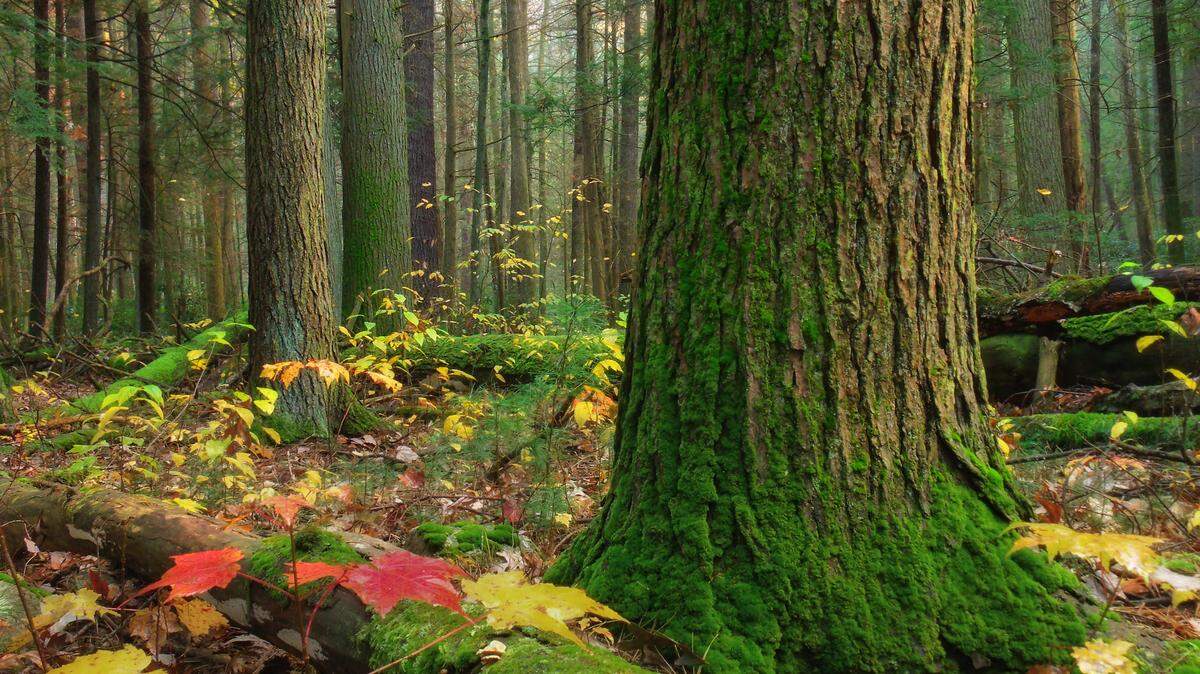
About 8 billion trees cover Pennsylvania’s 16 million acres, yet just over one half of one percent of this area contains trees predating the 20th century. Most of our trees are just nearing their hundredth birthday, which is not nearly as old as the trees that once stood in their place. These younger, first or early second-generation growth trees have a long way to go before they will resemble the old-growth forests of yore.
Old-growth forests, specifically in Pennsylvania, are usually dominated by large hemlocks or dense stands of pines. These trees readily reach into their quadricentennials and become dominant landscape features whether standing alone or as part of continuous stands. Importantly, not every tree in a proper old-growth forests is hundreds of years-old. A true old-growth forest contains a multitude of generations of trees growing together and often among stands of dead trees with plentiful woody detritus, or debris, on the forest floor. A forest with trees at a variety of life stages ensures that the trees will not die simultaneously, while also providing a stable, if constantly changing, environment for forest species.
A visitor to early 16th-century central Pennsylvania would find a diverse forest structure awaiting them. Covering most of the valleys, and especially near streams, would be the primary forests consisting of coniferous trees and shrubs. The trees would prevent the sun from coming throughout the entire day and cast the forest floor in near-constant twilight. Only slow-growing plants that kept their leaves throughout the year would be able to compete with the large trees acting as sun umbrellas and survive. Mountain laurel, for example, would be the dominant under-story plant, growing in dense thickets near any source of water. When an area of ancient trees perished, new growth of hardwood species filled in differing layers of the canopy and ultimately yielded to conifers over the course of thousands of years.
The ridges, or anywhere where water was more likely to be scarce, would be populated with hardwoods such as chestnuts, birches, oaks, and maples. While not as wizened as the truly old hemlocks and pines, they could grow to equally gargantuan proportions if they did not succumb to the harsh environment of the ridgelines.
Our forests existed in this state of succession for the last 8,000 years, beginning when the boreal forests began to retreat into Canada following the final ice age. Prior to that our forests would have resembled areas in the Canadian Shield, loose stands of spruce interspersed with tundra. Eventually, as the climate warmed and the weather associated with the glaciers began to subside, the more familiar oaks, pines and hemlocks took over.
As European settlers began to move westward that cycle was broken. Early colonists prized the chestnuts and white pines for building materials. The quality of white pines was so great, in fact, that King George III of England enacted a law reserving any white pine over 24 inches in diameter for the British Navy. This selective lumbering left an opening for other species to take hold, which had a negative impact on the overall health and diversity of the forest.
By the 1800s, expanding industrial requirements for the rapidly booming iron industry put a much heavier toll on the forest landscape. Logging companies were now less interested in specimen trees for specific uses in shipbuilding or home construction and more focused on providing the dozens of iron furnaces in the state with a steady supply of fuel. The fuel was charcoal rendered from any woody material the companies could put into a pit and process. The seemingly endless supplies of timber stretched out across the state and logging companies set up entire communities on the logging frontier.
As technology improved and the fuel sources became further and further away, many of the furnace operations were no longer economically viable operations. However, the damage to the forests was dramatic. By this time over 70% of the forests had been clear-cut to provide charcoal or other timber products and all that remained were dusty scrublands checked with agriculture and crossed by railroads. Not every square inch had been decimated, though, and some original forests remained. Some forests were spared during rare instances when loggers were not 100% certain of their claim and left a section alone to avoid having to pay the owner or competing company over logging the wrong area.
A growing movement in the late 1800s and early 1900s to prevent continued forest destruction eventually formed the backbone of the modern forestry movement. Our first forester, Joseph Rothrock, and the first head of the United States Forest Service, Gilford Pinchot, were both borne out of this movement. In a strange irony, the lack of forests in Pennsylvania helped strengthen our resolve to protect them everywhere else.
For those looking to find the remnants of these prehistoric woods or areas that would most closely resemble them, visitors can explore the Alan Seeger Natural Area and Black Moshannon State Park.
Alan Seeger Natural Area in Rothrock State Forest is the only virgin forest for nearly 80 miles in any direction. The area is the result of a claim inconsistency for competing logging operations having contracts to Standing Stone Creek in the valley. As visitors will note, there is a large island where the stream splits. Not wanting to timber the other company’s claim, the island and small portion of the surrounding area was left uncleared. The result is a 390-acre area full of hemlock, white pine, and assorted hardwoods. While the oldest tree in the area fell a few years ago there still stand several trees that well over 200 years old.
If you choose to visit Alan Seeger, plan ahead by writing your directions to the site before leaving home as cell service is limited and the area is tucked fairly deep into the forest. Other recommendations for this site include plenty of water, bug spray and a child carrier for small children. Also, plan to pack out everything you might take in with you, including food wrappers or other litter and make every effort to leave only footprints and take only pictures when visiting.
Black Moshannon State Park does not contain any true old-growth forests, but visitors can observe prominent collections of second-generation hemlock and mixed hardwood forests here. State parks areas like this were some of the first in Centre County to be reseeded after logging as the companies left and the land was granted back to the state.
This story was originally published August 14, 2020 at 7:00 AM.