
Online education programs offer alternative for students, savings for districts
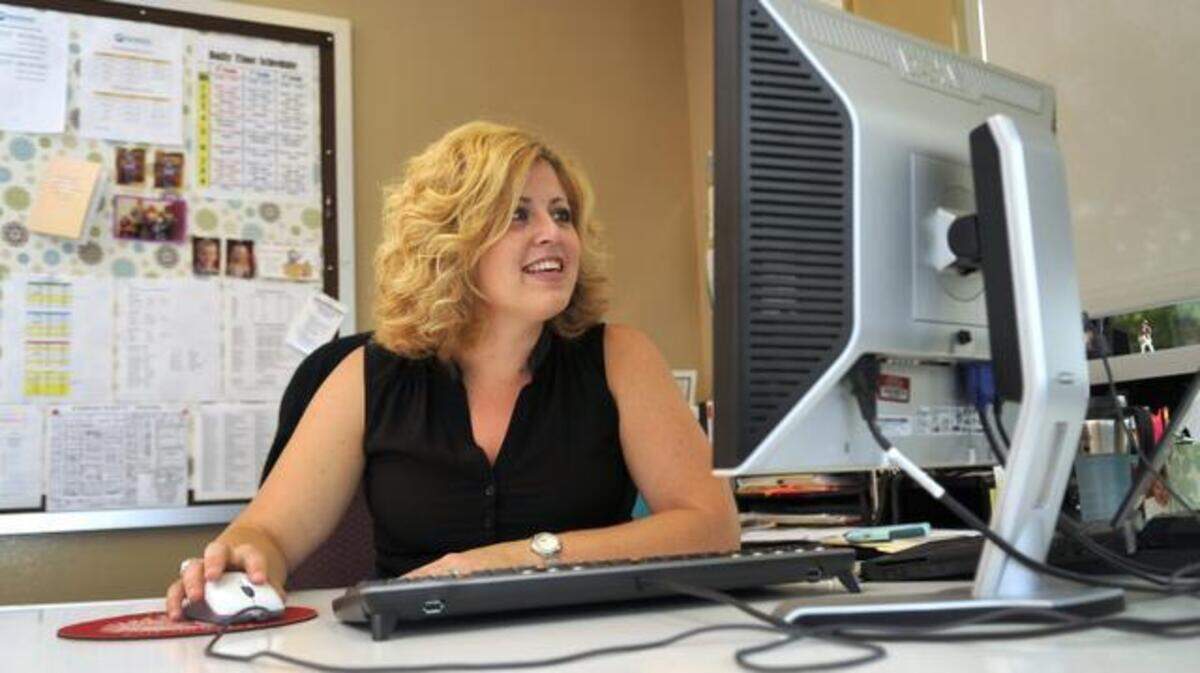
Maggie Koon was afraid that if the Bellefonte Area School District didn’t offer an alternative education program, she wouldn’t finish school.
The 17-year-old Bellefonte Area High School senior moved to Bellefonte last year from Lewistown.
Without knowing anyone and hesitant to be back in the classroom, Koon was given information that she could study online instead, through the district’s BeLA program — Bellefonte eLearning Academy.
“I still feel like I’m getting a good, solid education,” Koon said. “I love it and it’s the kind of program that’s good for students who are bullied or not ready to be in school. ... I met other students (in) the program who feel the same way.”
The program, which is open to students from fifth through 12th grades, provides an alternative learning style with parallel requirements for graduation — as if the student did classroom study, Bellefonte Area Middle School Principal Sommer Garman said. Garman helps run BeLA.
“It’s a full cyberschool through our district,” she said. “It’s become a growing trend in education, and we recognized that if students are interested in this type of learning, then we need to have it.”
The program is entering its sixth year and was started to enhance learning and compete with other cybercharter schools. It’s grown from 10 students in its first year to about 25 students this year, Garman said.
All school districts in Centre County have such programs, and in addition to offering an alternative to students, they save the districts thousands of dollars annually by recruiting students to district online programs instead of paying for them to attend Pennsylvania Cyber Charter School, or PA Cyber.
“The initial expectation was to save money and bring back students from” PA Cyber,” said Brian Griffith, Penns Valley Area School District superintendent.“We weren’t sure if it would really work, but it was an option that would develop a different way of teaching our students and save us money. What we found is it is working and students are coming back.”
Other district programs
The Penns Valley Cyber Academy is an alternative educational option for district students from kindergarten to 12th grade.
The program offers full and blended online classes taught by Penns Valley teachers and an outside company, Griffith said.
He said it attracts students who want to get ahead by taking additional online classes that may not fit into their daily required course load.
“I think we were the first traditional public school system to provide this kind of program,” Griffith said.
It started with five students in 2005 and grew to about 20 full-time online students and 20 students who are part of a blended in-class and online system, Griffith said.
“They’re responsible to log in each day for attendance and be diligent in their work,” he said. “Our job is to offer a successful program that helps students. We work with them and have counselors and principals who sit down with students to help meet their needs.”
The Bald Eagle Area Cyber Academy was started eight years ago as a way to help serve students who were struggling in school.
“We wanted to find the best way to support them and give them an alternative,” school facilitator Margie Fisher said.
The program is open to any school-age student in the district.
“It serves those students who are employed during the day or homebound, and can’t make the traditional school day,” Superintendent Jeff Miles said. “It’s good for kids who quit school early and are offered that opportunity to bounce back with a good, solid education that can fit their lifestyle.”
The program started with four students. By 2013-14, it enrolled 28. This year, the district expects about 35, Fisher said.
But it’s not a one-size-fits-all program.
Students interested in online courses are put through an interview process to tailor the program to meet their needs.
“We make sure this is what they and their families really want,” Fisher said. “We come up with a plan ... and stress the importance of personal discipline.”
The State College Virtual School started four years ago to help students who wanted to drop out or who were failing get back on the right path.
Its mission also was to create competition for PA Cyber, said Jon Downs, director of educational alternatives.
Superintendent Bob O’Donnell said the program started with about seven students and now attracts about a dozen annually.
“It’s really for kids at risk for not being successful in a traditional school setting,” O’Donnell said. “We want to provide a small environment to get kids back up to speed with schooling.”
As a district, O’Donnell said, it’s a goal to academically guide students and help prepare them for their future in the community.
“It’s truly a unique option for students and families in the district,” O’Donnell said. “We’re in a choice environment in our state and can offer a more responsive experience for our students. Everything we’re doing is to help them become more responsive.”
Downs said the online program is limited to district high school students, but he hopes to expand the program.
“We get a variety of students and we think it would be beneficial to all students of all ages,” Downs said. “It’s just a matter of rolling it out. It takes time.”
Day in the life
Koon wakes up at 9:30 a.m. every weekday and logs on to the Bellefonte Area website to survey her classwork for the day.
“It depends on what I work on, but I’m responsible for doing all tests and getting all my work done on a deadline like any other student,” said Koon, who plans to attend a trade school after graduation.
Garman said students in BeLA are encouraged to spend one hour on each subject each day.
“We have students who are night owls so they study at a different time of the day,” Garman said. “In essence, we recommend they spend the same amount of time on their studies as other students.”
At the Bald Eagle Area Cyber Academy, online students are required to log on to the site and sign in by 9 a.m. every weekday, Fisher said.
Students check in again at 3 p.m. daily to give their teachers a progress report on their studies.
“What I feel is that it’s enough work to substantiate the day, and I’m seeing a tremendous amount of success in the elementary level because of parent interaction,” Fisher said.
Challenges
One challenge students said they face is the lack of teacher and peer interaction.
“You don’t have a lot of face time with teachers, so you learn a lot on your own,” Koon said. “In a way, it prepares me for the future when I have to learn things by teaching myself.”
School administrators understand that there are cons that come with the positives of online programs, but students and their families are put through a rigorous process to make sure it is right for them.
“The first conversation you have is ‘What are you going to do other than being in your room or basement? Will you have a job? Are you joining a club?’ ” Downs said. “I meet with every parent and student at least once a marking period. Parents are aware of that, and it’s usually a family decision for their child to enroll in online classes.”
Bald Eagle Area offers time for students to work one on one with a tutor.
“Students and their families are aware of the lack of social life that comes with a program like this,” Fisher said. “That’s always going to be a family choice.”
And, in Bellefonte, BeLA coordinator Rebecca Leitzell is on the forefront of making the online program more social. She organizes monthly gatherings for cyberstudents to keep involved in community-type settings.
“You want to help students who need this kind of alternative education to succeed, but we don’t want to make them hermits either,” Garman said.
A cost savings
Districts that offer their own cyberschools can save as much as hundreds of thousands of dollars a year.
It’s an alternative for students interested in focusing on online education close to home instead of studying through a state-run cybercharter school. Although PA Cyber is free for students, it costs school districts thousands of dollars per student.
Ken Bean, Bellefonte’s director of fiscal affairs, said the district paid for 131 students to attend PA Cyber in 2013-14 at a cost of $12,123 for a regular-education student and $24,557 for a special-education student.
However, through the BeLA program, it costs the district $4,851 per student. The district spent $121,291 last year for BeLA, which included teacher salaries, hiring an outside provider and providing supplies, Bean said.
Downs said the State College school district annually saves between $200,000 and $225,000 by recruiting students into its online program from PA Cyber.
He said the cost to send a district student to an out-of-district cyberschool is about $13,000 for a regular-education student and $23,000 for a special-education student.
At Penns Valley, it costs the district about $3,000 for a student to take eight credits in its online program.
Griffith said the district sends between 70 and 80 students to PA Cyber at a cost of about $9,800 for a regular-education student and $15,000 for a special-education student.
Bald Eagle’s cyber online program costs about $2,500 a student.
“It’s absolutely a money saver for us,” Miles said. “We’re able to tailor our online curriculum to our students and at the same time saving us. It has the ability to recruit students in our district who study at cyberschools into our program.”
Looking to the future
The online programs at each district are changing annually as administrators find new ways to enhance online education and work with growing technology.
“It’s a matter of offering what they need, whether it’s a full cyber program, all in-class or a blended schedule,” Garman said. “When you look ahead to how technology is changing, you try to predict years ahead of time how things will work.”
The BeLA program is led by Garman, Leitzell and Assistant Superintendent Michelle Saylor. It’s run by teachers from an outside company, Garman said.
Bellefonte has a multiyear goal to transition its teachers to be online educators for the BeLA program, Garman said.
“We’re starting the process slowly,” Garman said. “It will be a step-by-step learning process.”
But as cyberschools are growing in popularity, school administrators say in-class teaching will never cease.
“It’s something that will always be in demand,” Fisher said. “Not every cyber program is fit for everyone. There is that need for students to have social interaction with their peers and teachers, so a cyber program will never fully replace the classroom.”
Fisher said cyber programs were made to enhance education and offer an alternative for kids who don’t fit the classroom mold.
All online students who participate in the cyber programs through their districts are able to participate in school athletics and extracurricular activities and are able to walk the stage with their graduating class. Each cyberstudent also receives a diploma upon graduation.
This story was originally published August 16, 2014 at 11:09 PM with the headline "Online education programs offer alternative for students, savings for districts."