
Report: Parents shoulder top share of college costs
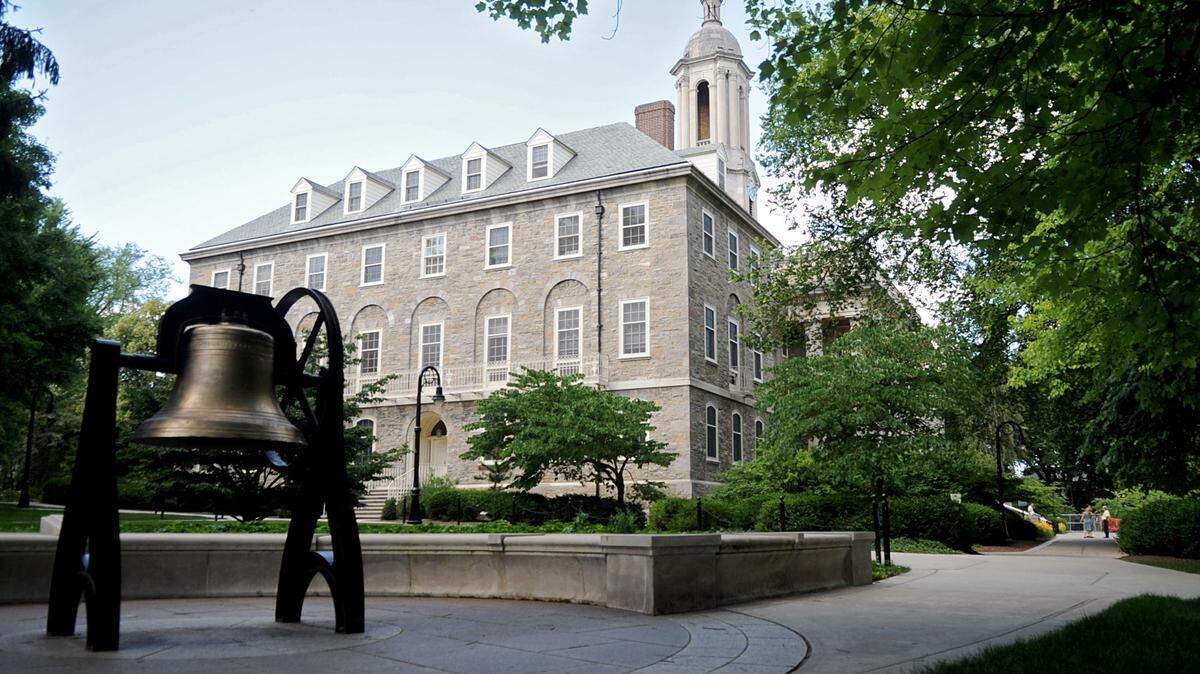
Penn State made history on Friday when President Eric Barron’s last minute proposal for the first in-state tuition freeze in 49 years passed unanimously.
Trustee Ted Brown was full of praise for the move, saying that the ever-climbing cost of a Penn State education was something he and other trustees have heard about from alumni and parents of prospective Nittany Lions on a regular basis.
A new report from Sallie Mae details just how those tuition bills are being paid across the country.
Penn State’s total bill for the 2015-2016 school year will be $16,572. When the U.S. Census Bureau lists Pennsylvania’s median income at just more than $53,000, it’s hard for a family to write a check that large, so most students are probably borrowing the money, right?
Not necessarily.
According to “How America Pays for College 2015,” compiled by Ipsos Public Affairs, only 38 percent of families borrow money to pay for a college education, and when they do, it represents about 22 percent of the cost.
So how are they doing it?
The report shows about 40 percent of families have a plan in place to fund college, and that had a lot to do with long-term goals.
“Those with plans were twice as likely as non-planners to strongly agree that the family expected the student to attend college, and a greater proportion strongly agreed they were willing to stretch financially to obtain college for the student,” the report stated. “These attitudes may be key to motivating families to create a plan.”
The report was generated based on 800 undergraduate students aged 18-24, and 800 parents of undergrads in that age group.
The cost of college was picked up by parent savings and income first, at 32 percent. Scholarships and grants represent 30 percent of the bill. The student’s own borrowing covered 16 percent, with student income and savings taking care of 11 percent. Parental borrowing, averaged across all students rather than just those that did borrow, came in at 6 percent, just ahead of the 5 percent that came from friends and family.
The average price of a year in college rose 16 percent in the survey, to more than $24,000.
For the second year in a row, black families outspent white and Hispanic families when it came to college, Where a white family’s average cost was $23,660, for a black family it was $25,963.
Barron spoke Friday about the importance of minimizing the cost of college as a way to insure Penn State reflects the more diverse nature of the future population. He called access and affordability one of the most critical aspects of attaining many of the university’s goals, as well as keeping it closer to the mission of educating Pennsylvanians.
This story was originally published July 19, 2015 at 11:39 PM with the headline "Report: Parents shoulder top share of college costs."