
Chick-fil-A ‘doing a bang up business,’ accelerates expansion into central Pa.
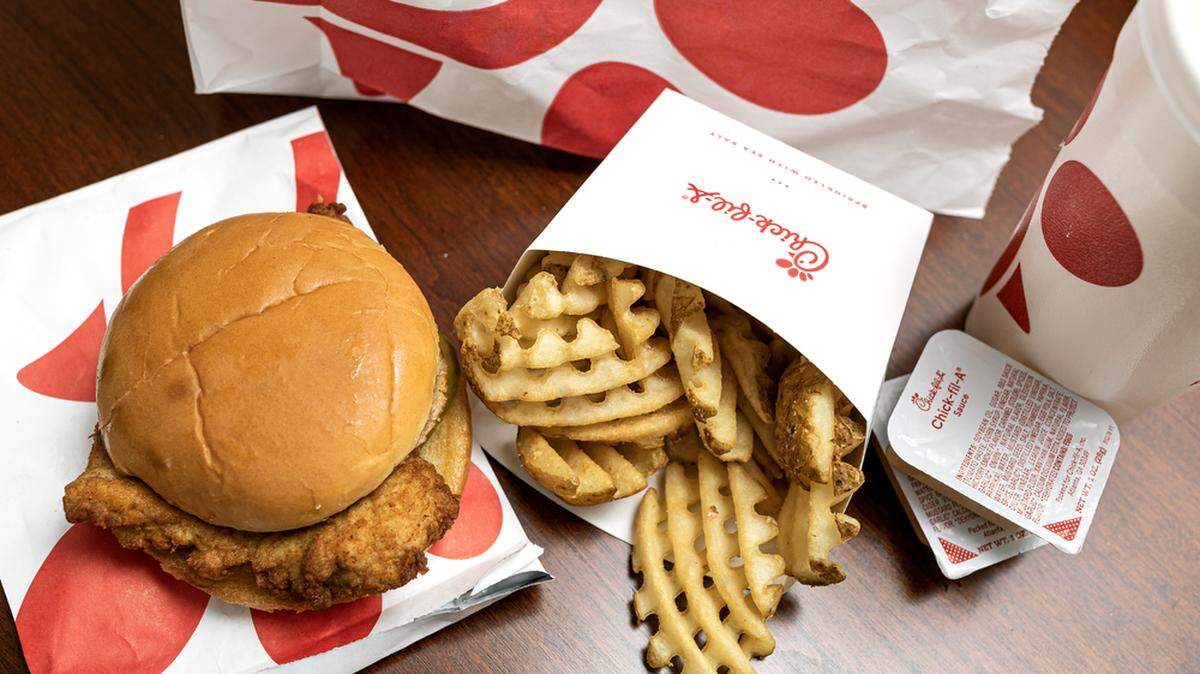
More Chick-fil-A restaurants are flocking to central Pennsylvania.
It’s good news for those who love the famous sandwiches, but not so much for those who claim the restaurants are a traffic nuisance.
At least four Chick-fil-As, known for the chicken-centric menus, customer service and multiple drive-thru lanes, are under development in Dauphin and Cumberland counties.
The expansion will give local fans of one of the nation’s most popular fast-food chains more places to go for the sandwiches, waffle-cut fries and milkshakes.
Chick-fil-A is the third-largest restaurant chain in the United States, behind McDonald’s and Starbucks. Sales in 2021 grew by 15% to $15.8 billion, according to Technomic, a research and consulting firm.
“Chick-fil-A is doing a bang-up business. Everywhere you see them they will have the longest lines compared to any of the other fast-food restaurants,” said Bob Gorland, a retail consultant and vice president of Matthew P. Casey & Associates in Harrisburg, which specializes in supermarket feasibility studies.
“They are probably banking on the success they are seeing all over the state and region,” he added.
More locations will fill a void in central Pa., where compared to some other fast food brands, Chick-fil-A has grown conservatively.
Up until now, only two Chick-fil-A restaurants operated in the Harrisburg region. The first one debuted along the Carlisle Pike in Hampden Township 15 years ago, and a second followed in 2016 at Lindle Road in Swatara Township. Others popped up in Carlisle, Shippensburg, Chambersburg, York and Lancaster.
Now, more are waiting in the wings.
A smaller format, drive-thru only restaurant is proposed in Dauphin County at a former Arby’s at 5101 Jonestown Road in Lower Paxton Township. It will have three drive-thru lanes and outdoor seating with a walk-up window. About three miles away in Susquehanna Township, another Chick-fil-A is under development with a 62 seat dining room and drive-thru at the former First National Bank at 3951 Union Deposit Road.
In Cumberland County, one of the restaurants is under construction at the Lower Allen Commons near Trader Joe’s in Lower Allen Township, while another is coming to the Mills at Shepherdstown Crossing, a mixed-use development under construction at Gettysburg Pike and Route 114.
Gary Nalbandian, a broker for RSR Realtors in Lemoyne, said at least two more restaurants are in the negotiation phase. While he would not identify the locations, he called them blockbuster sites with multiple drive-thru lanes.
Like most chains, Chick-fil-A is quiet about its development plans. The company didn’t respond when reached for comment. In December, during an Upper Allen Township meeting, Brent Edmiston, a developer for Chick-fil-A, hinted at the reason behind the expansion.
“We feel like as we look long term, we want to have other restaurants in the market to take pressure off our existing restaurants,” he said.
‘They like the food’
The proliferation of Chick-fil-A restaurants has to do with the unconventional way the chain operates. Today, the chain oversees more than 2,700 locations and is expanding into Canada and Puerto Rico.
Its popularity mostly hinges on one factor.
“They like the food,” said Edward Black, vice president of the Lower Allen Township Board of Commissioners, who worked on developing the shopping center where Chick-fil-A is opening. “It’s something that is a little healthier than some other things they can buy.”
The chain uses the same chicken recipe its founder, the late S. Truett Cathy, invented in 1964 at his suburban Atlanta diner, dubbed Dwarf House, using a pressure cooker and peanut oil.
The lightly breaded chicken on a buttered toasted bun with two pickles remains the backbone of Chick-fil-A’s simple menu. The restaurants, which are closed on Sundays following the owner’s Christian values, also serve chicken nuggets and strips, along with waffle-cut fries and milkshakes.
Nalbandian points out closing for one day could be viewed as a risky business move for any other national restaurant chain.
“That’s one seventh of their business other people have that they don’t have, yet they still do better than anyone else,” he said.
Chick-fil-A’s values trickle down to its customer service. The chain has dominated America’s Best Customer Service reports for eight years in a row, beating competitors In-N-Out Burger and Whataburger.
Employees are trained to greet customers with smiles and say “my pleasure,” and workers are positioned outdoors with tablets to take orders.
“We should be about more than just selling chicken. We should be a part of our customers’ lives and the communities in which we serve,” reads a quote on the restaurant’s website.
Chick-fil-A has faced backlash for its support of Christian charities and political groups. In 2021, the Daily Beast reported COO Dave Cathy was one of the highest donors to the National Christian Charitable Foundation, which funded opposition to the Equality Act, expanding federal protections for LGBTQ people.
Still, Chick-fil-A’s franchise model is appealing to owners.
Unlike other chains where franchisees pay for startup costs, Chick-fil-A owns the locations and selects and builds the restaurants. An initial $10,000 startup fee is required versus the more than $1 million in startup costs required for McDonald’s, Burger King and Taco Bell.
Traffic flaps
In some cases, the popularity is a determent to the chain, which is frequently met with resistance over traffic concerns. Drive-thrus stack up at busy times of the day, sometimes spilling into parking lots and blocking roads.
News reports across the nation from Fort Lauderdale, Florida, to Livermore, California, detail traffic nightmares associated with the restaurants. In Santa Barbara, city council considered one location a public nuisance over vehicle lines, while business owners in Ohio, Texas and New Jersey have sued, claiming the Chick-fil-A’s long lines were damaging their businesses.
Here in central Pa., concerned citizens have pushed back against some of the chain’s locations.
Several years ago, Chick-fil-A faced opposition for a proposed unit at the southeast corner of 32nd and Market streets in Camp Hill. After Consolidated Properties worked for more than two years to get approvals to build the store, it failed in the face of fierce opposition from neighbors who aired concerns over traffic, noise and litter. Chick-fil-A terminated the lease.
Another proposed unit in Manheim Township, Lancaster County, was denied zoning approval for a drive-thru due to traffic concerns.
Dozens of residents in December filled an Upper Allen Township commissioners meeting saying while they like Chick-fil-A, it has no place in their neighborhood and would bring added traffic congestion and accidents.
“Do residents have any input in what happens in our community? You’ve got this room full of people saying we like Chick-fil-A, but not here,” said Susan Weenik, an Upper Allen Township resident, during the meeting.
Still, Upper Allen Township officials gave their blessing. The location will be one of the area’s largest, with three drive-thru lanes. To combat long wait times the chain is adding drive-thru lanes to existing stores, opening more drive-thru only locations and testing express mobile ordering pickup lanes.
Gorland agreed Chick-fil-A’s volume of business without a proper road network and access could be an issue, especially during rush hours at some locations, where cars end up waiting out in the street. When it comes to locations, he noted Chick-fil-A prefers major thoroughfares with high traffic, not off-the-beaten spots tucked in neighborhoods.
It’s why the Lower Allen Commons seemed like an ideal location. Black called the shopping center with Trader Joe’s an appropriate spot due to previous Route 15 improvements.
Obviously, he noted there was demand for the chicken chain, because as soon as word got out about the center’s development, residents shared suggestions.
“You start to get calls from residents. Keeping track, Trader Joe’s was probably the No. 1 request. Chick-fil-A was the next requested site and we got a few requests for Ikea,” Black said.
Gorland cautioned Chick-fil-A’s biggest challenge will be to space locations so they don’t cannibalize business.
“But if they are picking busy pad locations and they are keeping the distance between them, then that’s a good successful move, because that is one hell of a franchise,” he said.