
Just 18.1% of Pennsylvanians got the bivalent COVID shot. These counties have lowest rate
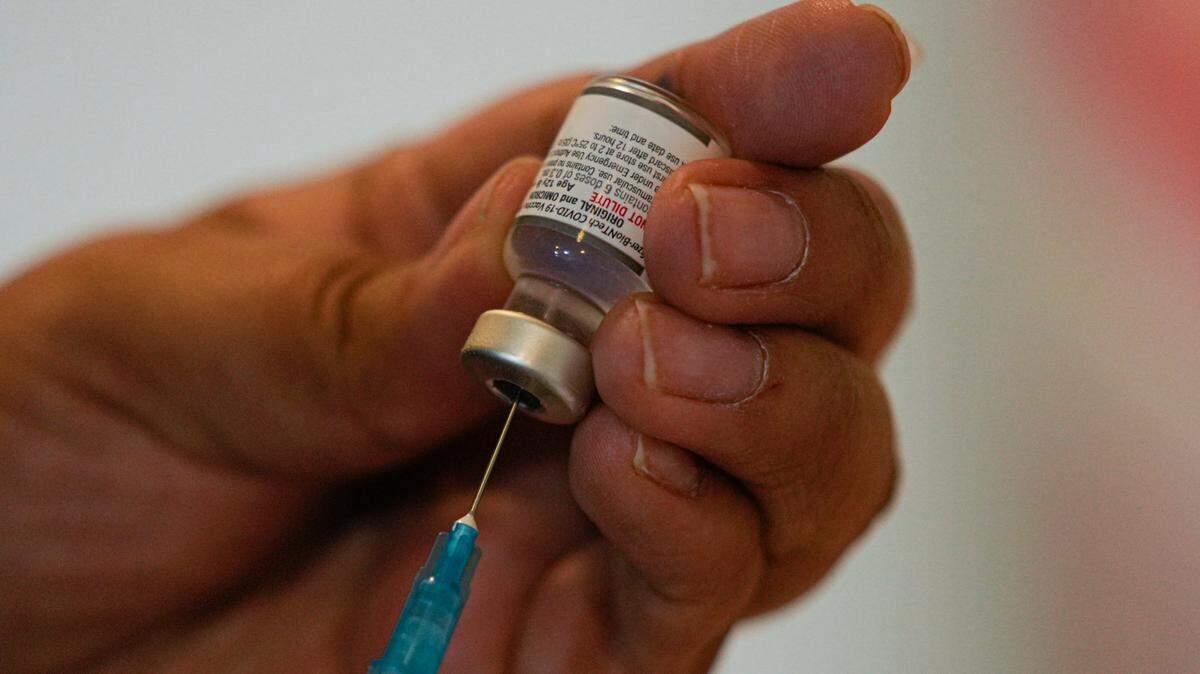
The U.S. Food and Drug Administration will move forward with a proposal for annual COVID-19 vaccines for Americans, even as uptake of the bivalent booster has proved sluggish.
According to briefing paperwork released Monday, the agency will seek a schedule similar to annual flu shots and aimed at providing yearly vaccines targeting the coronavirus strain believed to pose the greatest risk each winter, as reported by The Washington Post.
Federal officials are reworking strategy following slow uptake of newer versions of the COVID-19 vaccine. Across the U.S., the vaccination rate for the bivalent booster, which became available in September, is just 15.3% (or 16.2% among those ages 5 and older).
That compares to 81% who received at least one dose and 69.1% who completed the primary series.
In Pennsylvania, the bivalent vaccination rate is a bit higher than the nation as a whole, coming in at 18.1% of the state’s population ages 5 and older, according to U.S. Centers for Disease Control and Prevention data current through Jan. 18.
The commonwealth’s rate sits over 90% having received at least a single dose, and 73.2% having completed the initial series.
The bivalent shot, with an updated formula to better protect against omicron and other, newer strains of the coronavirus, was made available to many Americans last fall. Nationwide, 50.6 million people have gotten the updated vaccine.
Bivalent booster rate by Pennsylvania county
CDC data through Jan. 18 indicate the five counties with the lowest rate of uptake on the bivalent booster are:
- Fulton County, 6.8% bivalent dose rate (934 doses)
- Bedford County, 8.9% bivalent dose rate (4,044 doses)
- Juniata County, 9.1% bivalent dose rate (2,126 doses)
- Clarion County, 10.2% bivalent dose rate (3,717 doses)
- Forest County, 10.3% bivalent dose rate (730 doses)
Note: This graphic will automatically update as new data become available.
Pennsylvania counties leading on bivalent vaccination rate are:
- Montour County, 27.7% bivalent dose rate (4,766 doses)
- Chester County, 26.6% bivalent dose rate (132,018 doses)
- Montgomery County, 26.5% bivalent dose rate (207,804 doses)
- Allegheny County, 23.5% bivalent dose rate (270,580 doses)
- Bucks County, 22% bivalent dose rate (131,292 doses)
Centre County is among the middle of the pack, with a bivalent dose rate of 19.6%.
Eligibility and finding the bivalent booster near you
The bivalent shot became available to those ages 12 and older in September, ages 5 to 11 in October and for those younger than 5 in December.
According to federal health officials, you qualify for the updated booster shot if you:
- Are 5 years or older and got your last COVID-19 vaccine more than two months ago.
- Children ages 6 months to 4 years must have completed the Moderna primary series and must have not gotten a dose in the last two months.
You can receive the vaccine if you have had a COVID infection, as it provides additional protection against severe illness from reinfection.
If you are aged 12 or older and have not received a dose since August, you are likely eligible for the bivalent booster. If you are unsure if you have received the updated formula, contact your health care provider.
Guidance differs for those who are immunocompromised.
To find a vaccine provider near you, visit vaccines.gov.