
For nearly 40 years, this used book sale drew bargain hunters to Fort Worth.
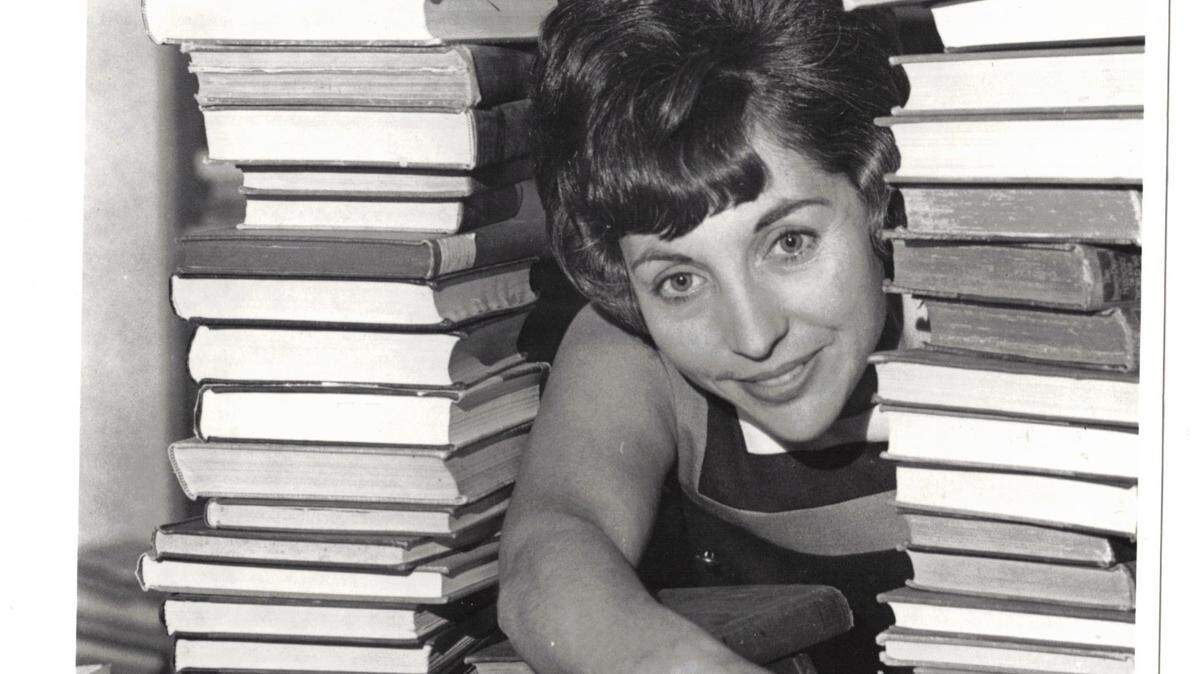
Before ebooks, before books on tape, before Half Price Books and before recycling became a buzzword, Fort Worth had what was popularly called the “Jewish Women’s Book Fair.”
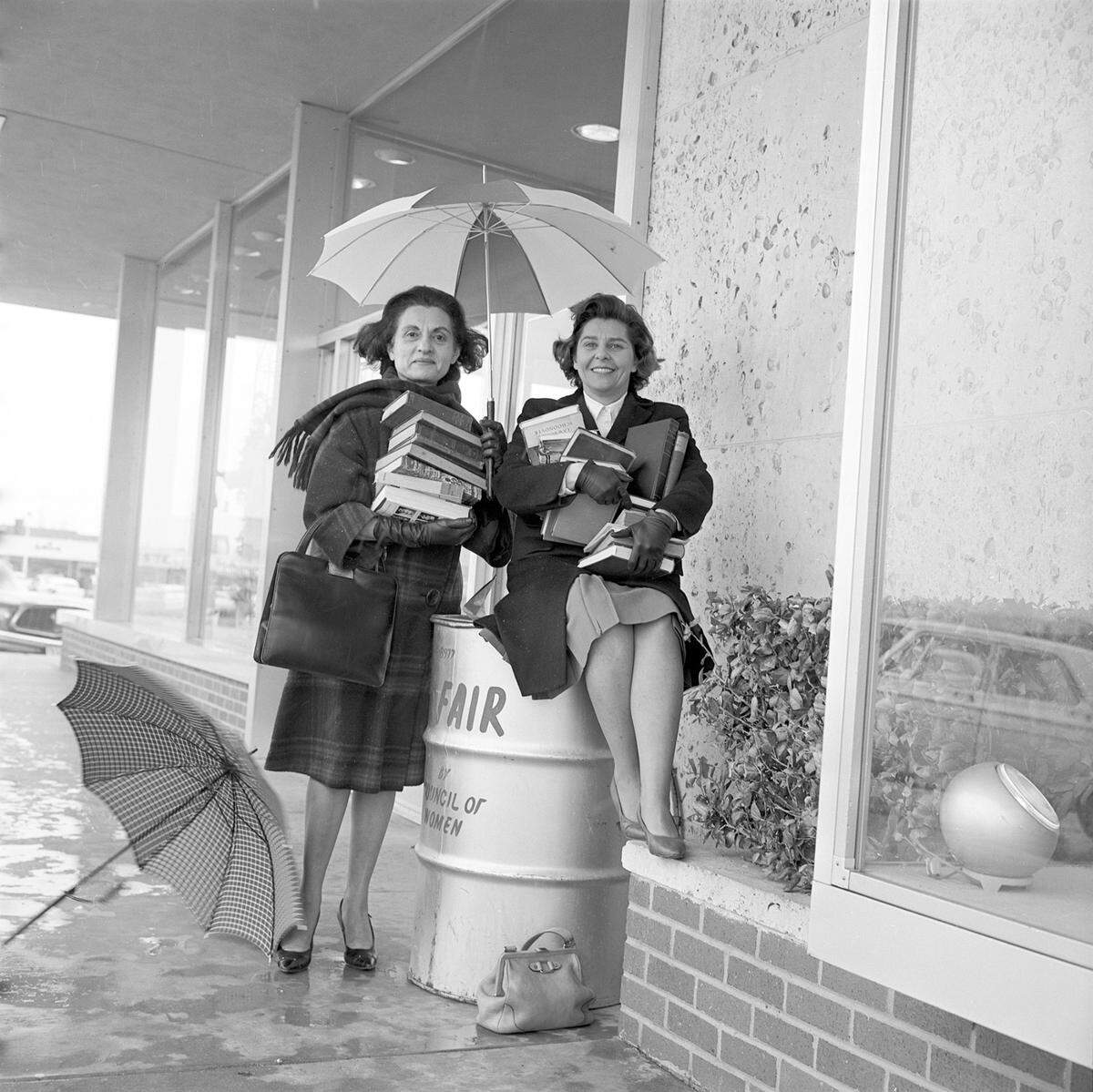
From 1958 to 1996, readers eager for bargain-priced mysteries, histories, and biographies flocked to the nine-day used book sale staffed by the Fort Worth Section of the National Council of Jewish Women (NCJW). Year round, the Council’s more than 400 members collected second-hand hardbacks, paperbacks and record albums that readers tossed into empty oil drums, dubbed “book barrels.” The metal containers were located outside high-traffic shopping sites such as Buddie’s, Cox’s, Monnig’s and Seminary South (now Le Gran Plaza), then the city’s only mall.
With a nod to religious observance, the Book Fair opened on a Saturday night, after sundown at the close of the Jewish Sabbath. Scores of customers, some from as far away as Oklahoma, lined up, waiting for the doors to open. Once inside, parents grabbed grocery carts, deposited kids in the children’s book section, then roamed the aisles for treasures and curiosities — perhaps a Dickens’ first edition or a love letter tucked between the pages of Shakespeare’s “Romeo and Juliet.” The scavenger hunt for discoveries, some priced as low as a nickel, continued until 10 p.m.
A convivial air pervaded the premises, whether the sale was staged at the dilapidated Pioneer Palace — a relic from the 1936 Texas Centennial — or the dimly lit cafeteria of the Lena Pope Home — a former orphanage slated for demolition.
“Book Fair was a BIG event in our lives, anticipated for months,” recalled retired librarian Joann Karges, a customer who came year after year. “I remember ... the opening of those great magical doors and the mad rush ... for thousands of books ... carefully categorized by genre or subject.”
One year, Pulitzer Prize winning author Larry McMurtry purchased 3,000 books, loaded them into his Lincoln Continental and drove to Archer City, where he ultimately opened a used-book emporium.
Every year on opening night, National Council of Jewish Women members arrived with spouses and children who bagged popcorn and restocked dozens of wooden shelves and tables built by Charles Miron, whose daughter Sandra Freed was a longtime Council leader. In the Jewish community, Book Fair was a family affair.
Until her death in 1989 at the age of 81, Marian Lederman captained one of the check-out stations. Each day, she reported for duty wearing her “lucky” gray dress and remained at the adding machine from opening until closing time. Charitable to a fault, Marian gave away books, gratis, to struggling students and customers she deemed in need.
People who paid with personal checks rarely showed IDs. “In all the years I was involved with Book Fair, we NEVER had a check to bounce,” reported Carol Minker.
Carol grew up with the Book Fair. Her mother, Charlotte Goldman, was Book Fair chair in 1963, the year the Council had to vacate the Pioneer Palace. (City planners were eyeing the acreage for Casa Manana, the geodesic-domed theater.)
When Seminary South’s promotion manager Bill Benge learned that Book Fair was searching for a home, he offered space for book sorting, storage and the springtime sale. The match with the mall lasted until the fall of 1975, when new management opted to lease the space to paying clients.
The eviction led to front-page publicity. “A bargain is hunting for a basement,” screamed a headline in the Star-Telegram. Two weeks later, another page-one story informed readers, “Book Fair is no longer a homeless orphan. The Lena Pope Home will take it in.”
The book fair business had come to Fort Worth via St. Louis. In 1957, former Council president Pearl Rabinowitz attended a mammoth used book sale there. Little money was expended because during the 1950s, most Council members were full-time homemakers who donated their time.
Pearl coordinated Fort Worth’s initial Book Fair with her friend Norma Mack, another past president. When profits from the four-day sale totaled $2,000, they thought they’d struck gold. The money was earmarked toward building a residential treatment center for “juvenile delinquent” boys — a controversial measure defeated in a county bond election. Fliers promoting the Fair trumpeted the slogan: “Buy a Book, Help a Boy.” (It did, for the facility evolved into Tarrant County’s Lynn Ross Juvenile Detention Center.)
As annual profits gradually rose to $35,000, grassroots groups asked the National Council of Jewish Women for seed money to get pilot projects off the ground. In Tarrant County, the Council helped launch the first downtown day care center, the first senior citizens center and the first rape crisis program. Book Fair profits gave the Council the capital and the clout to push for social change.
Each year, the Book Fair volunteers grew savvier. They asked bestselling authors to donate autographed books. They encouraged decorators and furniture stores to shop for outdated encyclopedia sets to fill showroom shelves. When Ernest Hemingway died in 1961, they raised the price of “A Farewell to Arms.” They invited a retired TCU librarian to set minimum prices for rare books that were placed on a silent-bid table. Joan Katz, Book Fair chair in 1978, turned the silent auction into a suspenseful live auction, with Star-Telegram book editor Larry Swindell as emcee.
As profits rose and the women sharpened their business and organizational skills, they found opportunities for themselves beyond the volunteer sector. Times were changing. Women strived to break through the glass ceiling in the public and private spheres. Membership in the National Council of Jewish Women fell. By the mid-1990s, there were no longer enough volunteers to staff the Book Fair. Its final year was 1996. In 2002, the Fort Worth National Council of Jewish Women section disbanded, although its legacy and its leaders are everywhere.
Historian and archivist Hollace Ava Weiner is the author of Jewish “Junior League”: The Rise and Demise of the Fort Worth Council of Jewish Women.
This story was originally published December 3, 2022 at 7:00 AM with the headline "For nearly 40 years, this used book sale drew bargain hunters to Fort Worth.."