
Neil Sperry: Can you a fill a tree hole with concrete? And other unusual questions.
Over the years I’ve encountered some questions that would make even a veteran gardener think twice. Since question answering is actually a big part of how I’ve made my living, I’ve come to look at these offbeat inquiries as breaths of fresh air. Let me share a few of them with you.
“My tree’s trunk has developed a hole where an old branch rotted. Should I fill that with concrete?”
Certified arborists will tell you not to do so. Where mere mortals like most of us would, on first instinct, think that the concrete might make the trunk stronger, it actually traps moisture around its surface and thereby encourages additional decay. Let the tree heal on its own. If it’s healthy, it will try to form a roll of new bark across the wound. If it’s really healthy, that bark will develop symmetrically. Once it closes the gap the tree will have an internal void, but if that void isn’t too large the girth of the maturing trunk will be sufficiently strong to support the tree. If you have any doubt, let a certified arborist help with the work and look after the tree in subsequent years.
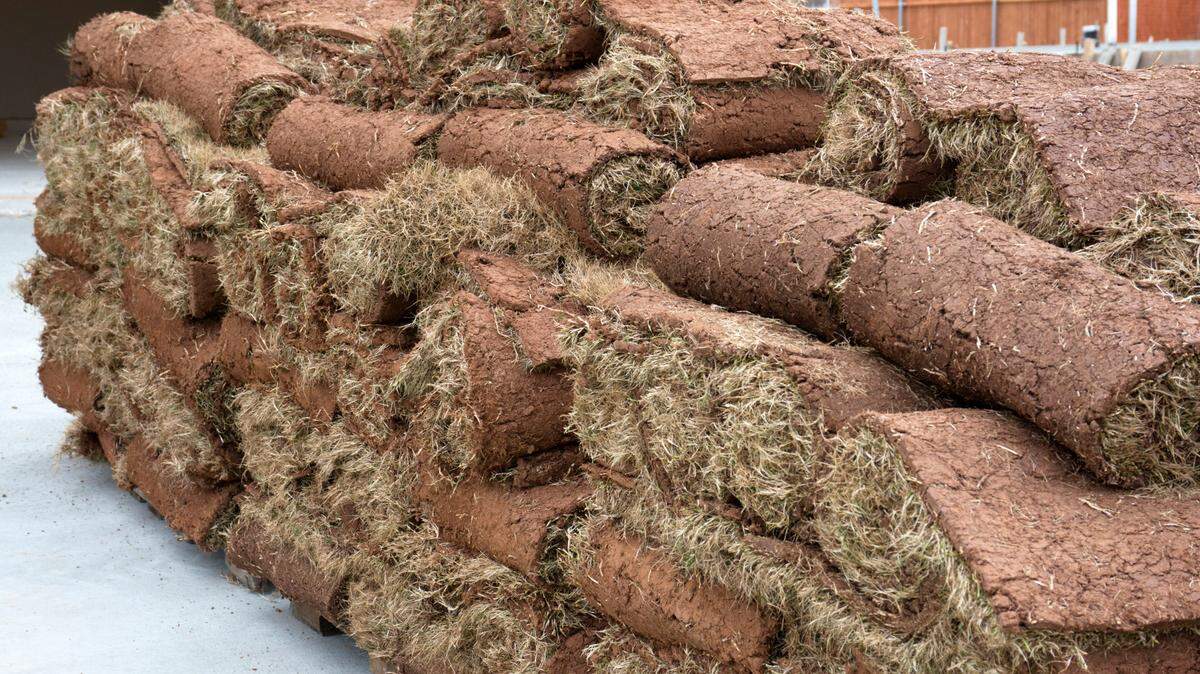
“Our dog is tracking mud into the house this winter. I have to do something. What type of sod can I plant now?”
I get this question many times every winter and I’ve never been proud of my answer. It’s risky to plant any type of sod at this time simply because extreme cold could kill out the grass before it takes root. Common bermudagrass would be most likely to survive, but I certainly wouldn’t recommend planting it unless there is no other alternative.
All too often the bare areas are beneath shade trees where the grass has died away due to insufficient sunlight. It may seem like bright light now, but you must remember that bermuda needs eight hours of sunlight to thrive. St. Augustine needs six, and zoysia needs seven. Is there a way to fence off that part of your yard that is contributing the mud? Will you have to resort to a shade-tolerant groundcover anyway?
Regular mondograss (monkeygrass) is a superior shade groundcover and it’s also fairly resistant to pet traffic once it’s established. It can be planted or dug and divided at almost any season, so perhaps that’s a good post-holiday project to think about. But planting of sod now is probably not the best plan.
“Why did my croton and bougainvillea plants drop all their leaves soon after I brought them in for the winter?”
That’s almost always because they’re not getting enough direct sunlight. Even though they might have been in partial shade outdoors in the summer and fall, when we bring them into winter “storage,” we often push them into a dark corner of the garage or storage room. They need greenhouse-like conditions and virtually full sunlight all winter long. Without it, leaf drop will begin within three or four weeks of their coming indoors. You may be able to save them by trimming them back by one-third and putting them into a bright, warm (60-65F) setting, but you need to do so immediately.
“How much can I prune my shrubs this winter? I have several types and I want to cut them back by half or more.”
That’s a very heavy trim. If it’s the first time that they’ve been cut back that heavily they may come through fine. Hollies and abelias, for example, would, but junipers and other cone-bearing evergreens would probably be killed. Nandinas could be cut to within an inch or two of the soil and allowed to regrow as full, bushy plants. It all depends on the plants.
I’d suggest taking clear photos and generous clippings from each type of plant (since you have extra growth to spare) and visiting with a certified nursery professional at a full-time independent retail garden center.
Winter would be the time to do such pruning. Use hand tools as much as possible so that you can groom the plants into a more natural look when you’re finished. Leave some green foliage in place to nurse the plants back.
“I have low spots around two of my shade trees. Can I add soil to bring them up to grade level? When should I do it?”
Adding soil over the root zone of a tree is very dangerous. As it compacts it drives oxygen out of the topsoil. In doing so the surface roots become suffocated.
Along these lines, there are two things to which you’ll want to pay attention in the care of your trees. First is the root flare. That’s where the trunk broadens out to show the topmost roots as they expand just below the surface of the soil. You want to see the root flare at the soil’s surface. If the trunk goes into the ground showing parallel sides, the root flare is too deep. Perhaps an arborist has used an air spade in years past to expose the root flare. (That’s a good thing.)
Second, if the low area represents just a small portion of the root zone and is up close to the trunk, perhaps there’s a way to cut a shallow swale out from the trunk to a lower part of your yard to allow the standing water to escape after rains. If it’s done correctly, it need not be noticeable. Once again, a certified arborist could give expert advice.
This story was originally published December 16, 2022 at 7:00 AM with the headline "Neil Sperry: Can you a fill a tree hole with concrete? And other unusual questions.."