Where you’ve spotted potholes in State College and what crews are doing to fix them
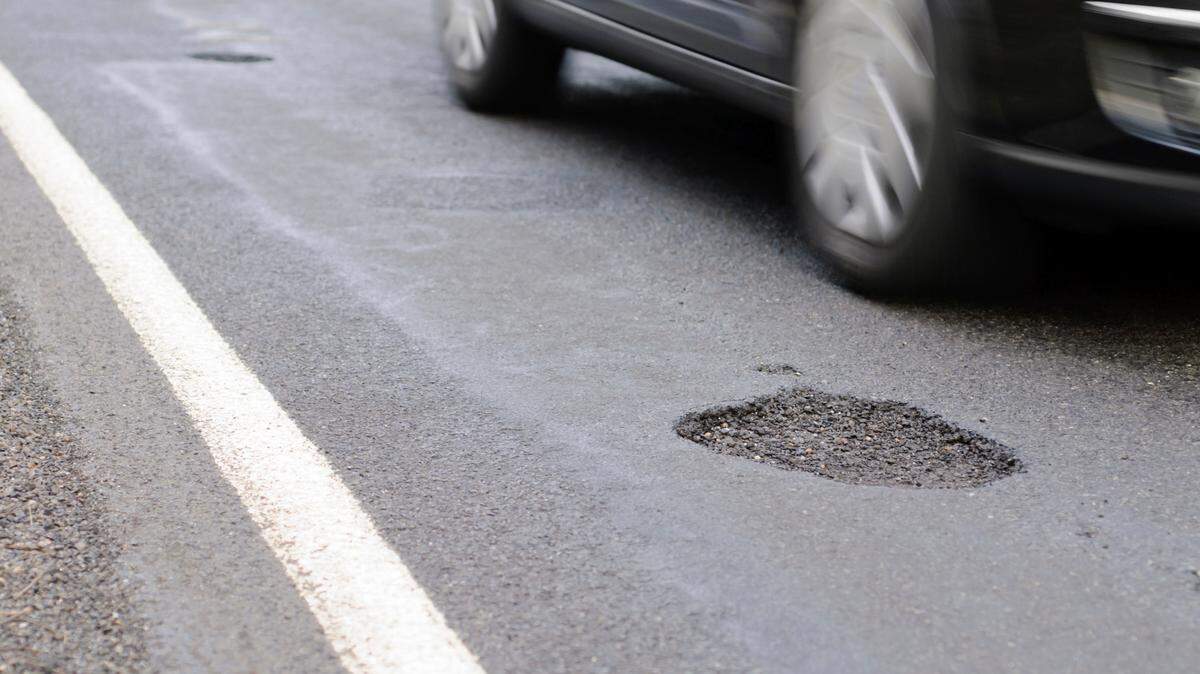
As temperatures start to rise this spring, it’s finally possible to fix the potholes that have plagued drivers all winter.
Here’s why permanent fixes are made in the warmer seasons, as well as how to request a fill for that annoying bump on your commute.
How to report a pothole
Centre County drivers can report potholes and other non-emergency concerns on state-owned roads to PennDOT by calling 1-800-FIX-ROAD or by making an online report.
Drivers are asked to provide as much information as possible to help maintenance personnel locate and fix the issue in a timely manner.
Using the online system, you can click on the map to pinpoint the issue’s location. You will also be asked to list the nearest cross street or intersection and any other location details, such as nearby mile-markers or landmarks. If you dropped a location pin on the previous page, the “Details” tab will autofill as much about the location as possible. You’ll be asked to describe the pothole, and you can also choose to upload a picture.
After submitting the request, PennDOT aims to contact you within 24 business hours to let you know your request has been received and provide any updates about the plan to fill the pothole.
The pothole will be patched as quickly as PennDOT can get there, depending on the request volume, county, weather and other factors. In the meantime, you can use your report’s reference number to check its status.
How are potholes filled?
Marla Fannin, PennDOT’s press officer, said potholes are fixed using temporary cold patches in the winter and more permanent, warm materials in the spring. The reason potholes get temporary fixes in the winter is that most asphalt plants don’t open until the spring, so hot mix isn’t available in winter.
“Once we have access to hot mix and hot material, then we can come back and use hot mix to ensure a more permanent repair,” Fannin said.
PennDOT uses 175 tons of material on average to make temporary pothole fixes, which take place from March to May, Fannin said. Permanent fixes take place from June to October, and the state uses an average of 1,191 tons of material for those.
PennDOT prioritizes fulfilling requests based on safety concerns, severity of issue and location. High-volume intersections will likely be fixed sooner than roads traveled less frequently.
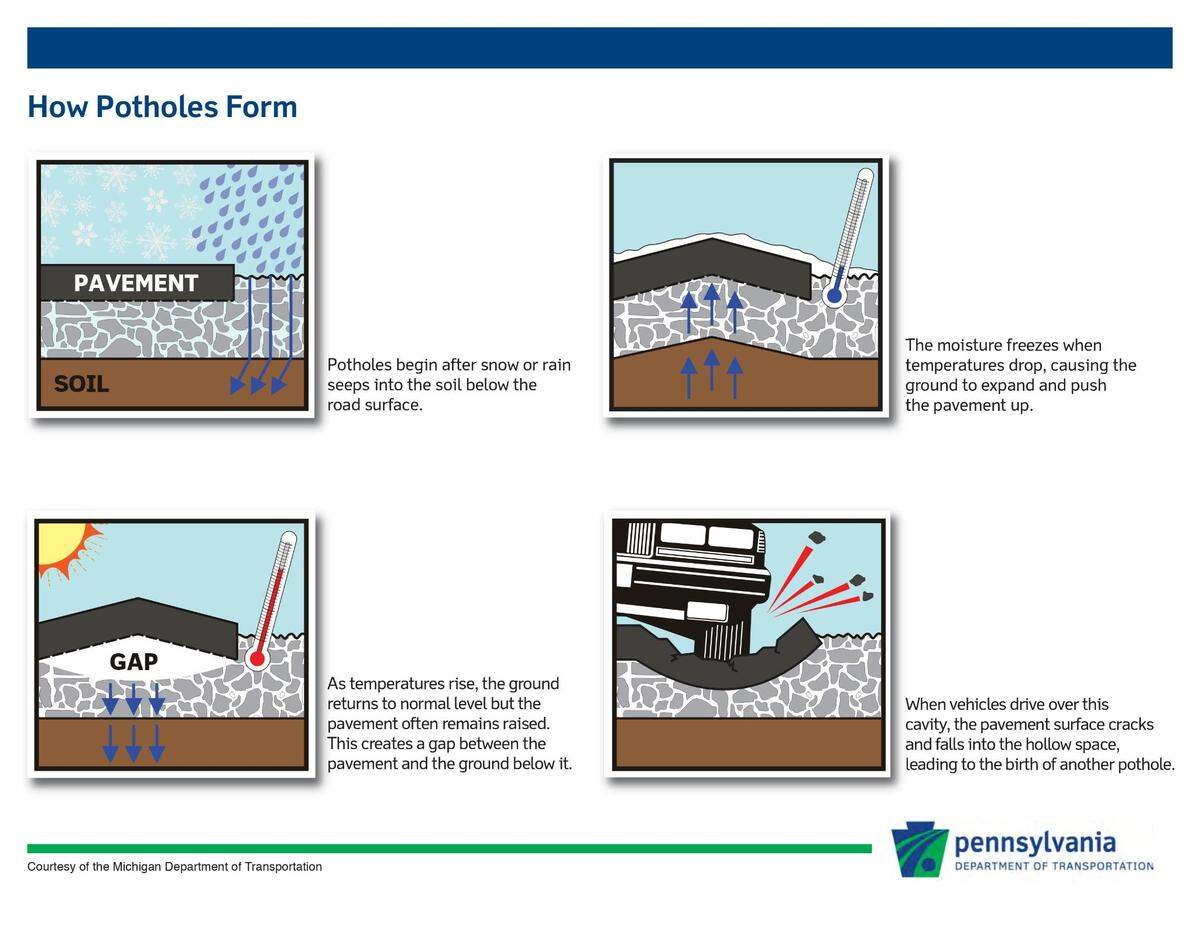
Fannin said there have been more potholes in the past five years than historic averages, in part because of unpredictable weather and longer winters. Potholes form frequently in winter due to the process that takes place when snow or rain seeps below a road surface, then freezes.
How can I report concerns on roads that aren’t state-owned?
Concerns on roads that aren’t state-owned can be reported directly to the road’s township. The State College borough maintains about 48 miles of municipal streets and 10 miles of alleys. You can reach the State College Public Works Department at 814-234-7140 or email publicworksdept@statecollegepa.us.
If you’re not sure in which township you’ve found a pothole, you can call the local county government office. You can also call PennDOT’s number, and the operator will try to assist you in locating the correct office.
Where are you finding potholes?
Last week, the Centre Daily Times published a survey asking readers to tell us where they find potholes in the State College area and what they think are the best and worst roads locally.
Readers said they found potholes on Beaver and College avenues downtown and on Route 64.
There were two responses for worst road, and both listed Blue Ball Road in Walker Township. Survey responses for best road included I-99 from State College to Altoona and Route 192.
Our survey on road conditions is still open. Tell us what you think. We are also looking for feedback about what coverage areas are important to you.