
Can that be recycled curbside in Centre County? Your guide to help avoid contamination
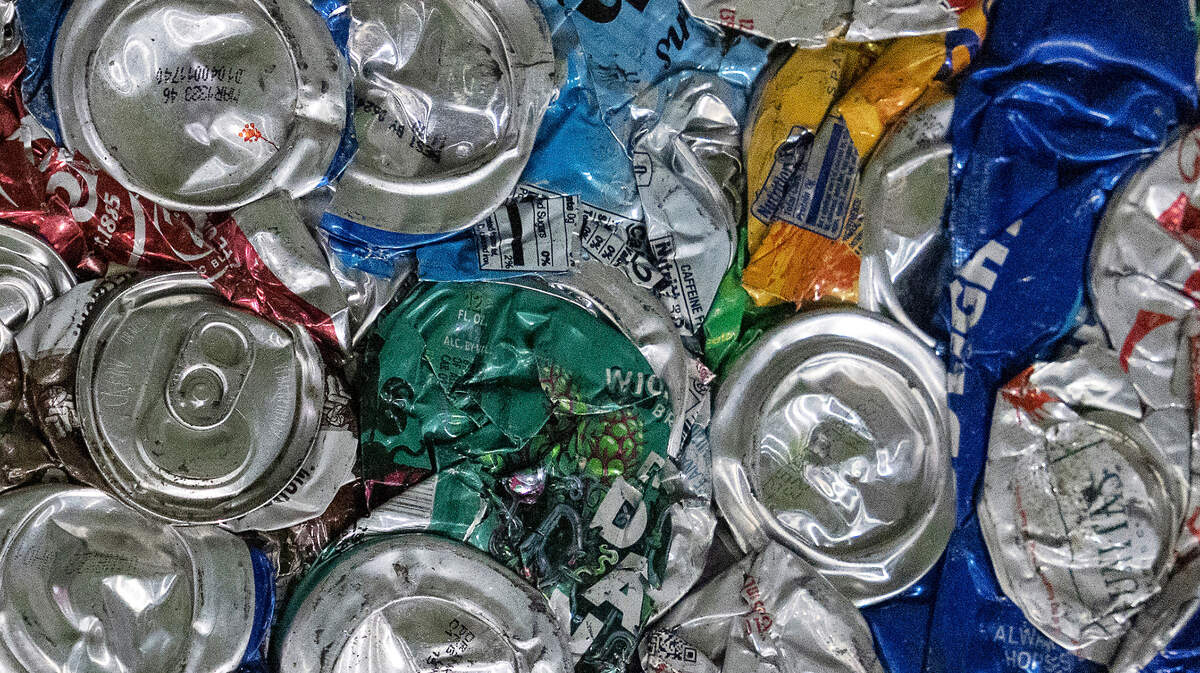
Earth Day has come and gone, but there’s still plenty of time to brush up on your environmentally friendly habits.
According to a 2018 Forbes survey, nearly 95% of Americans support recycling, but just about a third of them actually recycle in their day-to-day lives. Common disconnects include a lack of convenient access to recycling programs or an inability to accurately determine what is recyclable in their communities.
With those challenges in mind, here is what you need to know about recycling in Centre County.
How is recycling organized in Centre County?
Centre County recycling is ultimately the responsibility of the aptly named Centre County Recycling and Refuse Authority. Founded in 1972, the organization is responsible for operating more than 60 drop-off recycling locations throughout all Centre County municipalities in addition to offering curbside recycling in Bellefonte and State College, plus Patton, Ferguson, College, Harris and Benner townships, as well as parts of Spring, Walker and Halfmoon townships. The agency recently announced plans to expand curbside recycling to parts of Howard Borough and Howard, Marion and Walker townships.
The CCRRA’s curbside recycling program serves roughly 28,000 of Centre County’s estimated 55,000 households, according to Joanne Shafer, the agency’s deputy executive director and recycling coordinator. Its influence expanded greatly in the late 1980s following the passage of Pennsylvania’s Act 101, which added legal requirements for recycling in municipalities with populations exceeding 10,000 people.
Recycling participation in Centre County remains high these days, Shafer says. More than 90% of residents who are able to use curbside recycling participate at least once a month.
Shafer hesitated to discuss the CCRRA’s recycling rate, or the proportion of recyclable items that wind up getting recycled into new products. That measurement, she says, can often be misleading.
“At one time, I would’ve said that Centre County’s recycling rate is slightly in excess of 50%. It’s lower than that now, but I don’t believe that figuring out a recycling rate is the true measure of how people are participating,” Shafer said. “In 2000, for example, a ton of 10-ounce water bottles contained roughly 39,000 bottles. But by 2016, that same ton contained about 67,000 bottles. We’ve figured out how to lighten the weight of containers so a consumer is buying more product, so discussing recycling by weight just doesn’t make sense.”
What happens to recyclable items in Centre County?
When CCRRA crews swing by your house each week to unload your recycling bin, workers sort your recyclable items into eight different compartments curbside, Shafer says. That’s a key difference from single-stream recycling systems that mix all recyclable items together at once.
Recyclable items are taken to the CCRRA’s material recovery facility along Transfer Road in Bellefonte, where they are sorted and stored until they are ready for baling and shipment. The agency maintains a lineup of buyers who recycle collected materials and ensure they do not wind up in a landfill.
When collected materials are ready to be recycled, they often don’t travel far. Shafer says the CCRRA prioritizes using Pennsylvania-based markets when possible and does not export materials outside of the country outside of an occasional load of paper products that get shipped up to Canada.
“We’re not putting loads on trains and shipping them to California or loading up a barge heading for China,” Shafer said. “Domestic markets need to be developed, and we look for the highest and best use of our materials.”
Curbside recycling often yields a cleaner product, Shafer says, which helps the CCRRA find more markets for its recyclable items. Loads arrive at the agency’s facility already sorted and largely free of contamination, marking one of the many advantages of curbside recycling over single-stream processes.
“We can’t make a clear glass bottle out of a green glass bottle,” Shafer said. “While operating curbside, we’re sorting different colors and materials so you don’t have your Rolling Rock mixed in with your Arizona iced tea, for instance. It’s very clean, and that’s what’s necessary to provide the stock for whichever recycling operation is using the materials we are collecting.”
The CCRRA conducted a year-long study in 2016 to examine the potential benefits that converting to single-stream recycling could provide. That report, available online, concluded the alternative system was ultimately not viable for Centre County.
Single-stream recycling is most commonly seen in areas that serve larger populations. The process also helps boost participation rates, but Centre County’s metrics are already sufficient, Shafer said.
Additionally, the survey concluded switching to single-stream recycling would not save the CCRRA money unless it switched to every-other-week pickups, leaving the weekly collections behind. The report also suggested “over time, it is likely that residue rates from a single-stream system would creep upward,” ultimately increasing contamination within collected items.
“The capital expense of changing to a single-stream system provided no advantage to be gained,” Shafer said.
How to properly recycle in Centre County
When it comes to recycling through the CCRRA, Shafer offers a simple mantra: “Bottles, jugs, jars, cans and paper.”
Generally, those are the kinds of items that are collected through the agency’s curbside recycling program. Here’s a quick breakdown for each category:
- Paper can include mixed paper, paperboard, magazines and newspapers, as well as corrugated cardboard if boxes are broken down and placed beside your bin. All other paper products should be bagged together and placed inside your bin.
- Plastic and glass can include bottles, jugs and jars. Make sure to rinse out your containers, and don’t worry about removing the lids and labels.
- Steel and aluminum products are accepted if they’re cans or foil. Be sure to rinse them out and remove any food residue before placing them inside your bin.
Notably, the CCRRA’s curbside program does not recycle batteries, Styrofoam, used paper plates and cups, glassware and ceramics or miscellaneous plastics. Residents are advised to avoid placing these items in their bins.
The CCRRA accepts additional items through its drop-off locations. There, you might be able to recycle miscellaneous plastics like yogurt containers or margarine tubs, for example. A list of frequently asked questions, available online at centrecountyrecycles.org/faq, offers detailed answers to recycling processes for some of the more uncommon recyclable items, including old smoke detectors, electronics and automobile waste.
Above all else, perhaps the most important thing to remember when recycling in Centre County is the symbols on your items’ packaging carry little meaning.
“That recycling symbol means absolutely nothing. There is no control over it outside of California,” Shafer said. “A company can slap that symbol on anything. It can mean that a product has recycled content in it, that a product is recyclable itself or absolutely nothing. To me, that is the biggest challenge we face.”
If you aren’t sure what you can recycle, the CCRRA is happy to answer your questions, Shafer says. You can contact the agency by phone at 814-238-7005 and by email at ccrra@centrecountyrecycles.org.
%202.JPG)