Centre County passes ‘landmark’ Responsible Contractor Ordinance despite controversy
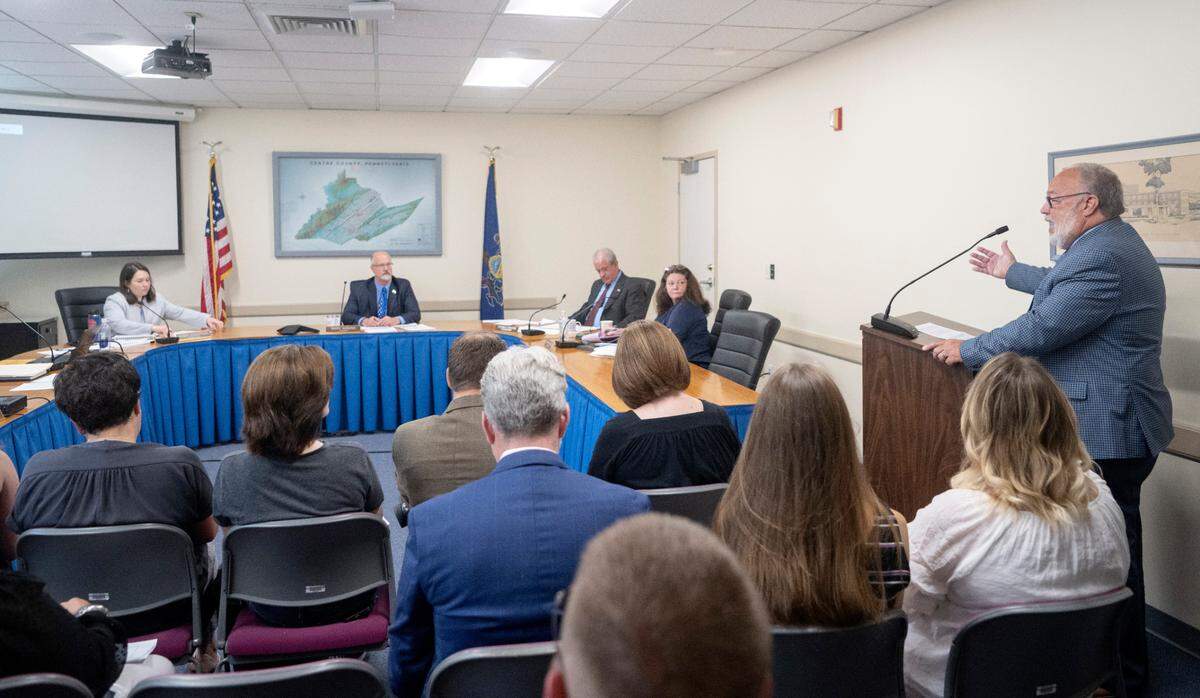
After months of discussions and work sessions, the Centre County board of commissioners adopted its Responsible Contractor Ordinance Tuesday in front of more than 50 people who gathered for the public hearing.
Over the course of two hours during Tuesday’s highly anticipated meeting, the commissioners heard from 30 people who passionately spoke both in support of and opposed to the proposed ordinance.
After the hearing, the board voted 2-1 to adopt the ordinance; Democrat Commissioners Mark Higgins and Amber Concepcion voted in favor of it and Republican Commissioner Steve Dershem voted against it.
The Responsible Contractor Ordinance, or RCO, applies only to public construction contracts with the Centre County Government over $250,000 and will require the county public works contracts to be performed by “qualified responsible contractors and subcontractors” that meet criteria like satisfactory records of past performances and adequate present performance capabilities. That includes “contractor and subcontractor competency and availability of skilled craft personnel.”
The ordinance will require the county to use contractors with at least 70% of the craft labor workforce employed on such projects be either journeyperson — workers who have completed an apprenticeship training program registered with/approved by the federal Department of Labor or state apprenticeship agency — or registered apprentices enrolled in such programs.
Among other requirements, such as having the necessary experience, equipment, skills and such to complete the project, the ordinance would require the firm to pay all craft employees on the project prevailing wage, at minimum. The wage requirement would also apply to employees doing custom fabrication work for the project.
The ordinance will go into effect July 27.

Commissioners sound off
After hearing from those in attendance, Higgins said the RCO will protect taxpayer dollars and strengthen Centre County communities.
“Current state legislation forces local governments to always take the low bid for large construction projects, as the legislature has not defined what ‘responsible bidder’ means,” Higgins said. “Our RCO will allow the commissioners to weed out unscrupulous bidders who lowball bids and then create multiple change orders to improve their profit to the unfair advantage of the honest contractors.”
The RCO also requires Occupational Safety and Health Administration and certified skill training, which will improve worker safety, he said.
“In Centre County, we have an issue with construction worker deaths,” Higgins said, pointing to five construction workers who have died on the job in Centre County in the past five years.
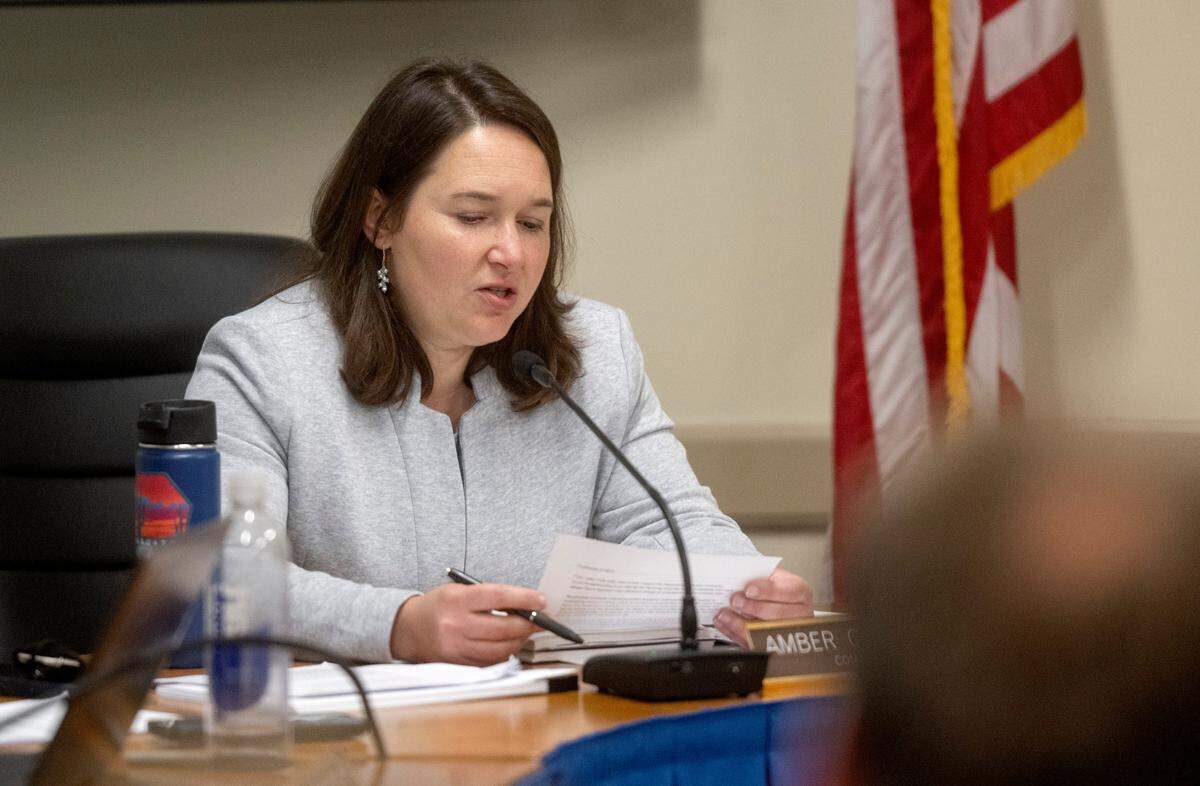
As county commissioners, the board has a responsibility to do what they can to ensure taxpayers are getting what they pay for, and that their workplaces are safe, Concepcion said.
RCOs are not new, she said, and the effects of such ordinances are well studied. She cited two peer reviewed studies done on RCOs over the course of many years in Ohio and Massachusetts. Those showed similar RCOs did not increase project costs; another study in Indiana showed RCOs have a positive impact on the community through things like increasing productivity and infrastructure safety, she said.
A common concern of those opposed to the ordinance is that because it requires the project workforce to be 70% journeypersons or registered apprentices, it will unfairly impact local contractors who do not meet that threshold. Concepcion disputed that.
“First, the county legally cannot choose to select a local contractor over a lower bid from a non-local contractor on projects of a size that must be bid. Second, in even relatively locally owned construction firms, they are often bringing in workers from well outside the area to meet the construction demand we have in our local region. There are simply far more projects ongoing in our area than there are workers who live nearby,” Concepcion said. “However, there are in fact hundreds of skilled trades or craft labor workers in our region who are currently in an apprenticeship program or who have graduated from such a program.”
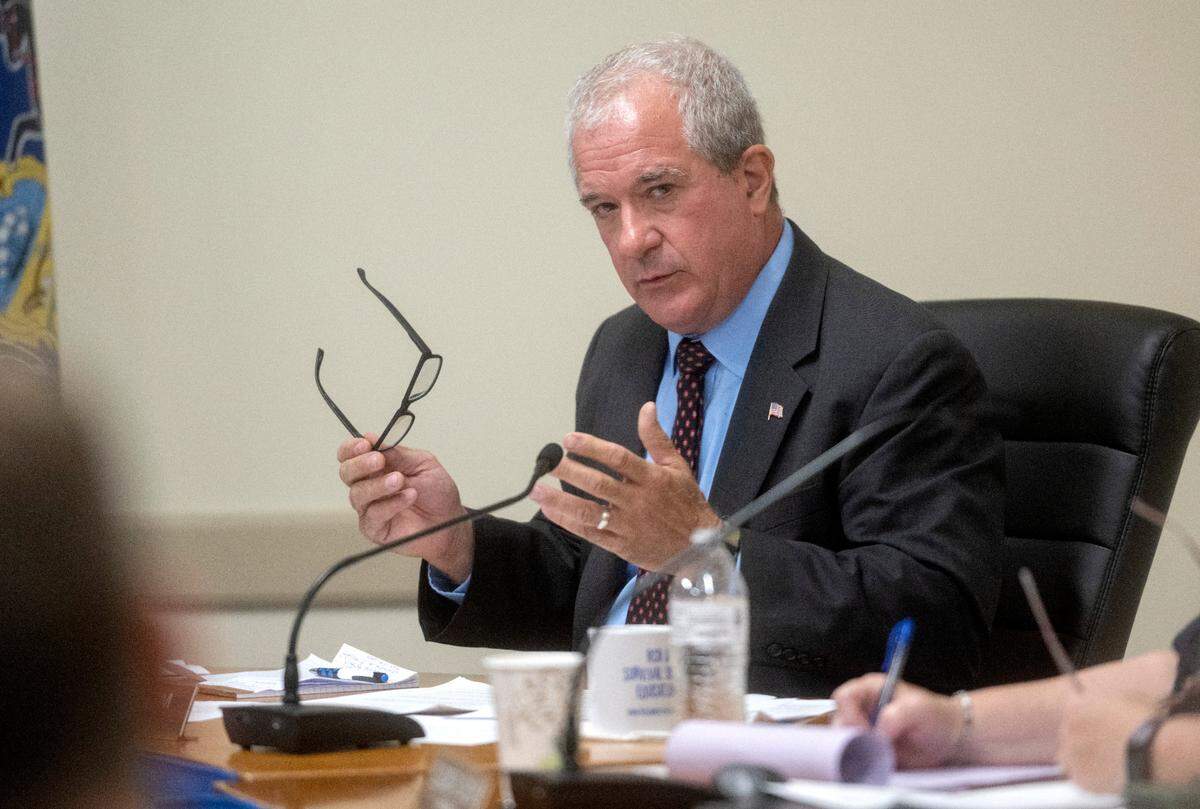
Dershem has long been an outspoken critic of the ordinance. The RCO — which he called the restrictive contractor ordinance — would shut out many local contractors from being able to bid on county projects, he said.
“There’s a lot of nebulous pieces of this puzzle that continue to generate more and more questions, and we could sit and talk about what they are. I think the die is cast about how this vote is going to go. But it really doesn’t answer the biggest issue that I have, which is fairness,” Dershem said.
Dershem echoed some who spoke in opposition who said the ordinance was rushed through and said it was flawed; he suggested they go back and look at things they can do to ensure worker safety.
“There’s very little doubt in my mind that this is going to show a lot of flaws in the future,” he said. “...I really think this was rushed through. I think every time somebody had a thought, they changed it, they twisted it and made it to what it is today, which is actually a far cry from what the original conversation was along the way. And I just think this is a mistake, and we really need to rethink this.”
What did residents say?
The meeting room was packed with residents, laborers and local contractors, as well as politicians, elected officials and candidates, with at least one overflow room set up with a livestream of the meeting.
Of those who spoke, just more than half were in favor of the RCO.
Connor Lewis, president of the Seven Mountains Central Labor Council, AFL-CIO, said Centre County’s RCO is a “landmark ordinance” that will benefit the community in many ways, including ensuring public projects will be completed on budget, on time, with the highest quality, and while ensuring worker safety.
Mary Bellman, director of labor education at Penn State, also spoke in support.
“Trained workers are actually the best safety standard. You can do lots of other things but having workers who know how to do their job and know what’s a safe thing to do and a safe thing not to do — so beyond the OSHA training — that is the best protection for our workforce. And I believe that having the percentage of craft labor and apprenticeship programs is the best way to do that,” Bellman said.
But Greg Scott, president and CEO of Chamber of Business & Industry of Centre County, said some of the RCO’s requirements will impose unnecessary restrictions on local contractors. He asked the board to reconsider the ordinance.
“While the chamber supports the county’s aim to ensure accountability, this ordinance imposes excessive restrictions that will negatively impact our local contractors and ancillary businesses. The Chamber believes in fostering a competitive and inclusive business environment that benefits our entire community,” Scott said.
Brandy Reiter spoke on behalf of state Sen. Cris Dush, R-Pine Creek Township, who was in Harrisburg. She said while Dush isn’t against ensuring responsible contractors are being used for public contracts, he didn’t feel the county’s proposal did that.
“Senator Dush does not feel like the current responsible contractor ordinance proposed by Centre County only ensures that responsible contractors are being used. It is the senator’s opinion that this ordinance will also either force contractors to use union labor or ensure that these projects are only awarded to union contractors,” Reiter said, echoing a frequent criticism that the ordinance favors unions, though mention of unions is not included in the ordinance.
Others who were opposed questioned why an apprenticeship is the standard rather than years of experience, and others brought up concerns that the ordinance lacks clarity in several areas.
This story was originally published June 27, 2023 at 6:40 PM.