Centre County plants sapling from a Liberty Tree ahead of America’s 250th birthday
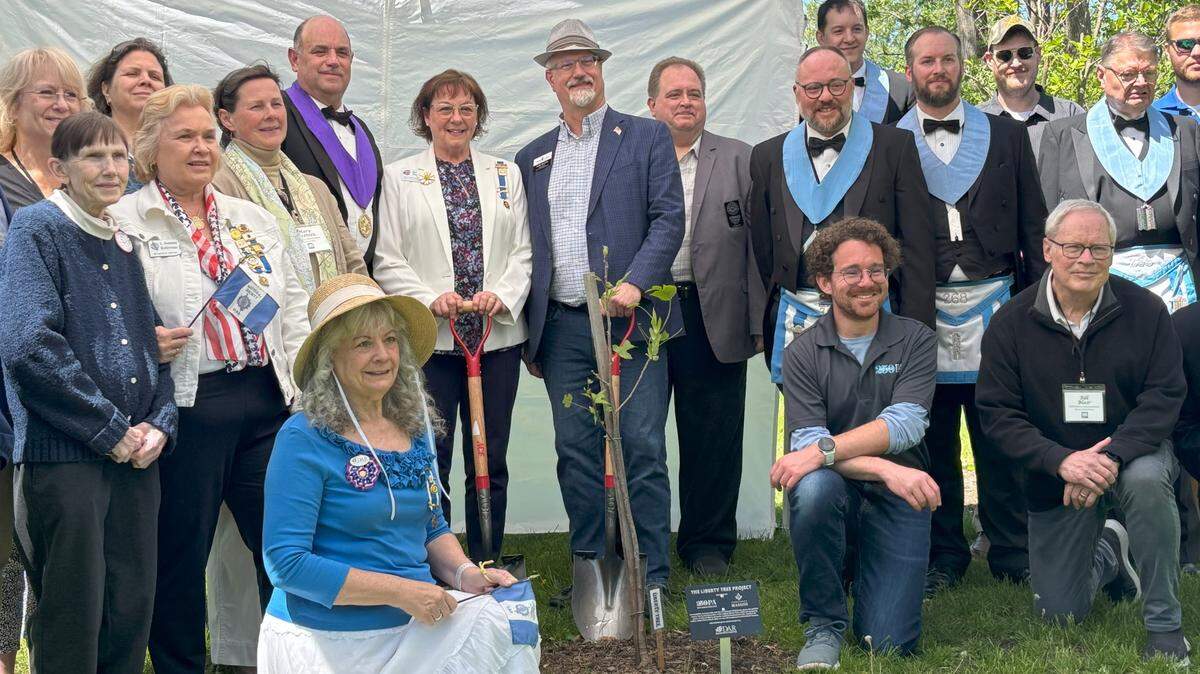
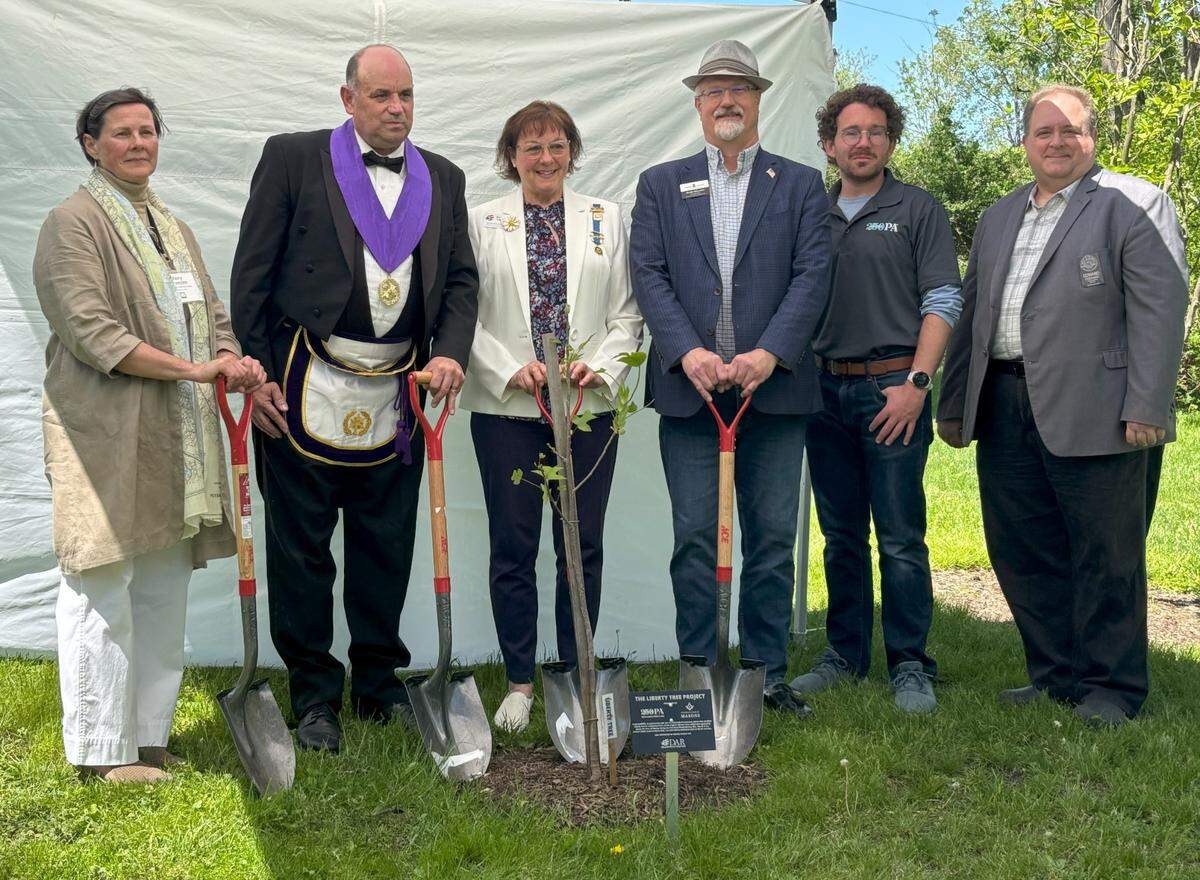
As part of a statewide project ahead of America’s 250th birthday next year, a sapling descended from a historic “Liberty Tree” — a meeting place for American revolutionaries — was planted Saturday on the grounds of Centre Furnace Mansion during a formal ceremony.
The tulip poplar will eventually grow to more than 70 feet tall, with leaves that turn a vibrant golden-yellow in the fall. But, for now, organizers hope guests visit the waist-high sapling in the State College area for the history it represents and the principles it embodies.
“The planting of the Liberty Tree is not just a celebration,” Centre County Historical Society executive director Mary Sorensen said, reading a statement from the Bellefonte chapter of the Daughters of the American Revolution. “It is a profound reminder of our nation’s revolutionary beginnings from 250 years ago ... and serves as a testament to the enduring legacy of those who fought for our freedoms.”
Before the United States was united, back in the 1760s when the country was still an English colony, American patriots like the Sons of Liberty met beneath a large elm along a main road in Boston. It was there, at this “Liberty Tree,” the first major act of defiance against the British government took hold, when colonists opposed the Stamp Act by hanging an effigy of the appointed Stamp Act collector.
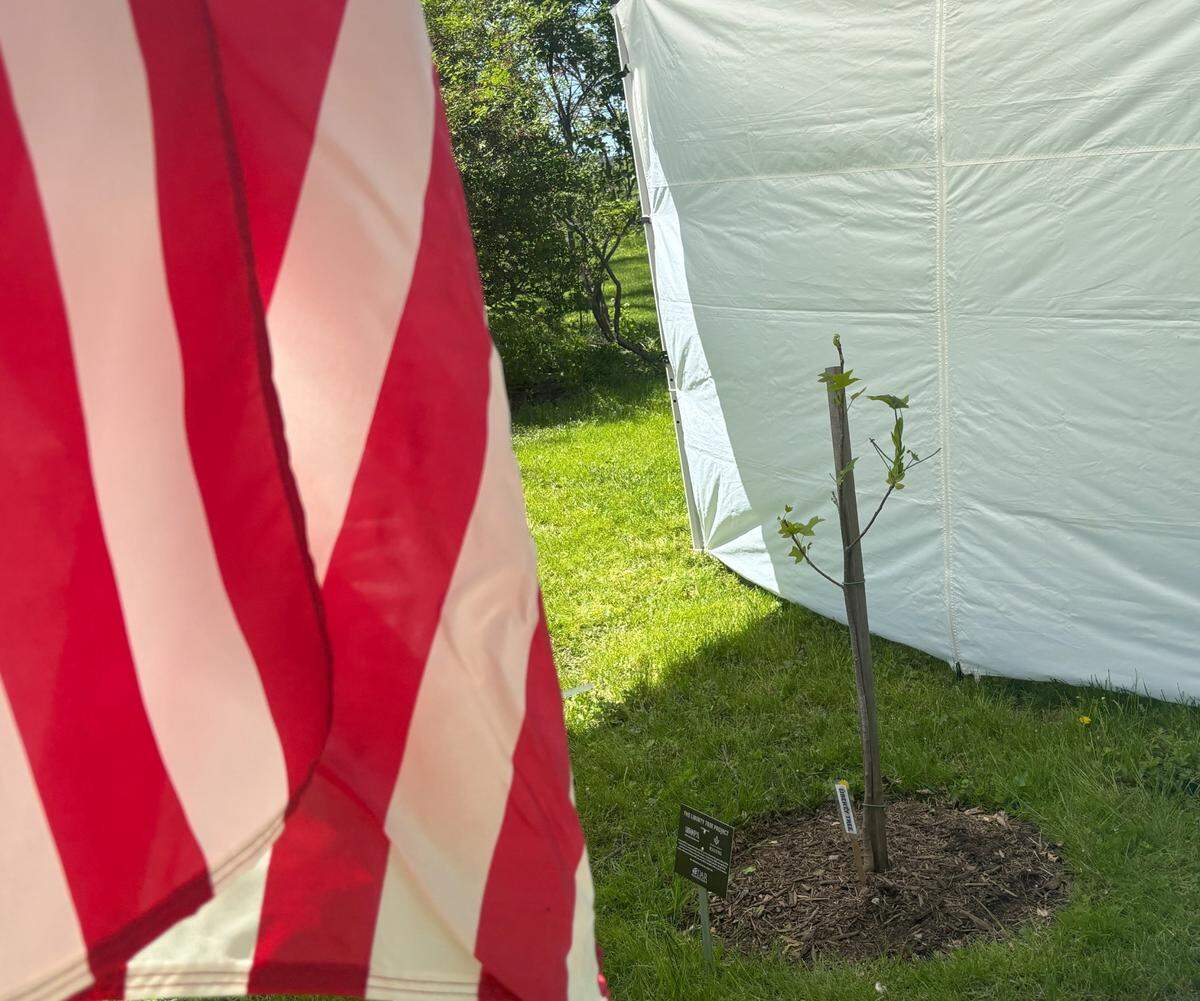
The idea of a Liberty Tree, where the common man could meet to rally or discuss resistance, quickly spread to other areas — such as Annapolis, Maryland; Newport, Rhode Island; and Charleston, South Carolina. They became a symbol of the American Revolution, with Boston’s iconic tree appearing in famous engravings from Paul Revere.
One historian, John Higham, even later said the Liberty Tree should replace Uncle Sam as “a compelling symbol of American identity.” And local speakers on Saturday afternoon alluded to that importance in front of about three dozen attendees.
“What better way to honor the Revolutionary principles upon which our nation was established than by planting these living, tangible connections to our country’s roots?” asked John Segursky, a local leader with the Pennsylvania Freemasons.
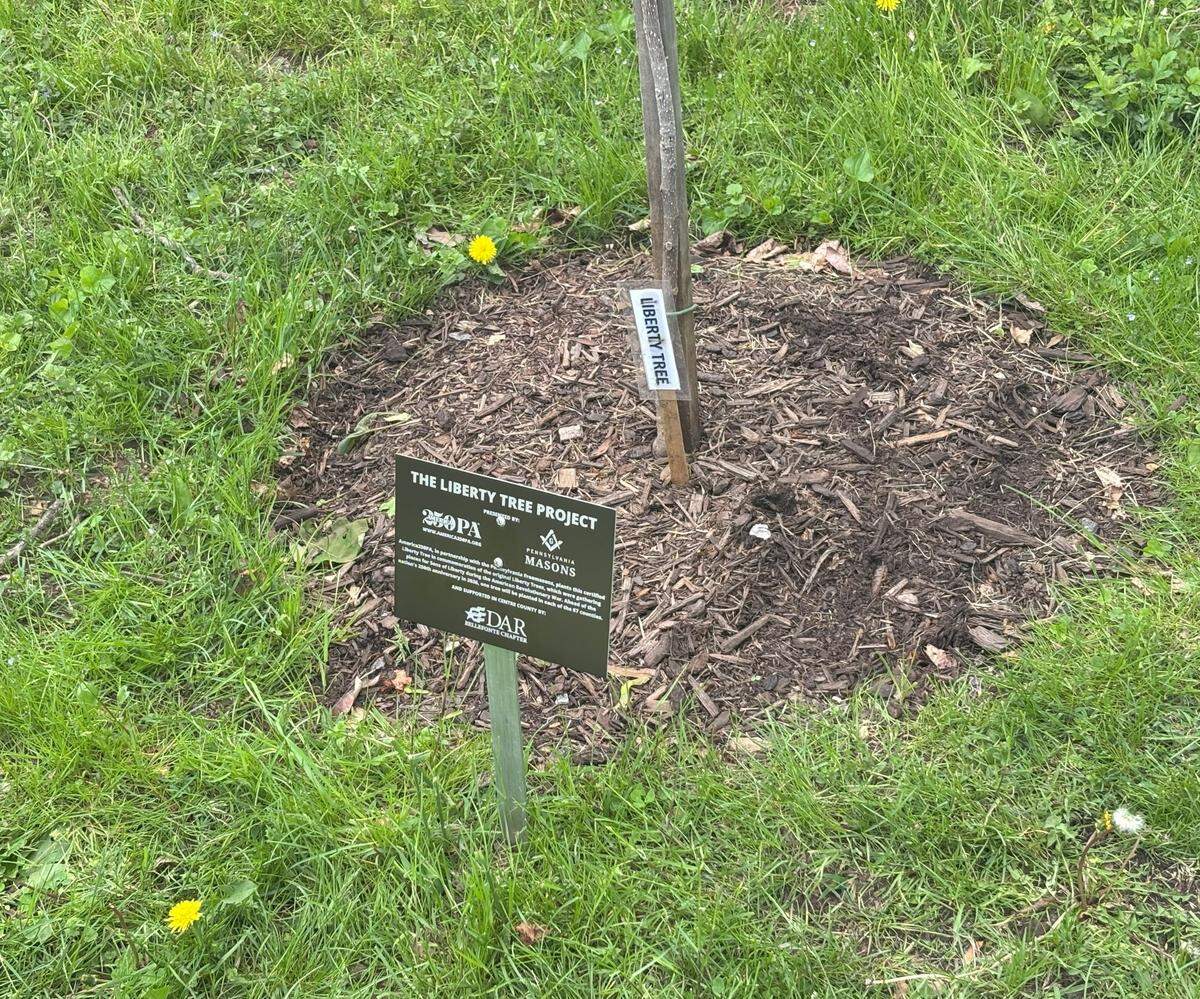
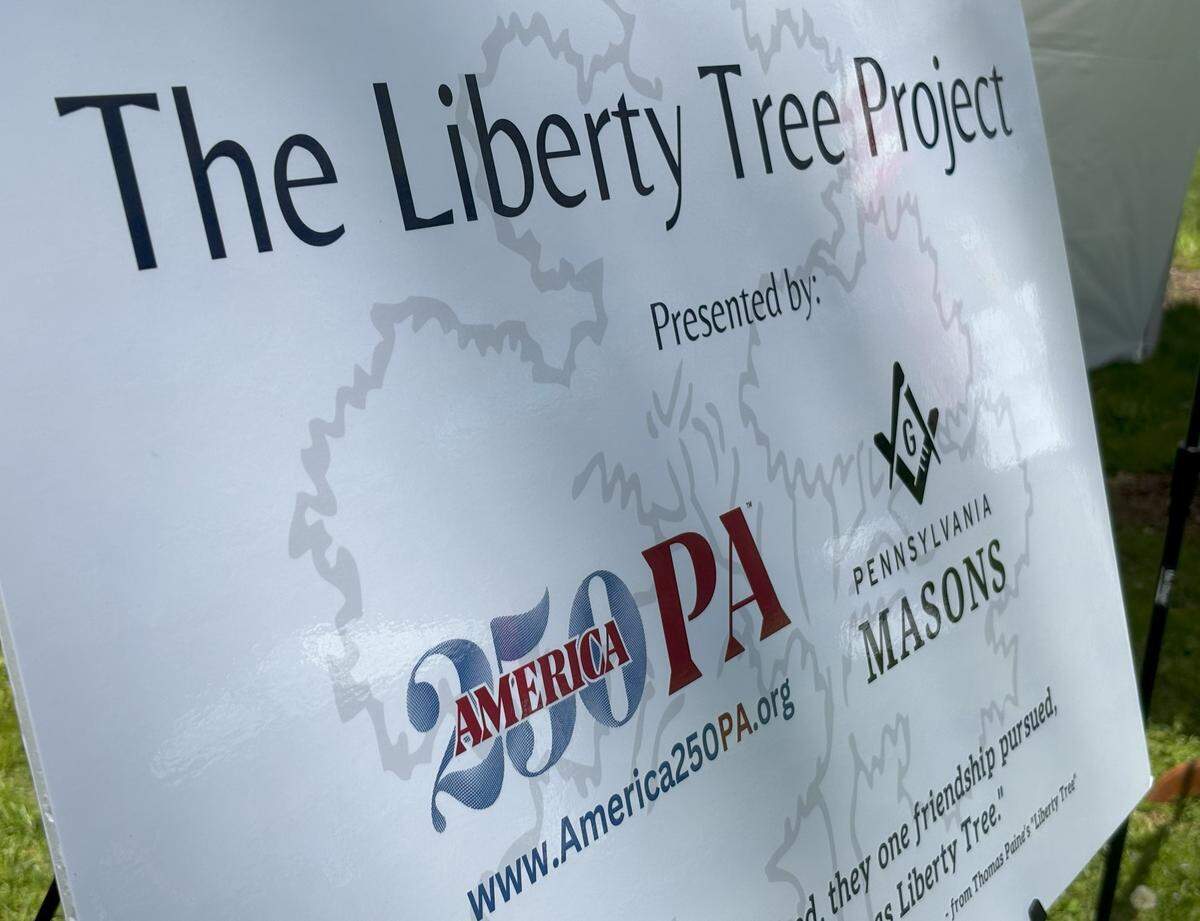
To celebrate America’s upcoming 250th birthday, two main organizations — the Pennsylvania Freemasons and America250PA, the commonwealth’s official commission for America’s 250th birthday — partnered to plant a Liberty Tree of sorts in each of Pennsylvania’s 67 counties. Some neighboring counties have already held similar ceremonies: Blair County’s Liberty Tree was planted at Altoona’s Fort Roberdeau, and Clinton County’s is located at Montoursville’s Northcentral Pennsylvania Conservancy.
Origins of Centre County’s tree
Boston’s famed Liberty Tree was destroyed by British forces in 1775 and turned into firewood. Charleston’s was burned and destroyed five years later. Both were targeted because of their symbolic importance.
But one of the original Liberty Trees in Annapolis, Maryland — also used in 1765 — was spared because the British never occupied the city. That 124-foot-long tulip poplar, planted around the same year (1599) William Shakespeare’s Globe Theatre opened, was the last surviving colonial Liberty Tree until 1999, when it suffered irreparable damage from Hurricane Floyd.
Centre County’s sapling can trace its literal roots to that specific Liberty Tree.
That tree in Annapolis grew on what is today the campus of St. John’s College. Even a century ago, college officials there recognized the tree’s importance. They created a clone of the tree in 1889 by planting a scion, or branch, grafted onto a young root system — and America250PA organizers believed Centre County’s sapling was taken from that 1889 clone, which still stands on campus and shares identical DNA with the original.
Annapolis’ Liberty Tree does not boast the acclaim of Boston’s, but it still shares a rich history. Two signers of the Declaration of Independence, Samuel Chase and William Paca, both held meetings beneath the tree. Marquis de Lafayette, a French military officer who volunteered for George Washington’s Continental Army, spoke there in 1824. And U.S. President Calvin Coolidge delivered remarks there in 1928.
Centre County’s Liberty Tree sapling is appropriately placed just outside the shadow of the property’s “Constitution Tree,” a large Sycamore certified to have lived there at the time of the signing of the Constitution. It’s also about a football field away from the historical marker commemorating the birthplace of Penn State, within walking distance of the intersection at Porter Road and East College Avenue.
“I couldn’t think of any better grounds within the county that is a central, pivotal location to recognize our ties to the history of the United States,” said Edward Stoddard, the county adviser to America250PA and the communications director for Happy Valley Adventure Bureau. “This is the right spot.”
Looking ahead
More is planned locally — and statewide — for America’s 250th birthday, or semiquincentennial. And more plans will be revealed as that birthday creeps closer.
One signature statewide project that has already been revealed, besides the planting of Liberty Trees, involves replicas of the Liberty Bell. According to organizers at America250PA, the goal is to place a fiberglass Liberty Bell replica that’s painted by local artists in each of the state’s 67 counties. Some counties will have more than one; Centre County is expected to have several.
Each bell will be 3 feet-by-3 feet, and the initiative is called “Bells Across PA.” Artists will be paid a $1,250 honorarium, and all bells are required to be in place by the end of this year.
Based on information shared by Happy Valley Adventure Bureau, more than 20 county stakeholders — from the American Philatelic Society to the Philipsburg Heritage Society — are also partnering to collaborate on a theme of “Then & Now” to celebrate America’s 250th. The aim is to show how Centre County has contributed to the nation’s growth from 1776 until today.
That means tours, exhibitions and workshops, in addition to other key focus areas that include community engagement and tourism development.
For more information on how Pennsylvania plans to celebrate the semiquincentennial, go to America250PA.org or Facebook.com/America250PA.