Will your taxes rise this year? Check out municipal budgets across the Centre Region
AI-generated summary reviewed by our newsroom.
- Four Centre Region municipalities raised real estate taxes for 2026.
- Centre County’ Commissioners did not raise real estate taxes for a 16th straight year.
- State College Borough had largest increase, raising millage two mills to 24.88 mills.
Municipalities across the commonwealth have been approving their final budgets for 2026 this past month, and some municipalities in the Centre Region will see a tax increase.
The Centre Region spans seven municipalities — Bellefonte and State College boroughs, and College, Ferguson, Halfmoon, Harris and Patton townships. And residents in four of those municipalities will see raised taxes in 2026.
Budgets for Bellefonte and State College boroughs, and Harris and Patton townships all include tax increases, with the largest increase coming from State College Borough. State College’s budget includes a two-mill real estate tax increase, bringing the borough’s total millage rate to 24.88 mills. (A two-mill increase amounts to paying an extra $102.56 annually on a $300,000 home.)
The Centre County Government passed its 2026 budget in December with no tax increase. Included below is a snapshot of the Centre Region municipalities’ budgets, as well as the Centre County government’s budget.
Centre County
The Centre County Commissioners adopted the county’s 2026 budget with no increase in real estate taxes — something that’s been done for 16 straight years now. The county’s total budget for 2026 remains unchanged from its tentative budget, and sits at nearly $120 million, with a $116.9 million operating budget and a $3.1 million capital budget.
The overall budget shows an 11% decrease in expenditures, due to the dwindling down of their American Rescue Act funds, and the completion of the county’s new Community Services Building.
- Operating Budget: Expenditures and revenues are even at $116.9 million, with a $3.1 million capital budget. Total operating and capital expenditures amount to nearly $120 million.
- Real Estate Tax Rate: 7.84 mills, no increase.
- Highlights: The biggest expenditure in the budget is personnel costs, at about $48 million, or 41.2% of the budget. The other two largest are service expenditures at 30.7% and operating expenditures at 13.2%. The three largest sources of revenue for the county are grants, gifts and payments in lieu of taxes at 42.4%, real estate taxes at 27.2% and charges for services at 20.4%.
Bellefonte Borough
Bellefonte residents can expect a small tax increase this year, with the borough’s budget showing a 0.1-mill increase to help its EMS fund. The increase brings the borough’s total millage to 19.435 mills, from 19.335 mills, and will help cover rising operational costs, upgrade vehicles and equipment, and better compensate EMS staff.
According to interim manager Dave Pribulka in the budget’s opening memorandum, balancing this year’s budget proved to be a challenge for several reasons, with the most prominent being rising costs.
“It hardly needs to be mentioned that this is no easy task,” Pribulka wrote. “Inflationary pressures have increased the borough’s cost of doing business, and made it difficult for revenue growth without overly burdening residents who face increasing expenses to maintain their quality of life and operate their businesses.”
Some of the rising costs Pribulka mentioned include a more-than-doubling of the borough’s electricity supply costs due to the expiration of a multiyear contract for electricity supply, and a 14.4% rise in healthcare costs — which represents the second straight year with a double-digit percentage rise in that area.
- Expenditures: $16 million
- Revenue: $16 million
- Real Estate Tax Rate: 19.435 mills, a 0.1-mill increase
- Highlights: Projects like the Big Spring cover replacement, the Talleyrand Park stage, Kepler Pool rehabilitation and ADA access to the Talleyrand Train Station are all anticipated to finish, or be near-finished by the end of 2026.
College Township
Despite inflation pushing costs up, College Township adopted its 2026 budget without a tax increase for the fourth straight year, making it one of three Centre Region townships to achieve that feat this year.
The township’s last tax hikes came in 2020 and 2021, at 0.4 and 0.3 mills, respectively.
- Expenditures: $16.78 million
- Revenue: $16.4 million
- Real Estate Tax Rate: 6.10 mills, no increase
- Highlights: The township’s three major expenditures this year will come from capital projects, payroll and benefits, and “all other spending,” which includes information technology, utilities, insurance, etc. The three account for $5.86 million, $3.8 million and $2.942 million in costs, respectively.
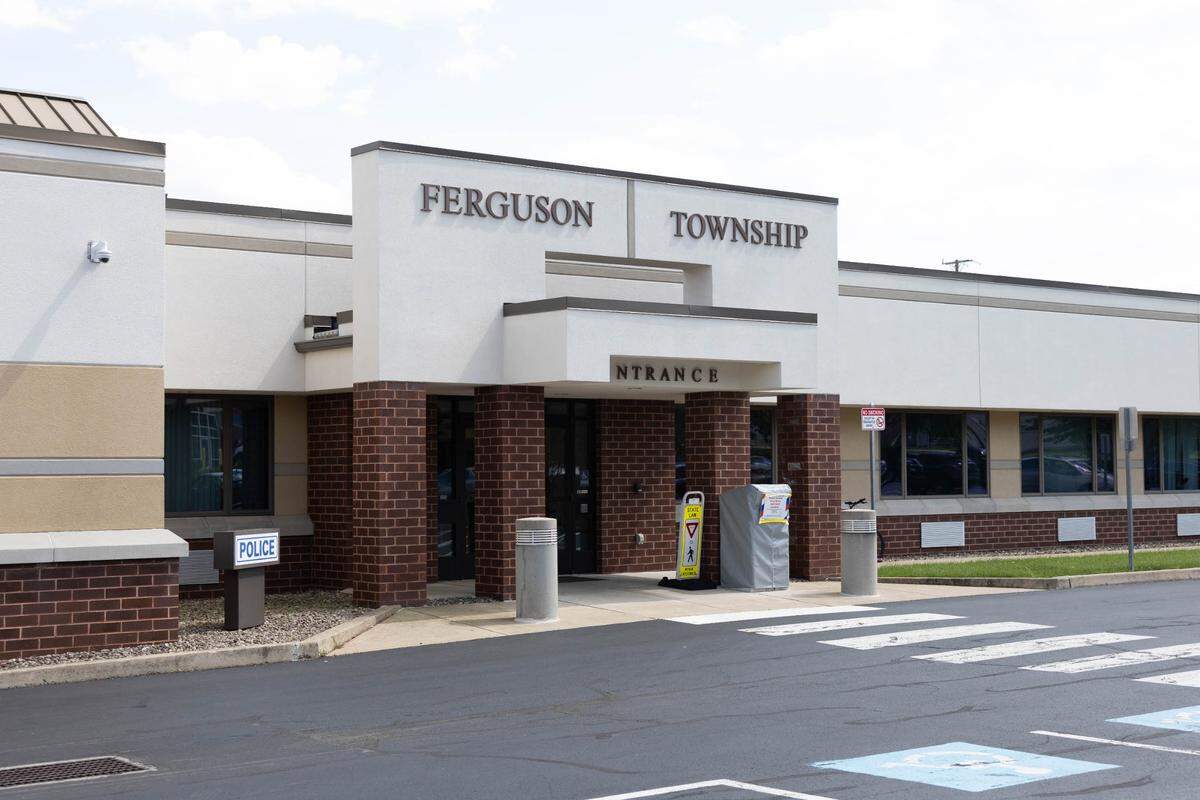
Ferguson Township
Ferguson Township’s 2026 budget does not include a real estate tax increase, despite the board of supervisors initially considering a one-mill tax raise, or 31.5% increase, which would’ve supported an increased contribution to the Centre Region Council of Government’s regional fire protection program.
The proposed tax increase would’ve been the township’s second year in a row raising taxes, as last year a 0.75-mill real estate tax bump and a 0.125% property transfer tax bump were approved.
The board ended up shooting down the proposed 2026 increase by a 3-2 vote following significant resident pushback, and instead went with supervisor Matthew Heller’s idea on to make up the budget’s deficit— by pulling from the township’s $11 million in reserve funds, working to slim the township’s 2027 budget throughout the year and, ultimately, considering a tax increase the next year, if necessary.
“I believe that tax is a last resort when all other options have been investigated, tried ... (and) we haven’t done that yet. We’re not there,” Heller said earlier this month.
2026 marks the sixth straight year that the township has adopted a structurally unbalanced budget, with expenditures exceeding revenues by $3.6 million.
- Expenditures: $19.2 million
- Revenue: $15.6 million
- Real Estate Tax Rate: 3.172 mills, no increase
- Highlights: An ordinance was rescinded that would have required homeowners living within 780 feet of a hydrant to pay an annually assessed fee based on front footage to fund hydrant operations. The remaining surplus in the township’s hydrant fund will be used to cover future hydrant expenses until the fund balance has reached zero.
Halfmoon Township
For a fourth straight year, Halfmoon Township has approved a budget with no tax increase — although, if it were up to outgoing board Chair Dave Piper, the residents of the township would be seeing a tax decrease.
The budget was approved on Dec. 18. But, before the 2026 tax rate was voted on, Piper made a motion to lower the real estate tax rate by two mills and allow for the township’s reserves to make up the difference. However, that motion was shot down by a vote of 3-2.
- Expenditures: $1.22 million
- Revenue: $1.22 million
- Real Estate Tax Rate: 7.37 mills, no increase
- Highlights: $918,000, or roughly 75% of Halfmoon Township’s $1.22 million in revenue, comes from only two separate taxes — $360,105, or roughly 29% from real estate taxes, and $558,395, or 46%, from income taxes.
Harris Township
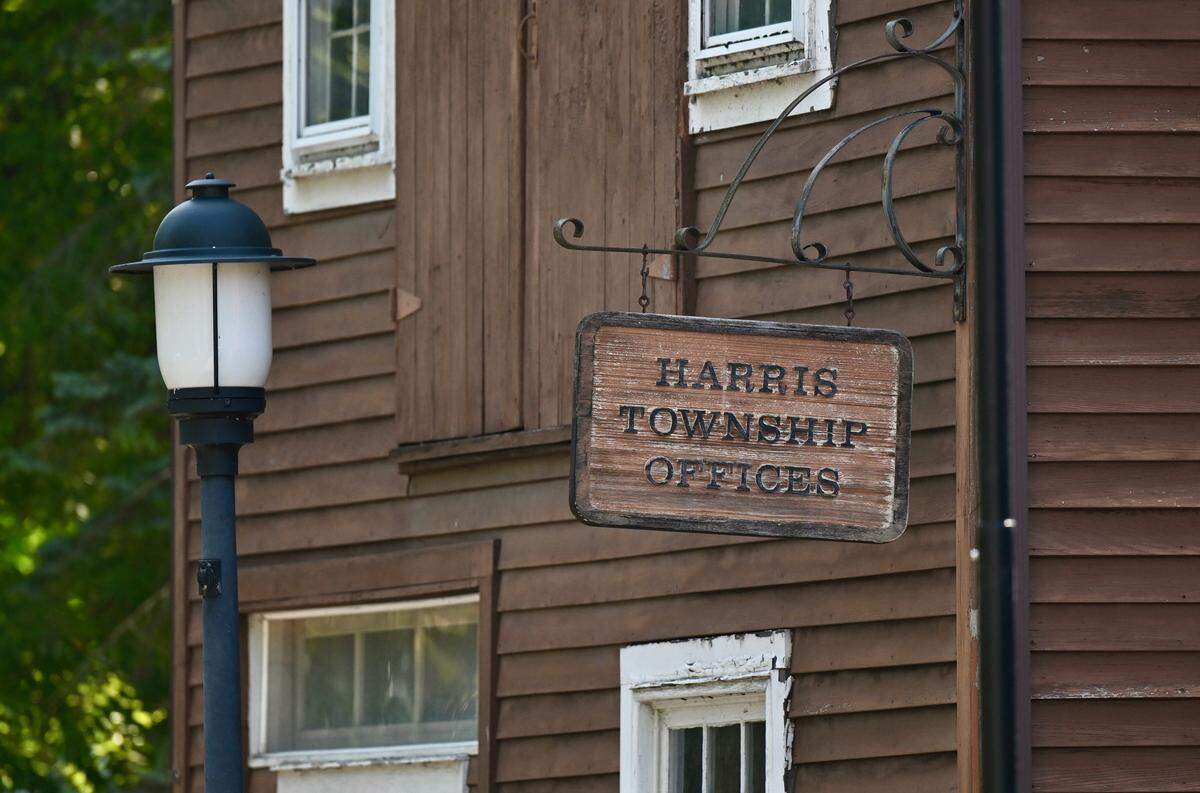
For the fourth straight year, Harris Township included a real estate tax increase in its budget — this time by 0.5 mills, which is still smaller compared to last year’s 1.5-mill increase.
Township manager Mark Boeckel wrote in the budget memorandum that the increase is due to a projected rise in 2026 expenditures, which would see them “slightly” exceed the township’s revenue.
He anticipates the increase to enhance the township financial stability, align revenues and expenditures, and preserve the policy-required fund balance. But getting the budget to the balanced point it’s at now took a full year’s worth of work and attentiveness.
“Staff have taken steps to limit expenditure growth in the 2026 budget,” Boeckel wrote. “Throughout 2025, costs for routinely purchased goods and services were carefully analyzed, and adjustments were implemented to reduce ongoing operating costs. The resulting savings were applied strategically to offset projected increases in other budget categories.”
- Expenditures: $5.17 million
- Revenues: $5.17 million
- Real Estate Tax Rate: 8.7 mills, a 0.5-mill increase
- Highlights: A total of $233,199 was set aside in Harris Township’s budget for a “special project fund,” which was created in 2018 for one-time improvements and projects. Some of the items listed in the township’s 2026 special projects list include annual tree plantings, Tussey Pond Park and Country Place Park improvements, Boalsburg Pike culvert repairs, and more.
Patton Township
The Patton Township supervisors approved their municipality’s 2026 budget with a 1.2-mill real estate tax increase, which marks the township’s fourth straight year with an increase.
The revenue from the increase will be spread across three separate funds — 0.2 mills for the general purpose fund, 0.4 for mills regional library contributions and 0.6 mills for regional fire protection program costs.
“As discussed with the board at numerous points during 2024 and 2025, the township needs to strategically enact real estate tax increases to account for rising operating costs due to inflation and other factors,” township manager Amy Farkas wrote in the budget’s introduction. “We are committed to using our tax money wisely and to re-evaluating projects and programs during the year to determine if items need to be deferred to future years.”
- Expenditures: $14.8 million
- Revenue: $15.6 million
- Real Estate Tax Rate: 12.1 mills, a 1.2-mill increase
- Highlights: In her introduction, Farkas outlined several projects that are planned for 2026, including the schematic design for the renovation and expansion of the township’s public works facility, the replacement of police and public works radios, the completion of design work for Grays Woods Park, various road improvements, and more.
State College Borough
The State College Borough Council approved a two-mill, or about 8.7%, tax increase for 2026, a major reduction compared to the previously proposed eight mills, or 35%.
The total budget includes expenditures of $72.2 million ($3.2 million less than the 2025 budget), with recurring revenues of $60.6 million ($3.8 million less than the 2025 budget). The borough will use $11.7 million from fund balances to make up the difference. The budget is structurally unbalanced for the sixth consecutive year.
To reduce the tax rate increase from eight mills to two, the borough will use money from the fund balance as well as $2.8 million from real estate transfer tax revenue it unexpectedly received in December. The borough will also defer $1.2 million in street reconstruction projects in the capital budget.
With the two-mill increase a typical $300,000 (market value) home will see an increase in 2026 of about $102.56 ($8.55/month); a $400,000 home will see a $136.75 increase ($11.40/month), and a $500,000 home will see a $170.94 increase ($14.25/month).
Those with homestead exclusions will see reduced increases. A $300,000 (market value) home will see an increase in 2026 of $52.56 ($4.38/month); a $400,000 home will see an $86.75 increase ($7.23/month) and a $500,000 home will see a $120.94 increase ($10.08/month).
The council also approved a 12.5% rate increase for its refuse program as part of the budget, as well as increases to the sewer rental and tapping fees.
- Expenditures: $72.2 million
- Revenue: $60.6 million
- Real Estate Tax Rate: 24.88 mills, a two-mill increase
- Highlights: The 2026 State College Borough budget shows continued work on projects like improvements along Calder Way and the construction of the Parkway multimodal path. However, many other capital project have been delayed “until 2027 or later” due to limited capital funding and insufficient unrestricted fund balance.