Grant program to repair barns in PA is growing. How it’s helping one in Centre County
A grant program focused on barn repairs and conservation projects in Pennsylvania is growing as it enters its fifth year.
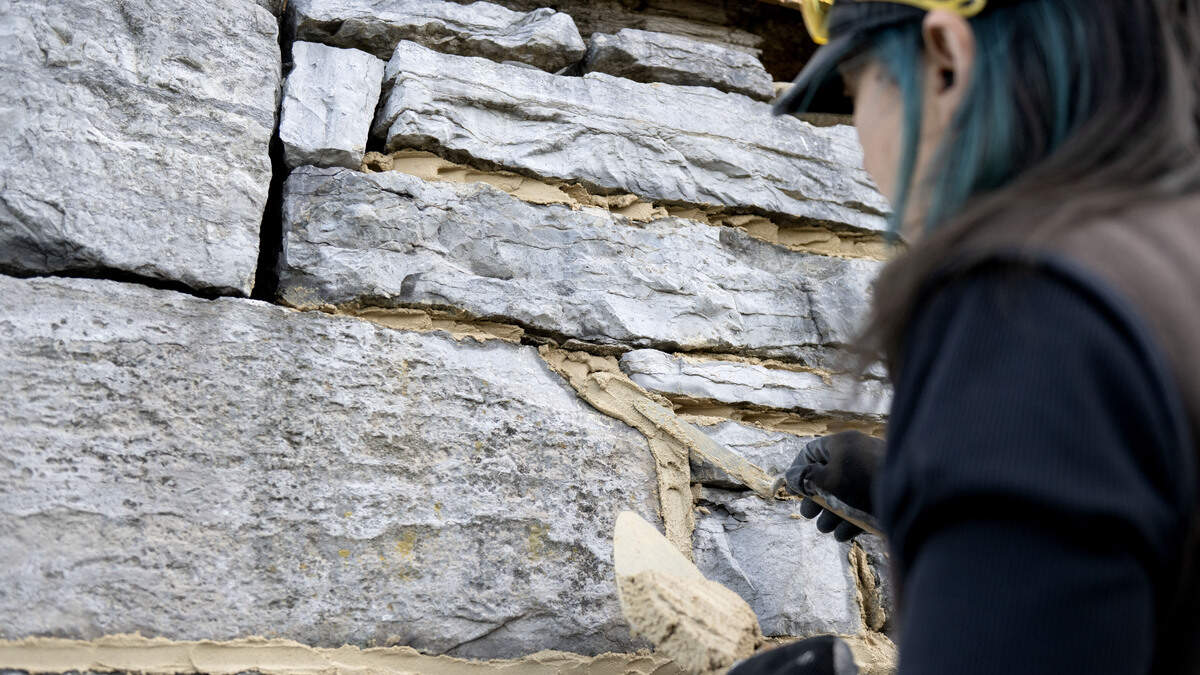
The Historic Barn and Farm Foundation of Pennsylvania’s Barn Grant Program has helped maintain and repair more than 20 old barns and other agricultural buildings throughout the state using materials and methods that preserve its historic character. The program provides a matching grant of up to $3,000 and this year was awarded to seven projects located in Erie, Centre, Huntingdon, Franklin, Lancaster, Berks and Lehigh counties. The projects include repointing stone foundation walls, restoration of partially collapsed barn framing, replacement of metal roofing and gutters and painting, a press release from the HBFF said.
Applicants are required to provide information about the proposed scope of work to show it compiled with the U.S. Secretary of Interior’s Standards for Treatment of Historic Properties, the HBFF site states.
“The USI Standards define a restoration approach in which historic materials, features, and finishes are retained, repaired, or replaced-in-kind to the fullest extent possible. Examples of compliance with this approach include use of a lime restoration mortar (as opposed to a standard Portland cement mortar mix) for repair of stone masonry, or replacing damaged and missing slate shingles with new material of the same material, shape, and size,” it states.
Chris Macneal, chair of the barn grant program, said for the 2027 grants the program is expanding and will offer matching grants up to $5,000 per project. The hope is the program will continue helping barn owners understand how to take historic preservation or conservation approaches to repairs. The grants are a significant contribution to a project that has not already started, Macneal said, and the payments are made in the form of reimbursements.
Pennsylvania has a rich agricultural history and heritage of farms and barn buildings, and they’re under threat because of changes in things like the economy, development and how farming is done, Macneal said. But a lot of barns are also falling into disrepair.
“I think as long as they are a vital agricultural tool for a farm, then people find the resources to keep them up and modify them. But that’s expensive. It’s becoming more expensive,” Macneal said. “Once farming patterns change, the building is not used in the way it has been for a long time as the site of farming work, or as agricultural patterns change from dairy farming to other types of farming, those buildings are in danger of being radically altered or demolished — or demolished through neglect. So we’re looking at a way of pushing back against that tide.”
The program is funded by mitigation donations from development projects in Pennsylvania that have adverse impacts on farm buildings and landscape, Macneal said.
“The impact of data center and energy projects has built up the grant fund in the past year, so we can offer grants to more projects than we have in the past,” he wrote in an email.
More information about the grant program is available on the HBFF website, pahistoricbarns.org/barn-grant-program. Application materials for the next round of barn grants will be posted in July and applications are due on Nov. 1.
Grant program helping barn in Centre County
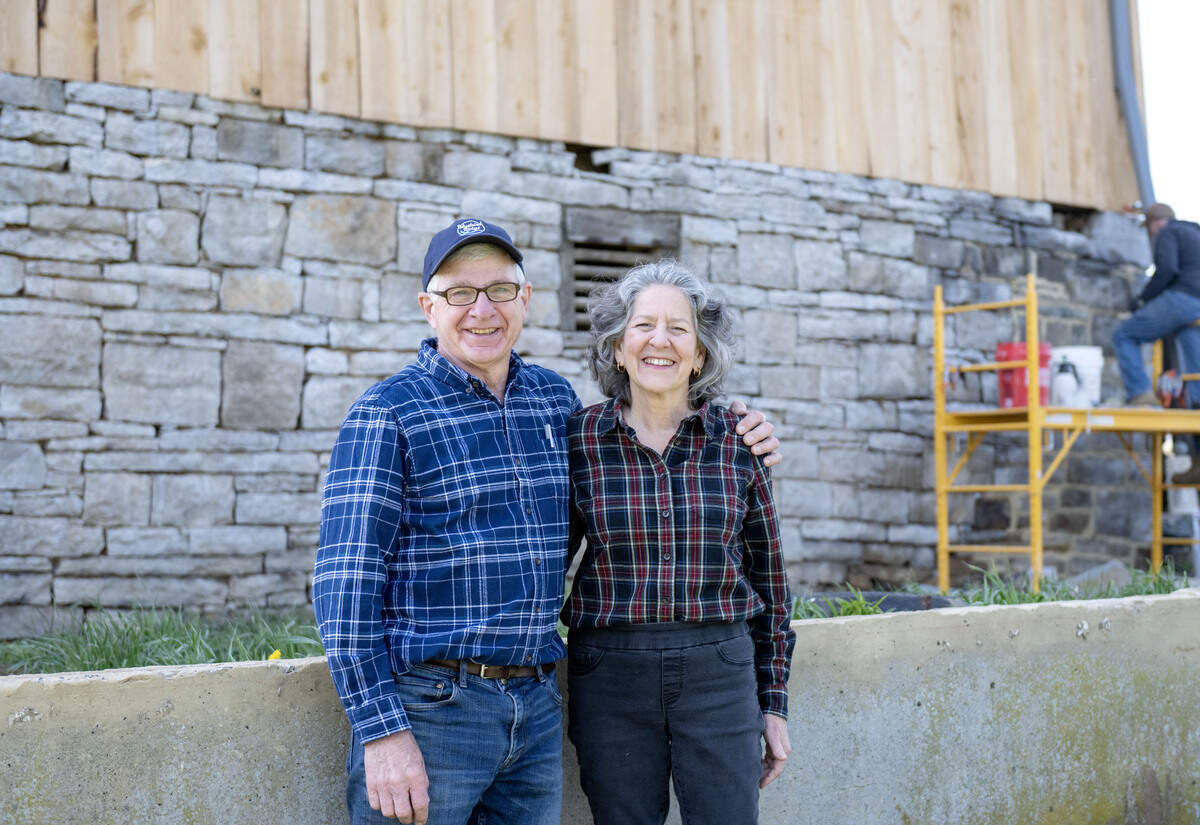
Gene and Rebecca Lengerich received a 2026 grant to repoint the stone foundation of their barn along West Branch Road in State College. The farm has been a farm for a long time, Rebecca Lengerich said, and she believes the barn predates the Civil War. Her family bought the property in the 1970s and her father used the barn for storing hay and taking care of cattle. The barn is still actively in agricultural use as the Lengerichs raise hay and use the barn for hay storage and other things.
But when a derecho hit State College last spring, it blew the shed end of the barn into the field and took off some of the barn roof. A lot of repairs would be needed if the barn was going to stay standing, Rebecca Lengerich said, and they had a decision to make: Should they keep the barn or should they call it a loss?
They decided to do the repairs and actually make it better than it has been in recent years, she said. With the help of the grant, they can get some of the foundation’s stonework repointed.
“Barns are community fixtures. Our barn is on the side of the road, and people see it as kind of — even though it’s not their property — their barn, in a sense,” Rebecca Lengerich said. “The reason the road goes up the hill and around the curve has been around that barn for many, many, many years, maybe almost 200 years. And so it would be very hard to just say we’re going to give up on a structure that somebody spent a lot of time and money to build back then, because it was built with an Ashlar pattern stone foundation that the stones are carefully crafted to fit together. And it’s a large barn.”
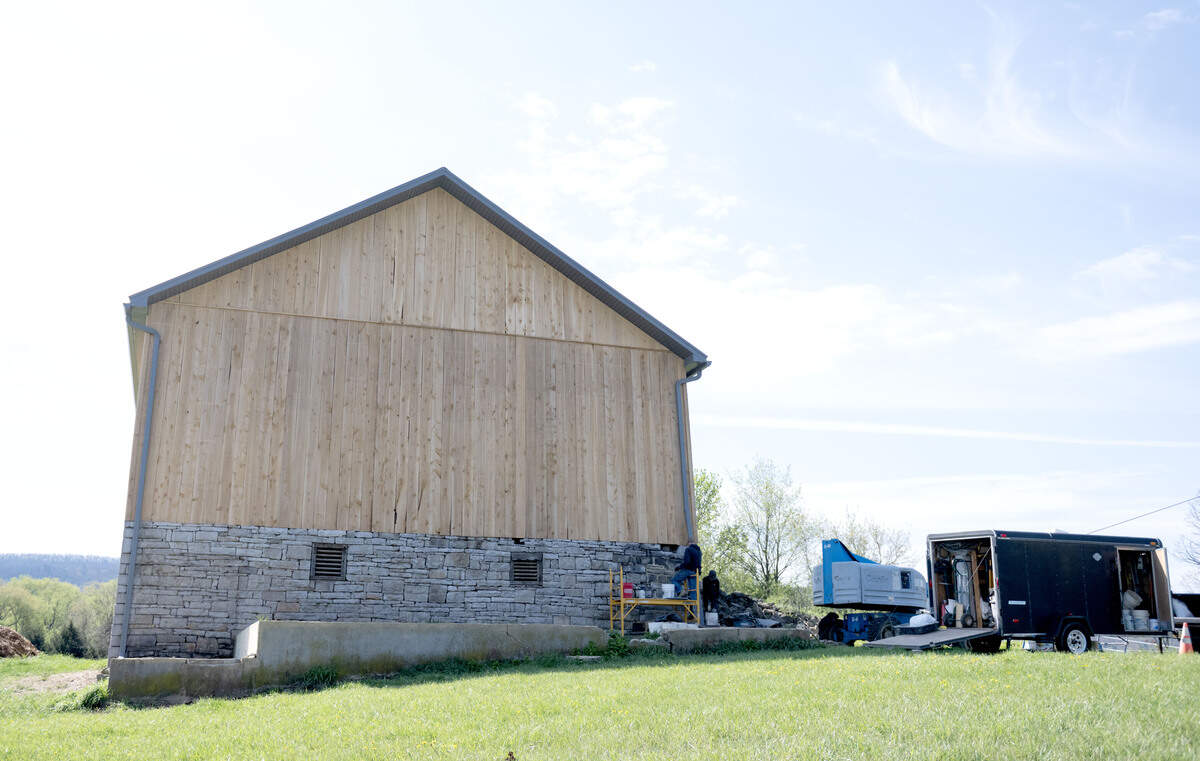
The grant is contributing to the Lengerichs being able to restore the exterior part foundation using the original methods, like lime-based mortar, which is not used often in today’s age of construction, Gene Lengerich said. With the grant, they can use a company based on Bellefonte that does this type of work, he said.
If they went ahead and used more modern methods, it could destroy the stone foundation, Rebecca Lengerich said. The project is more than just being historic about it, she said, it’s also preserving the stones that are in the foundation.
“Sometime in the early to mid 1800s, someone erected that barn … they put effort and energy into it. We can put some effort and energy into keeping that history,” she said.
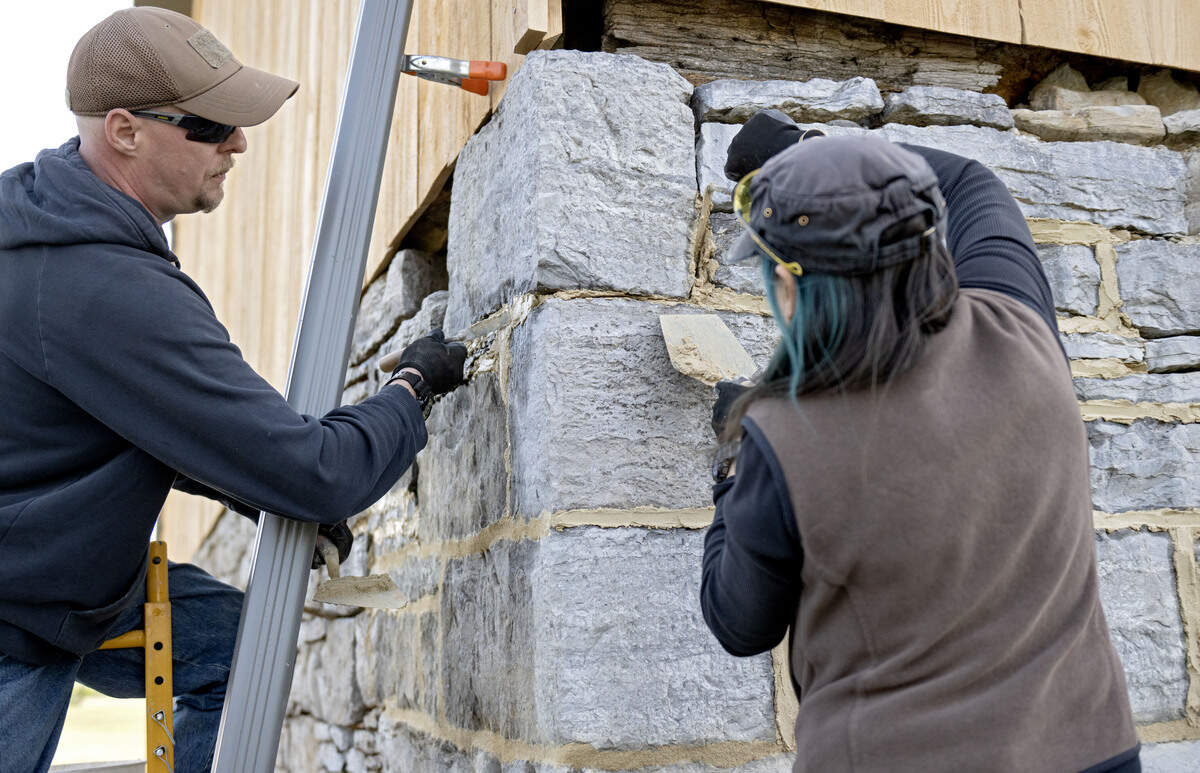
Barns are part of the larger central Pennsylvania culture that they don’t want to lose, Gene Lengerich said, and many people who have driven by their barn and saw they’re restoring it have been happy and pleased to see that happening.
“That is encouraging to me and I think it’s encouraging to the larger community as well because … for those people who have been here for a long time in this area, these barns represent a significant part of their cultural history. And I think, as Becky was saying, it’s also a significant structure, it has a function as well. So that’s another thing that we don’t want to lose either,” he said.