
Afield: It’s turkey time in Pennsylvania. What to know about ‘gobbler season’
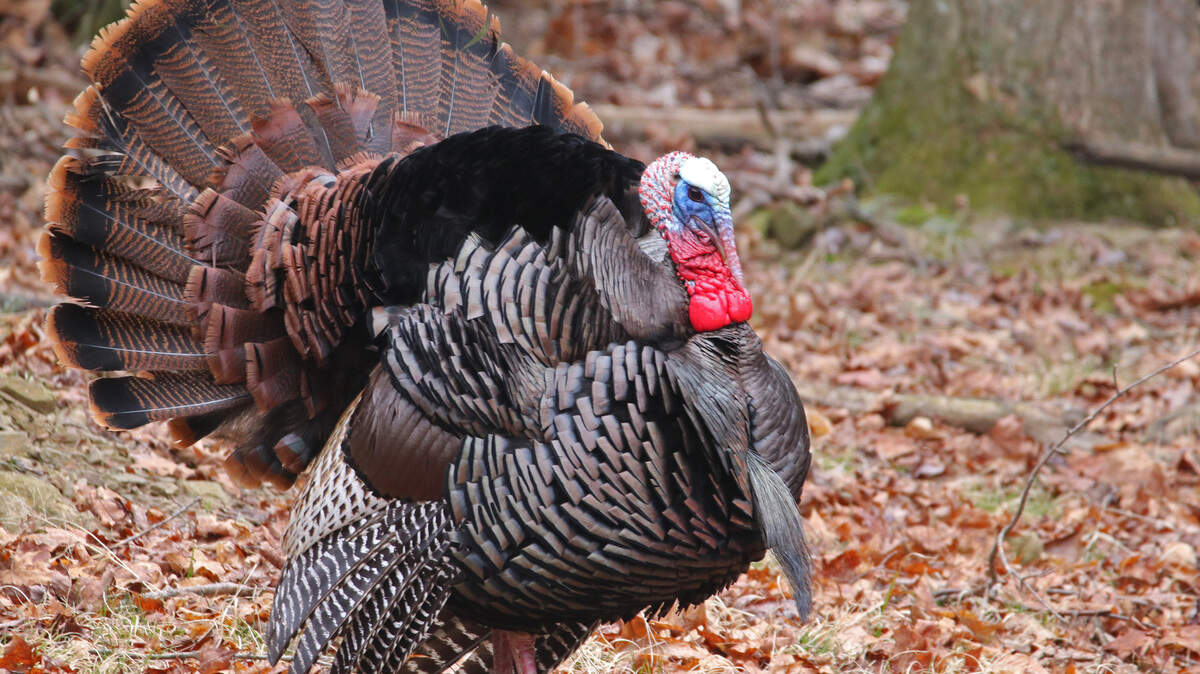
Pennsylvania’s spring turkey season, most commonly referred to as “gobbler season,” begins on May 2, and continues until May 30. It might seem counter intuitive to hold a hunting season during the spring mating period, but is it? Let’s dive more deeply into turkey biology.
Only birds with visible beards, a hair-like growth extending from the turkey’s breast, are legal game. The vast majority are male birds (gobblers). By the beginning of May, the breeding season is nearing its end. Most hens are nesting and biologists consider a certain percentage of the males as expendable — that is, their survival has little effect on the overall population.
However, a small percentage, although not an insignificant number, of females have beards. Both the Pennsylvania Game Commission and the National Wild Turkey Federation suggest that hunters look for other sex characteristics, such as head color. Why? Because those bearded females could have nests.
According to the Audubon Society, approximately 10% of female eastern wild turkeys have beards. Their beards are usually thinner and shorter than those on males. The National Wild Turkey Federation estimates that the percentage of bearded females could be as high as 13.95%.
For the past month, I have been seeing turkey gobblers displaying in open fields, with hens looking on. For those of you less familiar with turkeys, a “display” involves the male turkey or turkeys fanning their tails, puffing up their feathers, dragging their wings and gobbling regularly. They look just like the typical “Thanksgiving turkey” does in paintings.
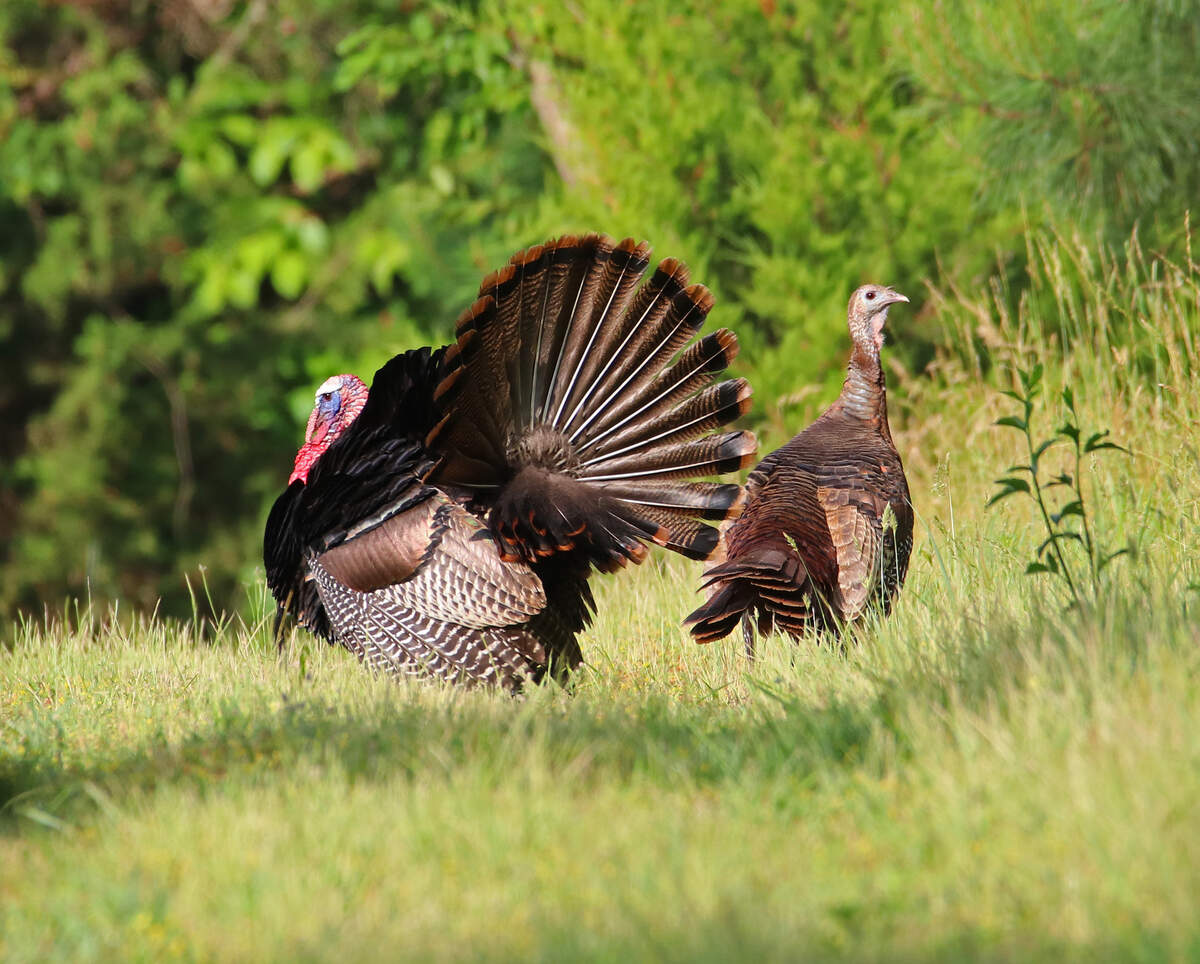
My first such sighting this year was on March 29 — several gobblers and a small group of hens in a field north of Port Matilda. My most recent sighting was on the morning of April 20 — one gobbler was displaying for five hens farther south in the Bald Eagle Valley.
Wild turkeys hang out in groups during the winter months — sometimes large groups — but come spring they are usually found in smaller groups. Once a hen turkey is bred, she will leave the group and begin to nest. According to the Cornell Lab of Ornithology, they typically lay one egg per day, producing a clutch of 8 to 17 eggs. Eggs hatch in 27 to 31 days after the hen begins incubation.
If you see a lone hen turkey at this time of year, she probably has a nest within a hundred yards or so. I saw a lone hen in Blair County on April 22 and I saw a hen in the same general area a few days prior. I saw a lone hen in Huntingdon County on April 20.
Turkeys typically nest at the base of a tree, or in thick weedy or brushy areas — sometimes even in a loose brush pile. Because they nest on the ground, their clutch is vulnerable to predators such as skunks, raccoons, fishers and pine martins.
Reproduction has a cost. A recently published hen survival study of turkeys in Louisiana, Georgia and South Carolina shows that nesting turkeys have a lower survival rate than non-nesting birds. Their survival rate was approximately 68%. The highest death rate occurs during the month-long incubation period.
Turkey eggs typically hatch within a few hours of each other. When all are hatched, the hen then leads her brood away from the nest. According to the study, mortality during this period is also high because young turkeys cannot fly up into trees to roost. Therefore, the hen roosts on the ground with her poults for the first two weeks after hatching.
If a hen’s first nest is predated, she will often attempt to nest again — expending more energy and again exposing herself to predators. The study, which was published in Royal Society Open Science, shows that these second-nesting birds suffer even a higher mortality.
The Pennsylvania Game Commission considers turkey restoration a wildlife success story, and the numbers support that.
“During the state’s first spring turkey season in 1968, the total take was 1,636. Compare that to last year, when hunters harvested an estimated 42,543 birds. Not only was that the largest spring turkey harvest in the last five years, it wasn’t far off the all-time record of 44,639, set in 2009.”
Hunters are reminded that there is no Sunday hunting for gobblers this spring, however this will be different in 2027. Hunting hours from May 2-16 are from a half-hour before sunrise, until noon. From May 18-30, the season extends until one half hour after sunset.
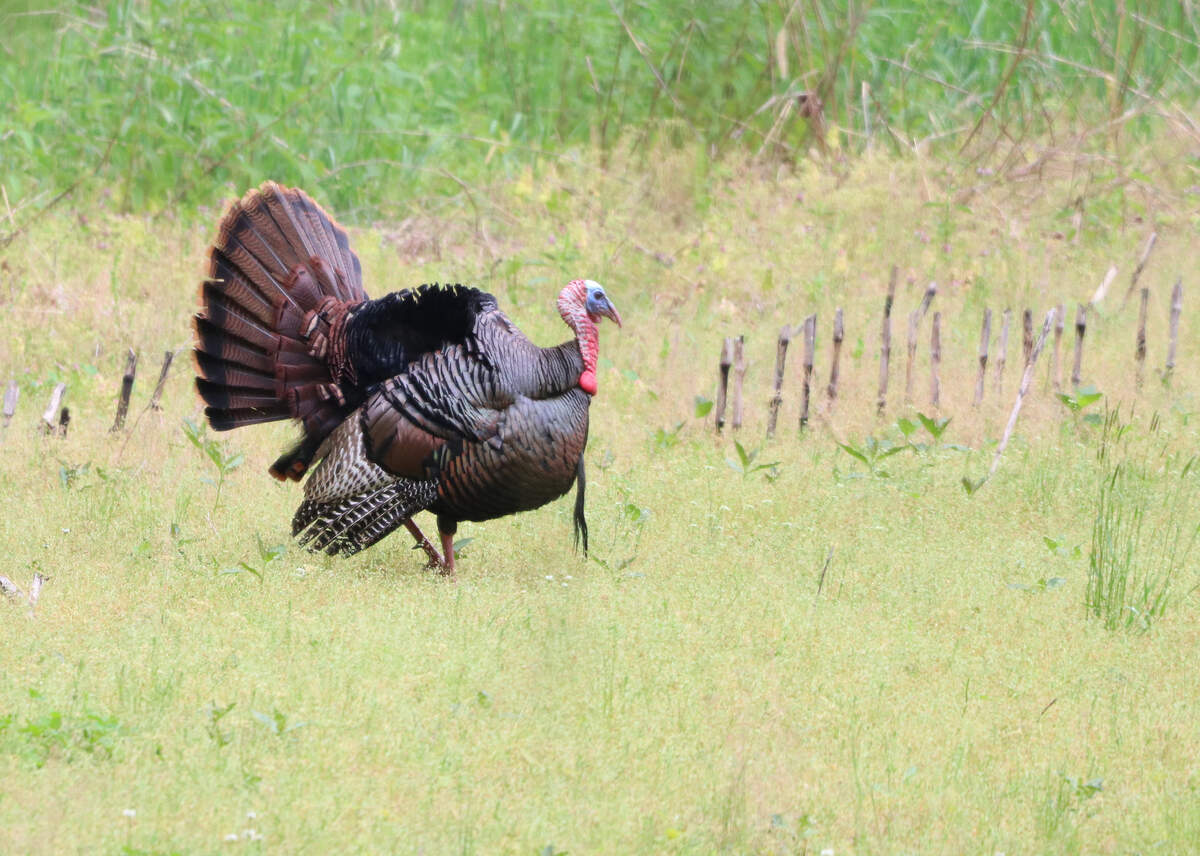
Throughout the spring turkey season, hunters may use manually operated or semiautomatic shotguns limited to a three-shell capacity in the chamber and magazine combined. Muzzleloading shotguns, crossbows and long, recurve and compound bows also are permitted.
One spring turkey tag is included with the purchase of a regular hunting license. A second tag may be purchased. Hunters are required to tag a harvested bird and report the kill to the Game Commission within 10 days.
Although Pennsylvania’s spring turkey season begins May 2, hunters regularly complain that the season starts too late. It is true that an earlier season would make turkey hunting easier, but it would also increase the chance of disrupting the breeding cycle. For now, the Pennsylvania Game Commissioners believe that the timing of the season is correct — a compromise between protecting reproduction and ensuring hunter success.
Mark Nale, who lives in the Bald Eagle Valley, is a member of the Pennsylvania Outdoor Writers Association and can be reached at MarkAngler@aol.com.