Centre County nonprofit’s ‘Poem in Our Eyes’ project connects artists across generations
.jpg "“A Poem in Our Eyes” exhibit at Schlow Library")
AI-generated summary reviewed by our newsroom.
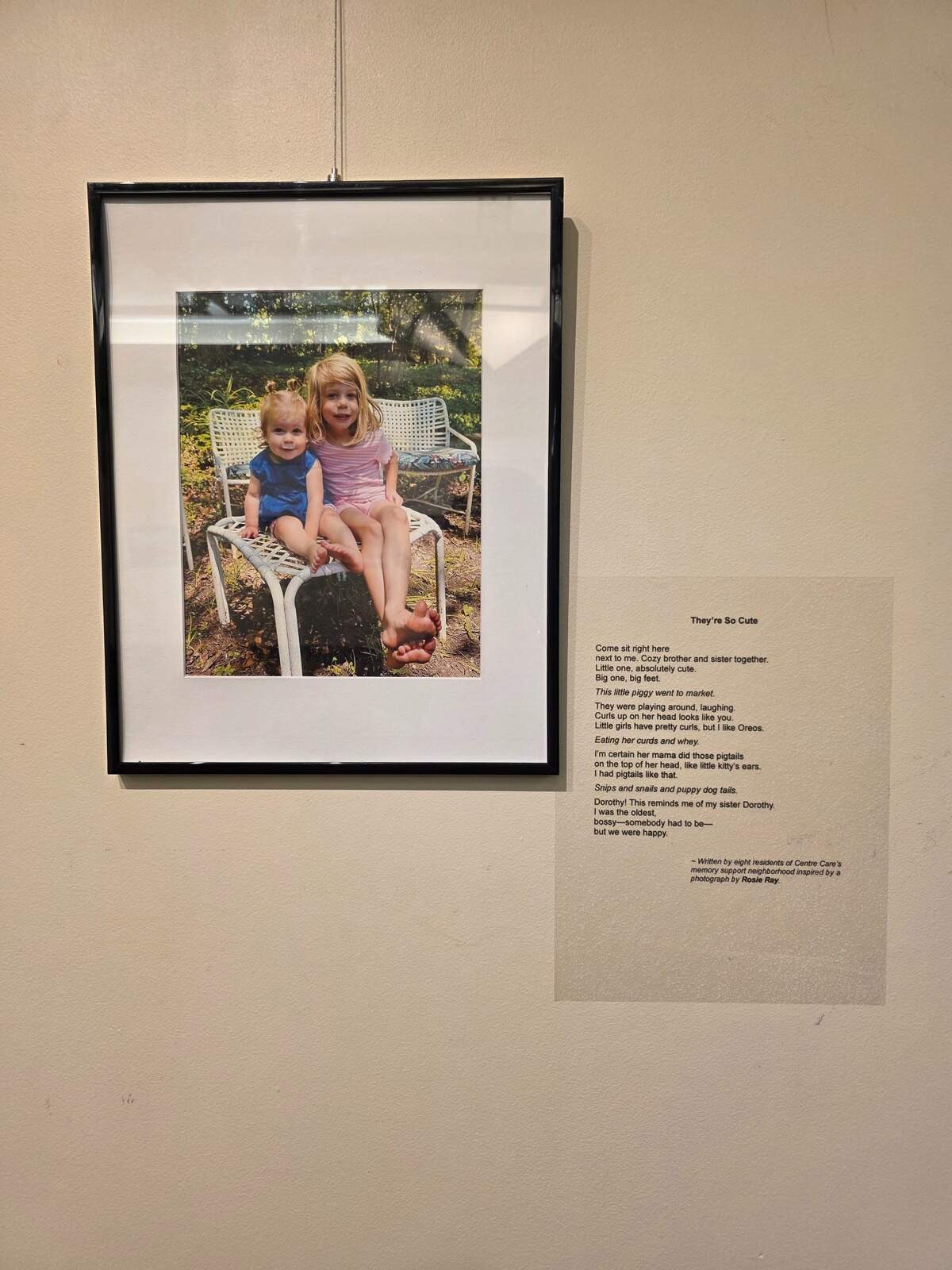
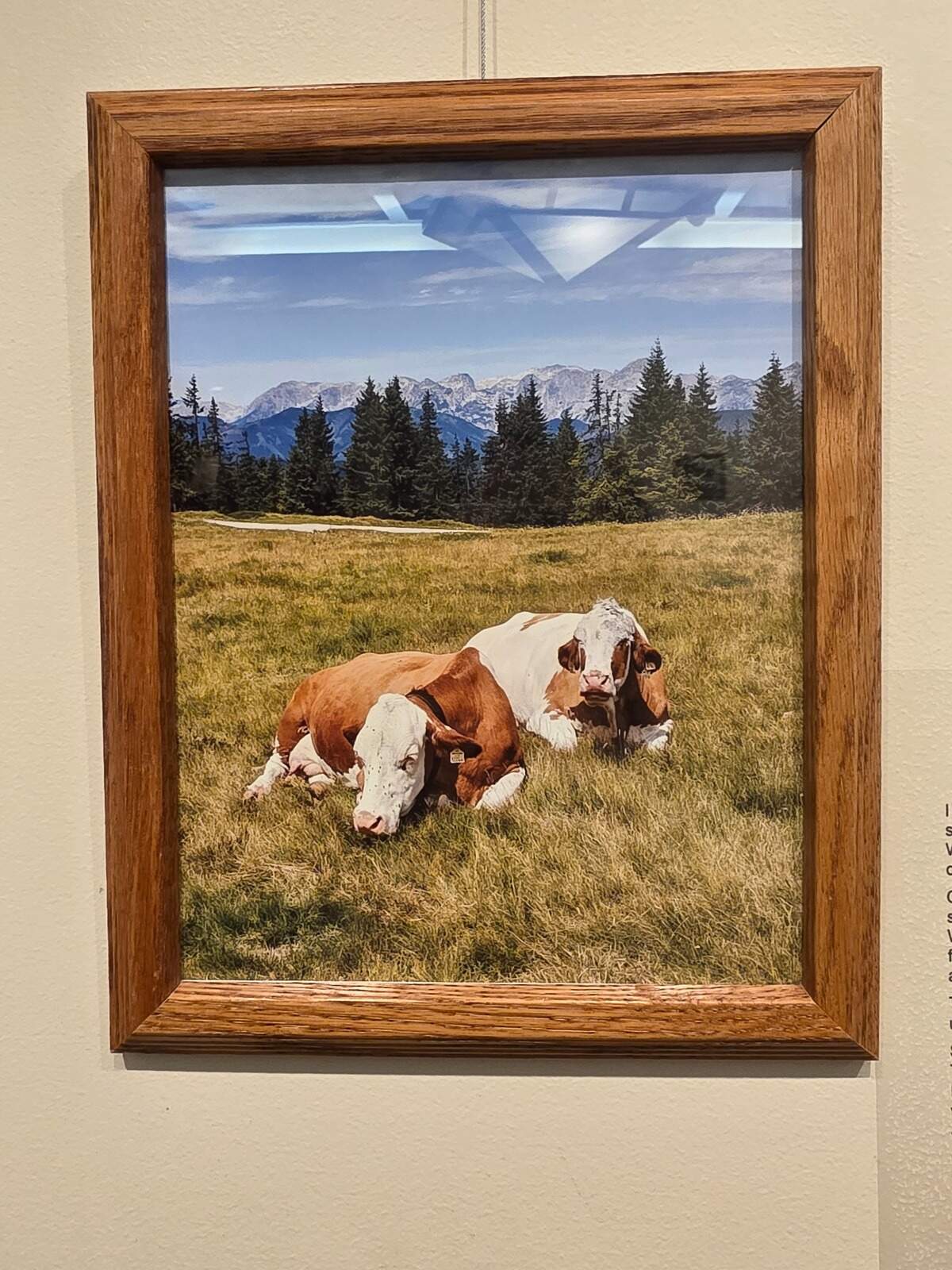
- Photos by State High students were paired with poems by Center Care memory ward patients.
- Ridgelines lost some state and federal grant funding and now relies on local partners.
- Robyn Rydzy hosts weekly Center Care poetry classes from Feb to mid-April.
On the first floor of the Schlow Library, two generations collide in an art display. On the walls are photographs captured by teenage photography students at State High. Beside them are poems inspired by those images, written by patients in Centre Care’s memory loss ward.
The exhibit visits Schlow every June, but this is the first time local students have been involved in the project. “A Poem in Our Eyes” is an annual effort by Ridgelines Language Arts, a local nonprofit that prioritizes the use of poetry and language-based storytelling to empower marginalized communities.
“Language is authorship and an opportunity to sit and reflect,” said executive director and teaching artist Jenny Hwozdek. “Using language arts, you are fostering critical thinking, emotional literacy, community building and bringing people together.”
The Poem in Our Eyes program runs from February to mid-April at Centre Care, where teaching artist and local journalist Robyn Rydzy hosts weekly poetry classes that encourage residents to use their lived experiences and collaborate to create a poem based on a specific photo.
“The classes are happening in a community setting,” Hwozdek said. “There are folks who, whether they are 5 or 95, might not identify as writers. ... So it’s a lot more inviting to say we’re all going to do this together.”
The nature of this year’s program fostered a connection between classrooms across generations.
“My students have grown up in a social media rich world where impressive images are part of their daily lives,” State High photography teacher Danielle Crowe wrote in an email. “When this opportunity was presented, it gave them a reason to create and share an image with a purpose beyond themselves. As a highly empathetic group of young people, it was beautiful to watch them consider memories being harder to access and how they might help people in that situation through their artwork.”
Formerly a hospice volunteer, Rydzy has been a teaching artist at Ridgelines since 2019, where she prioritizes building face-to-face connections with her students and slowly inspiring their creativity.
“My program is, I think, unique because yes, we are creating poems, so I always leave with some bits of creativity that we’ve collaboratively created together,” Rydzy said. “But more so, the hour has been a success if I’ve been able to spend a few moments with each one. I get right down at their eye level and I make sure to make eye contact with each of them to give them space to say whatever it is they’re able to say.”
Sometimes their communication is a whisper or a nod, but to Rydzy, that is enough to inspire a line in a poem.
“I want everyone to contribute,” she said. Rydzy lost her mother in May to dementia and her father is currently battling Alzheimer’s, which makes her work with Ridgelines all the more personal.
“There may be a day where my dad has to live in one of these facilities, and we can’t spend all the time we would love to with him,” Rydzy said. “I would hope that somebody like myself or community groups like Ridgelines ... could come in and spend some quality time with these folks and let them know they still have valuable things to say.”
In the past, A Poem in Our Eyes, and several of Ridgelines other programs, were funded through a combination of state and federal funding, local grants and facility partnerships. This year, however, the organization was forced to get “creative” about how to maintain operations due to changes in government grant allocation.
“We, like so many other nonprofits around the country, lost grants. Our grants were canceled last year. And the grant field at the state and federal level has shrunk, especially for small nonprofits,” Hwozdek said. “A lot of times, there is a wall where your budget has to be $100,000 or more. ... Our annual budget is around $60,000, so we don’t qualify.”
Hwozdek said that without a brick and mortar building, it has been slightly easier for Ridgelines to manage their cost of operations while hunting for new funding.
“This is [a challenge] across the board for every nonprofit,” Hwozdek said. “We’re all facing this new terrain of how to fund our organizations.”
Ridgelines still relies on its many local partners to create revenue streams to provide language arts programs across several communities.
This year’s iteration of A Poem in Our Eyes was sponsored by the Janet Atwood Fund, a Centre County foundation that provides financial support for local arts programs.
The resulting exhibit will be featured at Schlow Library throughout June before being transferred to the memory ward at Centre Care.
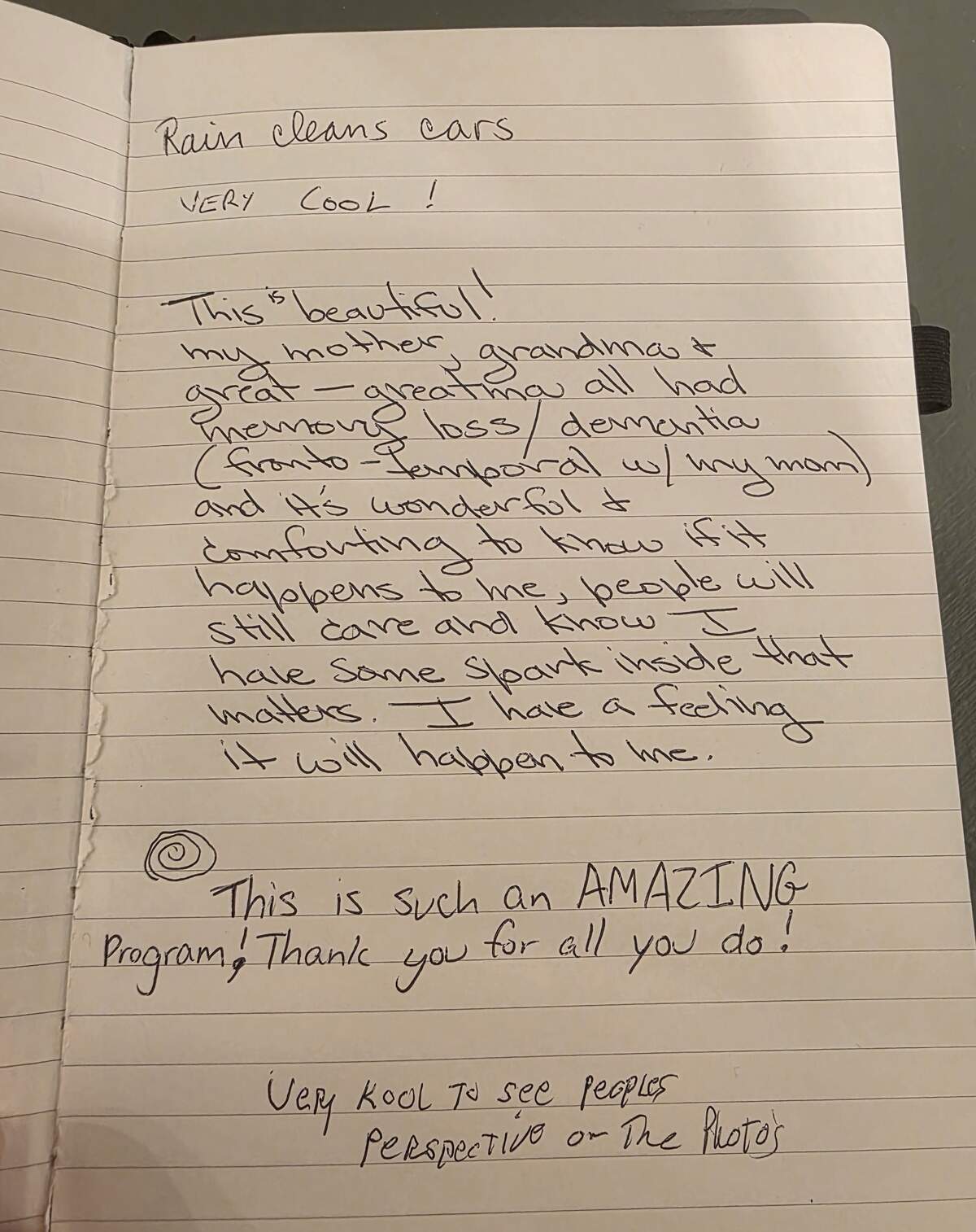
In the meantime, it has become a staple of “nostalgia” and “empathy” for the community.
“Many of us have older adults in our lives who either have experienced dementia or have some other kind of memory loss,” said Maria Burchill, head of adult and teen services at Schlow Library. “People look for [the exhibit] every year. ... The awe that you get when you are reading something that is like fragments of memories from someone who is a loved one — they may not be your loved one, but they are loved by someone — that’s the kind of response that’s usually communicated to staff.”
.jpg "20260605_151046(0).jpg")
The wide-reaching impact of language is one of the cornerstones of Ridgelines’ mission, which they try to reflect across the communities they serve.
“It really reverberates through so many different experiences,” said Hwozdek, who serves as a teaching artist for incarcerated women. “One of the ways we become better humans is if we learn to think and write and communicate.”
Ridgelines also provides programming for rural youth in Penns Valley, abuse survivors at Centre Safe and incarcerated youth at Central Counties Youth Center. These programs teach different types of language-based creative expression as a way to break down barriers and reshape perspectives.
Ridgelines aims to dispel the stigma and uncertainty around dementia and memory loss and to build a bridge for communication, according to Hwozdek.
“This can be a way to give [young people] entrance into connecting and communicating with people who have memory loss,” Hwozdek said. “This collaboration is for young people not to just stick to photographs, but to also consider, ‘Hey, I just learned something that I might be able to use when we visit Grandma.’”