Despite community concerns, Ferguson Township approves stormwater utility fee
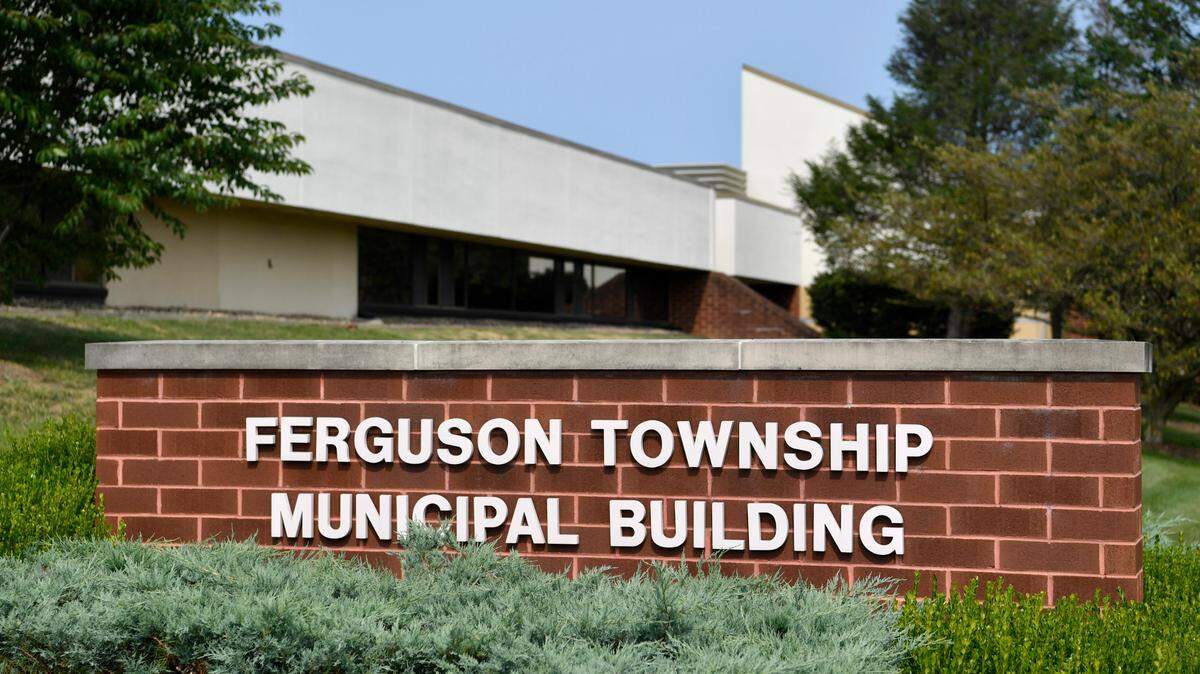
Beginning next year, Ferguson Township landowners will help pay for stormwater management costs through a utility fee.
With Prasenjit Mitra and Lisa Strickland opposing, the township board of supervisors voted 3-2 during Tuesday night’s meeting to enact the stormwater management utility fee. Effective Jan. 1, 2022, the fee that has been in the works since 2017 will help pay for rising management and infrastructure costs by charging landowners based on the amount of impervious surface on their property.
The fee is based on an equivalent residential unit billing system, so properties will be billed based on the median value of impervious area for single-family, detached residential land parcels. In 2022, the rate per ERU is proposed to be $119 for properties inside the Regional Growth Boundary and $75 for properties outside of the growth boundary. More information about billing for specific parcels can be found on the township website.
In the months leading up to the final vote, landowners voiced opposition to the fee, saying the proposal would create more financial burden on residents. Nearly 50 attendees joined the virtual meeting, but less than a dozen township residents offered public comment; no one spoke in favor of the ordinance.
Resident Fred Grau asked the board to delay enacting the fee until the township was sure how it would work and affect residents; Greg Herrold said he thinks the ordinance puts farmers at a disadvantage, and another resident asked the township to work stormwater management costs into the annual budget instead of asking residents to pay an additional fee.
Encouraging the board to vote against the fee, Strickland argued the ordinance puts constraints on the current and future boards by limiting the revenue for one use. She suggested that the board proceed with stormwater management costs in the budget for 2021, replicate that plan for 2022 while assessing the stormwater system and use new data to evaluate any additional costs or repairs needed in 2023.
“The board will also have an accurate assessment of tax revenue during and hopefully by then, following the pandemic, and will know what’s needed or not in terms of additional dedicated funds,” Strickland said.
Mitra said he was concerned about the potentially long-lasting financial impacts of the pandemic on landowners. Though supportive of a fee-based policy, which incentivizes people to reduce paved surface on their property, he said the township should delay implementation.
But Supervisor Steve Miller said the township has been paying for stormwater management for years. He added that managing costs have become a “growing part” of the annual budget.
“This is one way of addressing by isolating those particular expenses,” he said.
The stormwater fee was slated to be voted on last year, but the board decided to postpone the process in order to iron out details and hear input from newly elected supervisors. By delaying the process and accepting more community input, the board was able to strengthen the ordinance, Miller said.
“The board is aware of the impact on community members, and we are community members who will be affected by this if it passes,” Miller said before the vote. “Those things have been taken into account; we’re not rushing into anything.”
The board also approved resolutions for a credit policy manual, agricultural properties partial exemption, economic hardship exemption and a fund balance limit. These plans aim to add more structure to the fee as well as accommodate concerns voiced by residents throughout the planning process.
“I’m acknowledging that it’s a difficult time, and I think that in the documents that we’ve presented tonight, we’ve also acknowledged that it’s a difficult time, and we’ve provided exemptions for those that are feeling the greatest impact of that time,” Supervisor and board chair Laura Dininni said.
Dininni said the resolutions will outlast the pandemic and encouraged landowners to use the exemptions if they are struggling financially.
“Had it not been a pandemic, we may not have necessarily gone down that path as far as we did, and I think really continuing our deliberations at this time has made it a better ordinance,” Dininni added.