
‘If you can dream it, you can do it.’ State College icon Betty Jane Dittmar leaves lasting legacy
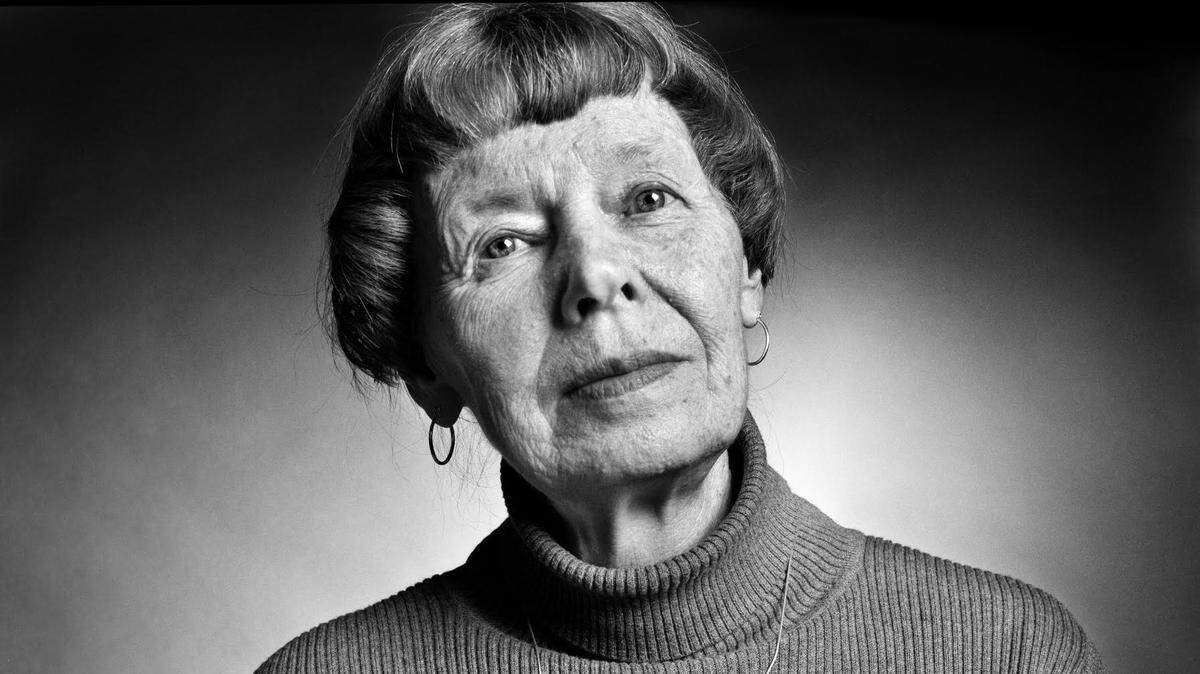
As a small child, Cheryl Cutler McHugh met not just the teacher who set her on a path to founding the Wesleyan University dance department.
Betty Jane Dittmar also was the world’s most beautiful woman.
Dittmar had yet to open the dance studio and summer camp that shaped the lives of State College girls over the course of decades. She was renting a roller rink for classes, but even in that humble setting, she seemed grand to McHugh.
“This tall, slender blond with long legs and flowing hair all but formed my ideal, my childlike image, of perfect womanhood,” McHugh said. “She was engaging, positive, intelligent and creative; graceful, poised, disciplined and ambitious. And best of all, her life and work were focused on my favorite of all pursuits: dance.”
Dittmar, who drew from nature, the arts and her faith for her innovative approach to teaching modern and creative dance, died May 12 at the age of 91. Over more than a half-century of classes, she integrated poetry, music, painting and folklore into her lessons to help students express themselves through movement.
“The body reflects what the mind has discovered, what the heart has discovered,” she said in a 2019 interview. “The body can’t help but be changed and be a reflection of that kind of thinking.”
Her legacy includes students becoming artists and educators in a variety of fields. For many of them, she remained a revered figure for her empowering instruction and support.
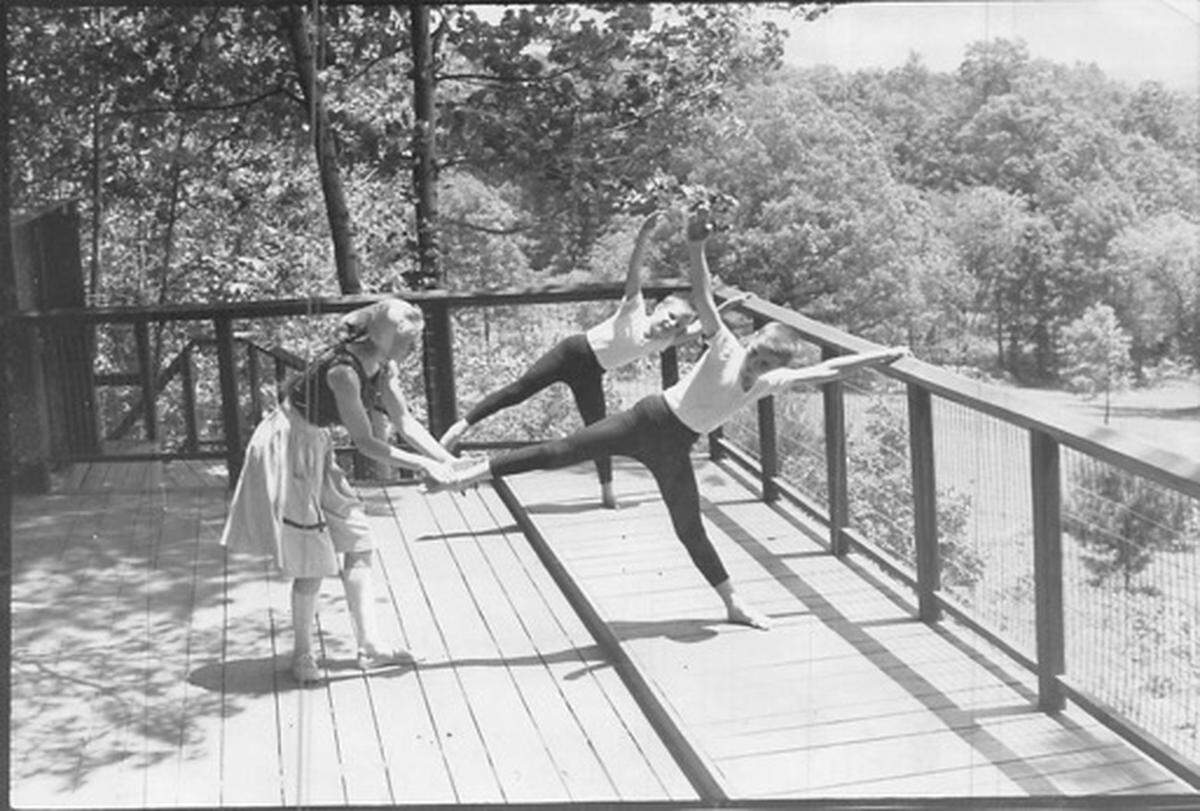
“BJ gave us a structure on which our creative project was developed,” said Carol Mansell, a veteran television, film and stage actor. “We were choreographing dances at age 7. Our choreography was based on ideas presented to us and we would explore the subject with dance.”
Encouraged by Dittmar, Mansell attended The Juilliard School to study dance. While earning an art education degree later, she taught with Dittmar, maintaining their friendship as she pursued acting.
“She has been a profound influence in my life ever since I was 5-years old,” Mansell said. “She will always be alive in my heart.”
A lifelong vocation
Born Nov. 21, 1929 as Elizabeth Jane Strom, Dittmar grew up in Bethlehem, first teaching dance classes as a teenage summer camp counselor in Maine.
At Penn State, she studied dance as a recreation major, but also fell in love with another student and Pennsylvanian, John Dittmar. They wed in 1950 to begin 58 years of happy matrimony.
Settling in State College, the couple initially taught ballroom dancing in local schools. At the request of families, Dittmar began teaching creative dance in community spaces in 1952, but that changed as word spread of her talent.
When she and John built their home on Pugh Street in 1954, they included studios in the basement and on the second floor. Parents responded in droves to Dittmar’s school, and she never looked back, eventually expanding to 10 course levels for ages 4 to 18.
In her 2018 book “Creative Dance for Children,” she outlined a time-tested curriculum geared toward young minds. Skipping, hopping and other basic movements became building blocks for learning techniques, rhythm and posture. Butterflies, snowflakes and other natural images provided models for imagining space, direction and sequences.
“Though children discover dance as a surprise, it quickly becomes what they begin to understand. Their thoughts may be: ‘What is dance? Is it me when I move to music? Is someone telling me how to move, or do I find my own way?’ ” Dittmar wrote. “... They learn to be part of and not apart from discoveries about dance and those who dance together in an inviting space.”
She herself was a constant student of movement, traveling to master classes, including one by Martha Graham, and attending touring dance company performances. With the advent of camcorders, she began videotaping every class and building a reference library.
“Teaching children dance was a serious, lifelong vocation for her — in fact, I would say nothing less than a calling,” said McHugh, who toured with her own dance company and taught movement improvisation at Yale University’s School of Drama after retiring from the Wesleyan faculty. “She loved dance and seemed to sincerely care for every one of the dozens of little girls who entered the doors of her dance studio.”
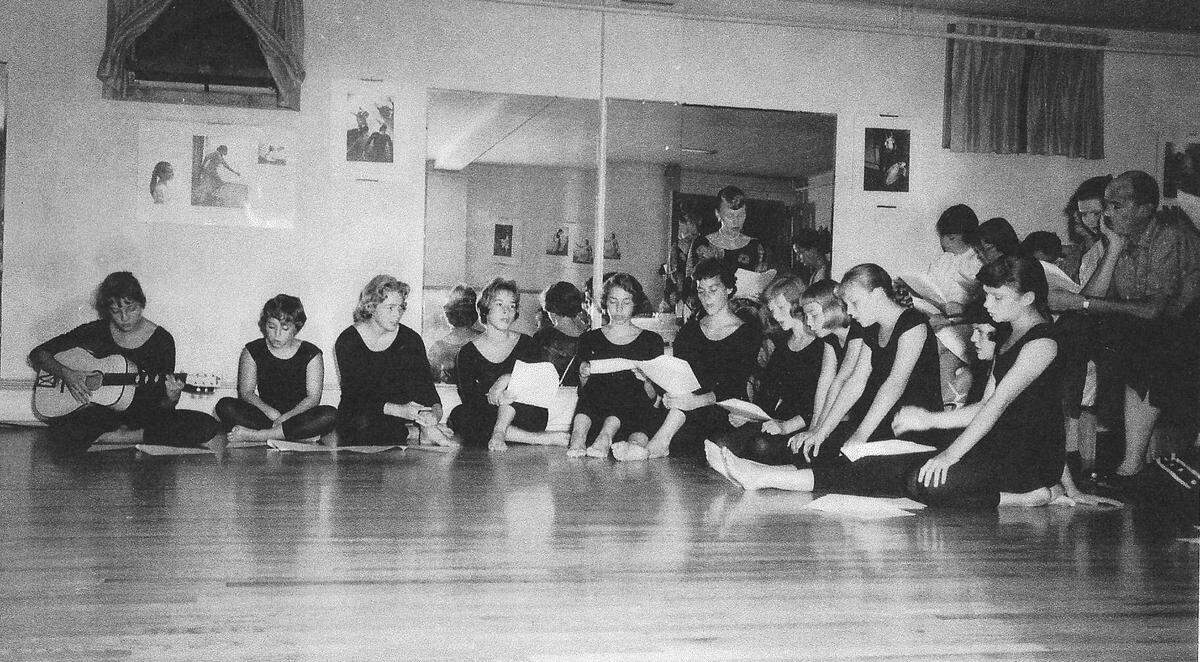
Dittmar’s commitment stemmed in part from being a lifelong devout Christian Scientist. A zeal for helping students conquer limitations and realize their potential infused her teaching, reflecting a core tenet of her faith: God’s infinite Love.
“She demonstrated that if you can dream it, you can do it,” McHugh said. “We saw and believed.”
Playful and profound
As Dittmar’s reputation grew, so did her household and business.
Her first child, John David Dittmar Jr. was born in 1957, followed by Hans Frederick Dittmar two years later and Heidi Anna Dittmar in 1964.
In 1958, the Dittmars began renovating a farmhouse on 23 acres near Centre Hall, and within three years, an arts day camp opened. Besides dance classes, two-week sessions included drawing, poetry, drama, archery and nature walks — all part of a cohesive curriculum. A perennial standout was the “deck class,” where students would create open-air, nature-inspired dances together under Dittmar’s direction.
The Strawberry Hill Center for Creative Arts, as the studio and camp came to be collectively known, quickly flourished. In 1966, Dittmar gave a lecture on her integrated arts approach to the American Dance Guild in New York City, bringing Mansell and two other students for a demonstration and impressing the guild’s executive director.
“Nowhere yet have I witnessed such a totally interrelated program of arts as that of the Strawberry Hill Center for Creative Arts,” Manon Souriau wrote.
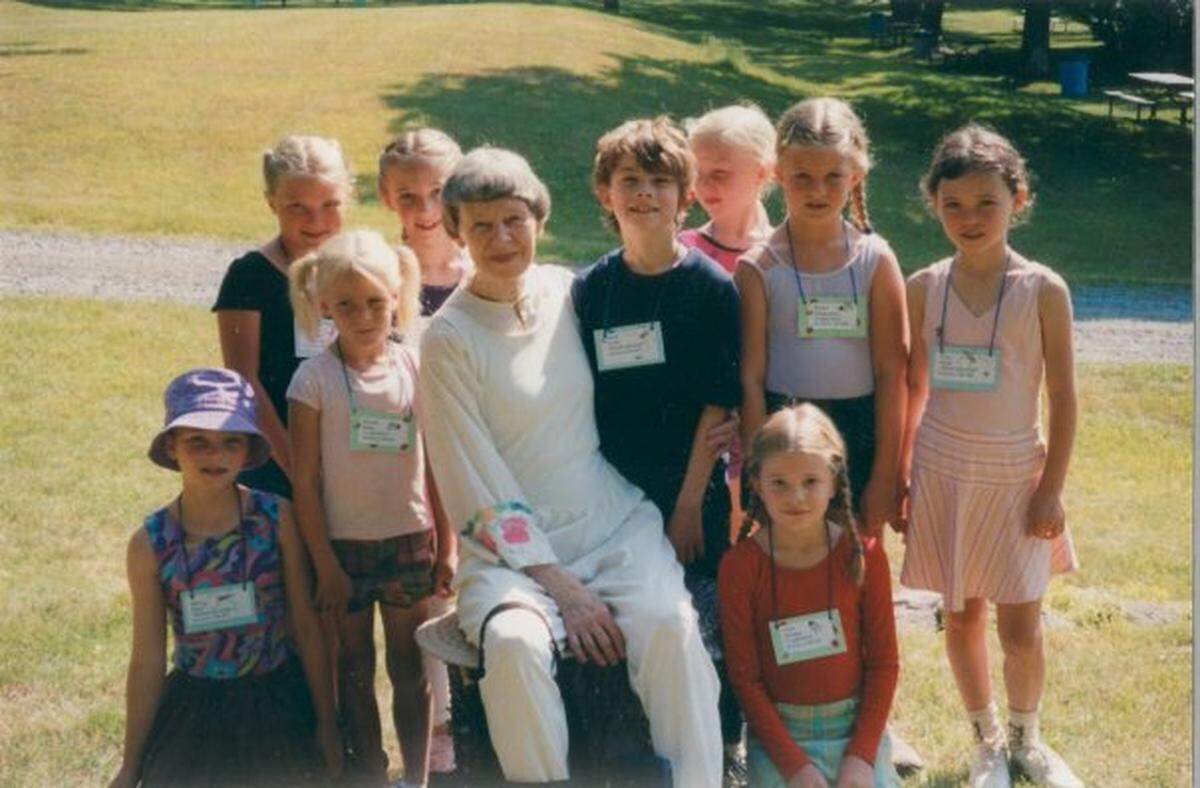
Boalsburg resident Anni Matsick, a children’s book illustrator and painter, taught in Strawberry Hill’s art house for six summers, coordinating her lessons with the year’s dance program theme. She’ll never forget helping Dittmar make Balinese headpieces out of two-foot long car funnels for the traditional culminating dance on the outdoor deck.
“Betty Jane was a role model of profound significance in my life,” Matsick said. “She inspired my role as a teacher and later as a mother.”
Over time, Dittmar developed a singular ability to connect with children and their perspectives. In her “spaghetti” exercise, for example, classes would break into random circling to learn how to locate space and each other.
“She made the lives of her students and others around her more joyous and magical,” said Loren Groenendaal, a Muhlenberg College fine arts professor and the artistic director of the Philadelphia-based Vervet Dance company. “She encouraged our imaginations through reading us fairy tales, decorating the studio for Halloween and Christmas, and acting out characters for those holidays and stories. She also pushed her students to imagine themselves as larger-than- life characters or that we were dancing in an imagined environment.”
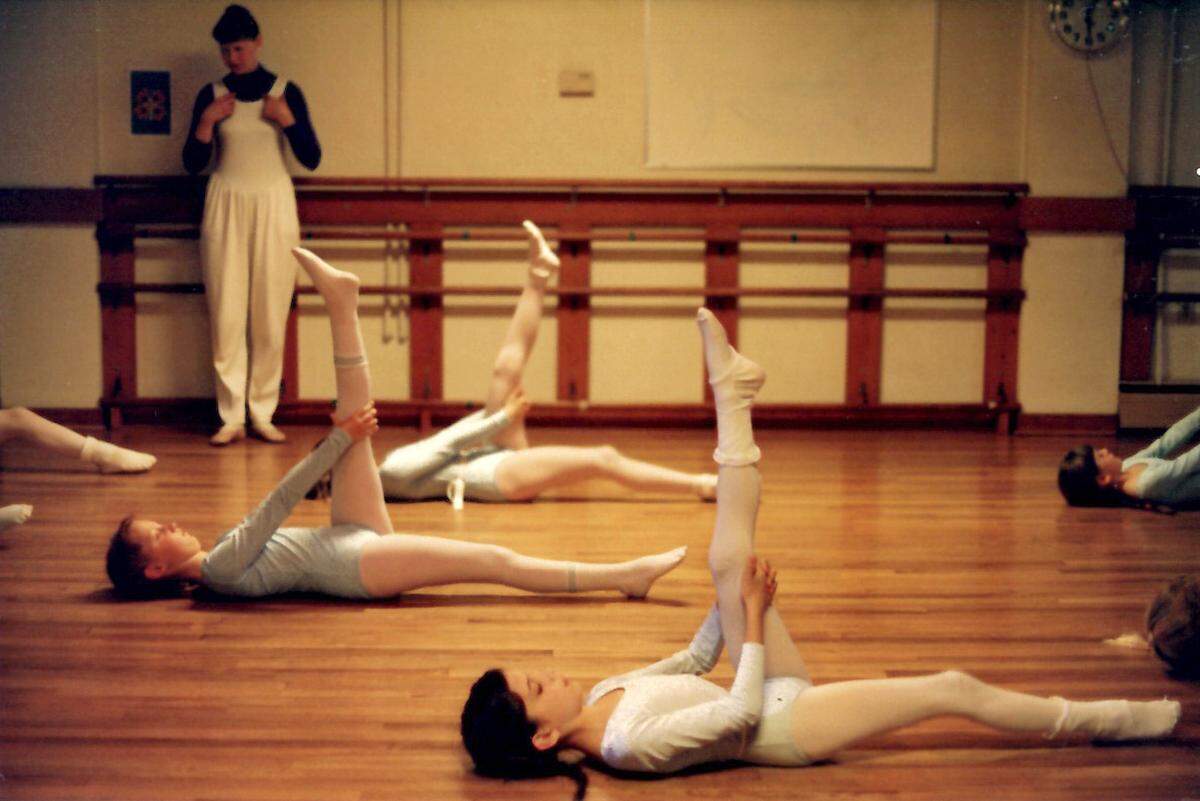
For a formative 12 years, Groenendaal studied with Dittmar as well as taught alongside her. She can still picture “Swim Dance” — a warm-up exercise in which classes visualized the studio filled with water — and “Up World,” in which students lay on their backs and studied the sky and trees for inspirational patterns.
“I love how she respected young children enough to give them profound activities and gave playful activities to more sophisticated adults, keeping their inner child alive and pushing them to deepen their research,” Groenendaal said. “Maintaining playfulness and not letting it get ground out of me or my students is one of my highest ethics.”
Lessons that live on
In 2005, Dittmar finally stepped down, three years before losing her longtime partner. After John’s death, Groenendall recalls, Dittmar spoke of her marriage in the present tense because her love wasn’t gone.
“I feel the same way about Betty Jane now,” Groenendaal said. “She is still my biggest influence and dear teacher and mentor.”
Dittmar will always occupy a special place for Amy Waite, who started dancing with her at 3. In an essay for her daughter’s second-grade class, Waite wrote about the “gifts that Mrs. Dittmar gave me,” including “how to tap into my creative spirit and express it” and “always look for the good in a person.”
“Other than my mother, she is the single most important influence in my life,” Waite said. “There is not a day that goes by that I do not think of her and the many lessons I learned.”
But nowhere does Dittmar’s spirit live on more than at the Pugh Street studio itself, now the home of Singing Onstage, the youth musical theater company started by her daughter. Feet still skitter across the floor, music still fills the air, and children still blossom into confident artists from loving instruction.
“All of those things have their own natural life and they don’t need you, but hopefully, they can’t be stopped by you,” Dittmar said. “You are part of the process that grows and grows.”