
‘Pain and sadness.’ Centre County residents reflect on the 20th anniversary of 9/11 attacks
All of us old enough remember where we were on Sept. 11, 2001. Many of us remember who we were with, the thoughts that rushed through our minds and how we spent the rest of that day that changed our world forever.
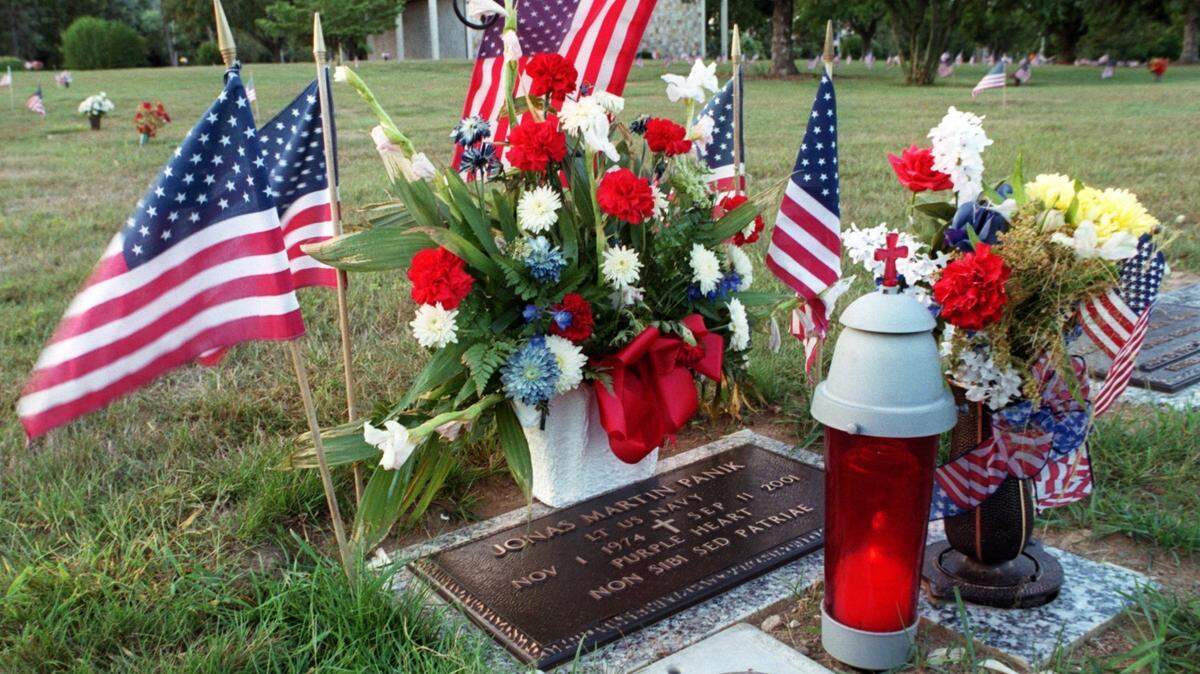
Centre County lost one of its own that day. Jonas Panik, a 26-year-old Navy officer and Walker Township resident, was killed at the Pentagon. A year after his death, Marion Township supervisors dedicated a baseball field in his honor. More recently, the Bellefonte Area School District, where Panik graduated in 1993, named the track at the renovated Rogers Stadium facility for Panik and Jeremy Herbstritt, a BASD graduate who died in the Virginia Tech shooting in 2007.
Penn State alumni were killed in the attacks, too. Artist Michael Pilato’s “Inspiration” mural in downtown State College serves as a 9/11 memorial for the local lives lost. Walker Township Community Park, near where Panik grew up in Mingoville, also includes a memorial for 9/11 victims.
On the 20th anniversary of 9/11, the Centre Daily Times asked readers to share their reflections — what they remember most and how it affected their lives in the decades since. The following are their responses.
John Corr
John Corr, of State College, was in central Pennsylvania on 9/11.
Q: What do you remember most about that day?
A: The shock and sadness of the unfolding tragedy but also the need for relief and assistance for the overwhelmed and exhausted firefighters, police and rescue workers at ground zero in New York City.
Q: How did the events of that day affect you or your family?
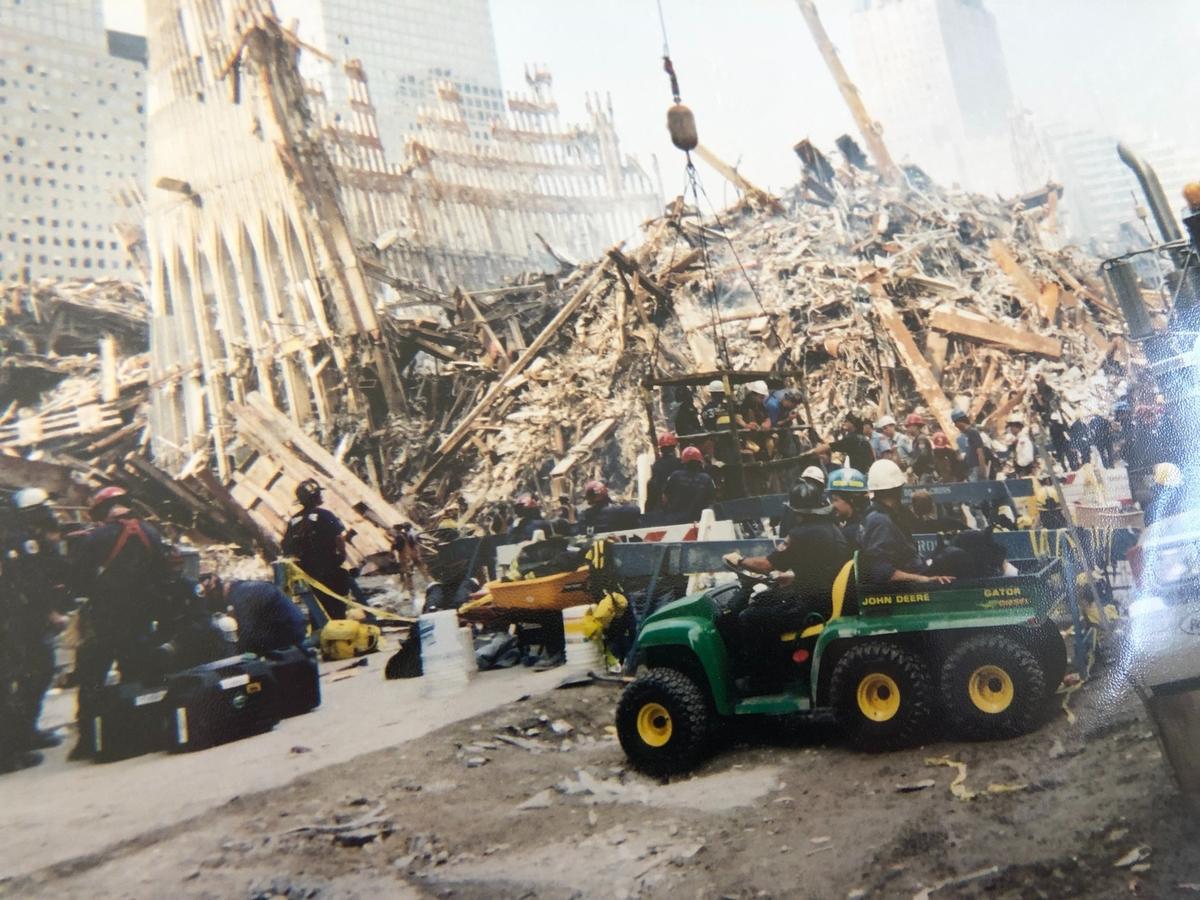
A: We were shocked and upset and it was decided that I would go to New York City and assist in the search, rescue and recovery. I spent 10 days as a Red Cross volunteer at ground zero adjacent to the remains of the south tower and Marriott hotel working at a tool and supply station assisting firefighters and recovery workers with the tools and equipment that they needed in their search and recovery work there.
The station supplied the chaotic recovery effort with everything from concrete and rebar cutting tools to safety gear, flashlights, batteries, shovels, fuel etc. — even cold water and Gatorade — and was at West and Liberty streets. I also worked at the Red Cross supply and feeding station at a hastily evacuated grade school at Greenwich and Chambers streets. It was noisy, dirty, exhausting and nonstop work.
My most lasting impression was that despite the grief among firefighters for their fallen comrades and the shocking and tremendous devastation and horror of ground zero, there was also an uplifting and positive sense of purpose, support and camaraderie among the thousands of rescue/recovery workers. There was very little anger, only support, courtesy and gratitude toward fellow workers in a nonstop 24/7 high energy effort. After 10 days of tireless effort with little sleep, I left ground zero exhausted but also inspired by the strength, bravery and character shown by my fellow workers as well as the people of New York.
Rose Codet
Rose Codet, of Bellefonte, was in New York City on 9/11.
Q: What do you remember most about that day?
A: My building was across the street from the north tower. The first plane flew directly over my building and we felt the boom of the plane hitting the tower. A dear friend worked on the 95th floor and I prayed for him. He was safe. I had a long walk uptown, and finally caught a ferry to New Jersey and caught my train home. Nineteen people in my neighborhood worked in or around the trade center, and miraculously all were OK. I am so grateful.
Q: How did the events of that day affect you or your family?
A: For a long time the sound of sirens brought everything back. My family here wanted me to leave the New York metro area, but I loved my job. We relocated our offices to near Rockefeller Center for eight months while our building was being repaired. Not seeing the rubble was a relief. A few years ago I visited the WTC Memorial and it was very difficult, but I’m glad I did it.
Robert Echard
Robert Echard, of Lemont, was in Arlington, Virginia.
Q: What do you remember most about that day?
A: I was there, within 2 miles of the Pentagon. My boss stuck her head in the door and said, “The Pentagon’s been hit.” We could see the smoke from the sheriff’s jail where I worked. Arlington County were first responders and in charge of recovery for the first 30 days. I was in a small way part of it.
Q: How did the events of that day affect you or your family?
A: Sorrow for those dead and injured. America is vulnerable, from terrorists within as well as without.
Bernie Ryan
Bernie Ryan, of State College, was in the Pentagon.
Q: What do you remember most about that day?
A: Seeing the explosion outside my window, and our ceiling begin to collapse. We knew we had to get out immediately. The plane hit below my office and one corridor over.
Q: How did the events of that day affect you or your family?
A: It was a very powerful day, wondering if their father was coming home. I actually got home before my children arrived from school. Our daughter, (in) fourth grade, almost fainted when she saw me. It had obviously weighed on her mind. We got word to our son, (in) seventh grade, that I was OK while he was at school. Our family loves the USA, and the country’s strength shone the best the following days as we pulled together as a country to work through those horrific events.
Samuel Rocco
Samuel Rocco, of Bellefonte, was teaching at Park Forest Middle School in State College.
Q: What do you remember most about that day?
A: My schedule provided the first two periods of my day for team meetings and lesson planning. We had no meeting scheduled, so I opted to use the time for grading and preparing my lessons for the day. I moved from the office to the cafeteria (Commons) area because it was open, spacious and free of the hubbub that would eventually pervade the room when the lunch periods started. ... As quiet and still as the room was while I worked, I began to feel a restlessness in the air as I saw one, two, then three, then four staff members moving about in the lobby area with an unusually urgent gait. One of my colleagues found me and told me what had just been reported (the north tower had been hit). Our principal appeared and beckoned all of us into the team office to give us some details, including the fall of the South Tower. Now what? Keeping our own questions, emotions and fears in check, we were tasked with how to take care of a school full of children and guide them carefully through the initial hours of this event — knowing that parents would be calling, coming to take their children home and wondering what tomorrow and the rest of the week would bring. It was, after all, only Tuesday, and all of the lessons, activities and materials we had prepared were no longer our first priority. Indeed, we would discover two days later that one of our students had a personal connection with someone working at the Pentagon when the incident occurred.
Q: How did the events of that day affect you or your family?
A: Outside the walls of my workplace, I had much time for my own reflection and attempts at understanding what had transpired that day — and why. “What” was pretty clear, although it took a long time to realize the incalculable scope of the tragedy. “Why” was much tougher and I must say that even today, 20 years later, I have not reconciled nor made peace with that. Nor will I hesitate to say that it took months for me to be able to see or pass by Old Glory in public (at half-mast for so long afterwards) without my eyes welling up with tears. I was also aware at the time that I was hearing one song, among the surge of patriotic music which became a form of therapy and refuge to so many, seemingly more than any other. It was “God Bless America.” Maybe I just imagined that, maybe not. Make no mistake, though — to this day (Irving) Berlin’s song continues to light a spark and touch emotions in me that no other song of its ilk can do.
Shih-In Ma
Shih-In Ma, of Bellefonte, was in California.
Q: What do you remember most about that day?
A: I was on a six-week retreat at a silent, no-eye-contact Zen monastery in the foothills of the Sierras in California. To minimize verbal communication, things like messages, announcements and working meditation job assignments were posted on a bulletin board in the dining hall. ... I remember walking into the deserted dining hall during a break in the schedule and seeing a white 3 x 5 note on the board. It said that planes had crashed into the World Trade Towers, the Pentagon and some place in Pennsylvania. Just one or two sentences. I felt shock and disbelief, which swiftly morphed into pain and sadness. I leaned against the brown mud-and-stucco wall and wept. There was no one to talk to, no TV to watch, nowhere to go with this news except to be with myself. We continued with the regular schedule that day, and in the following weeks. Three evenings a week we had “group discussion” where we all sat in a circle, looking down at the ground, while people shared and were facilitated through what they were looking at in their lives and spiritual practice. A few neighbors came to these sessions, so we residents learned a bit about what happened through their sharing at these sessions.
Q: How did the events of that day affect you or your family?
A: I continued to live at the monastery through the end of the six weeks I had committed to. It seemed like a different world when I came down the hill from the monastery. I felt like Rip Van Winkle. I found out that I had missed days of the crashes replaying endlessly on TV, of President George W. Bush telling Americans to go out and buy things to support the economy. I was so hopeful that the outpouring of sympathy and support from around the world would herald a new era of world peace and cooperation, but I think we squandered that opportunity. Some years later, I visited the 9/11 Memorial in Manhattan. And wept. And prayed.
This story was originally published September 11, 2021 at 5:00 AM.