Looking to support Ukraine? Here’s how Centre County residents and other Pennsylvanians can help
Centre County may be nearly 5,000 miles away from the capital city of Ukraine — but, even for those with no ties to Eastern Europe, distance hasn’t lessened residents’ willingness to help or make an impact, however small.
The Centre County Retirement Board voted unanimously Tuesday to divest all investments tied to Russia. Russian-made vodka is no longer available throughout much of the county and the commonwealth, after Sunday’s ordered removal by the Pennsylvania Liquor Control Board at its Fine Wine and & Good Spirits stores. And local officials have offered their thoughts and support of Ukraine and the Russian people caught in the middle, with nearby rallies scheduled and the colors of the Ukrainian flag — blue and yellow — plastered across the community.
The world has changed in one short week, after Russian President Vladimir Putin’s decision to launch a full-scale invasion of its neighbor. And both Centre County and the U.S. have changed with it, punctuated Tuesday night by both Democrats and Republicans alike standing and clapping in unison when President Joe Biden voiced his support of Ukraine during his State of the Union address.
Over the past week, residents have clamored about how they can make a difference and how they can support Ukraine, whose leader Volodymyr Zelenskyy refused an offer to evacuate by saying, “I don’t need a ride. I need more ammunition.”
Here’s a list of how you can make a difference:
Attend a rally, support PSU’s Ukrainian Society
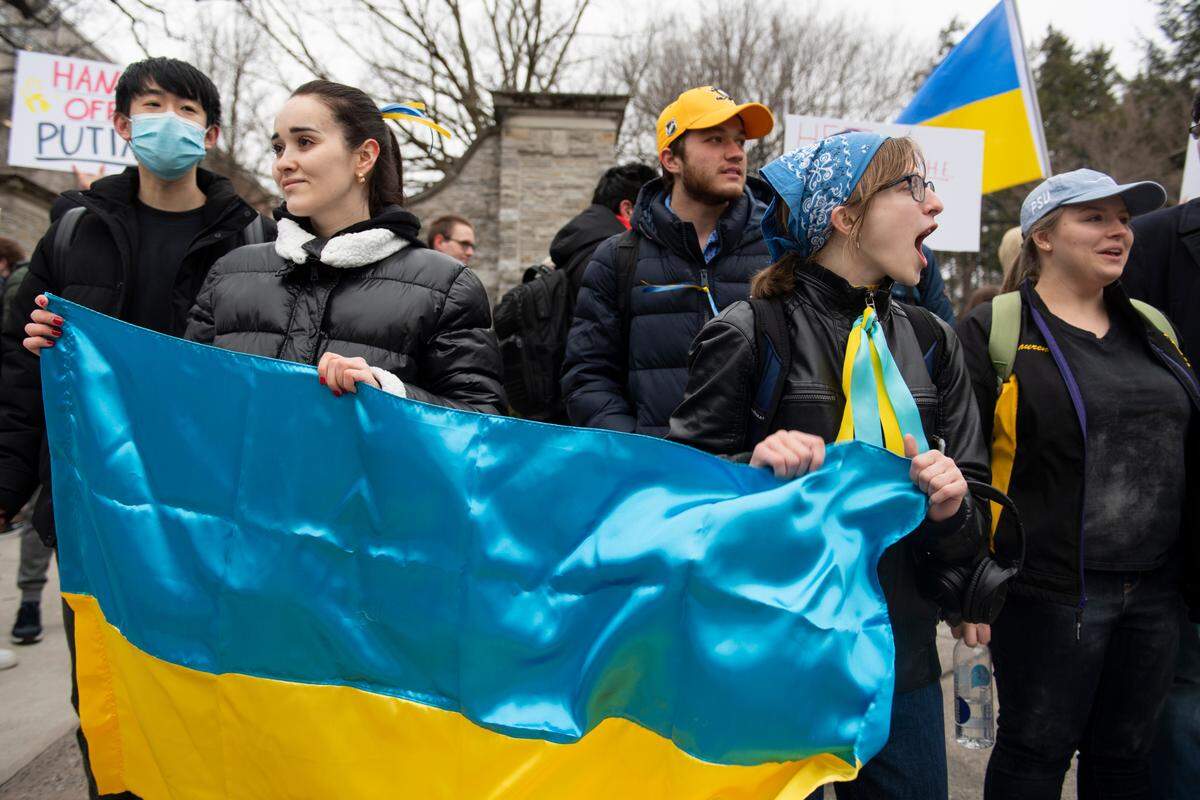
The Penn State Ukrainian Society will hold a two-hour rally, starting at 5 p.m. Thursday in front of Penn State’s Old Main. The rally will include both speakers and singing, and the university itself has also advertised the event.
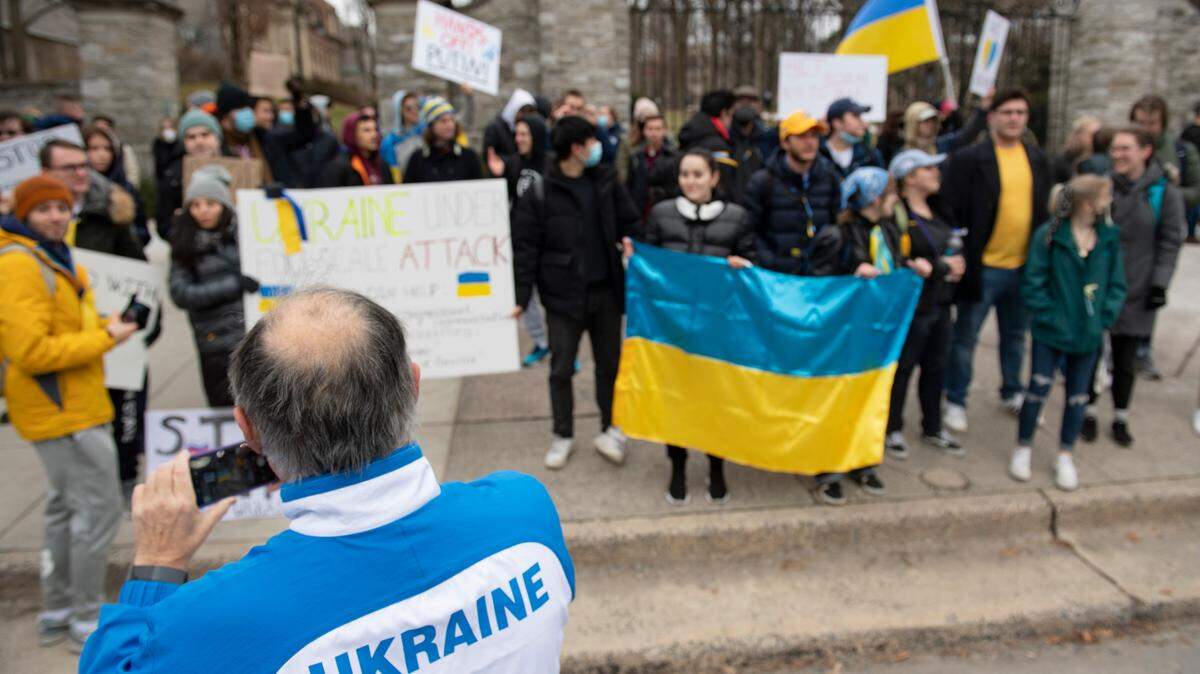
The Penn State Ukranian Society, a student group, is led by Maria Smereka and Sophia Datkso, two first-generation Ukrainian Americans who still have family back in Ukraine. The two helped organize an impromptu rally last week in front of the Allen Street Gates — and Datsko was pleasantly surprised by the response that saw nearly 50 attendees and many more passersby voicing their support.
“Seeing everyone here today put the first smile on my face that I had all day,” she previously told the CDT. “It just made me feel so happy that there are others that feel as passionate about it that I do, about my culture, my heritage and my mother country. It was a happy moment to my day today.”
A significantly larger crowd is expected for this event, as this one has been planned a week in advance.
The Penn State Ukrainian Society also recently created a Venmo account that allows for online donations. Those interested can donate to @WEARE4UKRAINE to help the group support Revived Soldiers Ukraine, a nonprofit that helps severely injured soldiers, and Ukraine’s armed forces. Funds will also go toward humanitarian aid for Ukraine.
How to help locally
A number of local drives and fundraisers have sprung up to help support Ukraine and some local Ukrainian Americans. Here are just a few:
- Adam Cole Salon sending donated items directly to Ukraine: The State College salon has two stylists with friends and family directly impacted by the war, so it’s asked residents to bring the following items to the salon at 129 Moses Thompson Lane: first aid supplies, dressings and bandages, toiletries (men and women), diapers, baby bottles, clothes (good condition), shoes (good condition), gloves, coats and hats, painkillers, antiseptics, batteries, flashlights, trash bags, blankets/sleeping bags, pillows/sheets, thermal long johns, dry sanitary products, non-perishable food. The salon intends to send the collected items to Ukraine.
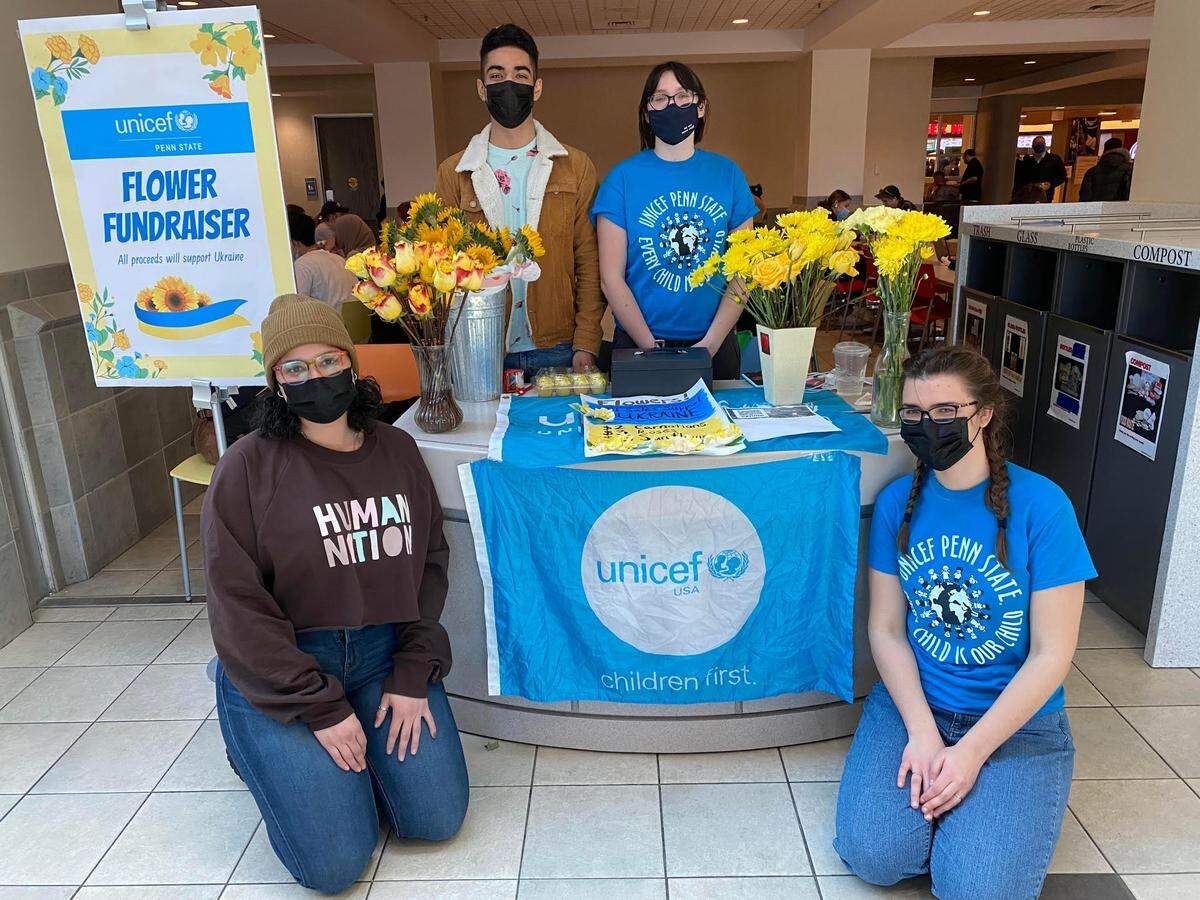
- UNICEF PSU selling flowers to raise money for Ukraine: Stop by the HUB-Robeson Center on the Penn State campus, between 1-5 p.m. Thursday, for a “Flower Fundraiser” that will raise money “designated for children in Ukraine to ensure they can receive safe water, nutrition, health care, education and protection during this crisis,” according to student organization president Shaunelle Rivers. Sunflowers, Ukraine’s national flower, can be purchased for $5 apiece while yellow roses are $3 and yellow carnations are $2. Those who cannot make it to the HUB but still wish to help can donate at unicefusa.org. More information on where funds are going can also be found here.
- Volunteer to help “Save Ukrainian Heritage Online”: A group of cultural heritage professionals from around the country, including the Big Ten, is hoping to get volunteers to essentially identify and archive at-risk data and websites in Ukrainian cultural heritage institutions before they’re lost while under attack. No programming background is required — although it helps — and the virtual “data rescue session” will be held online Saturday at a time to be determined. More information can be found at sucho.org, and you can sign up here.
Where to consider donating
There are a number of worthy nonprofits and charities to consider donating to, but the below list consists solely of the organizations identified by the U.S. government as reputable relief organizations responding to the crisis in Ukraine. Another list of nonprofits recommended by PSU’s Ukrainian Society — and which consists of some overlap — can be found at razomforukraine.org. (“Razom” means “together” in Ukrainian.)
Alternatively, rather than giving through official websites, you can also make one-time donations via text message: Text UKRAINE to 25383 to donate $25 to the International Rescue Committee; text UKRAINE to 80100 to donate $10 to UNICEF; or text UKRAINE to 52000 to donate $10 to the Salvation Army National Corp.
Airlink: This nonprofit works with airline and logistics partners to help nongovernmental organizations respond to disasters and humanitarian crises around the globe. It is working on sending relief supplies to Ukraine and has already supported the transportation of five assessment and emergency response teams to Poland, Romania and Moldova.
CARE: This organization works around the globe with a mission to save lives, defeat poverty and achieve social justice with an emphasis on women, families and the elderly. In Ukraine, CARE is aiming to reach 4 million people with immediate emergency assistance — meaning food, water, hygiene kits, psychosocial support and cash assistance.
Catholic Relief Services: Founded in 1943, this organization’s mission is to assist impoverished and disadvantaged people overseas — and while its mission is rooted in the Catholic faith, people are served solely based on need and not on religion. CRS’ plans through its 17 diocesan offices in Ukraine include hosting reception services for displaced families in transit, transporting displaced families, planning field kitchens to provide food, etc.
ChildFund: This charity focuses on children by historically providing food distribution, early childhood development, health and immunization programs, nutritional programs, water and sanitation development, emergency relief, etc. ChildFund’s German sister organization, ChildFund Deutschland, has worked in Ukraine for many years and “is acting quickly to provide emergency aid to kids and their families.”
Humanity & Inclusion: Formerly known as Handicap International, this organization was a co-recipient of the 1997 Nobel Peace Prize and aims to help disabled and vulnerable people involving poverty, exclusion, conflict and disaster. In Ukraine, it’s asking for donations to help those fleeing the conflict. Mental and psychosocial support sessions will be provided, in addition to emergency kits and rehab sessions for those injured.
International Committee of the Red Cross: An independent, neutral organization, the ICRC attempts to ensure humanitarian protection and assistance for victims of armed conflict and other situations of violence. It has worked in Ukraine since 2014 with more than 600 staff members, and it’s trying to increase its aid. Among its priorities are providing food, water and other essential items; supporting hospitals and primary health care facilities with medical equipment and emergency preparedness; repairing water stations; and helping separated families reconnect.
International Medical Corps: This nonprofit is known for delivering emergency medical and related services to those affected by conflict, disaster and disease. Teams are already in Ukraine and the surrounding areas, expanding access to medical and mental health services for both refugees and those living in affected communities.
Medical Teams International: This faith-based organization is focused on providing lifesaving medical care for people in crisis, such as survivors of natural disasters and refugees, regardless of the person’s religion. In Ukraine, the organization says it is in the process of deploying a team to the region and is working with partners to ship crucial medical supplies.
Project C.U.R.E.: This nonprofit is the world’s largest distributor of donated medical relief, delivering lifesaving medical equipment and supplies to hospitals and clinics throughout the world. It is accepting donations for its campaign to continue providing humanitarian assistance to the citizens of Ukraine and is on standby to assist with requests for medical supplies and equipment.
Project HOPE: This international health care organization aims to transform the health of communities around the world by empowering local health care workers through support, training and resources. Project HOPE is on the ground in Ukraine responding to the crisis and is actively shipping essential medical supplies to assist Ukrainians in need.
Save the Children: Founded more than a century ago, this nonprofit serves children’s needs and works to protect them from harm. Operating in Ukraine since 2014, Save the Children is providing children and families caught in the crossfire of the crisis with immediate aid, such as food, water, hygiene kits, psychosocial support and cash assistance.
UNICEF USA: This nonprofit says it has saved more children’s lives than any other humanitarian organization. UNICEF has launched an emergency response to the conflict in Ukraine, supporting health, nutrition, HIV prevention, education, safe drinking water, sanitation, psychological support and protection for children and families caught in the conflict.
United Nations Population Fund: The U.N. sexual and reproductive health agency promotes the health and rights of women and girls around the world through education, advocacy and fundraising. The nonprofit is accepting donations to support women and girls affected by the armed conflict, delivering lifesaving services such as essential medicines and reproductive health care to those at risk.
United Nations Refugee Agency: This global organization is dedicated to serving and protecting refugees, forcibly displaced communities and stateless people. With hundreds of thousands of Ukrainian families being forced to flee their homes into neighboring countries, the nonprofit is on the ground helping to ensure that families and children displaced by the violence find safety and stability.
United Nations Office for the Coordination of Humanitarian Affairs: This organization strives to deliver humanitarian action that meets the needs of the most vulnerable populations. It has a presence throughout Ukraine to coordinate humanitarian assistance of international and national organizations, activating the six humanitarian clusters of education; food security and livelihoods; health; protection; shelter and non-food items and water; and sanitation/hygiene.
World Food Program: This charity bills itself as leading the United States’ fight against global hunger. As the Ukrainian crisis leaves hundreds of thousands of families displaced and in hunger, the nonprofit is on the ground in Ukraine and delivering emergency food supplies to those in urgent need.
World Health Organization: Known for leading global efforts to expand universal health coverage, this organization is working closely with its offices in Ukraine and neighboring nations. It hopes to rapidly respond to health emergencies triggered by the conflict and minimize disruptions to the delivery of critical health care services.