
‘Barely getting by’: Centre County animal shelters struggle as pet abandonment rates rise
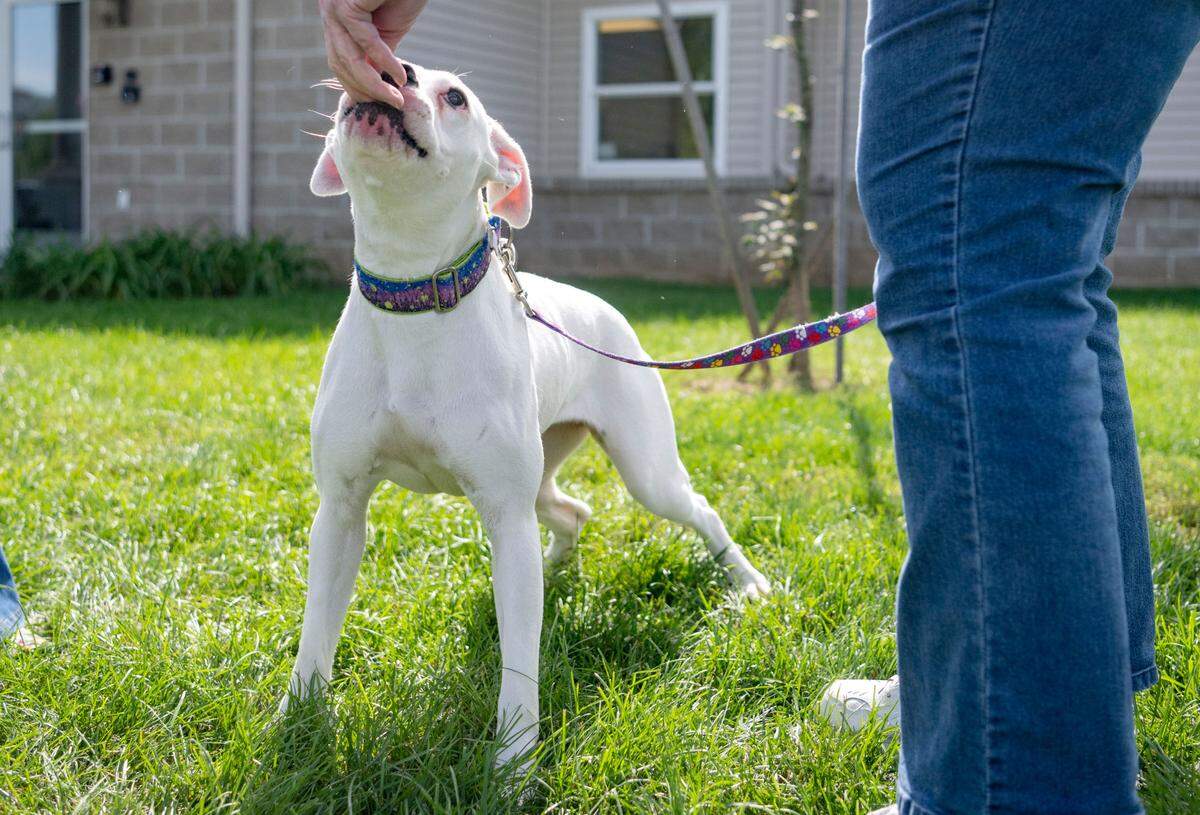
.JPG "Popeye at PAWS of Centre County on Thursday, Sept. 28, 2023.")
Across the nation pets are being surrendered, abandoned and left behind, leaving animal shelters — like those in Centre County — to pick up the slack.
The number of stray dogs has risen 23% from 2022, and with adoption rates declining, local shelter directors are asking the same question: What do we do with all the pets? For Lisa Bahr, executive director at Centre County PAWS, the answer isn’t an easy one.
More than 6.3 million pets enter shelters each year, the majority of which are strays. But only 4.1 million are adopted out annually, with the rest staying in shelters, moving to foster homes or being euthanized. Now, intake rates are again rising across the country — and Bahr said Centre County is no exception.
“Nationwide, people are bringing in more animals and sending out fewer,” Bahr said. “So we’ve been able to keep up adoption-wise. But with intakes, surrenders of animals, surrenders of dogs, specifically, we are just barely getting by with the local surrenders.”
In previous years, PAWS has taken in around 20 dogs a month from full shelters as part of the transfer program, which sends overflow from kill shelters to those that have space. But with the number of local strays, PAWS has had to stop accepting other transfers.
Bahr said the rise in abandonments and owner surrenders has filled spots in the shelter that would normally have been used for out-of-state transfers — leading to rising euthanasia rates.
Nationally, euthanasia rates have reached a three-year high as shelters halt transfers and fill up spots. From 2022 to 2023, the Shelter Animals Count national database recorded a 1.2% decrease in dog adoptions. With more dogs staying in shelters, transfers from kill shelters decreased and the number of dogs who were lost, died or euthanized in care rose 85% since 2021.
PAWS isn’t the only Centre County shelter affected by the number of abandoned or surrendered pets. Pets Come First, a non-euthanasia shelter in Centre Hall, has long dealt with high numbers of dogs coming into the shelter, whether from owner surrender, breeders or law enforcement. Deb Warner, co-founder and shelter manager of Pets Come First, said pet abandonment and shelter capacity are complicated.
For no-kill shelters like Pets Come First and Centre County PAWS, the increase in animals puts shelter directors in a tough position where space is limited and the number of pets in need of help just keeps rising. Warner said Pets Come First has a 15-person waiting list to surrender their dogs and a nearly 300-person waiting list for cats.
“No-kill sounds wonderful, but until people are willing to step up and spay/neuter their animals, what are you going to do with all these extra animals?” Warner said. “It’s so frustrating right now.”
A contributing factor to the issue is how many people have gotten into breeding dogs or failed to get their pets spayed or neutered, Warner said. In some areas, dog breeders have saturated the market and given the puppies that won’t sell to shelters like Pets Come First.
“They’re giving whole litters of golden retrievers, the golden doodles, the labs, just giving them away because they can’t sell it,” Warner said. “They used to get $1,500; $2,000 for them. Now they’re not even getting $100.”
Not only are dog breeders having a hard time selling purebred dogs, but prestige and designer dog breeds are being found abandoned in Centre County more often, Bahr said. There is also little correlation between the age or health of the stray dogs. They range from puppies to older adults; most have no major medical problems, she said.
“We’re now seeing dogs coming in with brand new collars,” Bahr said. “Dogs that clearly were purchased from breeders because they’re purebred dogs. These are dogs that in the past we would take them in and expect them to be gone within the day because these dogs are clearly from a home where they’re missed and [their owners] are just not coming to pick them up.”
Although shelters can see an increase in abandonment rates, understanding why owners are leaving pets behind is harder to determine. The only time many shelters can collect data on why owners are abandoning dogs is if owners directly surrender their pets to the shelter.
One major possibility, Bahr suspects, is the rising cost of pet supplies and veterinary care. Veterinary costs rose 11% from July 2022 to July 2023, and pet expenditures in general have risen dramatically over the last decade. From 2013 to 2021, pet-related expenses have grown by 78%, according to the U.S. Bureau of Labor Statistics.
In 2020, PAWS opened up its pet pantry, providing pet food and supplies to help owners who had trouble keeping up with pet expenses during COVID-19-related layoffs and furloughs. Three years later, the shelter can hardly keep the pantry stocked due to community needs.
“We cannot keep up with the demand,” Bahr said. “We’ll put out 10 bags a day and it’s gone. It’s gone in a day — 10 bags of cat food, 10 bags of dog food. A week, we can’t keep up with it. I think that’s a good indicator that people are having trouble paying for their pets.”
If pet owners are struggling to afford or care for their animals, shelter directors suggest looking for low-cost community options. Instead of surrendering animals to shelters, try rehoming them to a family member or friend, or find someone in your community in search of a pet. For medical needs and to spay/neuter, shelters like Pets Come First and PAWS provide low-cost vouchers for owners. Pet Pantry of Centre County and PAWS also provide help for owners in need of pet food assistance.
.JPG "006PAWScuties (1).JPG")
This story was originally published December 29, 2023 at 2:48 PM.