Geisinger has been officially acquired by Risant Health. Here’s what that means for you
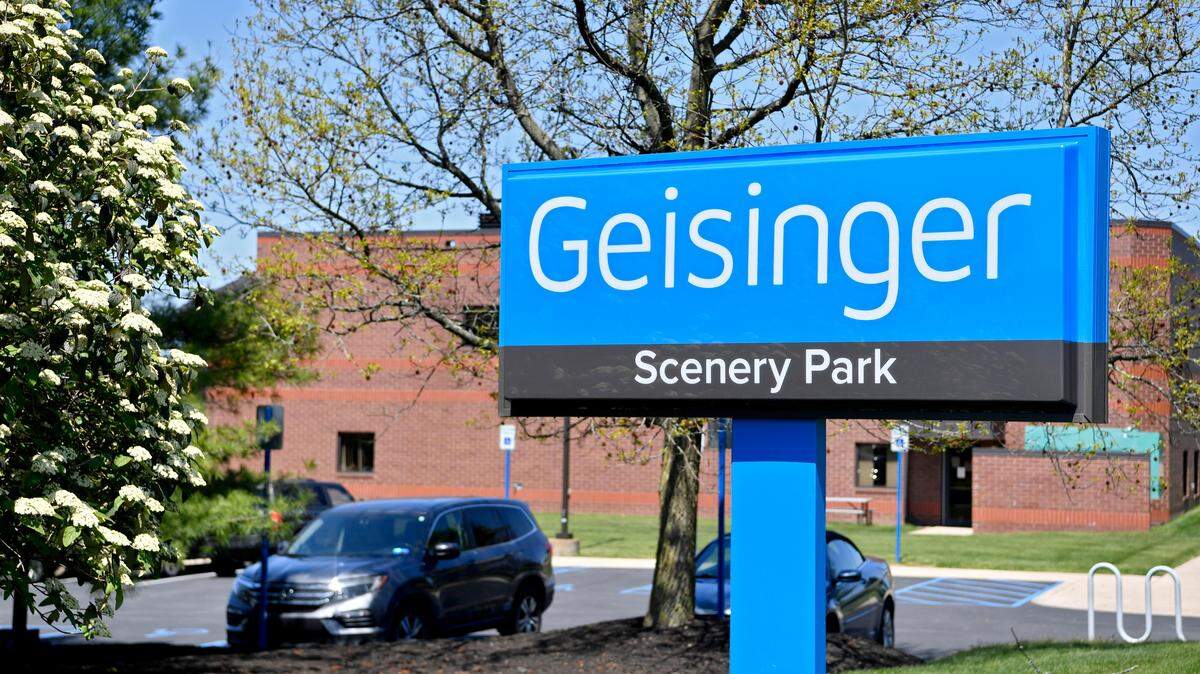
Geisinger has been officially acquired by Risant Health, a nonprofit created last year by Kaiser Permanente — but officials emphasized Tuesday the change shouldn’t cause headaches for Geisinger patients.
Geisinger will keep its name. The same insurance will be accepted. And patients won’t be forced to change doctors, even those with Geisinger insurance who see non-Geisinger specialists. In short, those officials told the CDT they’re hoping the only changes patients notice won’t cause them to reach for Aspirin.
“The things that do change will change over time, and it’s not for the worse — it’s actually for the better,” said Dr. Jaewon Ryu, who served as Geisinger’s president/CEO since 2019, before recently becoming Risant Health’s first CEO.
Throughout an interview with the CDT, Ryu expressed confidence that the acquisition would only strengthen Geisinger. It would allow the health system to “double- and triple-down” on projects and invest more in cutting-edge technology.
In a news release Tuesday, Ryu and Risant Health’s board chairman even touted increased affordability as a benefit.
But, even before the acquisition was finalized, some health economics experts expressed skepticism about that last point. In a roundtable last year on a potential merger, at least one UPenn professor found difficulty in believing Geisinger would improve affordability at every level.
“I have found in my own research that hospitals do obtain operating cost benefits or ‘merger efficiencies,’ but I have not seen evidence yet that these reductions are passed through to consumers,” assistant professor of health care management Atul Gupta said at the time. “We should expect to see higher prices for insurers and consumers even though there is no market overlap between the two parties.”
Who is Risant Health?
Risant Health may not be a familiar name to many because it’s so new, but it’s a nonprofit subsidiary of 79-year-old Kaiser Permanente, a California-based health care company that boasts more than 200,000 employees. Some experts and publications, such as Medscape, believe Risant Health’s creation could be Kaiser Permanente’s attempt to become a national player in the industry by expanding to the mid-Atlantic.
Risant Health has publicly said it plans to acquire 4-5 more health systems over the next 4-5 years. Geisinger was simply its first.
“Risant Health and Geisinger share a vision for the future of health care,” Risant Health board chair Greg A. Adams said in a written statement. “Through Risant Health, we will leverage our industry-leading expertise and innovation to increase the country’s access to high-quality and evidence-based health care, which we know improves care quality and the patient and member experience.
“We will also learn and benefit from Geisinger and the additional health systems that become part of Risant Health in the future, to help them grow in new ways, be more affordable and bring value-based care to more people.”
In a joint news release last year, Geisinger and Kaiser Permanente announced their intent to launch Risant Health, with Geisinger serving as the nonprofit’s first acquisition. The deal, which needed regulatory approval, was finalized by Sunday and publicly announced Tuesday.
How does Geisinger benefit?
Ryu understood that news of the acquisition might reflexively make some patients uneasy. After all, in other industries, it’s not uncommon for these kinds of transactions to be met with company-wide layoffs.
But that’s not the case here, Ryu and spokesperson Christopher Murphy said.
“It’s fair to assume that Geisinger will have more employees at the end of 2024 than it does right now,” Murphy said.
Added Ryu: “I think that’s exactly right — because of growth. That’s exactly right.”
For Geisinger to agree to the acquisition, Risant made several guarantees. For example, Risant will make at least $115 million available annually, for the next 10 years, to fund Geisinger’s research and education. And Risant will make at least $2 billion available to Gesinger through 2028 for support and strategic purposes.
Outside experts also believed the transaction should positively impact the credit ratings of Geisinger, which was downgraded by Moody’s last February to an upper-medium grade of A2, according to Hospitalogy.com. And it should allow Geisinger to better compete with growing rivals such as UPMC, which Forbes.com reported has more than tripled its number of hospitals — from 12 to 40 — in the last decade.
To remain a local leader in health care, Ryu said Geisinger needs to continue investing in better digital capabilities, more data/analytics and improved physician-facing tools. Risant, he said, offers a path to that.
“It turns out none of that is cheap,” Ryu said. “I wish it was, but it isn’t. None of that is cheap, and it requires significant outlays and commitments — and that’s well beyond what we could do on our own. And it’s well beyond what many community and regional health systems can do on their own.
“We’re lucky at Geisinger. We’ve been able to develop a lot of those capabilities over the years — probably moreso than most — but we also know we’re not able to keep up with where the world is going and, frankly, where our industry needs to go.”
Centre County & Beyond
Geisinger plans to continue its relationship with Mount Nittany Health. And Ryu, who was also aware of Centre County’s upcoming $70 million hospital (Penn Highlands State College), acknowledged new relationships were also possible.
When asked whether the acquisition would halt, or change, any current Geisinger projects — such as the $15.5 million primary and urgent care facility in rural Spring Township — a spokesperson believed they would continue as planned.
“Those projects, I would anticipate, will move forward as planned — partly because the Risant transaction enables us to fund our facility investments to the level we want to,” Murphy said.
Added Ryu: “I can’t speak to the specifics of those projects because I’m a couple steps removed from them. But this (acquisition) enables us to double- and triple-down on projects like that. That’s the reason we’re doing this.”
Geisinger and central Pennsylvania are inextricably linked. Statewide, Geisinger boasts about 600,000 members on its health plan and serves about 1.2 million people. In Centre County, the 52-acre Geisinger Healthplex State College offers more than 50 services and specialties, Geisinger Scenery Park has more than three dozen physicians and specialists, and Geisinger 65 Forward Health Center — for those 65 and older — opened in Patton Township in 2021. And that’s not an inclusive list.
Across the commonwealth, Danville-based Geisinger has 10 hospitals, 134 care sites, a college — and 26,000 employees.