
Judge reduces $20.5M award to woman who alleged racial harassment at State College workplace
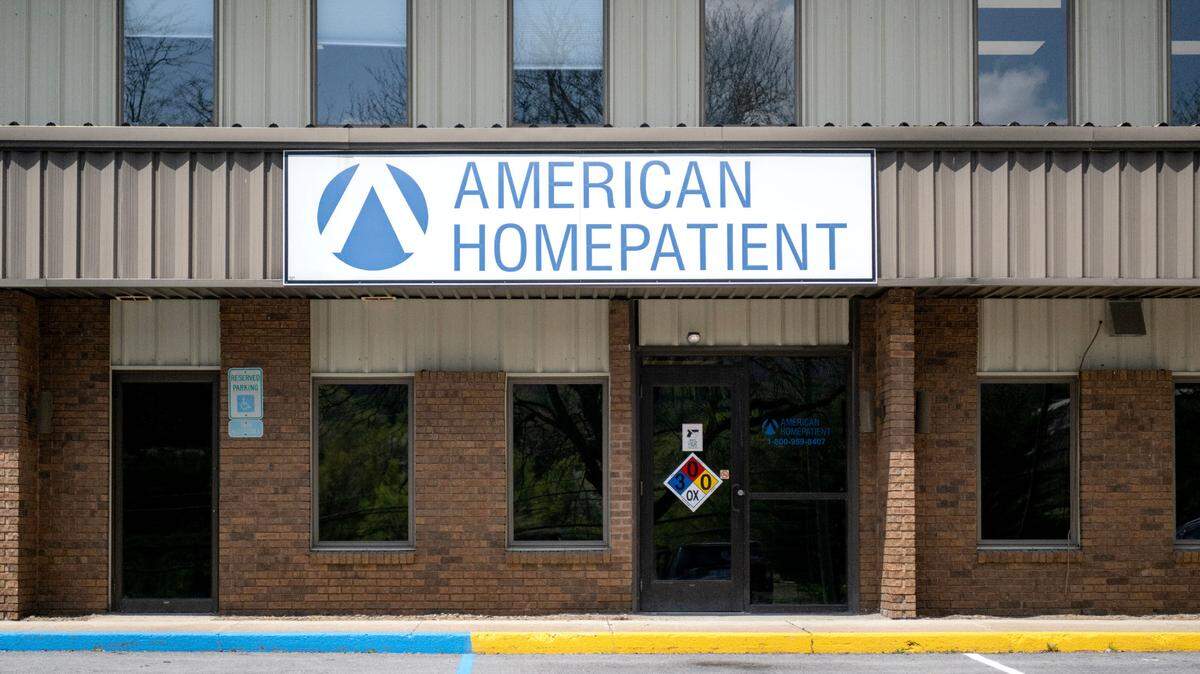
A federal judge significantly reduced earlier this month a jury’s award to a Black woman who proved at trial that she was racially harassed while working at a State College area business.
U.S. District Judge Matthew W. Brann found the $20 million in punitive damages awarded to former American HomePatient customer service representative Patricia Holmes was unconstitutional. He dropped the award to $1 million.
The jury’s award of $500,000 in compensatory damages was left undisturbed, an amount Brann agreed was “substantial.” Holmes’ full award is $1.5 million.
Compensatory damages are often meant to reimburse people for actual costs but also include compensation for emotional distress. Punitive damages are meant to punish defendants for their conduct and are also seen as a chance for jurors to send a wider societal message.
Though the judge sided with American HomePatient in reducing the award, he offered no praise of the business’ approach to containing the fallout from the jury’s decision.
“I note that Defendant has consistently minimized the severity of what occurred at its State College Center. From the Court’s perspective, ongoing racial harassment was present for Holmes’ entire stint of employment,” Brann wrote. “Even worse, the company’s designated recipients of discrimination complaints failed to address corroborated incidents of racial harassment involving the Center’s supervisor. Evidently, the jury was not persuaded by this argument; neither am I.”
Holmes’ employment with the home health care service, which began in October 2019, soured almost immediately. She was the only Black employee among the small staff during her time there.
Just two days after Holmes was hired to work at 2437 Commercial Blvd., co-worker Beverly Hibbert used the phrase “Oreo baby,” according to court documents.
That same month, a respiratory therapist placed a white hood over Holmes’ head as part of a test to see if she was properly wearing a mask. Location manager Timothy McCoy, according to a trial transcript, said it was “ironic to see a white woman putting a hood on a black woman’s head.”
Holmes connected the comment to the Ku Klux Klan and told jurors it made her “sick to my stomach” and that she believed McCoy “placed very little value on my life as a person.”
In March 2020, according to a court document, McCoy asked Holmes what she thought about the use of the N-word. She told him she believes it is “an ugly word” that should never be used.
After some more back-and-forth, McCoy — incredulously, Brann wrote in previous rulings — said he would “Google it.” While McCoy showed Holmes the search results, Hibbert emphasized the pronunciation of the slur. Then they laughed.
That conduct from a supervisor was “shocking,” Brann wrote in a July 2023 opinion that allowed Holmes’ claims to proceed to trial.
“It made me wonder why somebody would view me as less than. Did I give this man a reason to view me as less than anybody else, anybody else in that office? Why would he look at me or look upon me as that. Why? I don’t know,” Holmes said during trial in response to a question that asked if the conversation changed the way she felt about herself.
“And it did cause me to have some self-doubts, not that I was an ‘N’ word, but the value of me. Why would somebody devalue me? What did I present to this company for them to devalue me. What did I do? What did I say?”
Holmes lodged her first formal complaint about racist conduct the following day. The investigation, Brann wrote in an earlier opinion, quickly learned “this wasn’t uncommon behavior” for Hibbert.
The judge wrote that her actions were “highly offensive and inexcusable,” adding in a footnote that she had an “unfortunate history of such behavior.”
McCoy was issued a written warning, the company’s second-lowest level of discipline. The company said it felt that was appropriate because he had no prior discipline and had been with the company for about 20 years.
”We had taken into consideration malicious intent versus just poor judgment and we just didn’t feel that there was malicious intent and felt that we could coach him and move him along and help him improve,” a human resources employee testified during a deposition.
That response, Brann previously wrote, could be viewed by a jury as “markedly deficient.”
“McCoy had a history of making, to put it generously, racially insensitive remarks to his only black employee and, at a minimum, condoned racist statements and behavior from Hibbert, who had a pattern of offensive behavior,” Brann wrote. “Despite McCoy’s behavior over a period of months, AHP issued only a written warning — one of the mildest forms of discipline that AHP could impose — and this was not in response to McCoy’s racially insensitive behavior but, rather, was in response to McCoy having permitted Hibbert to behave in an unprofessional manner.”
Hibbert was initially issued a final written warning, but was fired after she placed tape over her mouth and said it was the “only way she didn’t say anything to get in further trouble.”
At least one of Holmes’ coworkers resigned because of McCoy’s behavior and because he allowed other inappropriate behavior to continue, according to court documents. The woman said she felt “so miserable that (she was) crying all the time.”
Another coworker testified it was “honestly horrible” coming to work when Holmes was being discriminated against. Holmes resigned in July 2020. An all-white jury sided with Holmes, now of New Jersey, after a three-day trial in April.
Brann deferred a decision earlier this month on Holmes’ request for more than $1.6 million in legal fees. He declined American HomePatient’s request for a new trial, finding its argument to be “unconvincing.”