
Over the garden fence: How to get the most out of seed catalogs coming your way
The Penn State Extension Master Gardeners of Centre County are pleased to continue Bill Lamont’s column in gratitude for his contributions to our program and our community. Have a home gardening question? Email centremg@psu.edu.
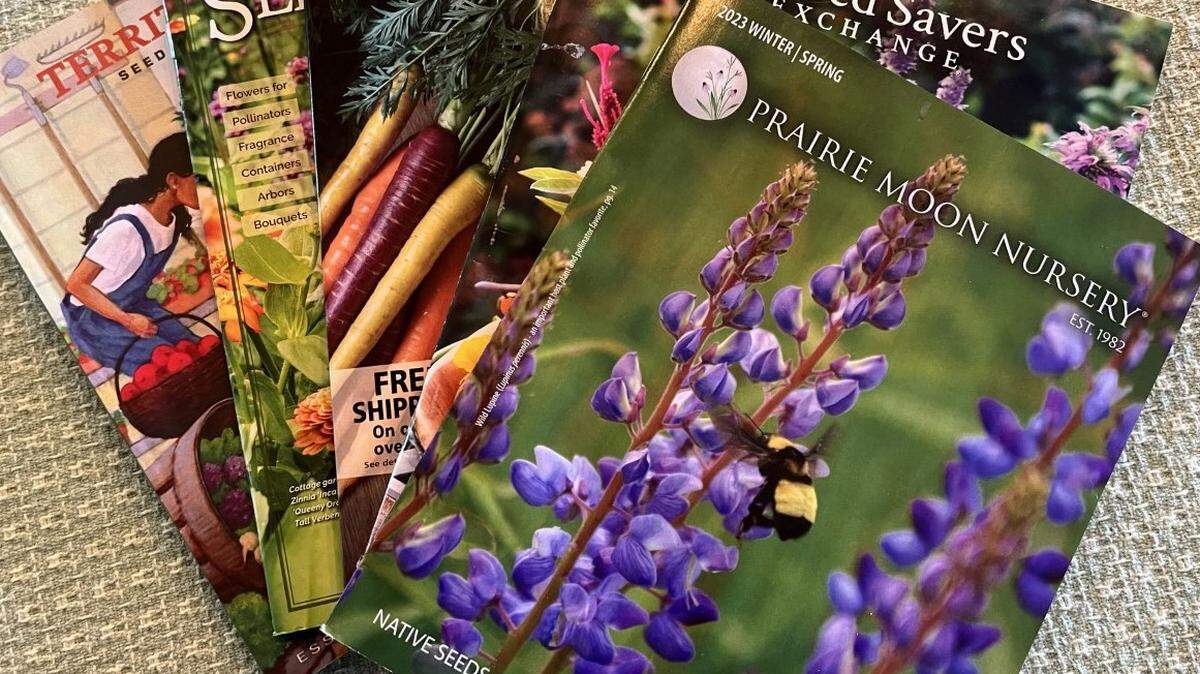
January in Pennsylvania: gray skies and chilly winds. At this time of year, gardening might be the farthest thing from your mind! But in mailboxes (and inboxes) across the region, the avalanche of seed catalogs is well underway. For a gardener, this influx can make it the most wonderful time of the year — time to relax in a comfy chair by the fire and create your dream garden.
Printed seed catalogs have been around since the mid-18th century, originally carrying hard-to-find imported seeds. (For those who enjoy history, Andrea Wulf’s “Brother Gardeners” is a fascinating look at the birth of the seed industry in this country.) Today, offerings range from the latest genetically modified varieties to heirloom seeds that have been saved from extinction. Perhaps you’re on the hunt for the latest and greatest new cultivar, or just looking to mix it up and try something different this year. Sometimes selections can be hard to find at your local nursery, or maybe you’d just like to save some money by starting plants from seed.
With so many tempting choices, anything seems possible — but where to begin?
A quality seed catalog is like a mini-textbook, and with some careful reading, you can learn a great deal before filling your online cart. Reputable companies will provide detailed descriptions of a plant and its requirements, and these are a good starting point.
First and foremost, consider the growing conditions in your planting area. Will this plant need full sun, part shade, or shade? What kind of soil does it like, and how large will it get? The goal is for plants to thrive, not just survive — no point in buying those gorgeous sunflowers if your yard is in deep shade! You’ll enjoy more success (with less work) if you let the plant’s preferences be your guide.
The best catalogs list a plant’s botanical name as well as common name. Why does this matter? Some plants are known by a variety of common names, so the botanical name can be essential information that will help avoid confusion. Equally, several different species may be popularly known by the same common name. For instance, “daisy” could refer to the popular perennial with white flowers (Shasta daisy, Leucanthemum), the showy summer annual with brightly colored flowers (African daisy, Osteospermum), or maybe another plant with a similar flower shape like ice plant (Delosperma). Knowing the botanical Latin name helps you avoid costly mix-ups.
Hybrid (Hy, F1 or F2) seeds are crosses between genetically distinct parents. Hybridization selects the best traits of each parent, improving characteristics like flavor, color or yield, but take note: Seeds saved from hybrids will not produce the same type of plants next year. Seed-savers should choose open pollinated (OP or heirloom) seeds, which have stable traits from one generation to the next. Plants grown from these seeds will “come true,” or produce plants very similar to their parents.
Some selections are noted as being disease resistant. These have been proven or bred to be resistant to a variety of common diseases, and this can be especially important information for vegetable gardeners. Many catalogs will also list the particular diseases or pests to which the variety is resistant. In any case, it’s a good idea to learn a little about common pests and diseases of whatever you’re planting — forewarned is forearmed! If you have an idea of what to look for, you’re more likely to catch problems early, when they’re much easier to manage.
Quality catalogs might even provide cultural information, especially for edibles — basically a short summary of everything you need to know about growing and harvesting the plant.
With the aid of a good seed catalog, a little advance preparation can help fend off overwhelm and buyer’s remorse and increase your chances of a successful season. Happy planning!
In the garden this month:
If you’re still itching to get your fingers into some soil, there’s one activity that can scratch that itch — winter sowing!
Some seeds, like those of many native plants, actually need a period of exposure to the cold in order to germinate and grow. Winter sowing mimics nature by supplying the four things such seeds need to germinate: Oxygen, moisture, light and cold temperatures. These plants can be successfully started in January and February in “mini-greenhouses” that anyone can make, and can be planted out in the spring, all with a minimum of fuss on your part. It’s a great winter activity for gardeners who are longing to get their hands into some soil, as well as children of all ages.
What seeds perform well with this method? Milkweed, monarda, penstemon and New England aster are examples of native perennials that will thrive with this approach. For the vegetable gardener, cool-weather edibles such as broccoli, cabbage, peas, lettuce, kale and spinach are good choices. Parsley, cilantro, oregano and chives are a few of the herbs that can be winter-sown. And annual flowers such as nasturtium and snapdragon are also good candidates. You’ll find a step-by-step video guide on YouTube: Winter Seed Sowing with Master Gardener Andy Faust.