Centre County trans community demands Penn State Health reverse gender-affirming care stance
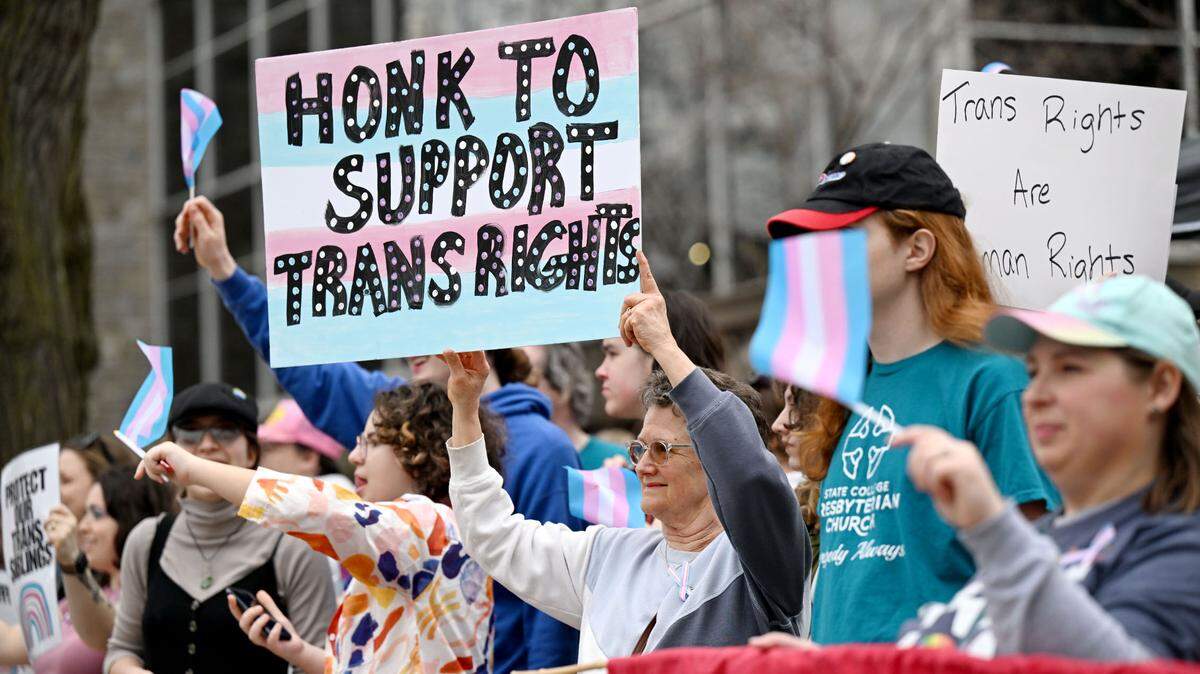
Centre County’s transgender community expressed anger, fear and disappointment over Penn State Health’s recent decision to discontinue gender-affirming care for those younger than 19, saying it could ultimately cost lives due to a documented increase in suicide for those without access.
Penn State Health’s decision was finalized around April 7, in an effort to better align itself with President Trump’s executive orders from January. A PSU Health spokesperson declined to answer why the policy was implemented now — the orders are still being challenged in court — but many health systems across the country have been changing policies to avoid the future risk of losing federal funding. Pitt’s health system, UPMC, made a similar decision last month.
“We are talking about medical care that saves kids’ lives. Full stop,” said Michel Lee Garrett, a trans woman and board member for the nonprofit Centre LGBT+. “There is this notion that the ‘trans agenda’ is to come for your kids and turn them trans, which is simply false and ridiculous. ... The fact of the matter is that some of your kids are already trans, and we want them to survive.”
Anger over the decision isn’t limited to Centre County. Multiple groups across the commonwealth, from the Pennsylvania Youth Congress to the ACLU of Pennsylvania, are planning to rally at 6 p.m. Friday in three locations across the state — here at the Allen Street gates, in Hershey at the Penn State Children’s Hospital and in Pittsburgh at UPMC headquarters.
“Penn State Health’s decision to abandon trans patients in need represents a fundamental rejection of the health system’s own stated mission to improve the health and well-being of the people of Pennsylvania through compassionate, culturally responsive and equitable care,” read a statement from Centre LGBT+.
Although every doctor does not agree with gender-affirming care, the consensus does. Every major medical association in the U.S. — including the American Medical Association and the American Academy of Pediatrics — has issued separate statements in support of such care, which often involves puberty blockers and hormone-replacement therapy (e.g. testosterone, estrogen).
A 2022 study found that such care was associated with 60% lower odds of moderate or severe depression and 73% lower odds of suicidality over a yearlong follow-up with minors.
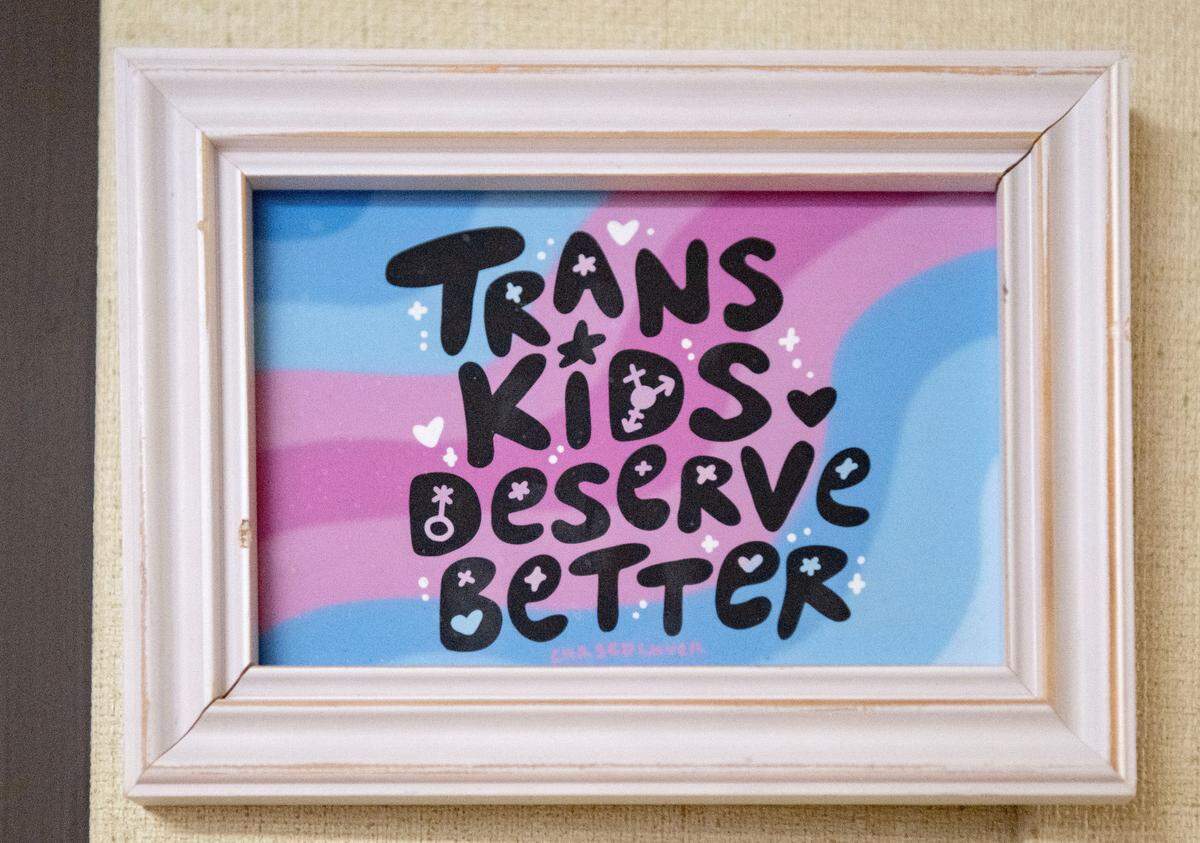
Impact of gender-affirming care
“Do you want a trans kid, or do you want a dead kid?” one State College mother asked. “Because that’s what we’re looking at.”
That mother, who spoke on the condition of anonymity due to fear of harassment, watched her talkative child suddenly go mute one day. That youngest child, usually a charismatic spark plug, slept all day and was diagnosed with depression. “I was scared,” she said. All that happened immediately after the child’s first period.
Her trans son would later explain that he never truly felt like a girl, so seeing that blood was disturbing. But he couldn’t describe that feeling as a pre-teen, so the family took him to a team of doctors and discovered he had gender dysphoria. They recommended puberty blockers and later testosterone, and he began acting like himself again. Five years of treatment later, his mother says he’s so funny, happy and creative that being trans “is, like, the least-interesting thing about him.”
“I don’t think he would be alive if he wouldn’t have had his gender-affirming care. I really don’t,” the mother said, pausing to steady her voice. “It is night and day, 100% different. Being a teenager is hard enough, and he still has teenager issues — he doesn’t want to clean his room — but I will take all of those problems because I know my kid is going to come upstairs and play with his dog and do all the normal things a teenage boy does.
“He goes to bed at night, and I know he’s going to be there in the morning. I’m not worried about him hurting himself anymore.”
She instead worries what might happen to her son’s care. What if she can’t get the testosterone and her son’s periods return? What about other parents of trans children?
She’s not alone in her concerns. Penn State freshman Gwynne Morris, 19, understands what it’s like growing up and feeling as if one’s not living in the right body — and she knows how important gender-affirming care can be for some children.
Although she “came out” a few months ago as a trans woman and didn’t undergo puberty blockers or hormone-replacement therapy in high school, she said everyone’s story is a little different. And some just can’t wait; there’s a reason transgender youth report more than four times greater rates of suicide attempts compared to their peers, per a 2023 study.
“The joy that I felt coming out of the closet and everything feeling affirmed to my identity — it’s the best feeling ever,” said Morris, who suspected she was trans at the age of 13. “And I want other people to feel validated in their own body. That’s the whole point of me talking today: I want Penn State to reverse this because this is dumb. It’s dumb to restrict that.
“Sometimes, it can feel even more hopeless as a kid. And, with everything going on in the world right now, we need this. We need Penn State to say, ‘OK, we’ll provide this to you.’”
Michel Lee Garrett, a board member at Centre LGBT+, didn’t mince words while referring to her own gender-affirming care as a trans woman.
“Coming to terms with my ‘transness’ and starting gender-affirming care literally saved my life,” she said. “It gave me back my future. There is such an intense and profound physical, mental, emotional and spiritual relief when you finally begin to feel your body and your presentation aligned with who you’ve always known yourself to be.”
Some critics have stated that trans youth are too young to make such important decisions, that they could regret starting such care. But a study published last fall showed that only 4% of surveyed youth regretted undergoing puberty blockers or hormone-related therapy. More Americans regret their tattoos. (A 2021 Harris Poll found nearly 1 in 4 Americans with tattoos regretted at least one.)
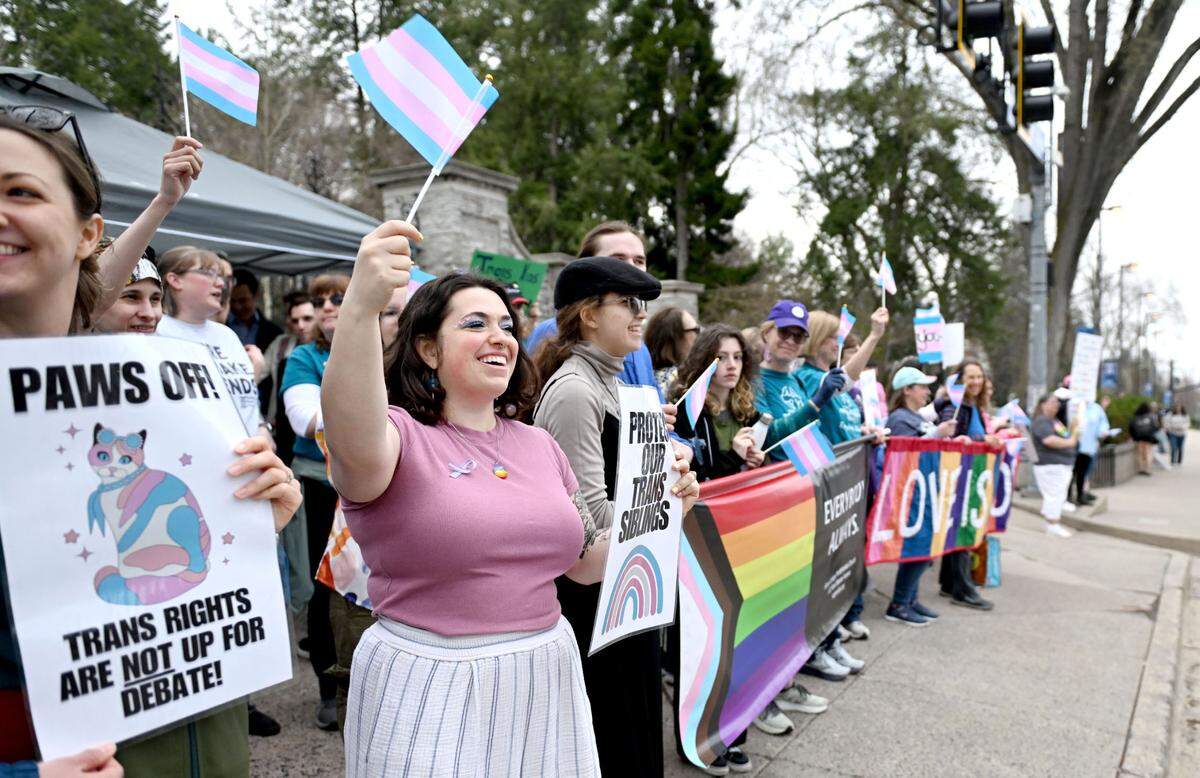
Looking ahead
Two other health systems within Centre County in Mount Nittany Health and Geisinger continue to offer gender-affirming care for minors.
Penn State Health never offered surgery on minors — fewer than 100 such surgeries happen nationally every year on trans minors, based on insurance data — but, up until last month, it still offered puberty blockers and hormone-replacement therapy. Its health system includes five acute care hospitals and nearly 200 outpatient practices, including four medical group locations in the State College area.
That decision didn’t sit well with state Rep. Paul Takac, D-College Township, whose district includes University Park.
“We’re in a situation where folks already struggle with access and affordability with health care,” said Takac, who has a transgender child and is scheduled to speak at Friday’s rally. “And the hard reality is that virtually everyone is fully dependent on what health companies are willing to pay for, and patients are trapped by a shortage of qualified caregivers. So the fact Penn State Health and UPMC and others are withholding care makes it that much more difficult for patients to get the appropriate care.”
Takac has seen the rhetoric pick up over the last few months, with the Trump administration describing gender-affirming care and surgery as “chemical and surgical mutilation.” Last week, Robert F. Kennedy’s Department of Health and Human Services released a 400-page report on trans minors with recommendations that “deeply alarmed” the American Academy of Pediatrics, which referred to the report as “inaccurate” and “misleading.”
The transgender community isn’t sure where the U.S. is headed, but it’s also alarmed by what might be in store. Will minors be able to continue their care? Will adults soon struggle to have insurance pay? Will it get even harder to be a trans person living in America?
“I’ll be honest. I’m very concerned this is just the tip of the iceberg,” Takac said. “If we comply with this, where do we go? Are we then being prosecuted for providing care to undocumented people? Are we going to be threatened for prosecution for performing reproductive health care, or any other care that someone else decides is not appropriate?
“It’s none of their damn business.”