New Northern Hawk Owl chick marks several firsts at Shaver’s Creek. How to meet him
AI-generated summary reviewed by our newsroom.
- Shaver’s Creek welcomed Pip, the first U.S.-bred Northern Hawk Owl for education.
- Pip’s arrival launches new programs and offers public meet-and-greet sessions.
- Pip offers rare research opportunity on a species last seen in Pennsylvania in 1991.
Shaver’s Creek Environmental Center welcomed a cute new addition to its aviary and the public can meet him as soon as this weekend.
Pip, a Northern Hawk Owl chick, was bred for conservation education in Washington state, the first time this species has been bred in the United States. Paige Sutherland, director of Wildlife Programs at Shaver’s Creek Environmental Center, said mutual connections and colleagues in the field connected Shaver’s Creek to the opportunity to have one live at the aviary.
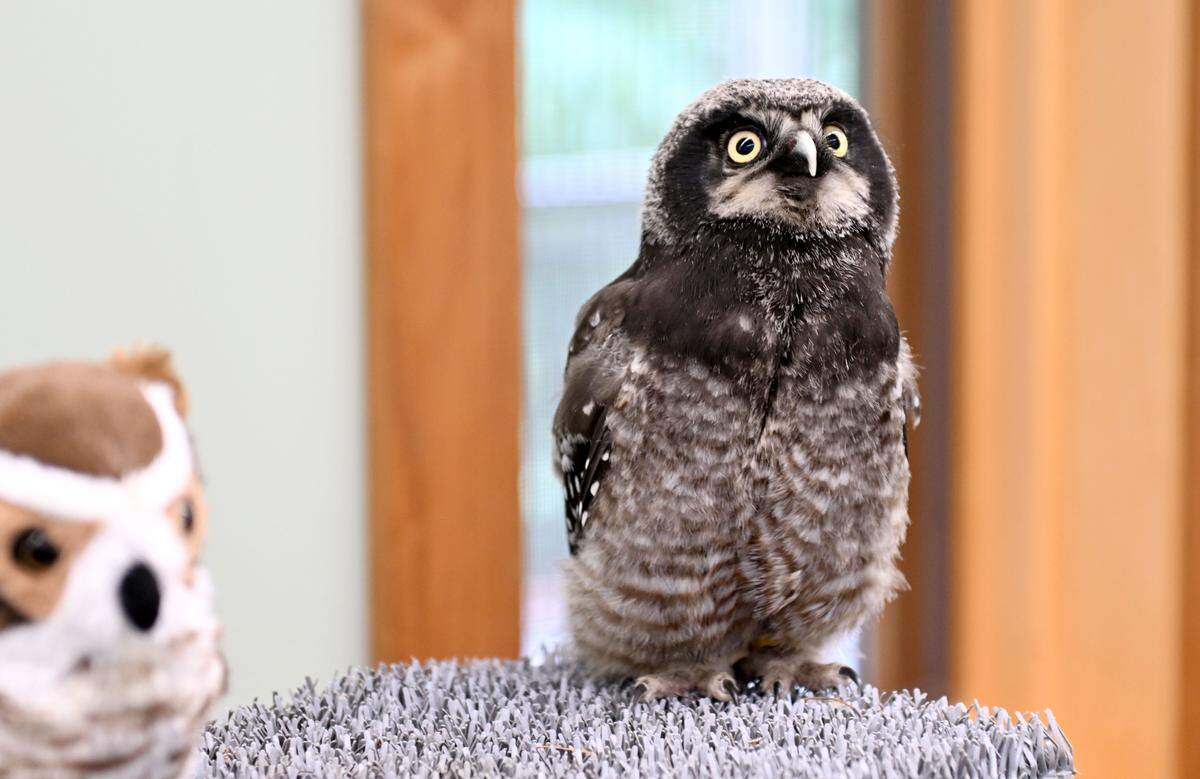
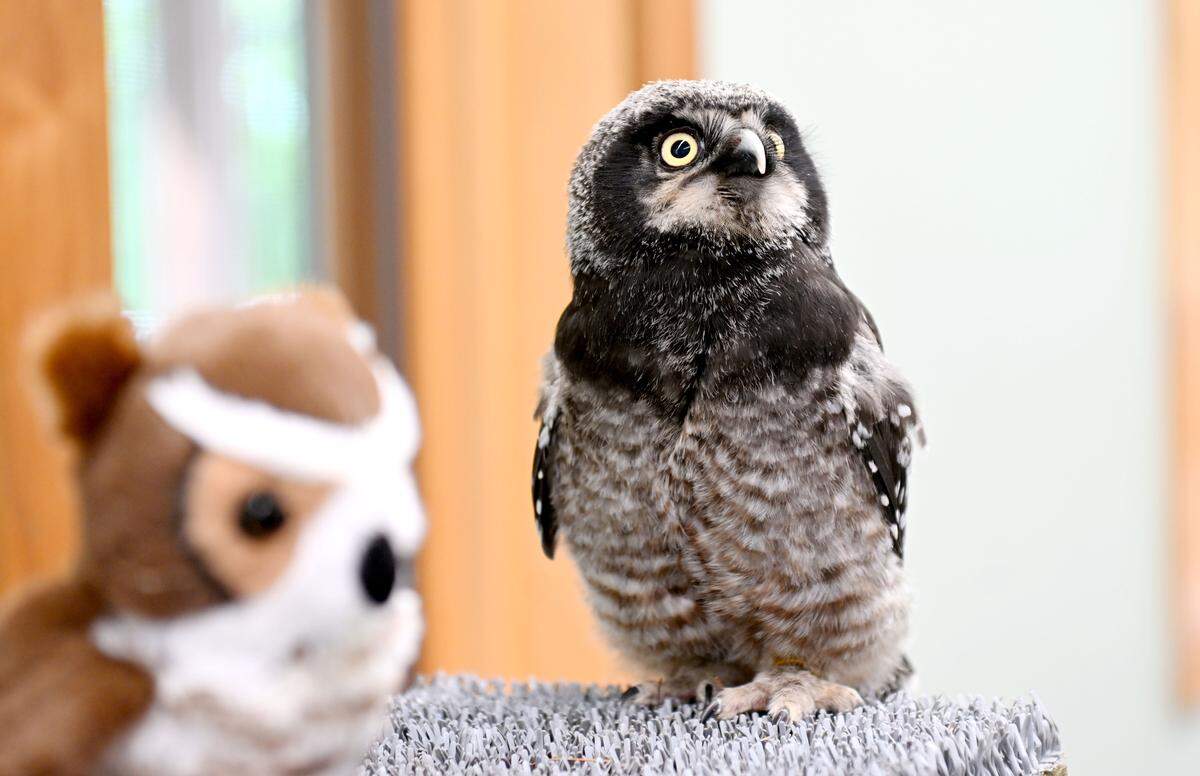
Pip is about six weeks old and weighs 270 grams (a little more than 1/2 pound) — and he probably won’t get much bigger. Joe Whitehead, coordinator for the Klingsberg Aviary at Shaver’s Creek Environmental Center, said Pip is within a normal adult range already and might not weigh much more than that.
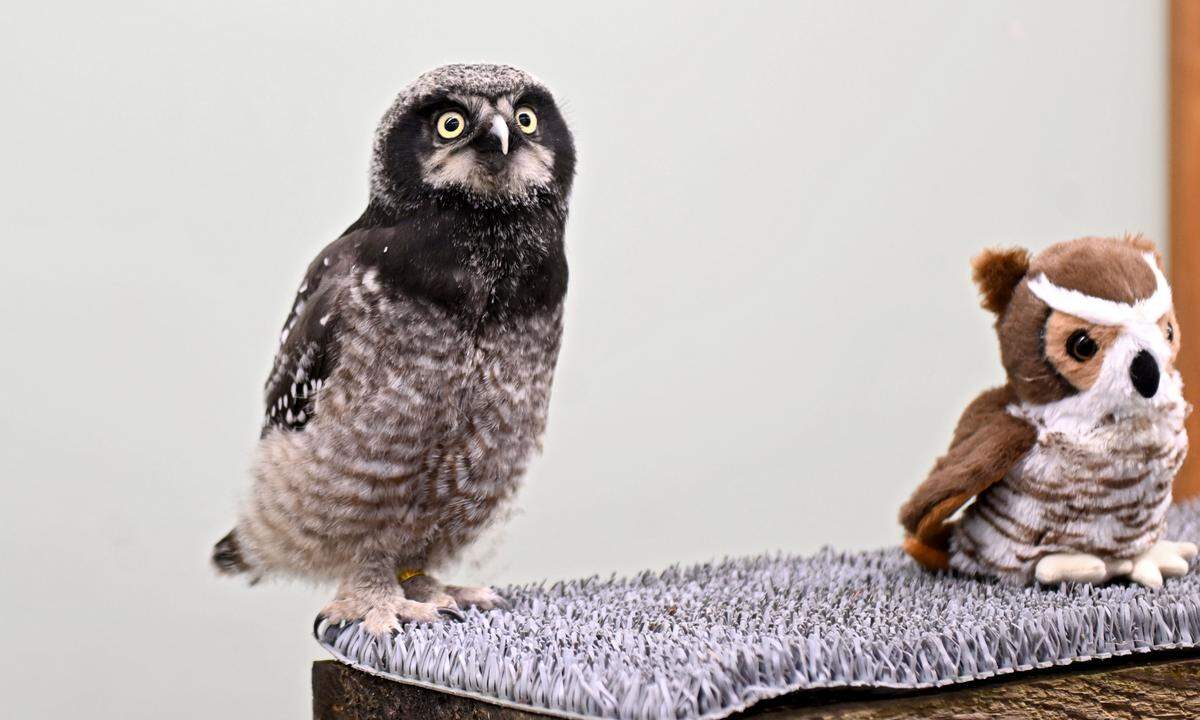
The name Pip was chosen as a way to represent the start of a new journey for Shaver’s Creek. A pip is the first crack in an egg that a bird makes when it’s hatching, Sutherland said. Because it is the first time a hawk owl was bred for conservation education in the country, they thought the name Pip would be a fun way to celebrate that.
“We’re also saying he’s a lot of new beginnings for our center,” Whitehead said. “We’ve never done a little baby promo that we’re doing right now, or the programming we have in mind for Pip to be doing would be new for us as well, so that’ll be something fun to promote down the road. But we just think he’s gonna bring out a lot of really good changes for the program.”
That programming starts this weekend. The public can sign up in small groups to come into the classroom at Shaver’s Creek for a “Meet-Cutes,” where they can meet Pip and have close up encounters with him.
“We’re hoping that the public really connects with him at this age, and that they watch him grow up and they’re invested in him, because we know that the more people care about a species, the more likely they are to take conservation action for them. And that’s the heart of what we do, trying to inspire as much conservation action within our community as possible,” Sutherland said.
For the rest of Pip’s life, they’ll have a variety of programs where people can experience Pip and the other wildlife up close.
Unique opportunity for Pennsylvania
Because it’s the first time one is raised under human care, there are a lot of research opportunities and collaborations available.
Hawk owls are northern birds and like the colder climates. They would visit Pennsylvania during the winter seasons, Sutherland said, and would come on a periodical cycle about every ten years. But the last observed hawk owl in Pennsylvania was in 1991. Theories as to why this happened include unregulated hunting pressures and environmental degradations, she said.
“We also have only been able to find 10 publications conducted globally for the species, we don’t understand them a lot. We don’t really know how they move, what they need. So from one of those publications, we do understand they use bogs and tamarack forests for their habitats or ecosystems. And so we know these are naturally occurring ecosystems within Pennsylvania that also need our help,” Sutherland said.
“Those habitats also are experiencing environmental degradations and pressures, so that’s probably another influential factor as to why they’re reducing their visit to Pennsylvania.”
There’s likely more influences that they’re not aware of yet because they have so much to learn about the species. Sutherland hopes having Pip at Shaver’s Creek can bring awareness to the raptor diversity Pennsylvania has, especially in the winter months.
This story was originally published August 2, 2025 at 5:56 AM.