Are more flights on their way to State College? 5 takeaways from local air summit
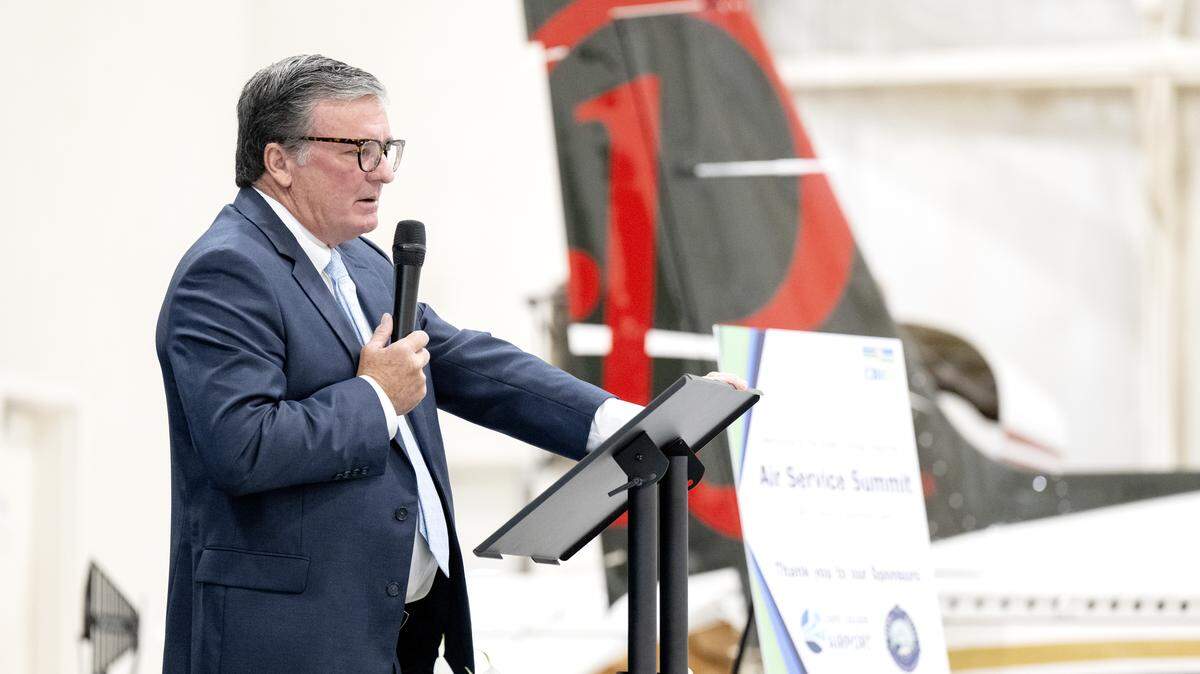
Centre County took a step forward Tuesday morning in its aim to expand flights and air service in the area.
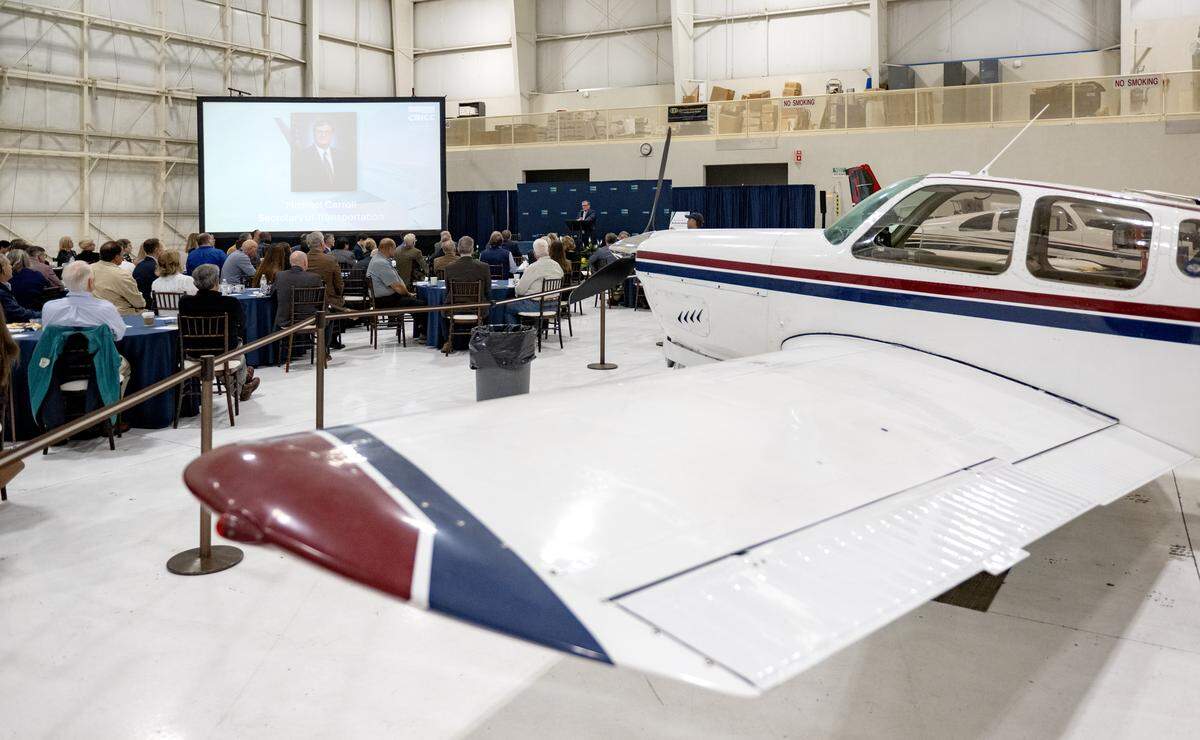
More than 130 business owners and community leaders gathered inside the State College airport’s maintenance hangar for the Air Service Summit, a roughly two-hour event designed to discuss the future of air service in and around State College. Officials relayed target destinations, the work they’ve done to this point — and the work that still remains.
No contracts have yet been signed, and no new routes are ready to be announced at State College Regional Airport. But community leaders emphasized they’re committed to this as a long-term vision — it’s long been a priority for many businesses — and the host organization, the Chamber of Business & Industry in Centre County (CBICC), made several significant announcements Tuesday.
Here are some of the key takeaways from Tuesday’s Voice of Business event:
Charlotte and Florida are early targets for more potential flights
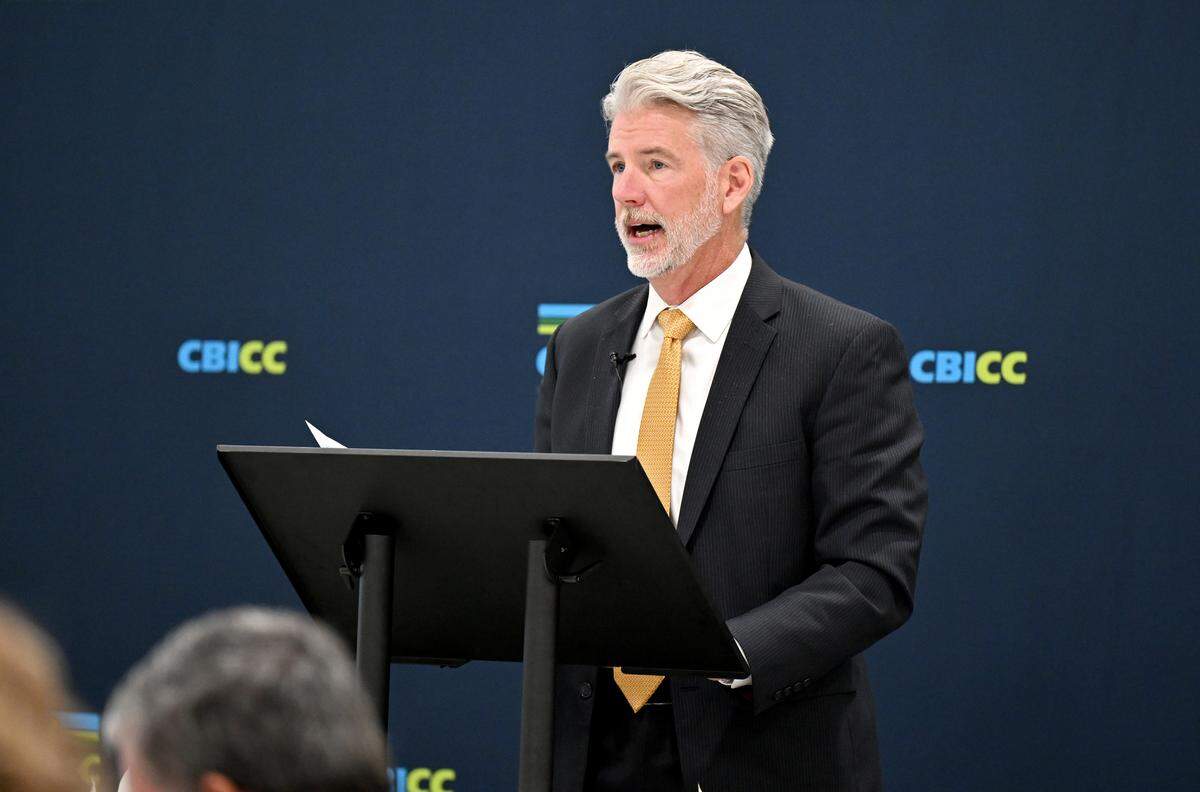
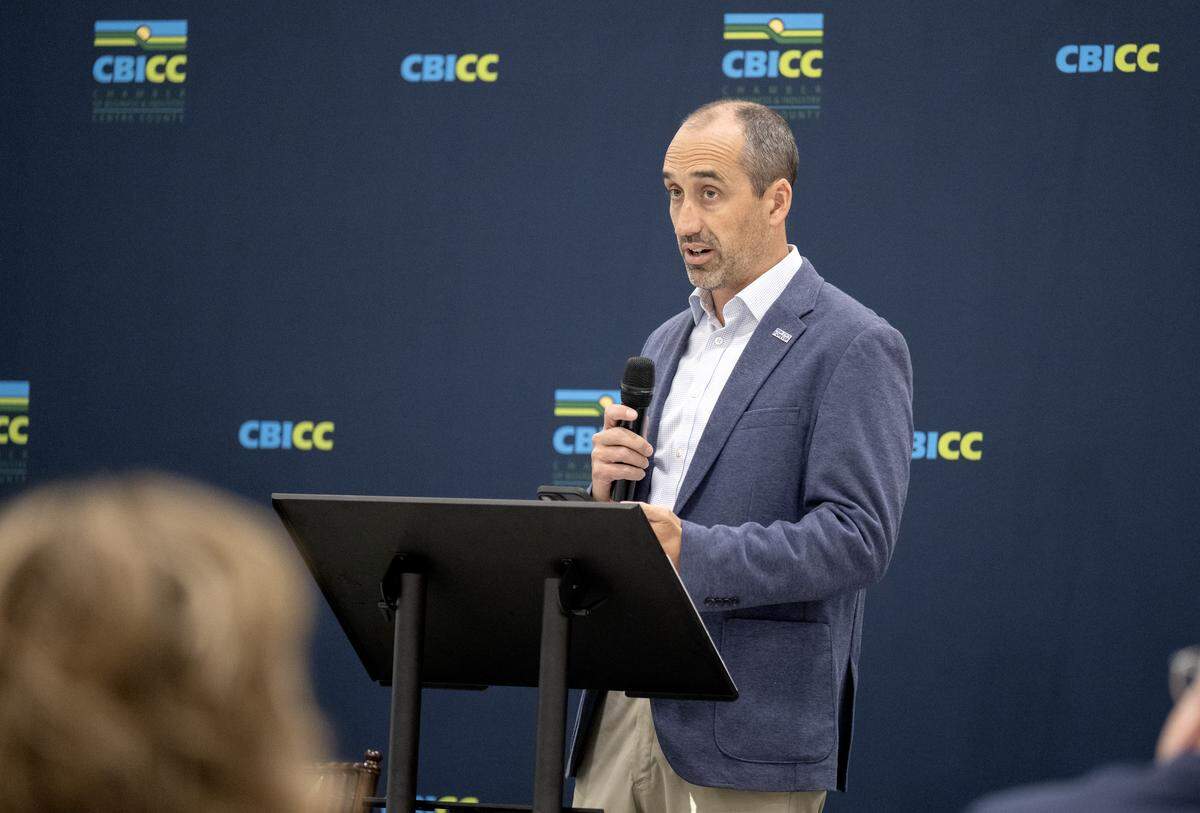
According to CBICC president/CEO Greg Scott, several local organizations have held “ongoing conversations” with 3-6 different airline carriers about adding flights to and from State College. And, next month, officials intend to make pitches at a national conference that brings together airports, airlines and destinations for the purpose of creating those future partnerships.
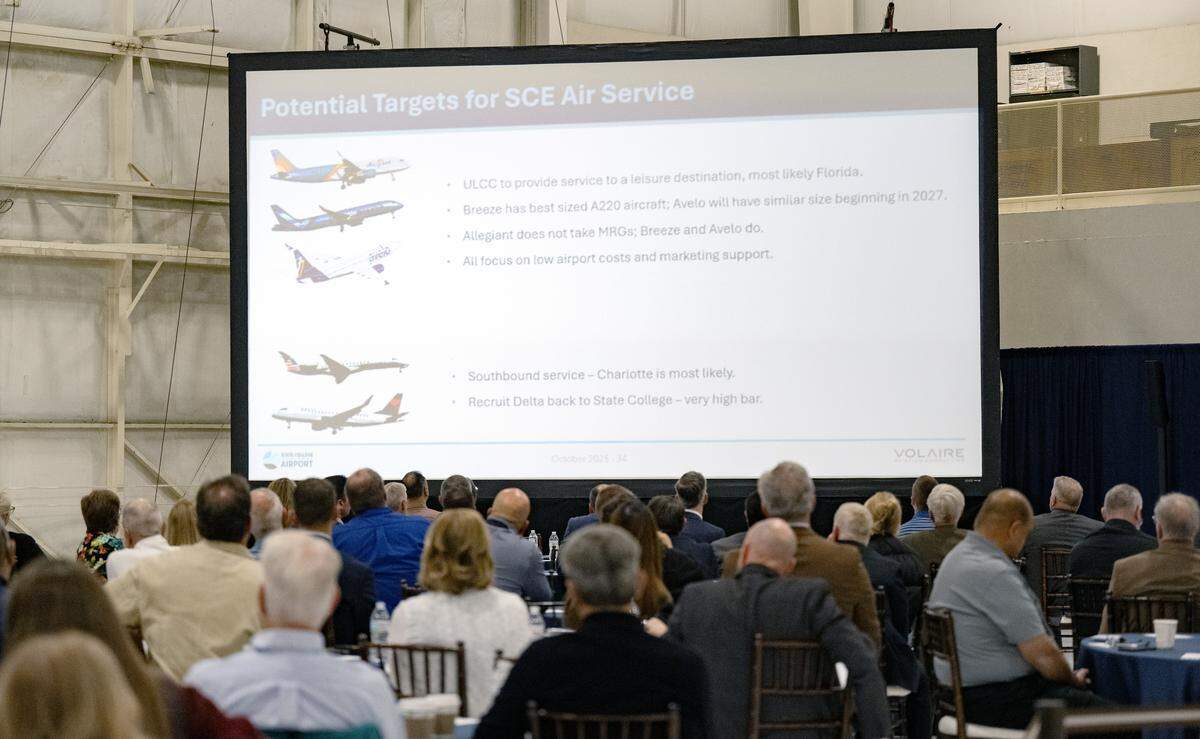
But, for now, there are two early target destinations for State College’s airport — Charlotte, North Carolina, and somewhere in Florida. (Orlando, St. Petersburg or somewhere in South Florida would be ideal, Scott added.)
Low-cost airline Breeze Airways expressed interest over the summer in potentially adding roundtrip flights between State College and Orlando, Florida. Officials initially said a decision was expected by the end of summer and flights could start as early as this fall — but that hasn’t come to fruition.
“I would characterize this as, there are ongoing discussions,” Scott told the CDT on Tuesday. “We don’t know what Breeze’s intention is at this particular time.”
Florida is a prioritized target for State College’s airport because data shows Centre County travelers — or, rather, those within 60 miles of the airport — are most often flying there. Orlando is the top destination with an estimated 193 Centre County passengers who use an outside airport to get there every day, followed by South Florida (West Palm Beach, Miami, Fort Lauderdale) and Tampa/St. Petersburg.
Charlotte via American Airlines is a priority for an entirely different reason.
“It’s not really the end destination that’s the attraction,” Scott said. “It’s that it’s a major hub, particularly for American Airlines, which was already established here. So if you can get that flight, it really unlocks this region as a one-stop mode to many destinations that you can get to.”
Establishing the ‘Fly State College Fund’ is an important step
Business leaders have tried to attract different airlines to the State College Regional Airport before. If you’re asking what makes this time any different, there’s been a concentrated effort on being more proactive this time around.
And the Fly State College Fund is a big part of that.
Air service isn’t a very profitable business. In fact Michael Carroll, state Secretary of Transportation, explained Tuesday that no airline carriers would’ve been profitable last quarter if not for their respective credit card programs. So, for an airline carrier to risk losing money on a new flight route, it needs incentives to compel it to take that risk.
Typically, that means an airport might waive terminal fees early or community groups might promise free marketing. But, on top of that, carriers often demand a minimum revenue guarantee, at least for that first year. And, if the airport accepts money from the federal government, then the airport is not allowed to directly pay the carriers that guarantee.
However, a community fund, just like the Fly State College Fund, can pay those carriers.
In the past, community leaders would try to come to an agreement and then raise the money. Now, they’re proactive. Several groups have set an initial goal to raise $500,000 — and $130,000 has already been raised from partners such as CBICC, the Centre County Airport Authority (CCAA), the Happy Valley Adventure Bureau (HVAB), Penn State and local municipalities.
The cost of such incentives can vary greatly but, typically, about $100,000 would be needed for a new route, officials said.
Officials at the event emphasized that every little bit helps. When carriers look at funds like Fly State College, it usually means more to have 1,000 people give $10 than it does to have 10 people give $1,000 — because carriers see community support as a positive, Scott said. (Those who would like to get involved can do so at FlyStateCollege.com.)
Centre County travelers’ top-15 destinations unveiled
Volaire Aviation Consulting’s Tim Sieber compiled data that helped show just where Centre County travelers are most often headed (or, rather, where those who live within 60 miles of the local airport are headed).
This was calculated by using the end destination someone in or near State College takes. If someone books a trip with three connecting flights, the data still only takes the final destination into account. Odds are, if a new flight route is announced, it will involve one of the below areas:
1. Orlando/Sanford, Florida 2. South Florida (West Palm Beach, Miami, Fort Lauderdale) 3. Tampa/St. Petersburg, Florida 4. Las Vegas 5. Chicago 6. Denver 7. Fort Myers/Punta Gorda, Florida 8. Dallas/Fort Worth 9. Nashville 10. Phoenix/Mesa 11. Los Angeles Basin 12. Houston 13. Charlotte/Concord, North Carolina 14. Seattle/Everett 15. Washington, D.C./Baltimore
Air service partnership formally announced
The formal creation of the State College Air Service Alliance was also announced Tuesday. It involves CBICC, the Centre County Airport Authority (CCAA), the Happy Valley Adventure Bureau (HVAB) and Penn State.
These organizations have already worked together on attracting new airline carriers, but the Alliance further establishes the importance of unifying efforts and coordinating outreach. The Alliance was also largely behind the Fly State College Fund.
“Through the Alliance, we aim to strengthen State College Regional Airport’s position to attract new routes, retain existing ones, and expand travel options for businesses and residents,” CCAA executive director Ralph Stewart said in a news release.
Federal grants will be integral
Believe it or not, PennDOT oversees the commonwealth’s 120-plus airports. But, at the state level, funding is hard to come by.
According to Michael Carroll, the state Secretary of Transportation, only about $15 million is available annually to divvy among all those airports. That funding comes from a 1.7 cents tax on every gallon of jet fuel, which Carroll said ranks well below the national average.
“Shockingly,” Carroll added sarcastically, “we have far more applications than we are able to fund from the $15 million that we are able to generate.”
Carroll said there is some political movement within the commonwealth that aims to get that tax increased to as much as 5 cents on every gallon. But Carroll didn’t expect that legislation to be introduced until the state budget is passed. Until the state has more to work with, federal funding will be critically important to State College’s airport.
In other words, the local airport might have to rely more on the U.S. Department of Transportation than PennDOT. One key program for the local airport will be USDOT’s Small Community Air Service Development Program, or SCASDP, which often helps small communities needing grants for new service or for retaining existing service.
Awards from SCASDP have ranged from $20,000 to nearly $1.6 million.
Officials said the airport itself isn’t in need of any significant upgrades or repairs before potentially adding new flight routes. The airport previously sought federal funding in April to construct two passenger boarding bridges — also known as jet bridges or jetways — so travelers can board and disembark an aircraft without having to go outside. The project was estimated at $11 million.