
What goes into Christmas tree production in Centre County? Here’s a look
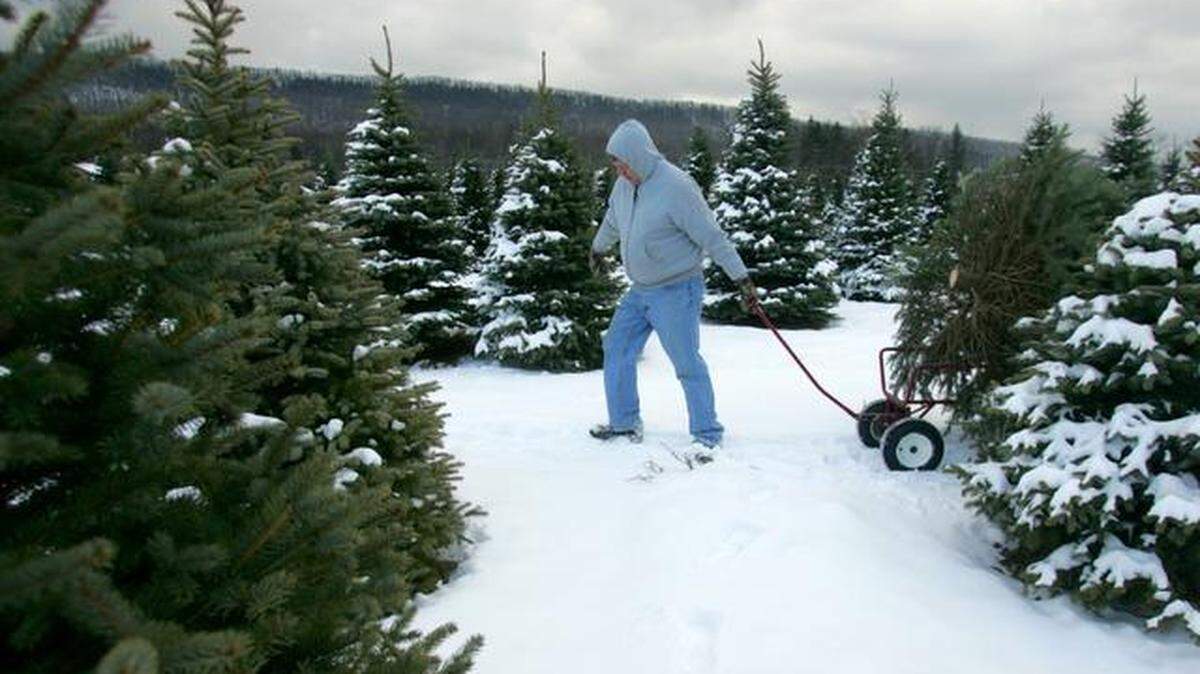
Is your tree up yet? For many Centre County residents, the annual trip to the Christmas tree farm is a beloved family tradition. After all, Pennsylvania is one of the top Christmas tree producers in the U.S., with over 1,400 growers. It’s also the only state whose citizens choose the state’s best tree, at the Pennsylvania Farm Show. But how much do you really know about the work that goes into producing this holiday essential?
While Scotch pine was one of the first plantation-grown Christmas trees in the U.S., firs are now the predominant species grown in Pennsylvania. At Kuhns Tree Farm in Boalsburg, manager Douglas Banker says the Fraser fir is a favorite for its desirable growth habit and fragrant needles with silvery-blue undersides and plenty of staying power. Canaan fir, another locally popular option, has a much denser habit and a somewhat stronger aroma.
Quality Christmas tree production begins like any other gardening task — with proper site selection, matching each species to the conditions it prefers. None of the most popular Christmas tree varieties like “wet feet,” so a well-drained site is essential. Soil testing helps determine what nutrients, if any, need to be added to the soil prior to planting.
Seedlings, typically 2-4 years old, are planted during early spring. At Kuhns, Banker chooses “2-2s,” which are 4 years old, having spent two years as a seedling and two more in transplant beds. Although they’re only about 18 inches tall, Banker notes that since their root structure is largely intact when planted, their growth rate will outpace a larger specimen. Of approximately 4,000 saplings planted, about 87% will survive.
During the growing season, trees are painstakingly pruned or sheared by hand to maintain a desirable, conical shape. And as with any crop, managing weeds and monitoring for pests and diseases are year-round tasks. Weeds not only steal water and nutrients from the young trees, but also harbor rodents such as voles, which can seriously damage saplings. Insect pests such as spider mites, aphids and scale must be kept in check, and increasingly, a disease has become a new challenge for Pennsylvania growers: Phytophthora root rot (PRR). Phytophthera means “plant destroyer,” and this soil-borne organism thrives in saturated soils, like those that result from heavy rains.
Adding to the problem, periods of drought such as we’ve experienced of late can stress Christmas trees, making them more susceptible to diseases like PRR. (Not limited to tree farms, PRR is appearing in home gardens across the state; many woody ornamentals fall prey to this disease, from arborvitae and juniper to azalea and rhododendron.)
But if all goes well, the young trees will grow to a marketable height of 6-8 feet in about 7 years.
According to Banker, the biggest mistake customers make is selecting a tree that’s too big for their house. “It’s surprising how many people don’t know how high their ceilings are,” notes Banker. For best results, know your limits, and use the measuring poles provided!
The biggest change in recent years? Consumers are choosing their trees much earlier: Fully one-third of all Kuhn’s business is now on Black Friday. Is there a need for such urgency? Although the intensity of severe weather events such as heavy rains or drought is increasingly a problem for tree survival, “I’ve got plenty of trees!” says Banker. Even if it’s been a year of challenging weather conditions, keep in mind that the tree you choose today was planted 6-10 years ago.
In the garden this month:
How to keep that just-cut tree fresh throughout the festive season? Penn State Extension experts suggest:
If it’s been longer than 12 hours since the tree was cut, remove a flat disk of wood about 1/4 inch thick from the base of the tree prior to placing it in the tree stand. The stand should have a water basin with a capacity of at least one gallon, and should be replenished daily, especially in the first week.
Be sure the stand is large enough; don’t whittle down the sides of the tree to fit it in. Those outer layers of wood (sapwood) are the most efficient at taking up water. Additives such as commercial preservatives, sugar, bleach, etc., aren’t necessary; a steady supply of clean, cool water is all that’s needed. And speaking of cool: position your tree away from sources of heat, which hasten drying.
After the holidays, don’t be in a hurry to haul your tree to the curb — it can be a gift that keeps on giving: First, be sure to remove all decorations, tinsel, glitter or artificial snow.
You can use your tree to start a brush pile in an out-of-the-way corner, providing habitat for beneficial insects, birds and other members of the ecosystem. As it gradually decays, it will return nutrients to the soil.
Try propping the whole tree up in a corner of the yard to provide winter shelter for songbirds; you can hang homemade feeders (like pinecones smeared with peanut butter) on the branches for an extra treat. Or place a few boughs on the ground near bird feeders as cover for ground-feeding birds.
Evergreen branches can also make good winter mulch for perennial beds, offering protection from cold winds and fluctuating temperatures.
And if you’d like to start a new tradition, save a section of the trunk for next year’s firepit Yule log!
Lisa Schneider has been a Master Gardener volunteer since moving to PA in 2017. Have a home gardening question? Email CentreMG@psu.edu.