Centre Helps volunteers trained for 988 Suicide & Crisis Lifeline texts. What to know
AI-generated summary reviewed by our newsroom.
- Around 50 Centre Helps volunteers were trained to respond to 988 texts.
- Centre Helps is the fourth call center in Pennsylvania to answer both 988 calls and texts.
- Text responses need separate training; volunteers currently handle one text at a time.
Volunteers at a local nonprofit were recently trained to respond to 988 Suicide & Crisis Lifeline texts to complement their existing ability to respond to calls — a combination that puts the organization in rare company within Pennsylvania.
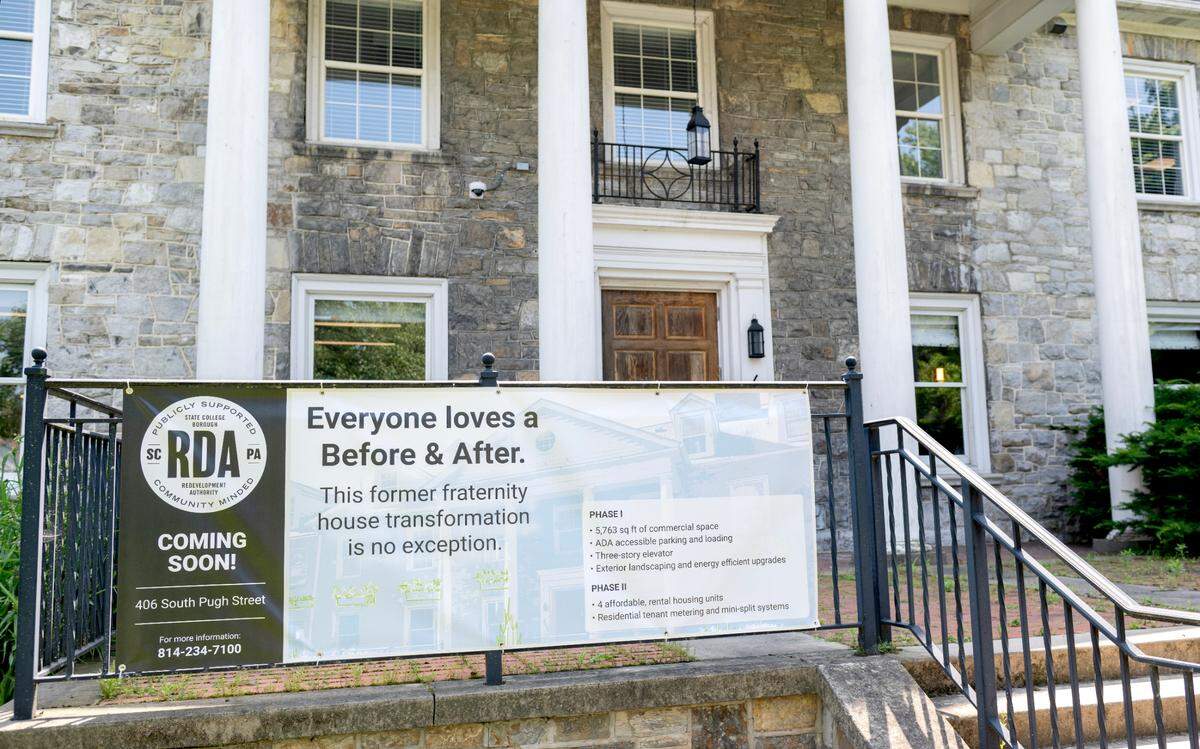
Denise McCann, the executive director of Centre Helps — which is located at 406 S. Pugh St. in a renovated fraternity house — wrote in an email to the CDT Tuesday that around 50 of the organization’s volunteers were text-trained. She said the training began in November 2025 and was completed around mid-January.
An additional 12 are currently being trained simultaneously to answer 988 calls and texts, McCann wrote. That current class of volunteers will be the first in the nonprofit’s history to be trained in answering both 988 calls and texts at the same time.
“Centre Helps has the capacity to respond to texts, and it is our mission to do whatever we can to help those in crisis,” McCann wrote. “Centre Helps’ call-takers are volunteers, mostly Penn State students, and what they do for people in crisis is nothing short of amazing. We are very grateful for each and every one of them, and we are always looking for more volunteers.”
As a result of the training, Centre Helps has become just the fourth suicide-and-crisis hotline call center in Pennsylvania to respond to both 988 calls and texts.
According to a study from the state Department of Human Services, in 2025 only 18.1% of 988 texts across the commonwealth were answered — a number that McCann wrote is “not acceptable,” especially when the person on the other end of the line is reaching out in a crisis situation.
With the new training, though, the executive director hopes to improve that statistic.
“More texts will be answered as a result of Centre Helps adding this service,“ McCann wrote. “We are pretty successful at de-escalating crisis calls, which prevents the need for emergency services to respond. That means that those services aren’t tied up when there is an emergency that can’t be prevented like health emergencies or accidents.”
Because 988 text responses differ greatly from call responses, separate training is required to handle them. One of the key differences is how long the conversations take to defuse.
According to McCann, a text conversation that lasts an hour is considered a short one, and some text conversations can last for up to three hours. The age of those reaching out to the nonprofit is another key difference.
“Not unsurprisingly, crisis texts tend to come from younger people, and we are especially seeing an increase in interactions with youth 17 and younger,” McCann said. “We’ve also had to do additional training around how working with callers that young is different than working with adults.”
Because of these differences, Centre Helps volunteers can only respond to one text conversation at a time, although once they’ve gained more experience, they’ll be able to respond to two text conversations at once.
Moving forward, Centre Helps will continue to provide its future volunteers with both 988 text and call training. Those who are looking to volunteer can start the process by visiting the nonprofit’s “apply to volunteer” website.