Bellefonte’s ‘angel’: How a woman’s kidney donation changed her life and her recipient’s
Maureen Stathes pointed to her silver necklace, with an angel-shaped pendant, and managed a smile. She then paused, her lip trembling and her voice cracking, when she remembered the words of the man who gave it to her.
You’re my angel.
Others had different descriptors for Stathes — such as “selfless,” “special” or even “crazy” — but she didn’t much care what other people thought. About a year ago, the 60-year-old Bellefonte woman donated one of her kidneys to a complete stranger and, earlier this month, she and her recipient met for the first time at Penn State Health Milton S. Hershey Medical Center, where she received the necklace and the two embraced like old friends.
She hasn’t taken it off in over a week now.
“The more I looked into (kidney donation), the more I thought I could do this. I wanted to do this,” said Stathes, who recounted her experience during a recent afternoon in Talleyrand Park. “And, if I had another one to give, I’d do it again.”
In recognition of National Donate Life Month, Stathes hoped to inspire others around Centre County by sharing her story. Before watching a CBS news segment in the winter of 2020, Stathes had no idea people could donate some organs while still alive — and she was particularly moved by the story of a California man who donated part of his liver to a baby.
If he did it, she thought, why couldn’t she? According to a recent study by Penn Medicine, more than 90,000 patients are awaiting kidney transplants and only about 20,000 transplants are performed every year, meaning that nearly 5,000 people die annually waiting on the transplant list. Why not give someone else a chance at life?
That thought birthed a monthslong process — her husband Gus knew better than to try talking her out of it — that ultimately led Stathes to donate her kidney to a 55-year-old married man from York County. She didn’t discover his name, Dwayne Weller, until both agreed to it following the May 2021 surgery.
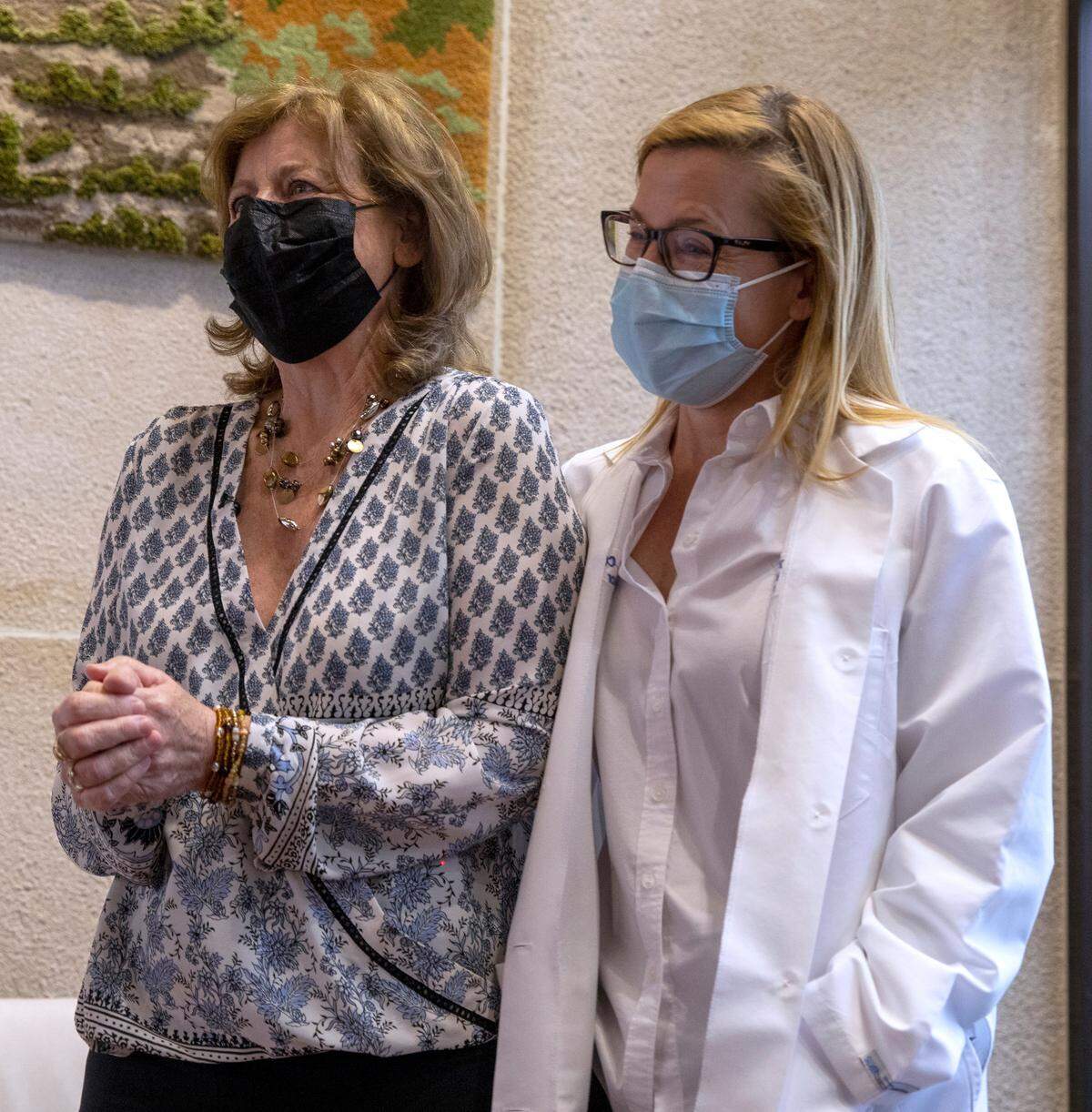
At the time, she didn’t know that Weller longed to take his adult daughter to the nearby dirt track. Or how there were no family vacations because Weller needed to be home by 8 p.m. to complete his daily dialysis. Or how he was told to likely expect 3 more years of that, on top of his 2-year wait already, to receive a transplant. Every day was a battle, every hour filled with fears and worries ready to pounce.
Until Stathes stepped in.
“The main thing I was thinking was whoever doing it was pretty special,” Weller said in an interview with Penn State, remembering his initial reaction to finding a donor. “I don’t know if the shoe was on the other foot, if I would be able to do it. I don’t know if I could give up a part of me for someone I don’t know.
“It just makes it more amazing that somebody did.”
Making the decision
Shortly after watching the news segment with Norah O’Donnell in November or December 2020, Stathes took to Google to read more on the topic.
And the more she looked, the more she felt qualified to donate one of her kidneys — which she later named “Thelma” and “Louise,” with Weller getting “Louise.” She filled out a quick 5-minute application at livingdonationpa.org and, when prompted shortly thereafter, spent about 20 minutes detailing her medical history.
Next, she was asked to undergo some blood and urine testing for a preliminary look at her health. Before those tests, she figured that would be a good time to let her husband know what she was thinking.
“He knows I’m bull-headed and I made my decision,” said Stathes, who speaks in a soft Irish brogue from moving from Dublin in 1985. “So he said, ‘Go for it.’”
Her husband Gus let out a laugh and nodded in Talleyrand Park. He couldn’t talk her out of a recent 22-mile hike during bear season; in fact, he knows he can’t talk her out of much. And he wanted to support her.
So she went through the preliminary tests with Gus by her side and, by March 5, underwent a full day of testing at Penn State Hershey. A medical board ruled she was healthy to donate and, within 6 months of that first Google search, a surgery date was set.
Maureen cried the night before the surgery — but not because she was scared.
“She wept and wept and wept. Because she was excited for it,” Gus remembered. “And she wept, and numerous times her friends asked her, ‘Are you sure you want to do this?’ And without a doubt Maureen would say, ‘Yeah.’”
What if Maureen would need a kidney herself down the line, they’d ask. Or what if, heaven forbid, a family member would need a kidney in the future? And how could she afford all the back-and-forth travel, medical checkups and time off as a financial assistant at Penn State?
Maureen had an answer for them all, responses that came from a team of coordinators at Penn State Hershey. If she ever needed a kidney, she’d rise to the top of the donor list. If she was fine and a family member needed one instead, they would rise to the top of the list. All of her expenses would be taken care of and, while she had plenty of sick time to use from the university, she could have also qualified for grants that would’ve made sure she didn’t pay a nickel for lodging, lost work or even child care.
In some states, donors even receive a tax credit — though not in Pennsylvania. (Stathes is aiming to change that.)
“If somebody really wants to donate, the money and the help are out there,” she said.
Maureen woke up with pain after the surgery. But not with any regrets.
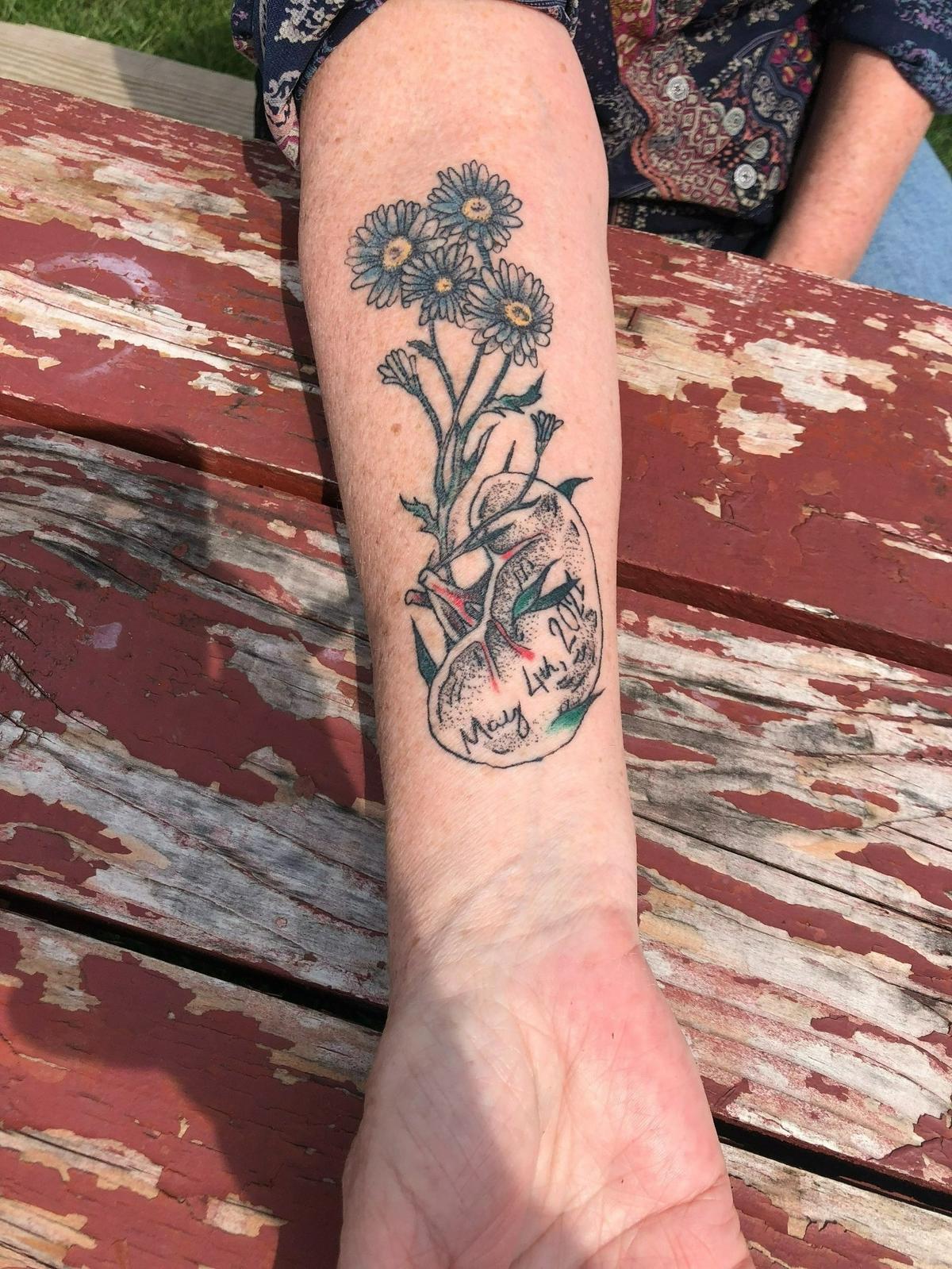
Recovery & future
Maureen spent three nights in the hospital, and the first week was the toughest.
Every time she’d wheel her IV through the hospital hallway, she’d glance at patients doing the same and wondered if one of them was carrying “Louise.” She still didn’t know Dwayne’s name, as it’s common for the identities of donors and recipients to be kept private unless both parties agree to release them six months later. She was told her recipient was doing well but, during her time in the hospital, she wondered about who he was and how he felt.
She didn’t have an appetite. Her stomach hurt — it was difficult sitting up — and she needed to use the restroom a couple times an hour.
Most of the pain subsided after a week. She ran a 14-mile race three months later, though she was 5 minutes slower compared to the year before.
“I never once thought, ‘What the hell did I do?’” Maureen said. “I just said, in two days, I’ll be fine. Then three. And in a week, I’d tell myself I’d be better in two weeks. I kept putting that timeline on myself, and I kept thinking about Dwayne — about how he doesn’t have to be on dialysis for eight hours a day.”
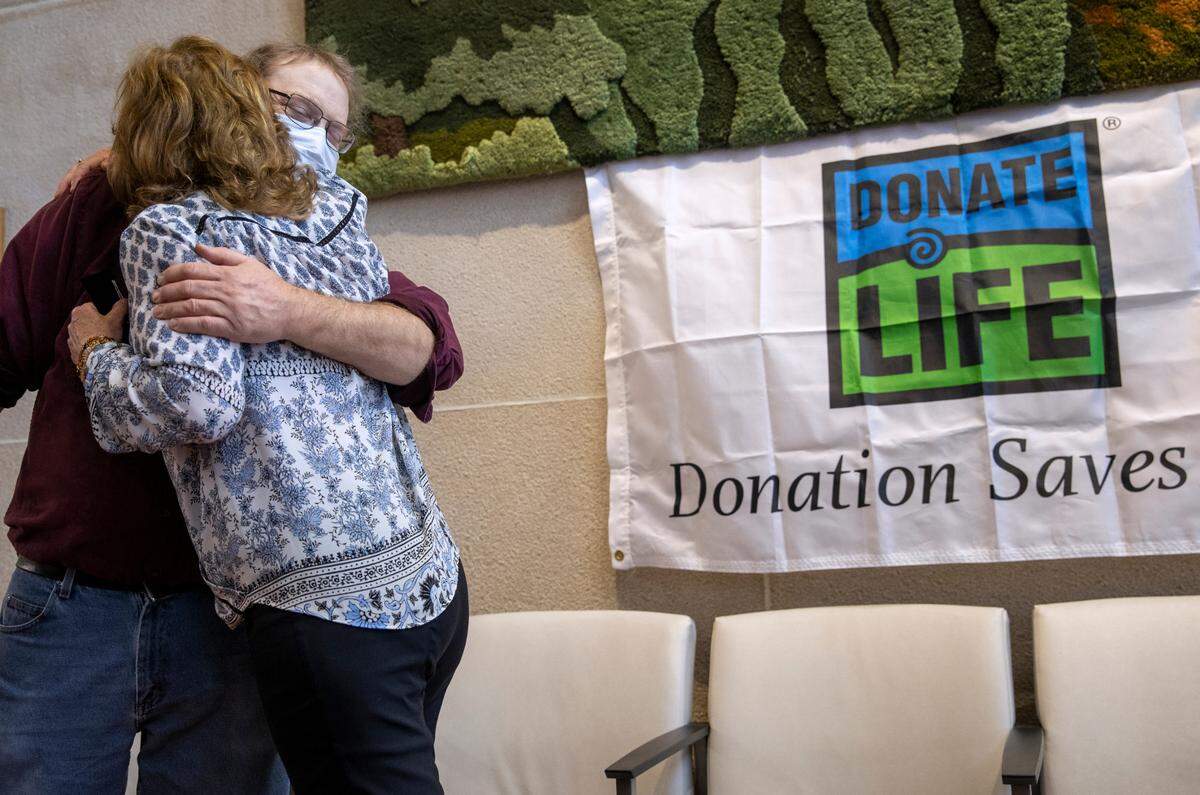
The two met for the first time earlier this month, both freely admitting to an army of butterflies buried deep in their stomachs. Weller, dressed in boots and a red shirt tucked into blue jeans, embraced Stathes the first time he saw her at Penn State Hershey. Masks covered both their faces, but smiles and gratitude rested behind their eyes.
“You look good. Yeah? Yeah?”
“Feel much better,” Weller responded.
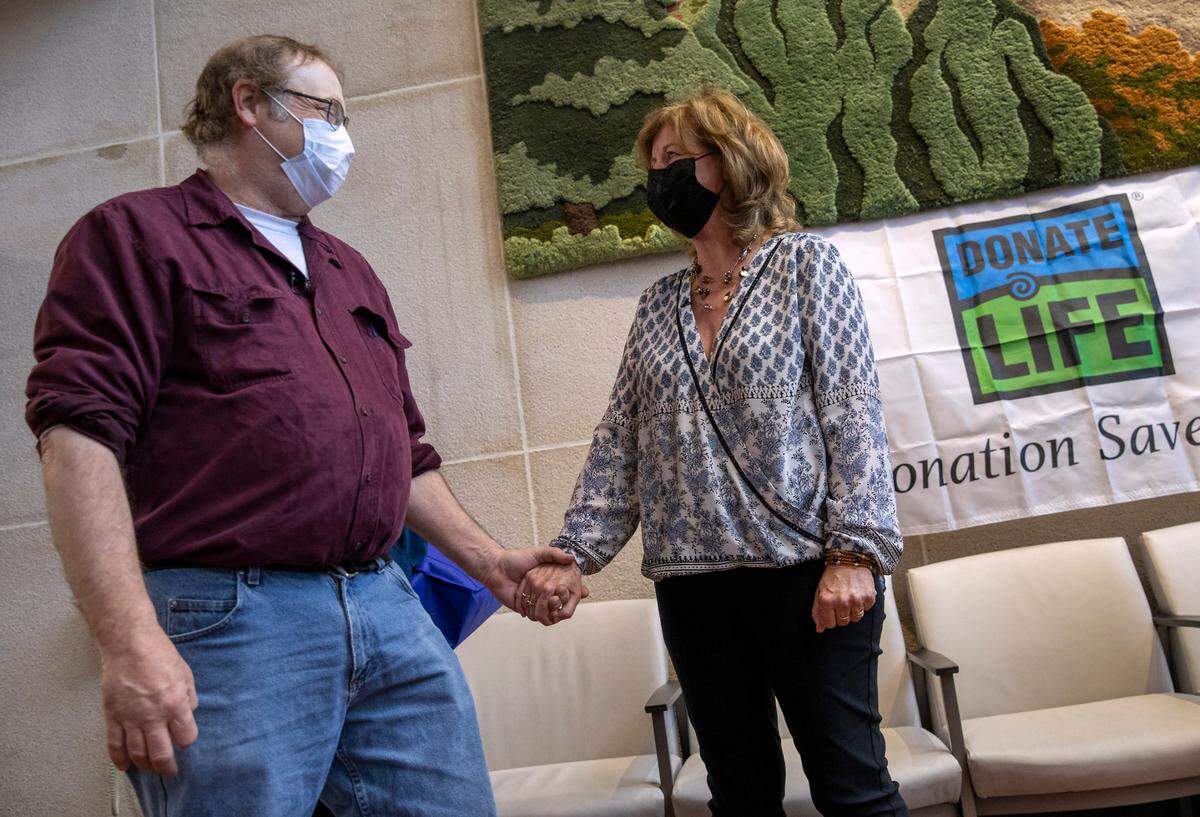
The two laughed and held hands as they spoke, neither wanting to let go. They had talked over the phone and exchanged letters in the months before but, until last week, they had never met. They plan to meet again next month, as they scheduled their annual checkups on the same day.
“The main thing I said was thank you,” Weller remembered from that moment. “And I know that’s nowhere near enough, but I’m not good enough to come up with anything more than that.”
Stathes resumed her active lifestyle last summer and, since then, she’s also become an advocate for living donors, trying to spread awareness of donation while encouraging others to help a stranger. At the age of 60, she’s also aiming to complete a 100-kilometer race — about 62 miles — later this fall, near Pittsburgh.
Her recovery wasn’t immediate. Or easy. But, in the end, a few weeks of bed rest and a few months of taking it easy were well-worth the knowledge knowing she helped a family man live a better life. After all, she knew from all her Googling — and her conversations with doctors — that kidneys from living donors boast better long-term outcomes than kidneys that come after death.
She never regretted her donation. And she hopes she might recruit others who feel the same way.