
This site may hold one of Bellefonte’s oldest structures. Will it be demolished?
AI-generated summary reviewed by our newsroom.
- Bellefonte’s school district wants to demolish an old farmhouse at 1002 Airport Road.
- Advocates say the property could be transformed into a hands-on education space.
- Some experts believe the home may be one of the oldest structures in Bellefonte.
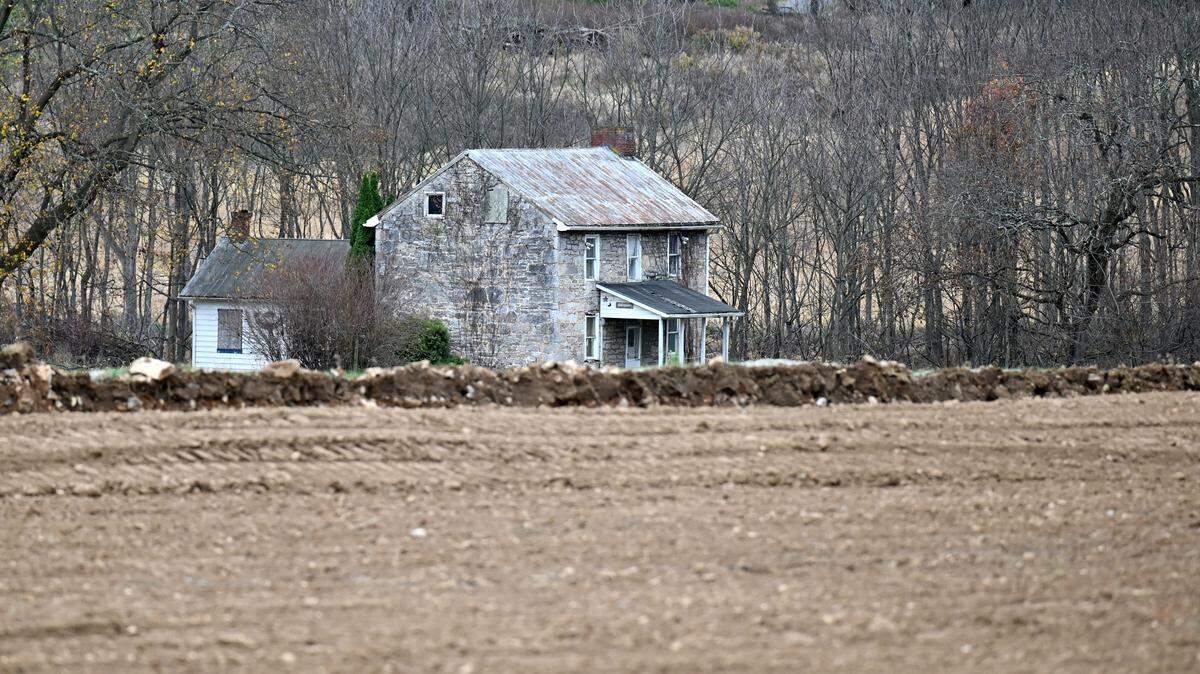
Local advocates are fighting to save and preserve a Bellefonte site that holds what may be one of the oldest buildings in the area.
The property in question, located at 1002 Airport Road in Bellefonte, sits on the edge of the campus for the under-construction new Bellefonte Elementary School. The school district’s request to obtain a demolition permit for the farmhouse property was tabled by an 8-1 vote at Nov. 3’s Bellefonte borough council meeting, with advocates and stakeholders asking for more time to assess its historic significance. With the property’s fate in limbo, borough council is expected to revisit the measure Monday.
Matt Maris, a Bellefonte social studies teacher and local historian, spoke at the Nov. 3 meeting and urged council members to hold off on granting a demolition permit until experts could properly assess the history and significance of the home, known locally as the Beaver Farmhouse. Maris noted that the home appears on local maps dating back to the early 1860s, but other experts believe it may be even older.
“I know we live in a community that cares very much about history, so I’m preaching to the choir,” Maris said. “I just wanted to weigh in on the farmhouse and preserving it or at least giving some more time to really take a hard look at its history and make sure we make the right decision.”
For Bellefonte’s school district, though, the decision is clear.
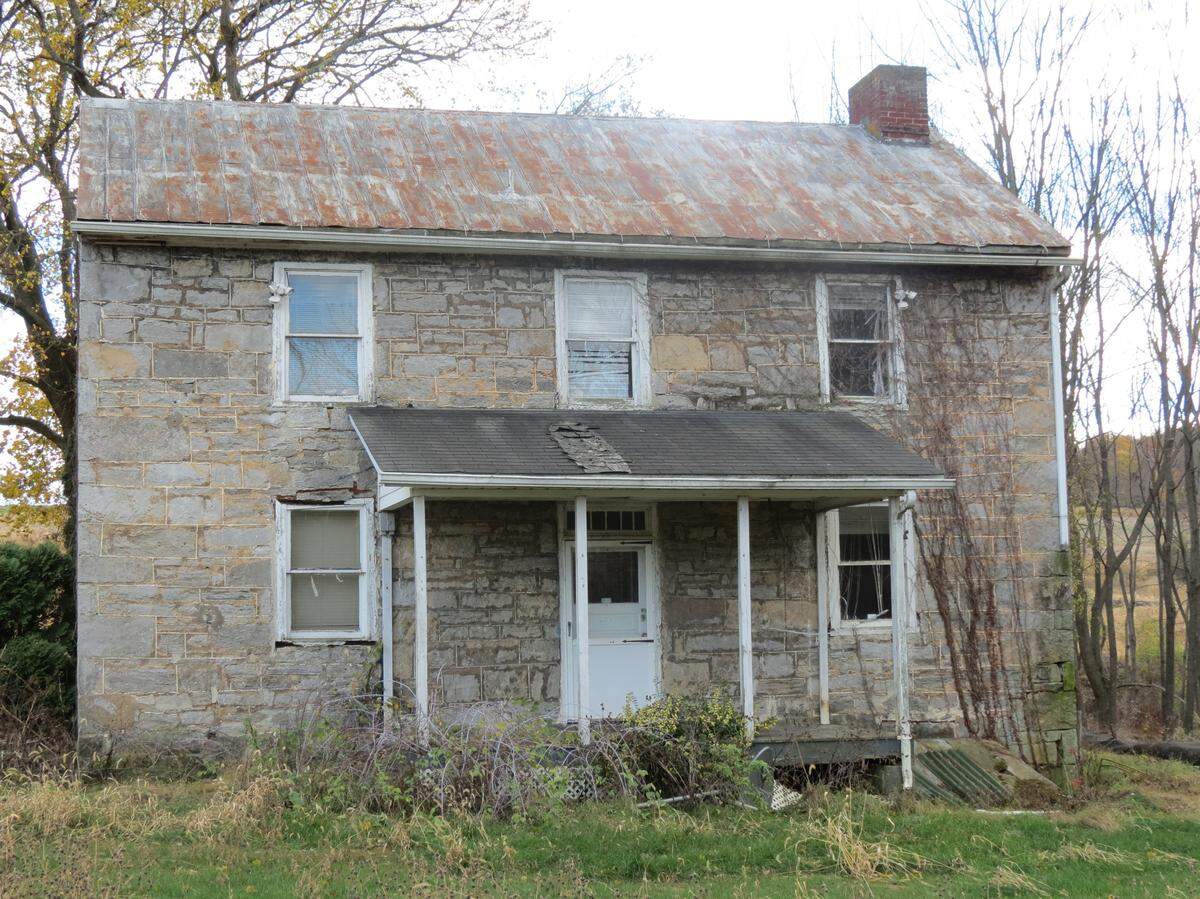
The vacant farmhouse, which sits on district property, presents several liabilities for the district, Director of Physical Plant Tom Lannen said at Nov. 3’s council meeting, including risks of trespassing and other safety issues. The home also sits in the basin of an outlet for all runoff water from Bellefonte’s new football stadium and additional runoff water from the district’s high school and new elementary school.
Roy Rakszawski, the district superintendent, said ideas to restore the farmhouse as an educational space are likely impractical. Conditions there are “so far removed” from a viable education space that efforts to restore the property for educational use would be a burden for taxpayers, he said.
“I understand there’s a lot of sentiment attached to the building itself,” Rakszawski said. “From my lens as the chief school administrator, it’s my job and responsibility to adhere to our mission. Our mission, the reason we exist, is to promote effective teaching and learning, and this building, this space, as it is, does not provide a viable space for education.”
Bellefonte’s agriculture programs and some other classes have used the property’s land for years since the district purchased it roughly 20 years ago, largely to grow produce for school cafeterias and other local sources in roughly 2,500 square feet of garden beds. For years, advocates for the building’s preservation have presented ideas to upgrade it into a more comprehensive learning space, but they would need to meet board policies, district education specs and Americans with Disabilities Act standards.
Jon Guizar, the school board president, said the district has not developed a viable path forward for using the property.
“Any of those things that you do and money that you spend on that is just prolonging the inevitable,” Guizar said at Nov. 3’s council meeting. “We’ve determined over a decade now there’s no viable path forward for that building to be a reasonable educational space that meets both our specs and ADA requirements.”
Potential plans for future use
Myken Poorman, an agricultural sciences teacher at Bellefonte Area High School, has long championed efforts to restore the vacant farmhouse and expand its offerings as a hands-on learning center.
Her latest vision for the property seeks to maintain its historic integrity while transforming it into “a model of green design and sustainability.” In an email to the Centre Daily Times, she said the project could collaborate with Central Pennsylvania Institute of Science and Technology students specializing in construction trades, masonry and emerging energy and infrastructure to make the restoration process a learning opportunity, too.
Poorman said the property could have wide-ranging uses for many disciplines. Science and family and consumer science classes could use it to study habitat diversity, food production and gardening, while English and history classes could study the significance of its past and hone research skills.
“I’ve worked for years on a project and plans to try to restore this house and do so sustainably,” Poorman said at Nov. 3’s council meeting. “I know another building could give us an outdoor classroom space, and that would be awesome. But the purpose is to restore this and do it sustainably, preserving the history of the area and the agricultural piece, the educational piece, that goes along with that.”
Poorman’s work to develop tentative plans for restoring the property stretches back nearly a decade. She paired her students with fifth-year Penn State architecture students to form ideas for the project and has secured local collaborations to support the project, including an offer from the nearby Bellefonte Building Supply to winterize the home at no cost.
Poorman said U.S. Rep. Glenn “GT” Thompson, R-Howard, has pledged to commit $5,000 in 2025 and another $5,000 in 2026 to support restoration efforts, though spokespeople for Centre County’s congressman did not respond to a request for comment from the Centre Daily Times. The Bellefonte teacher also said the project would pursue additional grants and programs to support restoration efforts.
“My goal is for this project to cost the district nothing,” Poorman wrote in an email.
Educational benefits aside, Poorman says the home must be saved due to its history. She believes it stands as a symbolic remnant of Centre County’s agriculture prowess, which played a key role in supporting Bellefonte’s iron industry.
“Farming was ordinary back then, and we tend to overlook ordinary. But it’s not ordinary anymore. It’s rare,” Poorman said at Nov. 3’s council meeting. “Its modesty is what makes this house so valuable, and there is a need to represent all socioeconomic peoples. I think it is an injustice to do otherwise.”
Sadie Belsky, a Bellefonte graduate and fifth-year architecture student at Penn State, has strongly supported efforts to restore the property. While abroad in Denmark, she studied adaptive re-use — a building philosophy that preserves historic structures but modifies them for modern use — and believes it could breathe new life into the property.
“It’s so prevalent over there because their ‘historic’ is hundreds of years older than our ‘historic,’ and they don’t have space to tear down and build new,” Belsky said. “They keep the authenticity of their historic structures, but they update them to serve a modern purpose as something that will benefit their community. I think that, architecturally speaking, this project has the potential to be really special in that aspect.”
Experts work to assess the property
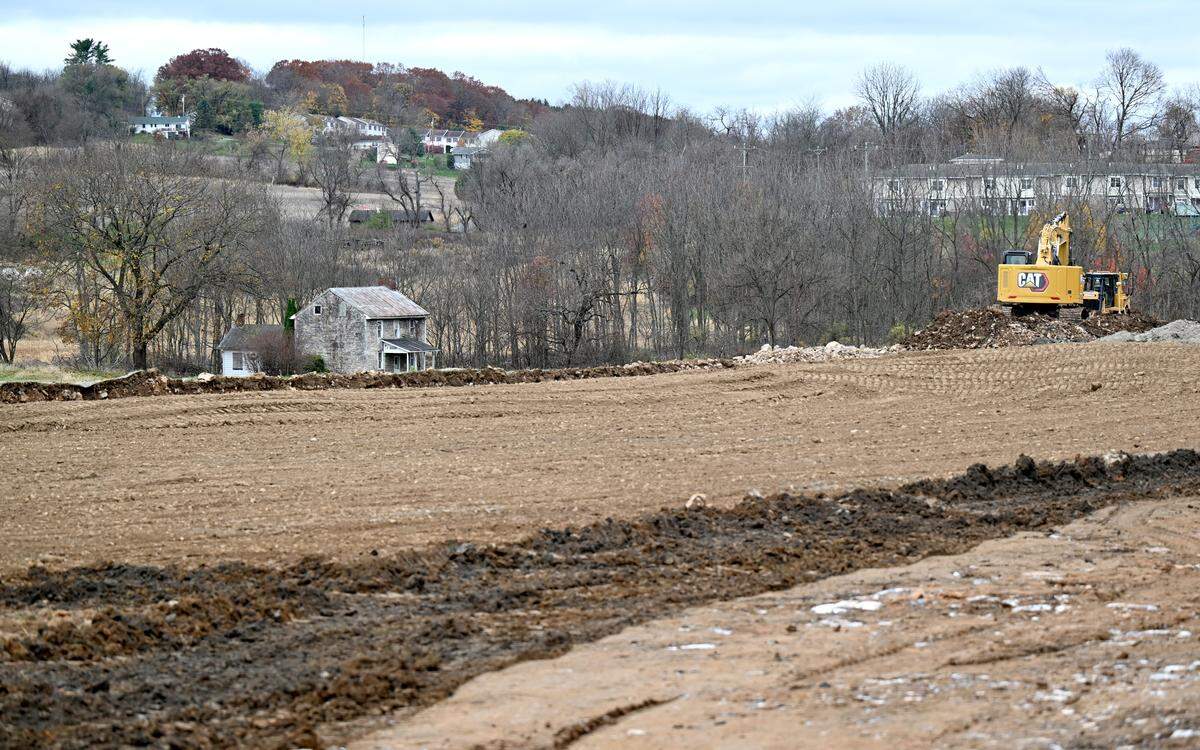
Joseph Griffin, president of the Bellefonte Historical and Cultural Association, has collaborated with local enthusiasts to seek more information on the Beaver Farmhouse. He recently visited the home and was particularly struck by its masonry construction, which used a broken ashlar pattern that requires precise stone cuts and a high degree of skill not typically characteristic of simple farm dwellings.
Though local maps indicate the property was standing by at least the early 1860s, Griffin believes it could be even older. He spoke with Mindy Crawford, the executive director of the Preservation Pennsylvania nonprofit, to learn more about the home and see if its architecture offered any clues.
After seeing photos of the building, Crawford immediately suggested the farmhouse could’ve been constructed in the 18th century. It resembles 18th-century architecture, and it was not uncommon for more rural areas and “backwaters,” as Griffin said, to construct buildings and homes in styles that would be considered out of date in larger cities.
“The documentary evidence suggests it’s mid-19th century, and the physical evidence suggests it’s later 18th century,” Griffin said. “I don’t know which is correct. It’s probably somewhere between 1770 and 1860. We’ve got a bracket of about a hundred years, and if it’s on the earlier part of that, it could be, in fact, one of the earlier buildings in Bellefonte.”
Alongside his team at the BHCA, Griffin works to organize advocacy efforts that preserve Bellefonte’s rich history. Over the years, the group has helped promote campaigns to save the now-demolished Garman Opera House, the Gamble Mill and a freight house that was preserved and moved to Talleyrand Park, where it became a small kayak and canoeing museum.
Though ongoing efforts to preserve a modest farmhouse are perhaps not as grand as some past endeavors, Griffin says the property has strong local significance.
“There’s something about a three-dimensional physical object that has been washed by time,” Griffin said. “It’s just so different from seeing a little history lesson on a screen or a picture in a book. It’s a teaching asset, even if you can’t live there. If it was properly preserved, it could be a really nice opportunity.”
Bellefonte Borough Council to revisit demolition permit
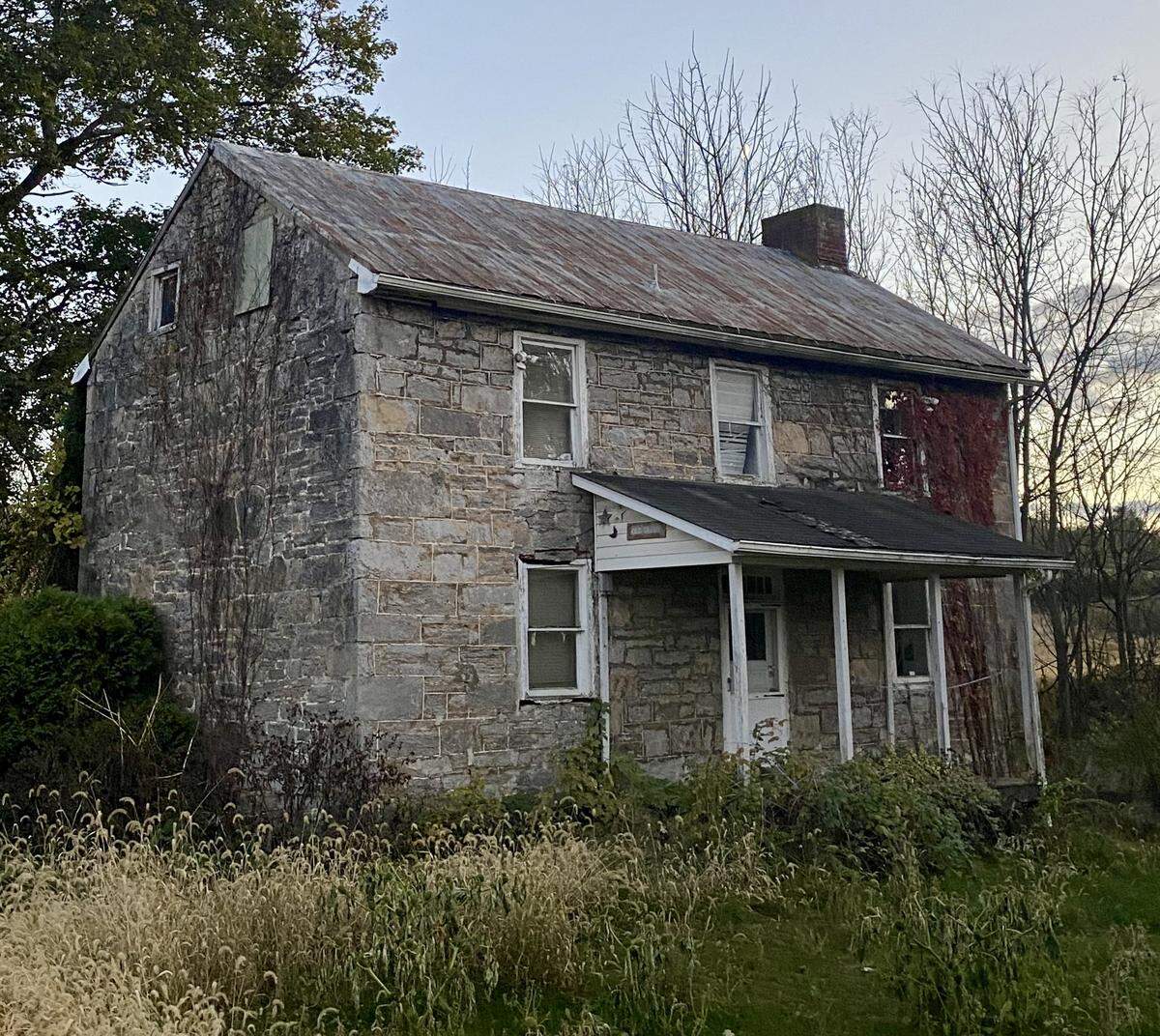
Bellefonte’s borough council is likely to revisit the motion to grant a demolition permit for the farmhouse property at its next meeting on Monday, Nov. 17, interim borough manager David Pribulka said.
Tabling the motion for roughly two weeks gave council members more time to hear community concerns and receive input regarding the property’s history, Pribulka said. Under local ordinances, Bellefonte’s council has discretion to grant or deny permits for the demolition of any structure in the borough.
Advocates like Griffin hope the farmhouse’s history — and its potential for future use — will be enough to help it stick around.
“This modern world pushes hard on us, and one way we remain upright is by leaning on the past,” Griffin said at Nov. 3’s council meeting. “Any old building, but especially this one, because of its modesty, its age and location, can help us hold on to our original nature. Somehow, it has been spared. Are we now to demolish it?”
%202.JPG)