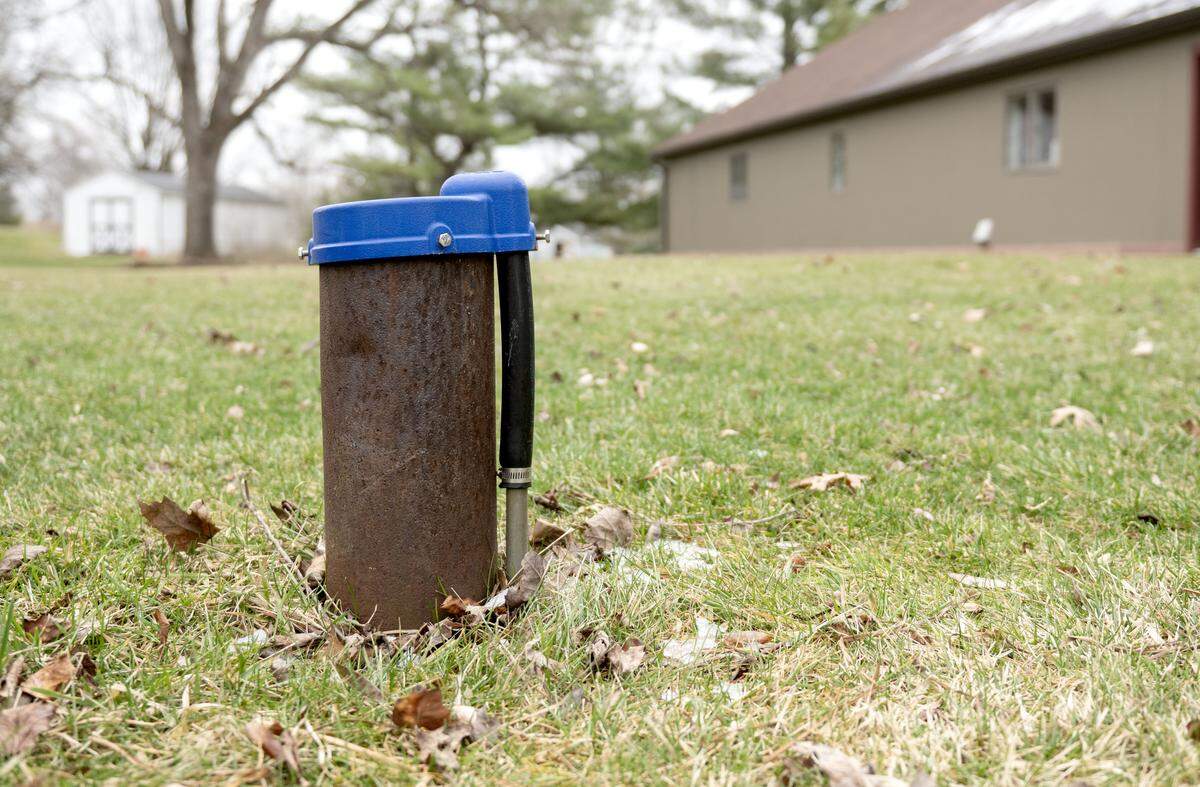
Benner Township residents remain ‘in real limbo’ 6 years after PFAS discovery
AI-generated summary reviewed by our newsroom.
- COA with DEP identified Penn State responsible for PFAS contamination of 43 homes.
- 39 homes use POET systems; residents fear costs if deemed final remedy.
- Residents seek public water hookup; feasibility, funding and authority disputes stalled.
It’s been six years since the Pennsylvania Department of Environmental Protection launched an investigation into dangerous chemicals in a Benner Township neighborhood’s groundwater supply. While a remediation agreement was struck with Penn State, which was deemed the responsible party, residents say they’re still waiting for permanent solutions and real accountability.
The consent order and agreement (COA), created in November 2024 by Penn State and the DEP, identified the university as responsible for the release of per- and polyfluoroalkyl substances, or PFAS, into Walnut Grove Estate’s water supply. The contamination happened through the leakage of a firefighting foam that had been used during training at what’s now the State College Regional Airport, owned by Penn State.
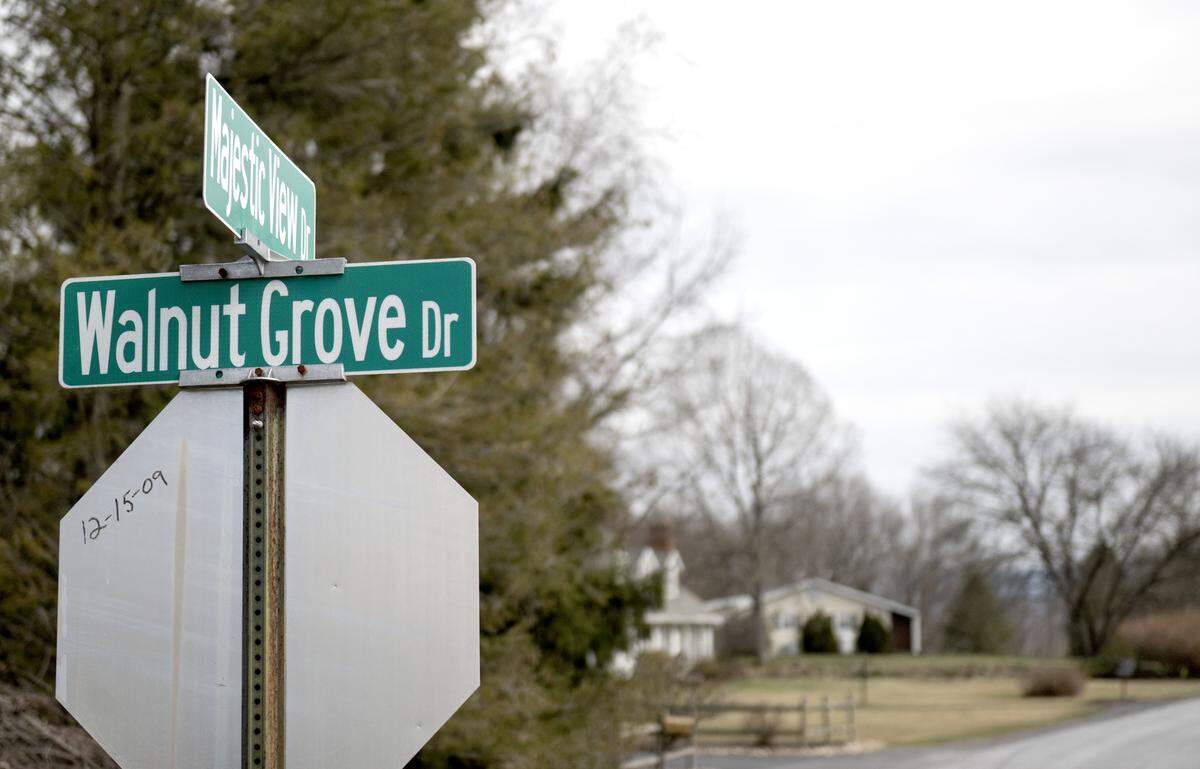
In Walnut Grove Estates, a development located less than one mile from the airport in Benner Township, 43 homes were affected by the contamination. The Centre Daily Times met in early March with 15 residents of the neighborhood who shared their quality of life, property value and health concerns, along with frustration about how the situation has been handled and uncertainty about the future.
As part of the COA, Penn State was ordered to pay about $565,000 to the DEP for investigation costs, along with costs to outfit homes with either a point-of-entry treatment (POET) system that filters PFAS out of the water or access to bottled water.
“This whole situation has been a nightmare,” resident Ellen Copper said. “We thought we were living in this little piece of heaven, tucked in close to everything, only to have one of your worst nightmares come true — a nightmare you can’t even think of until it happens.”
Penn State did not respond to specific questions about the PFAS contamination and the university’s response to residents’ concerns, with university spokesperson Wyatt DuBois writing in an email that Penn State “generally does not comment on pending or threatened litigation.”
“Please take a look at the information available on the DEP’s website, including the consent order and agreement, in which the university agreed to maintain the residential drinking water treatment systems, and the University’s Remedial Investigation Workplan detailing the plan to investigate the contamination,” he wrote.
A health and financial toll on residents
Also known as “forever chemicals,” PFAS have been associated with adverse health effects, including some cancers, thyroid problems and pregnancy-related complications.
Of the 15 Walnut Grove Estates residents the CDT met with last month, nearly all of them shared health issues that they believe they, or others they know, have experienced through exposure to PFAS.
“It’s in our blood, it’s in my bones — I have severe osteoporosis, and then there’s the unknown health risks,” resident Nancy Cord-Baran said. “I lost two really good friends in the neighborhood to ovarian cancer; there’s been a lot of cancer in the neighborhood. Our dog died at not such an old age from cancer too, and to be honest there’s been a lot of other dogs with cancer.”
Public comments submitted to DEP in February 2025 also included concerns about the health of residents.
“Why is there no requirement for the university to perform medical surveillance monitoring (including but not limited to blood serum testing), health assessment, and/or no cost access to medical professionals with expertise in PFAS and related health issues?” Mountain Research, LLC, a local residents’ community organization, wrote. “This lack of action leaves residents and individuals who have experienced long-term exposure to PFAS through the ingestion pathway from contaminated water supply wells without the necessary medical support and evaluation.”
There could be other consequences that stem from the contamination as well, such as the chemicals polluting the popular Spring Creek. Fish and Boat Commission Executive Director Timothy Schaeffer said in February that the fish in the creek are being monitored and are safe to consume, Lehigh Valley Live reported.
Outside of health impacts, the affected residents have had to mark their deeds due to the contamination. Many are now concerned that it has lowered the value of their homes and will make it difficult to find potential buyers.
“This has locked us into this inability to make any kind of life decisions,” resident Rick Weyer said. “It’s been going on now for the past five or six years — we’re in real limbo. We can’t move because no one wants to buy a home like this, and we aren’t going to pass them down to our children either, placing a burden like this on them.
“It’s like we’re damned regardless.”

A temporary solution?
While Penn State was identified as responsible in the consent order and agreement, an FAQ page on the university’s website stops short of accepting blame for the PFAS contamination. The use of the firefighting foam containing PFAS was mandated by the Federal Aviation Administration, and Penn State is now “proactively taking additional steps to hold the manufacturers of these chemicals and their products accountable,” the page reads.
A new foam that’s PFAS-free is now used at the State College Regional Airport, which Penn State is in the process of selling to the Centre County Airport Authority. The airport’s sale will have “no impact on PSU’s obligations under the COA,” Megan Lehman, DEP’s regional communications manager, told the CDT.
As a result of the consent order and agreement, Penn State was mandated to pay the DEP $564,767 for the investigation. The department also mandated that for at least two years, the university must install, test, maintain and replace point-of-entry treatment (POET) systems that filter PFAS out of the water — a task that Penn State hired environmental consultant Roux Associates to handle.
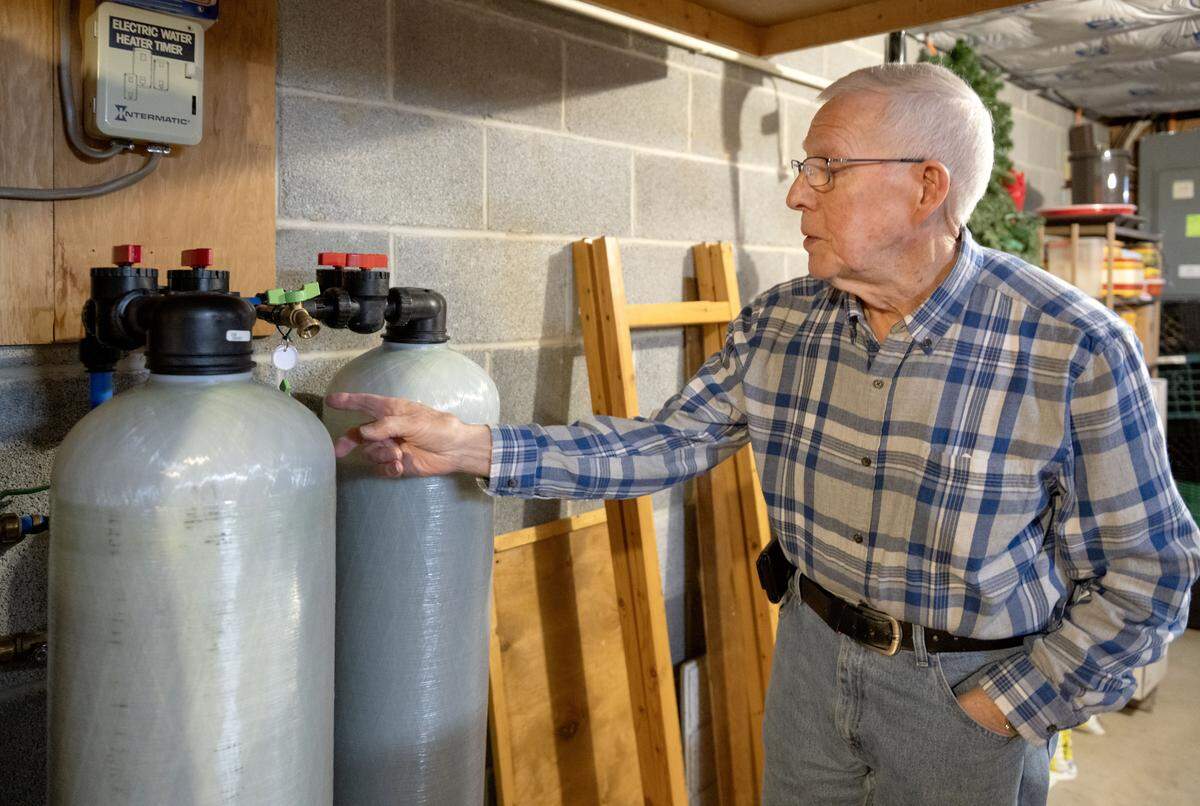
Of the 43 affected homes, 39 have POET systems installed, and the other four chose to be provided with bottled drinking water. Each of the 39 homes are outfitted with two POET systems — a main filtration tank and a backup. The tanks are tested semi-annually, along with the level of PFAS in the unfiltered water.
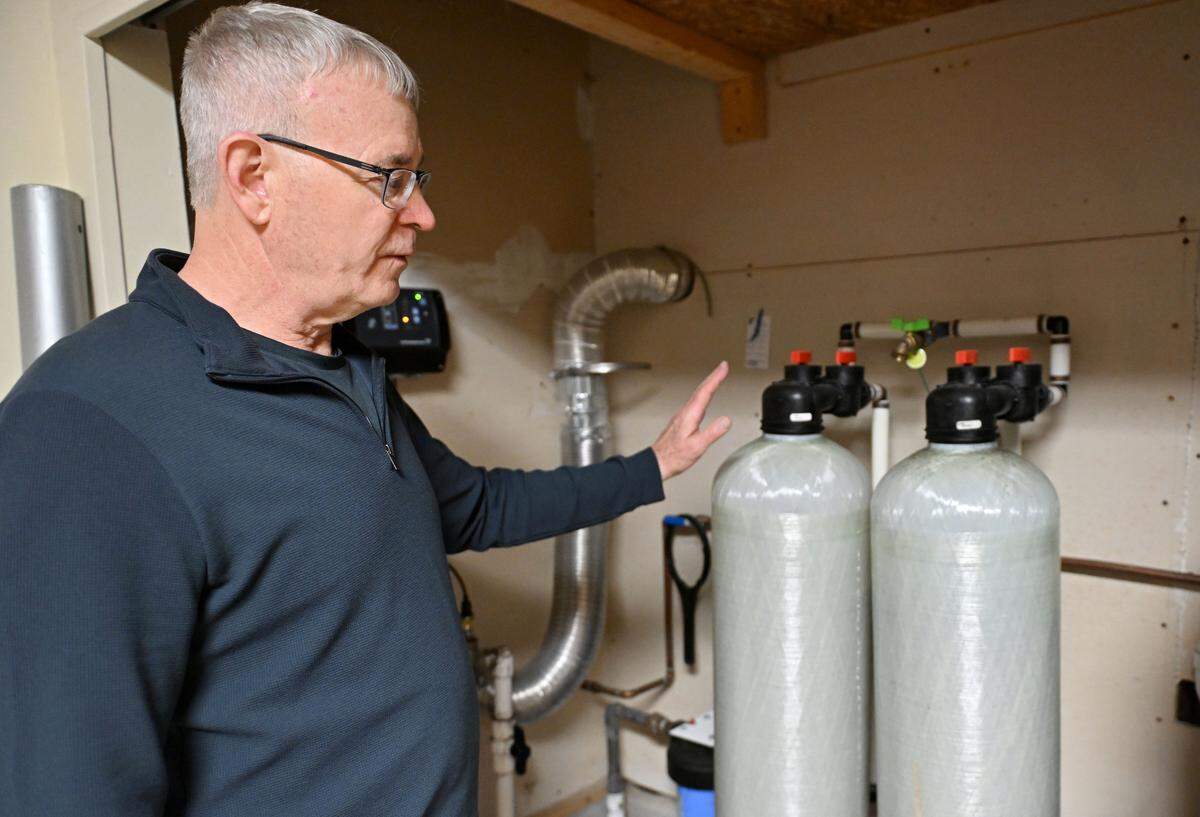
While the POET systems are effectively keeping PFAS out of the residents’ water, many hope that DEP doesn’t deem them to be the “final remedy” for the contamination. In that case, the testing, maintenance, replacement and disposal of the systems will become the costly responsibility of the homeowners.
“To my knowledge, it costs about $500 per test, per tank, so for four tests a year that alone will be around $2,000. It would cost an additional few thousand dollars to replace each tank when their filters are at max capacity,” Weyer said during a mid-March interview at his home.
He continued, “Not to mention the disposal of these tanks. When the filters fill up, they’re full of toxic PFAS, making them toxic waste — we can’t dispose of those ourselves. We’d have to call a professional waste disposal company, and that just adds to the cost.”
Moving forward, Roux Associates, on behalf of Penn State, is carrying out a study to determine the extent of the PFAS plume underground, and figure out what the “final remedy” should be.
When the study is completed, it will be presented to the DEP. If the POET systems are determined to be the “final remedy” — and if DEP approves — then Penn State will only have to maintain the systems for two years after the approval date.
Lehman said there “is no set timeline” for when Penn State and Roux Associates will finish their study, or for when the DEP would approve it. The two parties must follow Land Recycling Program/Act 2 regulations in determining the solution, she said.
A preferred remedy, and its challenges
Apart from designating the POET systems as a “final remedy,” Penn State could avoid maintenance responsibilities through four other means: the DEP assigning another party to cover maintenance, a homeowner’s well being located beyond the impact zone, quarterly water samples showing PFAS levels below legal limits, or residents connecting to a new water source.
The final option — hooking up to another water source, like a nearby water line — is the solution favored by many residents, with the project preferably being funded by Penn State. But bringing that idea to life has proven to be easier said than done.
The State College Borough Water Authority conducted a feasibility study in 2024 to determine if the residents could hook up to their water line, deeming it “not practical or feasible for SCBWA.” It suggested that the now-defunct Benner Township Water Authority develop a project to serve Walnut Grove from a water connection to the existing SCBWA system, SCBWA Executive Director Brian Heiser wrote in an email to the CDT.
“A portion of the new water line would have been owned and maintained by SCBWA with BTWA owning and operating the remainder of the water system,” Heiser wrote. “BTWA would have been responsible to bill and collect for those connections, using the revenue to operate the Walnut Grove water system. BTWA never contacted SCBWA to move forward with developing a project that would have utilized water from the SCBWA system.”
Weyer, one of the residents, called the Benner Township supervisors “obstructionists” to his and his neighbors’ goal of getting clean water, and said they haven’t done much to help the situation.

Benner Township supervisors did not respond to requests for comment, but township solicitor Rod Beard said that the SCBWA’s feasibility study, which was mentioned at various supervisor meetings, was never officially brought to the township to consider or support.
The solicitor added that even if the project was brought to the BTWA, the township authority “did not have the resources to take on a project of that scope.” It was originally created with the intent of taking over community water systems that had been constructed to serve specific developments and was “not ever conceived” as being the township’s overall public water supplier.
“As far as I am aware as the solicitor, the supervisors have undertaken all actions that the residents of Walnut Grove have specifically asked them to undertake, such as providing comment on the COA between DEP and Penn State, and requesting public input participation in the continuing investigation process,” Beard wrote in an email.
“There have been no other specific requests made by Walnut Grove residents as far as I am aware. Of course, people attend the meetings and want the supervisors to ‘do something’ about the PFAS contamination, but there has never been a definition of what that ‘something’ should be.”
The Spring Benner Walker Joint Authority took over the BTWA’s services in late 2025. The authority did not respond to the CDT about the possibility of linking a water line to the neighborhood.
In addition to feeling stifled by local government officials, some residents said state lawmakers haven’t provided much help either.
State Rep. Paul Takac, D-College Township, whose district includes Benner Township, wrote in an email that he is “focused on doing everything possible” to make sure that Walnut Grove residents are heard, and that “their interests and health are protected for the long term.”
“Our office has been and will remain a key conduit of information for both residents and the public, as well as an active participant in bringing all parties to the table in good faith to find the best path forward,” Takac said. “I can assure everyone that real progress is being made, and I am optimistic that we will find a solution acceptable to all.”
As residents anxiously await that solution, most of them said they hope Penn State will be made to cover its expenses, and will be a better neighbor moving forward — both in terms of keeping the groundwater clean, and in communicating with the residents.
“We have not been brought into a group like this by Penn State, and they haven’t come to us and said, ‘how can we help you?’” resident Dave Kline said during a meeting with the CDT. “We haven’t been confronted by Penn State in any way, shape or form... We’re not getting any feedback on anything.”