
Large signs popping up in Penns Valley criticize the school district. Are the claims true?
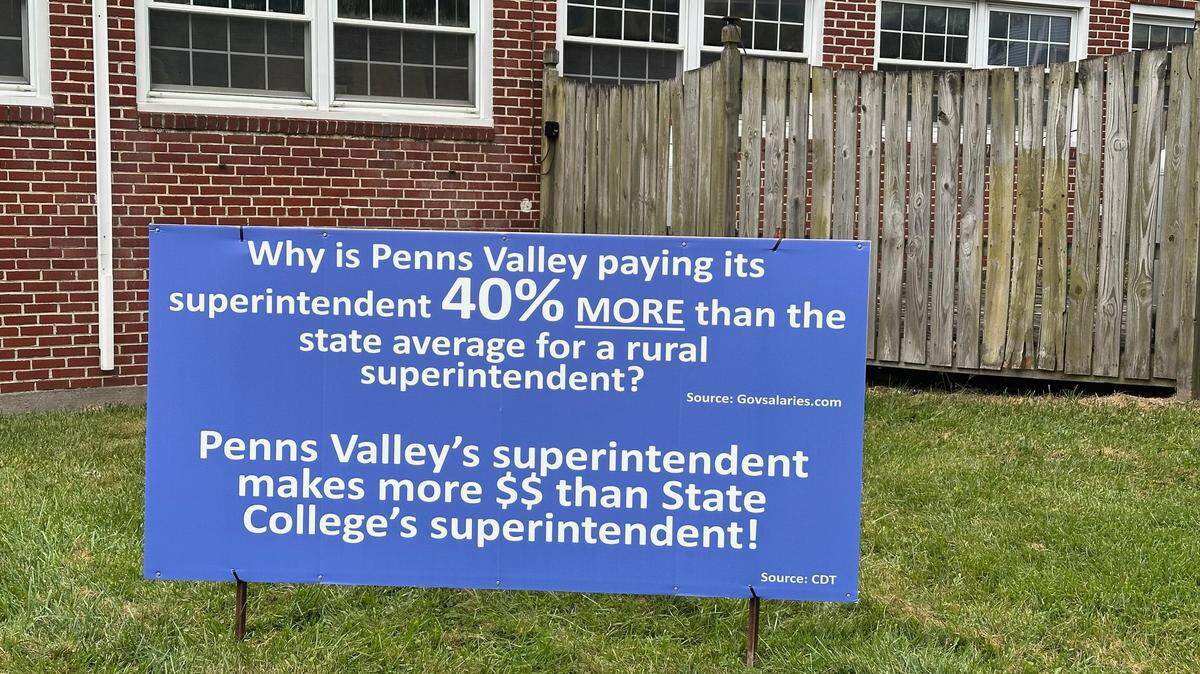
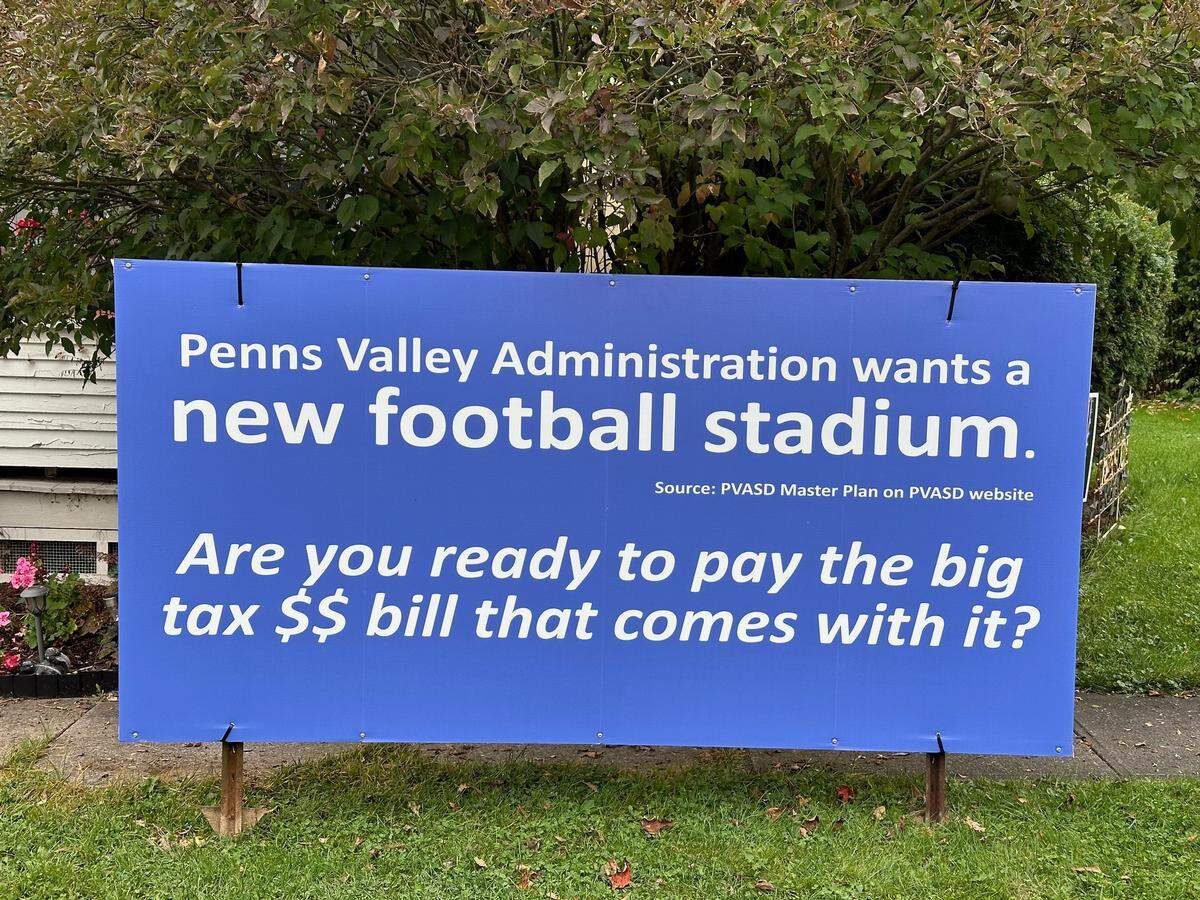
Driving down state Route 45 or other areas in Penns Valley, you may have noticed bright blue, 5-by-8 foot signs that criticize the spending and management of the Penns Valley Area School District.
The signs were put up in September by members of Penns Valley Town Halls, a community group that organized largely in part due to the efforts of community member Daniel Decker.
Decker, who co-chairs the group with former school board candidate Mike Pase, started hosting meetings in the Old Gregg Community Center in late 2023 for community members to voice concerns about the district and discuss candidates for school board.
The group has met periodically since then, with its numbers slowly but steadily growing. At the group’s October meeting, upward of 60 people were in attendance. The group used donations gathered at the meetings to pay for and put up six signs around the area.
Decker said the signs were ordered to draw attention to issues the group has raised about the district’s spending. Some signs were removed after a threat of vandalism, Decker said, but the group plans to reinstall the signs in different locations across the valley soon.
Several are printed with statistics or facts taken from Centre Daily Times reporting or from the Penns Valley Area School District’s website. The CDT has no connection to the group.
Members of the Penns Valley administration and many of its board members have not been present at PV Town Hall meetings. Superintendent Brian Griffith said he has reached out to Decker to clear up any issues but has not met with the group.
“I’ve personally talked or emailed the leaders of this group and offered to have a sit-down conversation with them, talk through any issues that they want to discuss with me,” Griffith said. “They have not taken me up on that. The board has done the same thing.”
Decker told the CDT that the group would be willing to meet with the board in the future.
In May, board president Domer Smeltzer and Griffith sent a letter to the group explaining that as the meetings started as political in nature, most board members and administrators chose not to attend.
The letter, which was shared with the CDT by Decker, attempts to clarify and correct some misunderstandings and concerns voiced by the group, while also questioning the group’s approach.
“Spending added time criticizing, responding to Right to Know requests, and crafting letters does not seem productive for you, our employees, or our community,” Smeltzer and Griffith wrote. “We want to emphasize that constructive dialogue with stakeholders is important, and this happens best through meaningful conversations rather than a town hall meeting seemingly intending to focus on criticism and create bias.”
When it comes to the signs around the community, some of the claims are misleading. The CDT recently sat down with Griffith to discuss the information presented in the signs.
Rising construction costs
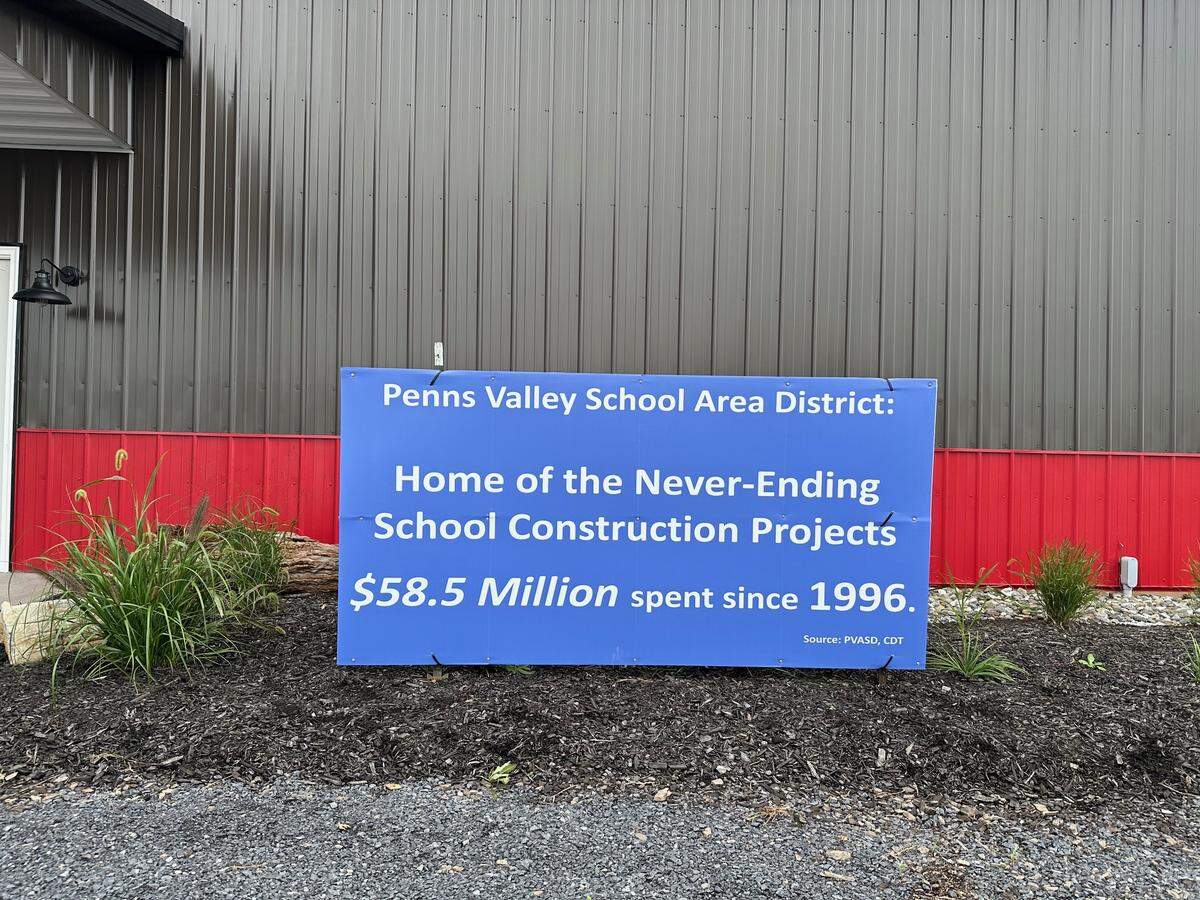
One sign points to “never-ending construction projects” and notes that the district has spent $58.5 million since 1996.
While Griffith was unaware how the group ended up on that number and could not speak to its accuracy, he said that amount is not uncommon for a district over a 28-year period, especially as prices and inflation have risen.
“That’s something that school districts are seeing,” he said. “Just like families see increases in their cost for food and for living expenses, school districts are seeing that as well. And so costs go up, facilities costs go up as well. As well as teacher salaries and other expenses school districts have.”
Districts also face much more complex construction and planning requirements than other residential or commercial buildings, Griffith said. For projects above $25,000, a request for proposal is necessary, requiring districts to advertise the job to companies who meet school district’s standards.
“You can’t hire a person who’s a residential electrician to do commercial work,” Griffith said. “I can do wiring in my home, I know that I have that skill, but I could not wire a school district. We’re just talking about a different scale, and school districts pay for that premium quality.”
Because most school construction projects are so complex, districts must also hire architects and engineers to draw up plans for commercial companies to bid on the project and pay higher rates for labor. All these factors lead up to elevated costs, which districts and boards do their best to keep down, Griffith said.
But when schools do have to complete these multimillion-dollar projects, how do they afford them without raising taxes? They do what many Americans do for large purchases — they borrow it. But unlike applying for a loan at a bank, districts take out bonds that they pay out at later dates.
Griffith said due to the use of its capital funds reserve and having some debt reimbursed by the state, the district carries very low debt despite rising construction costs.
“All debt in the school district is completely retired in seven years,” Griffith said. “Currently, after at the conclusion of this school year, the ‘24-’25 school year, we would be about $12.5 million of total debt with a potential debt capacity of around $60 million.”
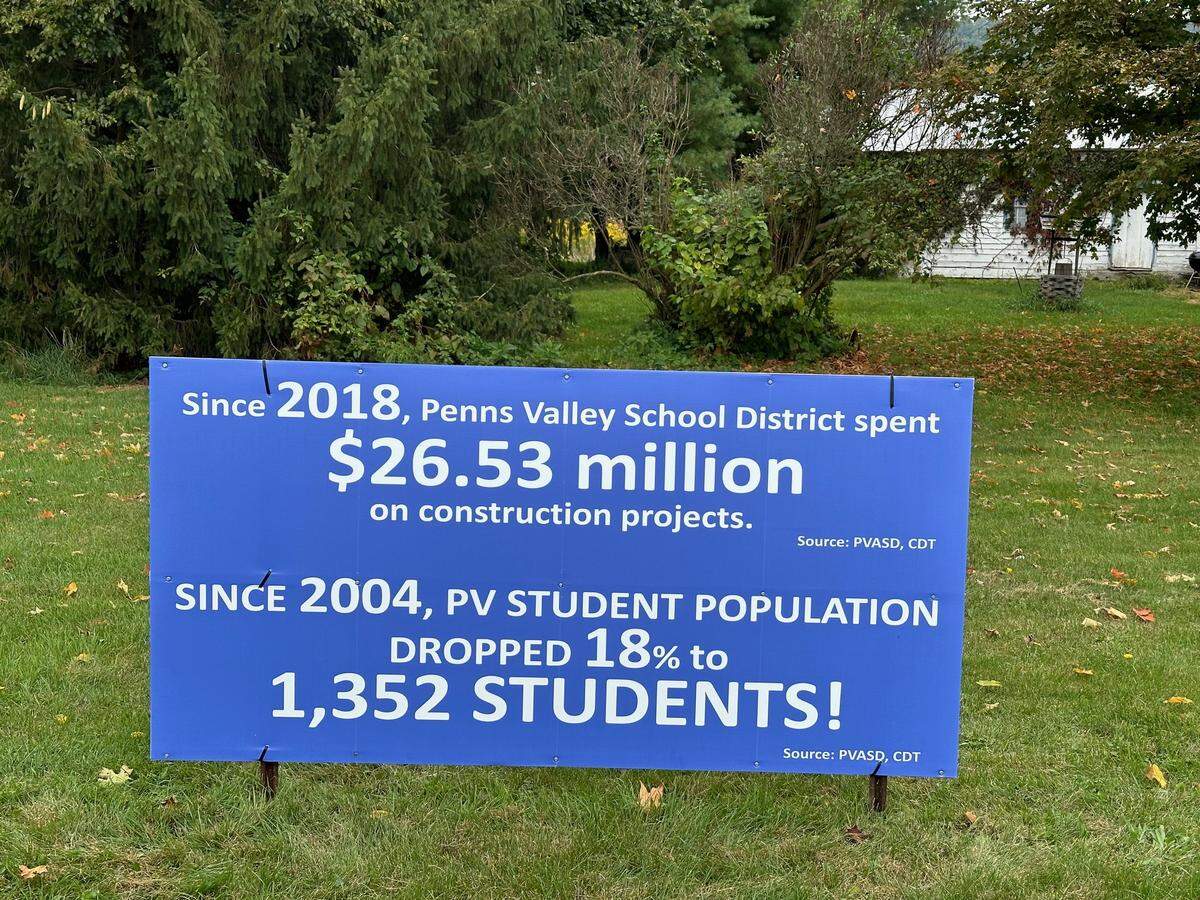
Although keeping facilities maintained and updated is costly, it’s part of the district’s job, Griffith said.
“Our students perform well academically,” he said. “They also deserve to have facilities that highlight their talents. Just because we’re a small, rural school district doesn’t mean our students don’t matter. Our students matter. Their skill sets matter, and we need to have facilities that can put them on the right stage to highlight those skill sets.”
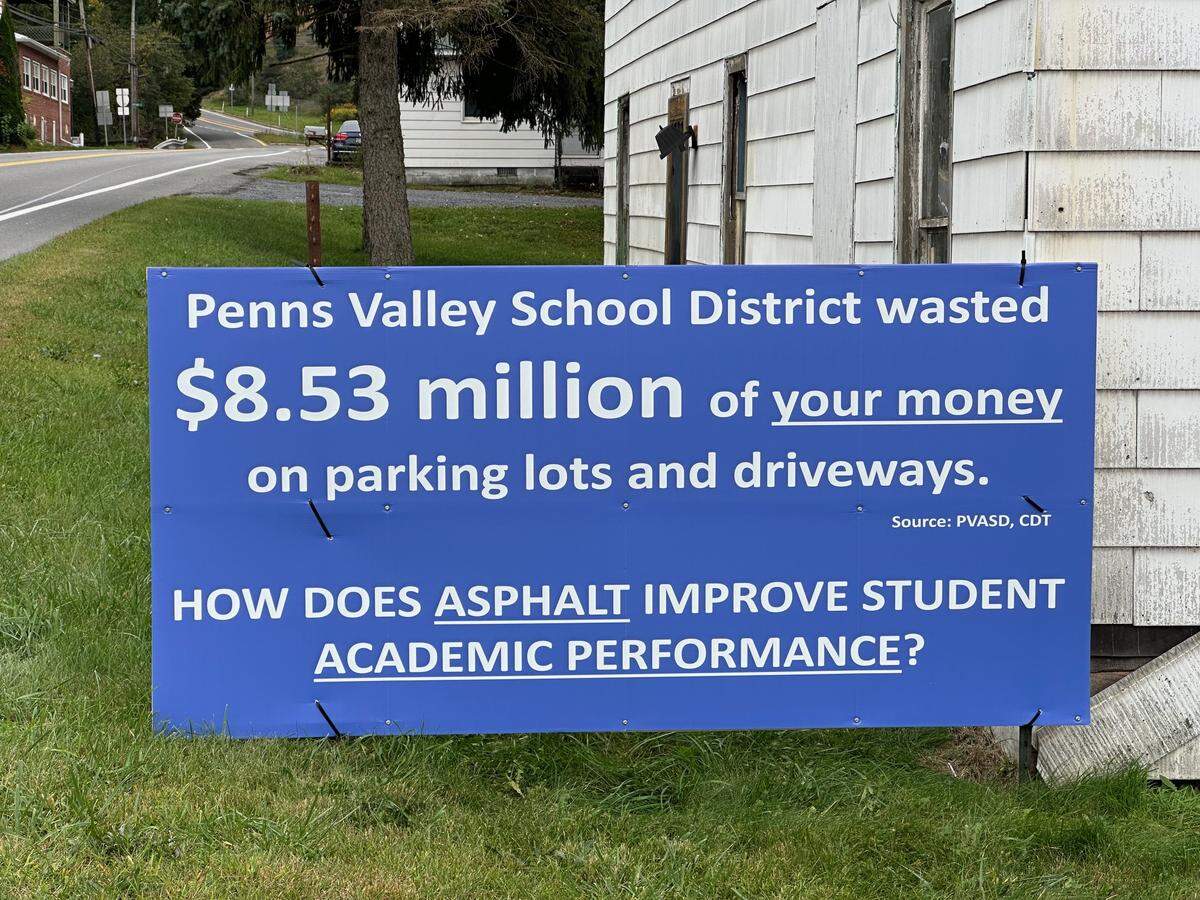
One of the district’s biggest projects, and a major contention point for the PV Town Halls group, is the $8.5 million Safe School Route 45 Corridor Improvement Project that was completed over the summer. The renovations resurfaced, rearranged and expanded the parking lots for Penns Valley High School and Penns Valley Intermediate/Elementary school. The project also created a safer crossing along Route 45 for students, parents and staff.
Griffith said that before the renovation, the district did not have enough parking at the schools to handle more than one event on the same night. But the parking renovation doesn’t only help students or make hosting events easier, it’s a benefit to the community members who attend as well.
“We have an older population, and there are some folks that really struggle to walk that great distance,” Griffith said. “And grandparents, quite frankly, who pay the tax bill deserve to be able to see their grandkids perform in a musical, or see them perform at a basketball event or a wrestling match, and they want to be here. We want them here, and we need to have safe, adequate parking for them.”
Plans for future facilities
Another sign states that “Penns Valley Administration wants a new football stadium” and asks if taxpayers are ready for the bill that would come with it. Griffith said the claim is not accurate.
The board has no immediate plans to construct a new athletic stadium, Griffith said, adding that the confusion comes from people misinterpreting the district’s master plan. In 2018, after the district bought 119 acres of farmland for $1.2 million, the administration set out to speak with the community about their long-term goals for the land use.
In a survey sent out by the district, community members asked for improvements to parking, safety and more athletic fields. Some wrote in asking for a swimming pool, a skate park, solar fields and a hockey rink.
In 2020, the district finalized its master plan, a long-term option of what the land would be used for in an ideal future taking into account suggestions from the community.
“If we’d want to do things perfectly, and we have all the money that we wanted in the world, where would we put things in? What would it look like?” Griffith said. “... The school district has not ever talked seriously about installing a pool, installing a golf course, or installing a new athletic stadium.”
However, Griffith admitted that the athletic facilities are behind some neighboring districts.
“We are the only school district that I know of in the region that doesn’t have restrooms at their athletic field,” he said. “In fact, I think we are the only school district in Centre County that doesn’t have a turf field. So we can’t play district soccer playoffs on our fields because they’re not turf.”
Contractual concerns
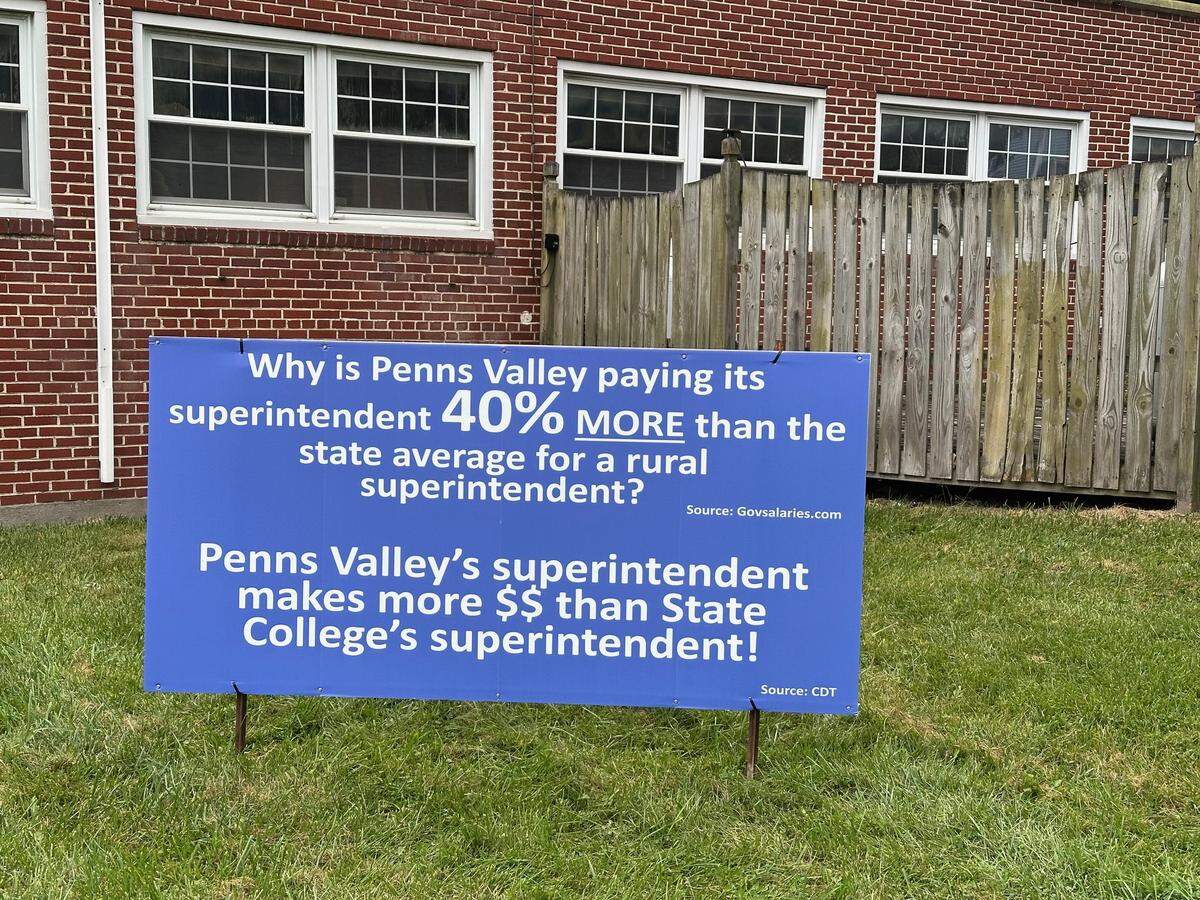
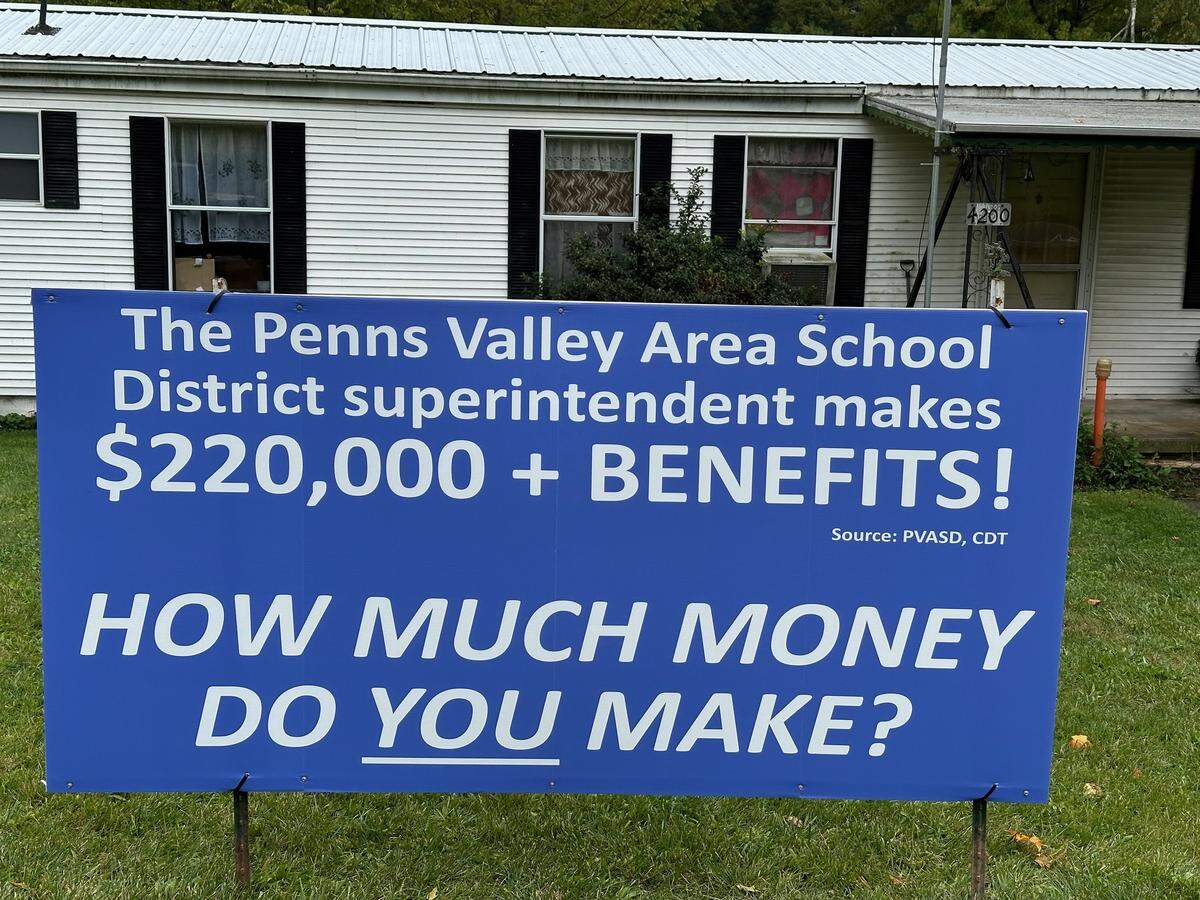
Throughout the several meetings, Griffith’s superintendent contract with the district has come into the spotlight several times. Griffith, whose contract was renewed by the board in 2021, makes $221,358 annually, according to 2023 data from the Pennsylvania Department of Education.
Although he’s the highest-paid school administrator in the county, he also has decades more experience when compared to other area superintendents. Every district in Centre County has gone through a change in superintendents within the last two years except for Penns Valley.
Griffith has been with the district since 2004 and the superintendent since 2008. Nationally, a superintendent’s tenure ranges from 3-6 years, according to a study from the Pennsylvania Clearinghouse for Education Research.
Having that kind of long-term experience with a community can be vital to helping a district run smoothly, Griffith said.
“I know what we’re doing well in education, what we’re not doing well in education,” he said. “I know people, and so it allows a superintendent with experience to move much more quickly than a superintendent trying to figure out what the history is here. And history matters.”
Griffith said his role, and the role of other superintendents, is to be an expert the board can rely on to bring information and recommendations.
“I don’t tell the board what to do,” he said. “I don’t tell the board whether they should or that they’re going to have to raise taxes.”