As plans for solar project in Rush Township move forward, questions and concerns remain
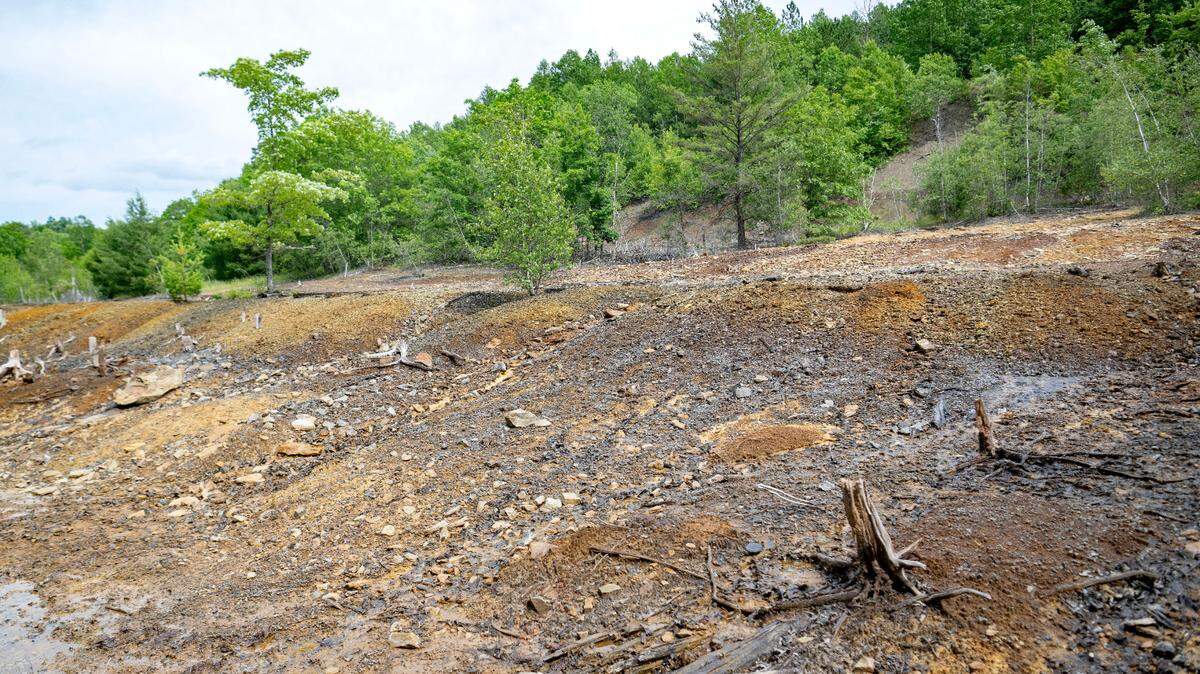
A solar farm on more than 1,000 acres of abandoned strip coal mining land is in the works in Rush Township, but residents still have questions and concerns more than a year after it was first proposed.
Ever since representatives from Ampliform and Project14, the solar project’s developers, formally introduced the project to the township in January 2023, and began attending the monthly supervisor meetings at the end of last year, public scrutiny and backlash directed toward both the developers and the supervisors has has been rife at nearly every township meeting.
The solar array is being planned for seven parcels of land that the developers have leased along Black Moshannon and Coaldale roads.
Before any solar panels are installed, the township is looking to amend its zoning ordinance to create a new commercial energy production district. This amendment would provide guidelines to the developers for where they can — and can’t — put the solar panels.
The developers could technically construct the panels on that land without any type of collaboration with the township or the creation of the district, township supervisor Pat Romano said. But the creation of the commercial energy production district would allow for the township to impose some regulations.
“[The solar developers] don’t have to work with us — they could come in regardless and build whatever they want,” Romano said. “What we’re doing is not approving solar to come to Rush Township. We’re putting some guidelines in place for when it does come — because it is coming, and we can’t stop it.”
Not to mention that the township could face legal backlash if the amendment is not passed, as the developers could potentially sue for not having an updated zoning ordinance that includes the commercial district. Township resident Jennifer Shoffner spoke about that concern at June’s monthly supervisors meeting.
“You all get so defensive whenever we ask you questions about things,” Shoffner said to the developers. “Why is that? How many lawsuits like this have been successful against townships in the past, and what’s the total percentage of success in these lawsuits for developers? What it sounds like they’re doing is threatening us.”
But Ampliform’s Senior Development Manager Vince Gibbs said legal action is not something they’re considering. He and fellow Ampliform and Project14 representatives have been attending the township’s monthly meetings, attempting to quell any complaints or critiques that the public may have — and there have been many.
Two recurring concerns that residents continue to raise revolve around buffer zones for the solar array and the acid mine drainage on the proposed site.
Buffer zones
When the project was first brought to the township’s planning commission, one of the biggest critiques was that the buffer zone requirements in the pre-existing zoning ordinance allowed for no more than 30 feet of buffer — a distance that would permit the solar developers to construct the array close to a property boundary.
Tony Maruschak, a Rush Township resident, questioned that during last December’s meeting.
“I know that in other municipalities, when a solar farm is going to be built, the buffer zone is 250 to 300-feet — why can’t that be the case here?” Marushak said. “What it sounds like to me is that these solar panels are going to be installed right beside people’s backyards. That type of thing might not effect me very much, but if it did happen to me I know I’d hate that.”
In the months that have passed, several other residents have raised concerns about the buffer zone.
“I just don’t want to see my property value bottom out,” Shoffner said at a June meeting. “Anyway you look at it, [the solar project] is going to border my property and [property value decrease] could happen.”
Because of the feedback from township residents, along with the proposed amendments to the zoning ordinance, Gibbs told the CDT that the developers plan to make their project’s buffer zone extend to 100 feet for roadways, with another 300 feet of buffer being added for all dwellings, which means that there won’t be a solar panel anywhere within 400 feet of a home.
Because the zoning ordinance amendment hasn’t been made yet, Gibbs was unable to provide an official map of what the potential buffer zones would look like.
“I understand the worry about property values decreasing, but we’ve done extensive research at our past solar farm sites, as well as others that we haven’t done, and the property values around the sites haven’t decreased a bit,” Gibbs said. “We’ve also been working closely with the supervisors and the township’s residents to try and work their concerns into our plans.”
Acid mine drainage
The second prominent issue with the proposed solar array is the abandoned strip mine land it would be built on, and the suspected acid mine drainage underneath.
According to the United States Geological Survey, this drainage can be harmful in several ways. That includes contaminating drinking water and corroding the infrastructure of things like bridges and buildings, but one of the most noticeable impacts of the drainage is the damage it does to local creeks. If a creek has been contaminated by this drainage, it will often be colored like yellowish-brown rust.
Rush Township was once rife with strip mines — a type of surface mining that involved stripping away the land’s surface to reveal the valuable coal underneath — but now, these mines have been left abandoned, and in its wake there lies a surface that Gibbs described as similar to the “surface of Mars.”
Desolate and barren in places, strip mine lands are tough to reclaim — a task that the Moshannon Creek Watershed Association knows about all too well.
The association released a conservation plan in 2021 detailing the history of the land, as well as what could be done in the future to reclaim it.
According to the plan, the acid mine drainage will naturally filter its way out over time, however, this could take decades at the earliest, and will cause significant damage as it does.
Residents at past meetings have brought up the status of creeks near their homes that have already been affected by the drainage.
David Roberts, a former Rush Township resident, said at the June meeting that he specifically would like Black Bear Run — a creek that hasn’t been expose to the drainage yet — protected from the drainage whenever the project comes in.
“The main thing that I would like to say is that whatever happens with the ordinance, what really needs protecting is Black Bear Run,” Roberts said. “It’s an exceptional value of water quality there.”
Other Rush residents have expressed at township meetings that if Ampliform comes in and builds solar panels on the land, that they should also clean up the drainage that lies beneath.
That’s something that’s easier said than done, Gibbs said.
“I know that a lot of residents want us to go in and clean up the drainage make that area spotless, but that would take a significantly large amount of work, and that’s not the type of business that Ampliform is,” Gibbs said. “If the zoning ordinance amendment gets approved, we do intend on cleaning up some of the drainage once this project gets underway, but there’s absolutely no way we’ll be able to handle all of it.”
After the amendment is approved, Gibbs said that Ampliform will work with Penn State to try and clean up some of the drainage through a process that professors at the university have created.
This process would bring trucks into the sites where the acid drainage was most prevalent, take the drainage and run it through a machine that would help sort out essential minerals that are found in the drainage.
These minerals can then be sold and used to construct things like cars, phones and military weaponry.
That could come years in the future though, Gibbs said, as the project is still in its earliest phases.
“I’d really like to be able to get some of that drainage out, especially if it means helping clean up the area here a bit and appeasing the citizen’s requests, but that’s still a long way in the future,” Gibbs said. “This project right now is still at its beginning — after the amendment hopefully gets approved, we would need to run environmental impact studies, along with a ton of other tests. However, (cleaning the drainage) is still in our long-term thoughts and we will cross that bridge if and when it arrives.”
What’s next?
While it’s still in its earliest stages, there are ways that the project could benefit the township in the distant future.
Last December Tim Schoonover, the attorney representing the developers, said that if the township were to go through with the creation of the commercial buffer zone, that there would be some type of monetary compensation through tax credits for the usage of it — but only if the developers can make the project work with the new ordinance’s requirements.
“We would provide the township with a monetary payment to be able to use [the land],” Schoonover said. “However, if we can’t meet all of the requirements you’re putting down then we might also have to walk away. There’s got to be a give and take here.”
Rush Township aren’t the only ones who could benefit from the solar farm though — according to Gibbs, the Moshannon Valley Economic Development Partnership could receive a 40-acre land donation. Philipsburg Borough and Philipsburg-Osceola Area School District could also benefit in some way as well.
“The discussions are preliminary, but our initial design assumes it will front 504 to the north as a 40-acre donation (to the MVEDP),” Gibbs wrote in an email. “The Philipsburg Borough, in addition to the Philipsburg-Osceola Area School District, are receiving compensation as easement participants. We are also in late-stage discussions with the school district for a sponsorship I am not at liberty to discuss in detail until the agreement is fully executed.”
In addition to these benefactors, Rush Township, Philipsburg Borough and the areas surrounding the project site could also benefit from the use of the solar energy.
“Whether they are billed for it or not ... they will all receive fossil fuel-free, solar energy from our project,” Gibbs wrote. “By that I mean, regardless of what utility they get their energy from, energy — like water — flows through the path of least resistance. If the plant is located in or near Philipsburg, its close proximity ensures that when the plant is generating the power will flow to the load centers closest to it.”
No timelines have been provided for the project, but Gibbs is hopeful that the ordinance amendment will be approved at either the August or September township meetings.
Once the amendment is passed, environmental studies can then take place, followed by the presentation of a more concrete plan for where the solar panels will be built. Gibbs is hopeful that the project will reach completion in late 2026 or early 2027.
The next Rush Township Board of Supervisors meeting will be at 4 p.m. Aug. 13.