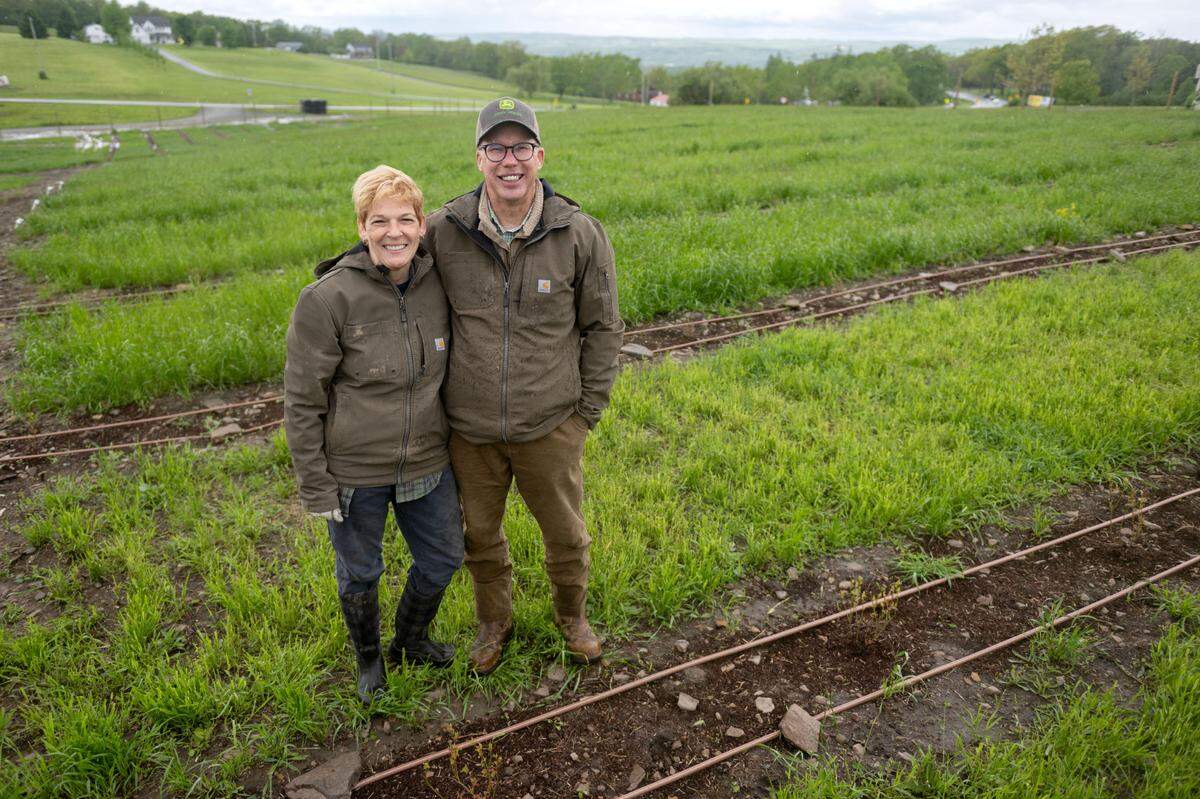
Retired couple has big plans for Philipsburg area blueberry farm. Here’s a look
AI-generated summary reviewed by our newsroom.
- Couple plants 2,300 blueberry bushes for Philipsburg area's first u-pick blueberry farm.
- Blueberry bushes require specific conditions to grow, including a "low-acidic" pH level.
- The Berries & Twigs Blueberry Farm plans to open in summer 2027.
Starting any business from the ground up is a daunting task, let alone a seven-acre blueberry farm — just ask Pat and Lisa Powers, the founders of what will be the Philipsburg area’s first u-pick blueberry farm.
Located at 2605 Port Matilda Highway next to the iconic Philipsburg castle house, the Berries & Twigs Blueberry Farm got its start when the State College couple started brainstorming post-retirement plans.
Pat, a Philipsburg native, had a 37-year engineering career while Lisa recently retired from her longtime position in Penn State’s office of strategic communications. The blueberry farm idea was born out of a desire for the couple to keep active while bringing a unique attraction to the Philipsburg area.
“I used to drive out to Williamsport a lot, and every time I’d always pass a big blueberry farm, which is definitely one of the things that inspired this venture,” Pat said. “[Lisa’s] a big gardener, I’m a big gardener and we both like the outdoors, so we though to ourselves ‘why not give this whole blueberry farm thing a shot?’”
Since announcing their big plans in January with the launch of a Facebook page, Lisa said that the Philipsburg community has already shown “tons” of interest. People are already looking to collaborate with the farm when it opens.
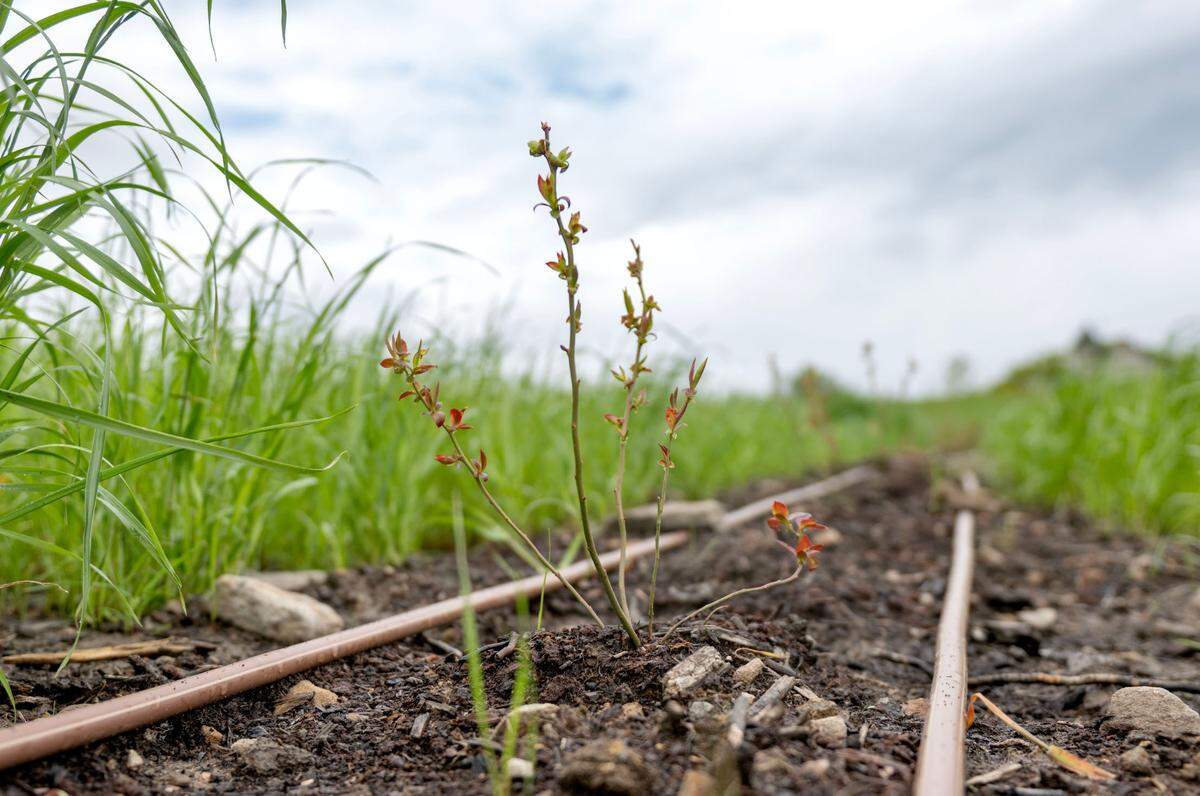
But it will be a bit of a wait. The farm won’t be open until around summer 2027 due to the length of time it takes the 2,300 recently-planted, 1 1/2-year-old blueberry bushes to mature.
Prepping the land
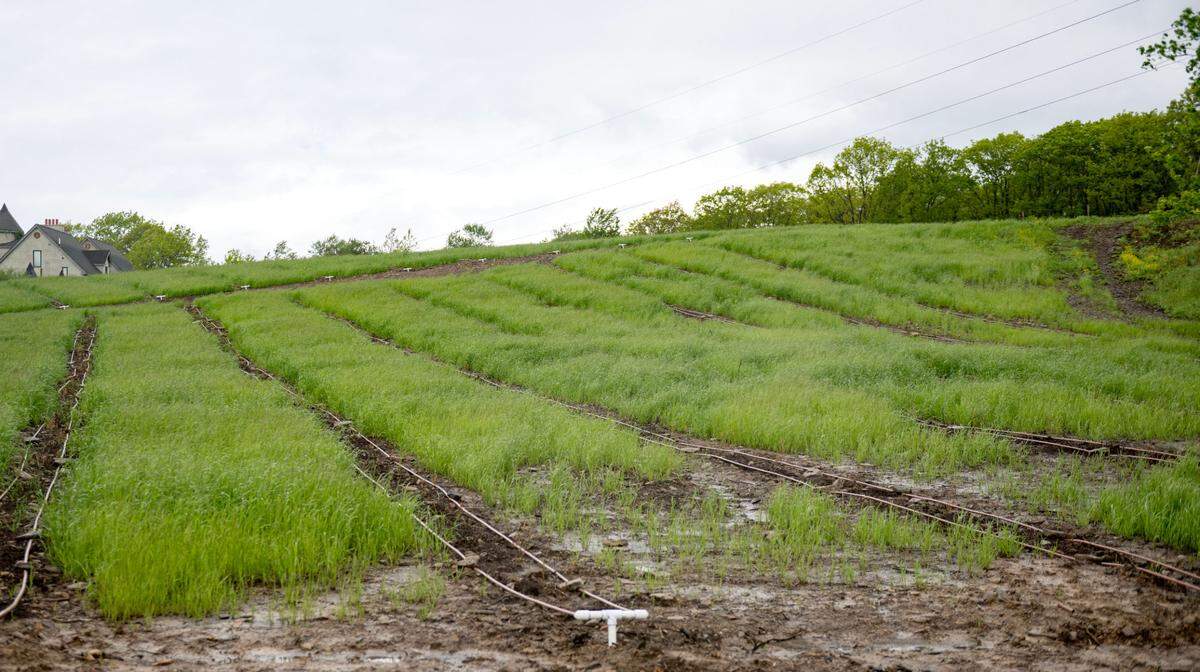
The bushes are planted roughly 4 1/2 feet apart from one another so that when they mature to a height of around six feet tall, they won’t be touching. That will give the farm’s visitors enough space to pick their berries from anywhere on the plant while keeping the bushes from overcrowding.
While planting 2,300 blueberry bushes is an intimidating task in its own right, the couple said that the location of the farm, and this spring’s inclement weather, didn’t make the planting — or the prep work — much easier.
“Before we even thought about getting the bushes in the ground, we had to clear out a bunch of trees from the property, and we’re still in the process of picking out rocks from the field so that when we mow it, we aren’t going to be damaging our mower,” Lisa said.
Pat said the location of the farm has also created challenges.
“The wind here is so strong and it just lashes our hillside, which is left pretty open to the elements,” he said.
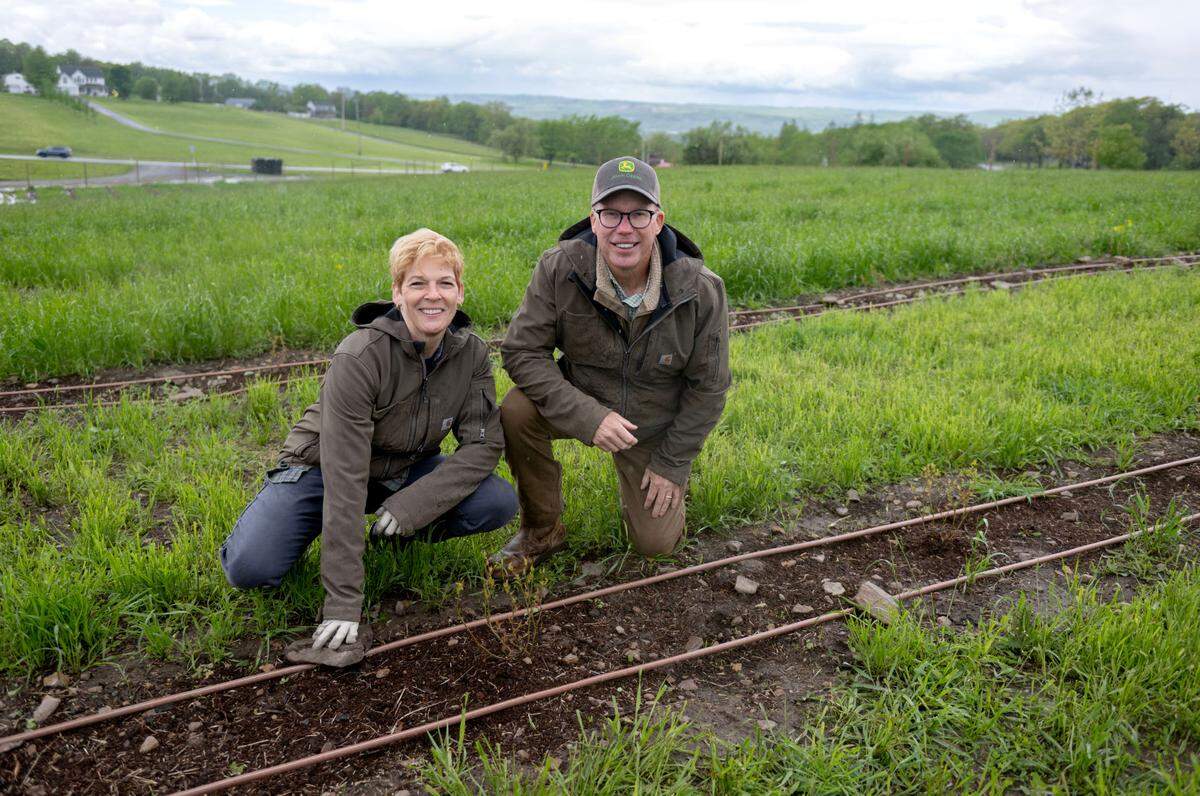
Still, they’ve managed to overcome some hurdles with the help of some crafty engineering, and the advice of some experienced friends.
When the pair was planning for how they would start their blueberry farm, they discovered that blueberry bushes thrive in soil that sits at a “low-acidic” pH level, specifically between the 4.5 to 5.5 pH range, which is a quality that the soil in the area did not previously possess.
In order to make the soil the proper acidity level, a few crucial changes were made when the bushes were planted, including the overlaying of Canadian Sphagnum peat moss around the rows of bushes, which acidifies the soil and keeps the bushes’ roots dry.
Pine mulch will be layered on the rows where the bushes are planted too, which helps maintain the soil’s low acidity level and prevents weed growth.
A drip irrigation system was also installed. It not only waters each bush, but also delivers fungicides and crucial nutrients like nitrogen directly to the bushes’ root systems through a process called “fertigation,” or fertilization through irrigation.
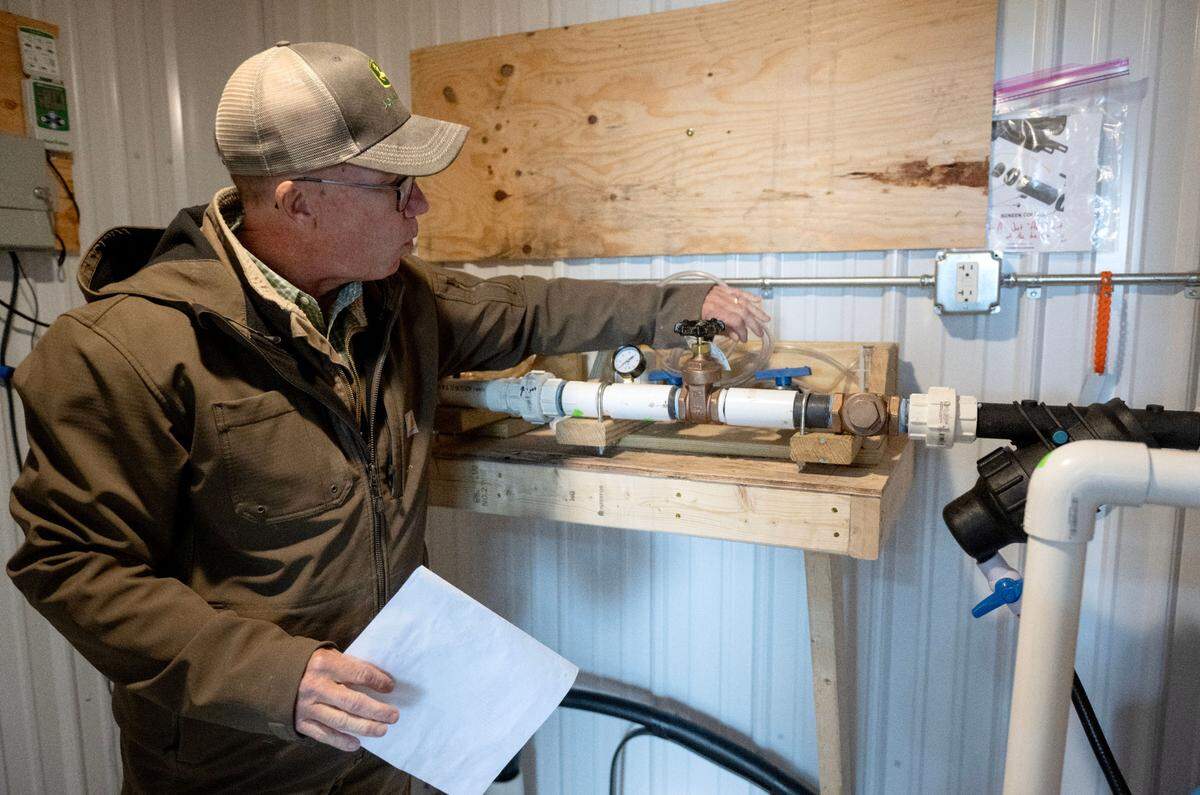
The operating room for the system is located inside the recently-built farm building. Next, water is pumped through a nutrient tub, and is then transported through a series of small, plastic tubes up to the rows of bushes.
From there, holes poked in the tubing — which are around one foot apart from each other — deliver the fertigated water to the roots, keeping them hydrated and well-fed.
“The fertigation system is such an awesome idea, and honestly, we probably wouldn’t have known about it had it not been for the help of other blueberry farmers that we’ve reached out to,” Pat said. “We’re learning new stuff about blueberry farms every day, and surprisingly a lot of that is coming from other farmers.”
A large fence is being built around the property to deter animals from indulging on the blueberry bushes once they mature, and Pat said they’re also looking at the possibility of installing netting over the bushes to keep out birds.
Looking toward the future
When the farm eventually opens in a couple years, Pat and Lisa hope their business can offer a number of services to the area aside from a just u-pick farm. That could include collaborating with other other local business owners to sell their goods, selling pre-picked, pre-packaged blueberries for short-on-time visitors and offering educational courses on blueberries, along with the protected wetlands located below the field of bushes.
The pair are also looking to offer a few other blueberry-flavored goods too, such as pies, ice cream and honey.
“Between the U-pick farm and the other things we’re going to offer here, I believe that this place is going to become a real asset to the Philipsburg community, especially since there isn’t really a blueberry farm close to this area,” Lisa said. “To all those who are excited about the farm — we hear you, and we’re excited to welcome you to our farm too, but please just be patient ... I promise the wait will be worth it.”