
5 years after losing his legs in battle, here's why Adam Hartswick says he's stronger now
He might be missing both legs from above the knees, his right index finger, the tip of his thumb and a chunk out of his right wrist, but Sgt. Adam Hartswick wants people to know that he's not broken.
In fact, the 27-year-old said on a Mother's Day afternoon at his home in College Township, the trauma he sustained when he stepped on an improvised explosive device during an ambush in Afghanistan five years ago and the subsequent surgeries, have made him stronger.
Since the injuries he suffered in the May 14, 2013 blast, Hartswick medically retired from the Army as a sergeant and transitioned to life as a civilian. He's employed as a technical casualty combat care instructor for Techline Technologies, a Willow Grove-based company, and is working on a four-year degree from Penn State. He lives independently, has been in a relationship with his girlfriend for three and a half years, renewed his faith and adopted an adorable black German shepherd puppy named Arlo.
Overall, the State College Area High School graduate seems to be a classic case of "post-traumatic growth," a phrase coined to represent positive change as the result of a major trauma. But at this time of year, the anniversary of when he lost his legs and four fellow soldiers and friends in that ambush in the Kandahar province, he always gets emotional.
"I think as I go on over the years here, I’m learning that you never fully heal, and it doesn’t necessarily become easier. You just learn to have your ebbs and flows, and you learn to take the good with the bad. And I think the good outweighs the bad," he said.
Hartswick took a long pause to gather his thoughts before continuing.
"So, yeah, I wouldn’t say I have it hard anymore. I think I’ve gone over the hill with that. It’s always painful to lose friends, especially in that manner — so suddenly and so cruelly — and I think that’s what’s always going to stick with me and with people who have been through these attacks and these situations through combat. You always remember your friends."
Reminders of the four fellow soldiers and friends Hartswick lost on that day are all around him, from the picture frame containing a photo of each of the men that hangs on his living room wall, to the black memorial bracelet with each of the names engraved that Hartswick wears at all times.
Sgt. 1st Class Jeffrey Baker, Spc. Cody "Doc" Towse, Spc. Mitchell Daehling and Spc. William Gilbert.
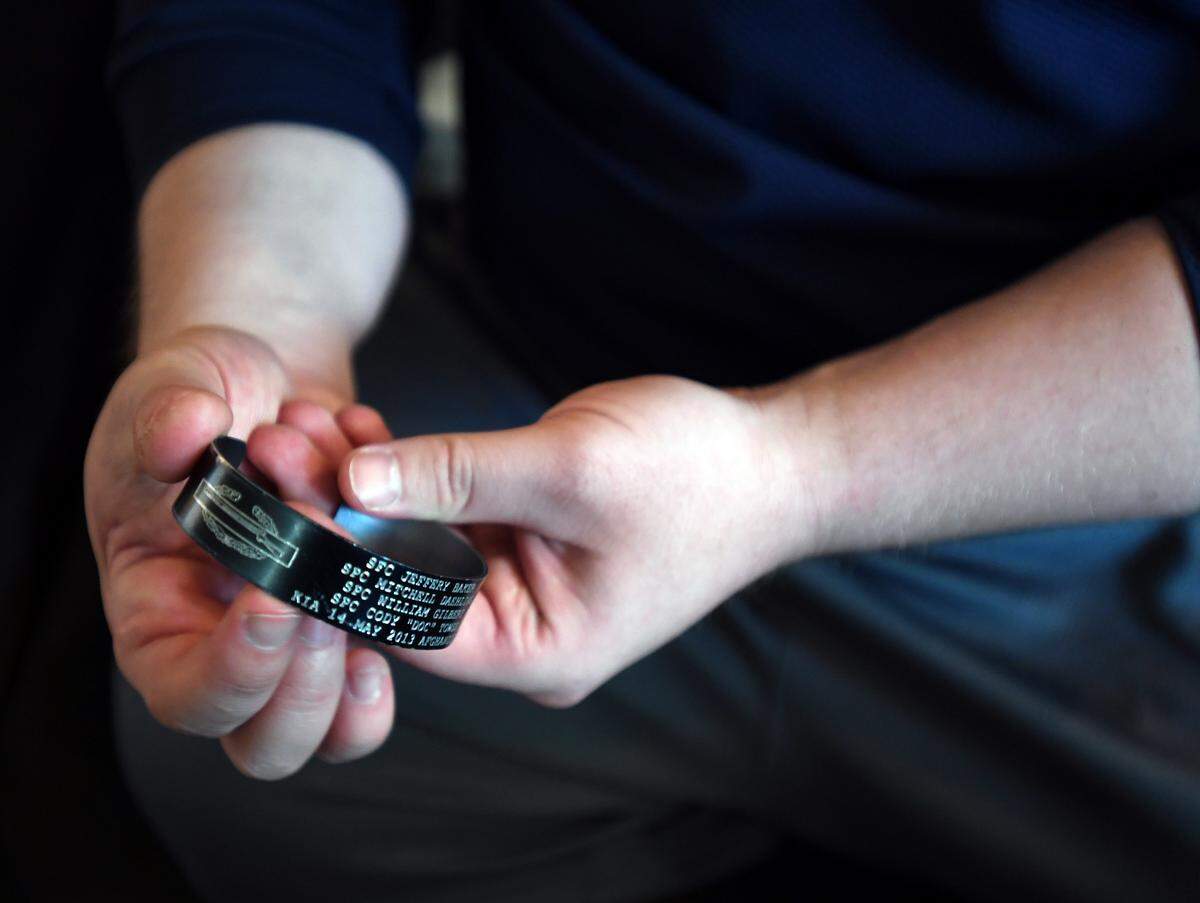
"That was something I learned early on — that on the days you're feeling sorry for yourself, that you don't want to get out of bed, the guys you lost are your motivation, and you have to live for them," he said. "So they continue to carry you through it, just as if they were alive, and just as my brothers who are alive do."
'We're not robots'
On the eve of his "alive day," what some people choose to call the day they sustained major trauma, Hartswick wanted to break down misunderstandings people might have about veterans.
"There's a huge misconception in our society that veterans are somehow broken, and they're unapproachable," he said. "And I think it's easy to think that, because if you look at the statistics, less than one percent of the U.S. population is serving in the military right now."
According to Department of Defense statistics from March, there are 1,302,346 men and women serving in active duty in the military, out of a U.S. population of 325,700,000, amounting to about .4 percent.
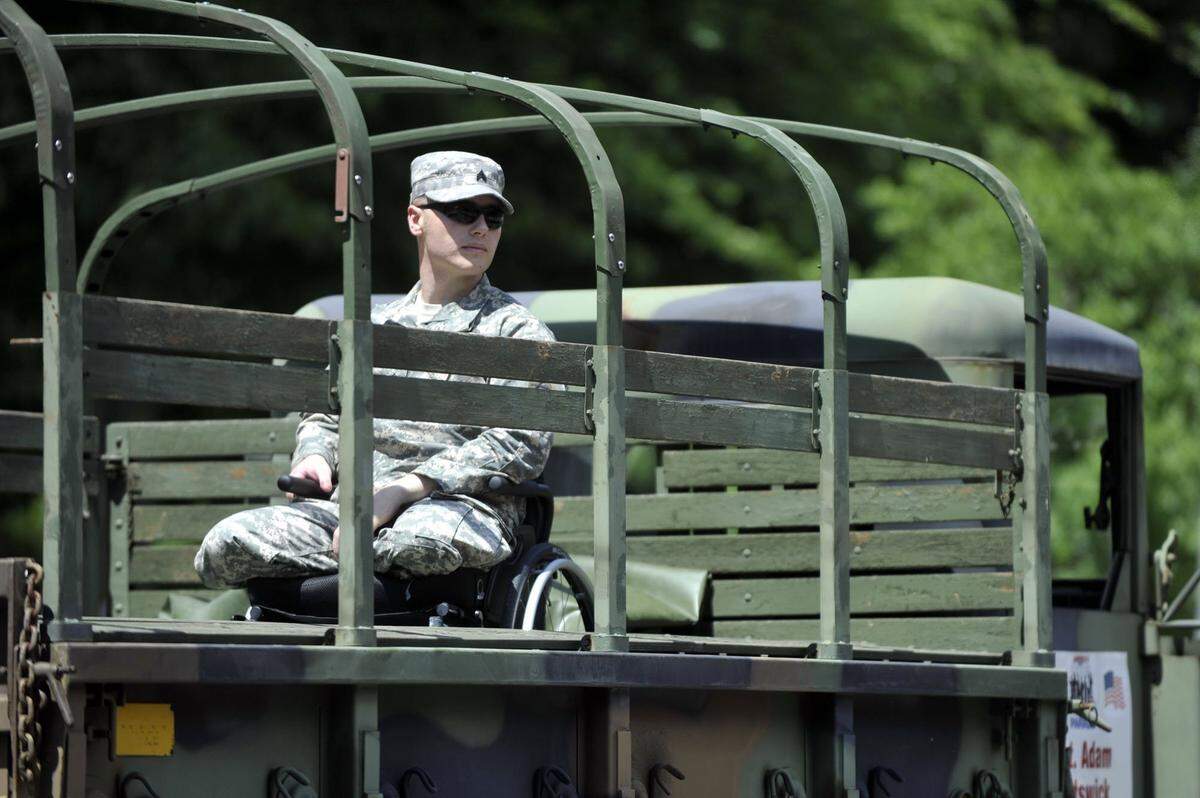
"There’s this huge portion of the country that doesn’t understand who we are, that doesn’t understand that we’re not robots, we are people. And I believe that if we closed that gap, there'd be less issues in veteran communities, and in society in general," he said. "Because you have this huge group of people, you have millions of people, veterans, who have been through these traumatic experiences, and with these school shootings right now or any sort of trauma, you have a specialized group of people who have been through similar situations and can help people. So why not call on them?"
Finding a purpose
As Hartswick sat on his couch in his living room, with his cat, Raven, nestled in his wheelchair, and his girlfriend, Sara Bordack, and mother, Morgen Hummel, playing with Arlo in the background, he recalled what he believes to be the biggest reason for his success in his transition to civilian life — he's found a sense of purpose again.
For Hartswick, that purpose is what inspired him to join the Army right out of high school in 2009 as a medic in the first place — he wanted to help people.
"Something you figure out really quickly is as a soldier, you aren’t necessarily fighting for a cause of a war, you’re fighting to keep somebody alive, and the people that are next to you, keep them alive, keep them safe," he said. "It’s a smaller effort for a bigger picture. So it doesn’t matter what you think about why a war was fought. For me it’s important, especially as a medic, I knew a war was going on and I wasn’t going to end it by protesting. So if I became a medic, I could minimize the damage."
As a combat medic, Hartswick learned life-saving techniques to help those who sustained life-threatening injuries in Afghanistan. Those same techniques he had used to help others came in handy when they were needed to help save his own life that day. But Hartswick wanted to clear something up — he didn't save his life on his own.
"It’s often said that I taught the guy how to, or I put my own tourniquets on," he said. "Well, I tried to put my tourniquets on, but I was missing a finger. You don’t survive that alone. I had my brothers around me and one, in particular, he ran to me, without thinking about his own safety. And he was a valuable asset out there, he was a leader. He didn’t have to do that. He came for me because it was the right thing to do, and he had the knowledge, he knew what to do, but he also knew he had to keep me in the fight, keep me engaged."
The other soldier knew that in order to keep Hartswick alive, he needed to give him a task, keep him fighting.
"He said, 'Doc, tell me what to do.' 'Tourniquets high and tight,' is all I had to say," Hartswick recalled. "He would never admit this but I'm alive today because of him and because of my brothers out there."
Paying it forward
So since retiring from the Army at age 24, Hartswick has been working to pay it forward. With his job as an instructor at Techline, Hartswick is able to fulfill another responsibility of being a medic — teaching others.
"If only one man knows how to do that, and he goes down, who's going to save him? I'm alive today because the men around me knew what to do," he said.
As an instructor, Hartswick has traveled throughout Pennsylvania, New Jersey, Delaware and Maryland, teaching people, including EMTs, police officers, firefighters, government agency workers and even ordinary civilians how to respond in trauma situations.
"You can see in society right now, there’s a lot of violence going on, and it’s been proven that if the bystander is trained and is no longer a bystander, people’s lives are saved. So don’t be a bystander," he said. "That’s what I’ve learned in the past five years."
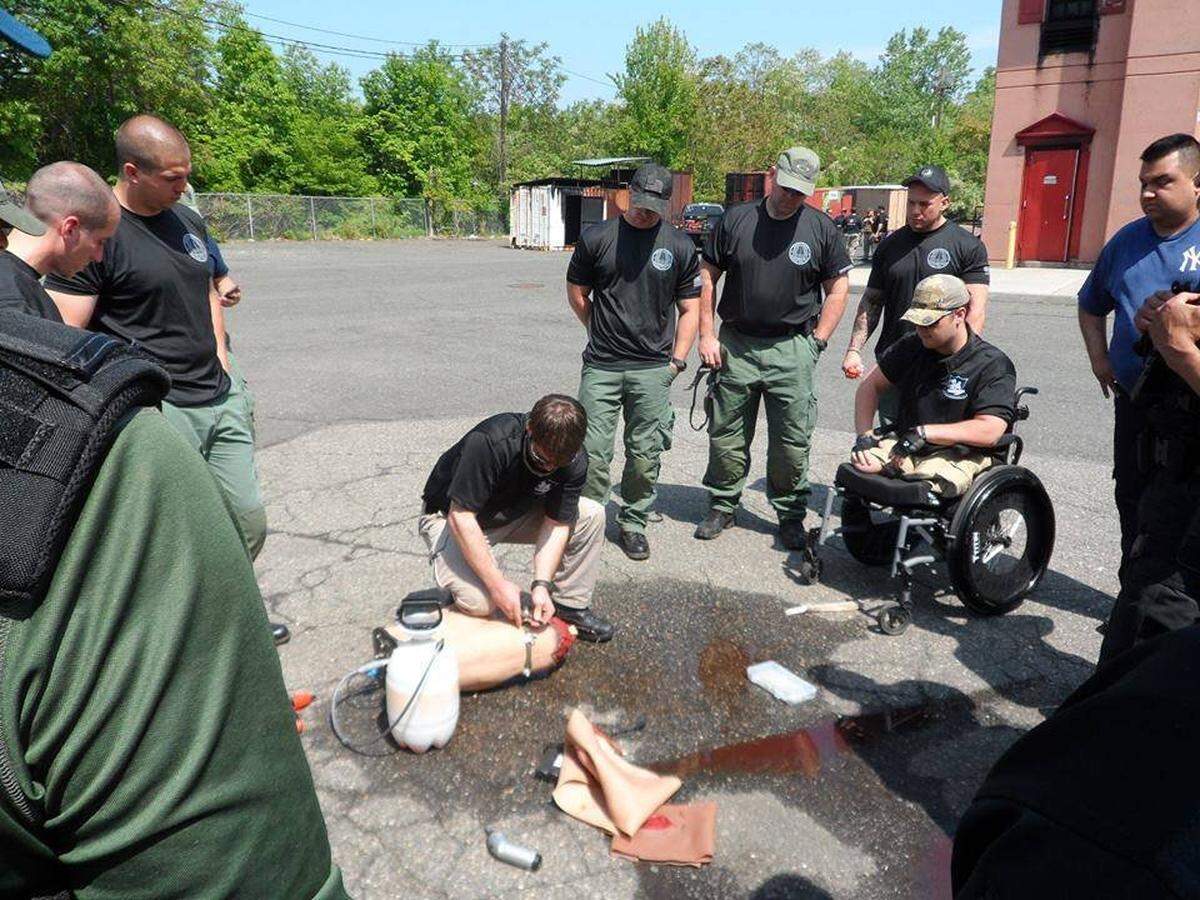
Though Hartswick enjoys helping others prepare for how to handle trauma situations, he decided that he also wants to help beyond that. With the use of the GI Bill, Hartswick just finished his second semester at Penn State in the Department of Undergraduate Studies. He's considering pursuing his degree in rehabilitation human sciences, and becoming a recovery professional.
"But that’s my main interest right now, learning the science of helping people because I don’t necessarily understand the 'how it works,'" he said. "I understand the 'why to do it,' I have good instincts when it comes to it, but it can only be better with more education and knowledge."
Although for Hartswick, finding a new sense of purpose after retiring from the military was easy, he acknowledged that doing so can be more difficult for some.
"I think that's what so many of us in the military crave — purpose. And the military just crams purpose. There's a reason you make your bed, there's a reason you have a neat uniform, there's a reason you do physical fitness. And a lot of people when they leave the military feel like they’ve lost that purpose. They miss it, but they can’t put their finger on exactly what they miss, and they don’t realize that maybe they need to find a new sense of purpose and a new way to exist," he said.
Hartswick continued: "I think that's why the suicide rate amongst veterans is so high; I think that's why there’s so many homeless, jobless veterans. And I feel like if they can find that sense of purpose again, I don’t know what that is for them, but I know what it is for me. Helping people is what my purpose in life is and what I want to do."
The ongoing battles
Despite all his successes, Hartswick still lives with daily reminders of his injuries — such as ongoing pain and limited mobility. Because of the nature of his amputations — above the knee — Hartswick still deals with pain, of a varying severity, on a daily basis, making it difficult at times to use his short prostheses.
But he said the pain is manageable, and with help from the local VA, he's had success with methods like acupuncture to give him relief.
"I no longer need physical therapy because I work out on my own," he said. "I don’t need counseling, per se, but I know I can go get it if I need it. My therapy is raising my puppy and petting my cats, and hanging out with my loved ones and going out shooting at the range or going to the gym or mentoring another amputee."
Initially, after the amputations, Hartswick said that body image was an issue for him. He wanted to date, but was uncomfortable with the notion of going out and meeting people. So one of his therapists at Walter Reed recommended online dating and encouraged him to set up a profile. Through that site, he met Bordack, who was at the time a 20-year-old Penn State Altoona student from Tipton. After their first date at Otto's Pub and Brewery on Dec. 26, 2014, the couple is as strong as ever.
"Obviously it worked out, because we've been together for three and a half years now," she laughed.
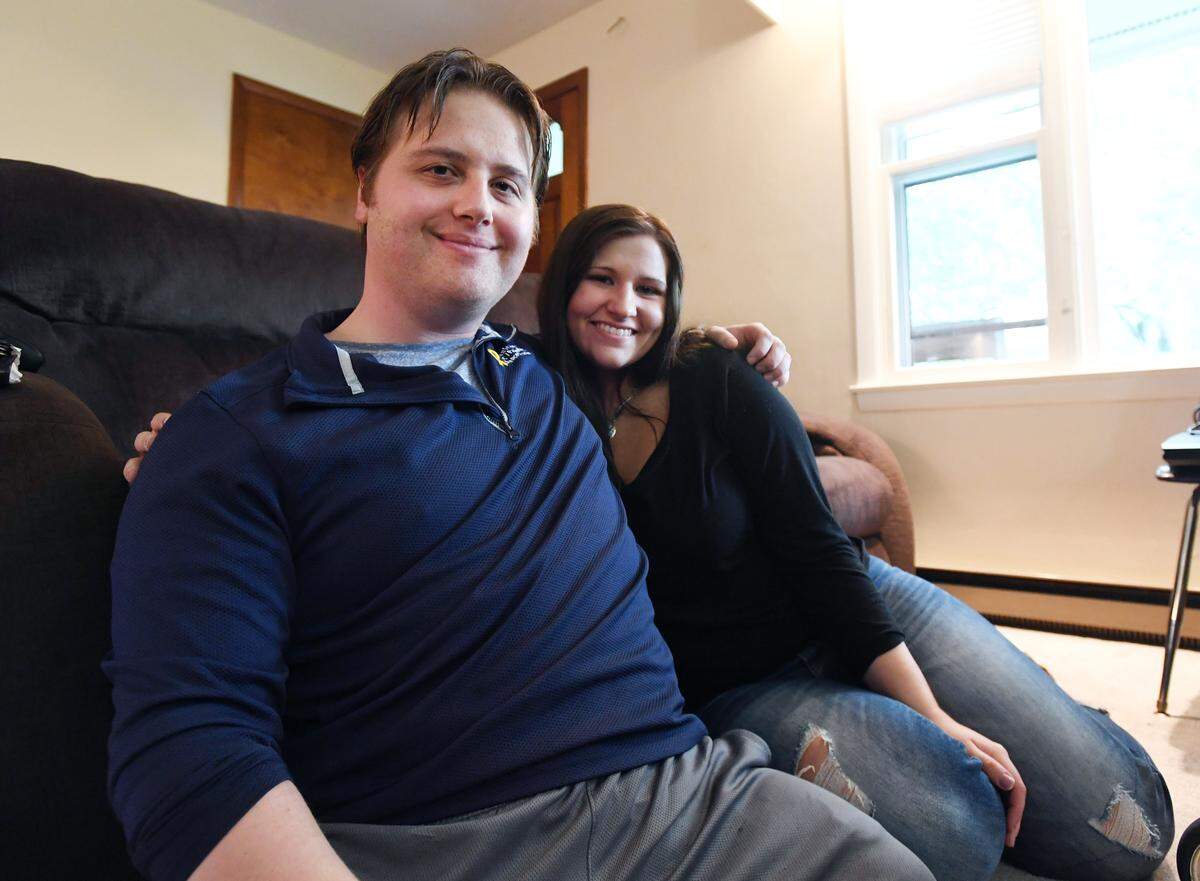
After all the family has been through over the past five years, Hartswick and Hummel both expressed gratitude for all their friends, family and strangers who reached out to help out, or just offer kind words of support.
"We certainly want to thank the community and family and friends, and perfect strangers who later became friends, and some of the very heartfelt things they said in their cards. It was as if they were feeling the pain themselves," Hummel said. "And now that he's transitioned into civilian life and still needing a large amount of care, people are still wonderful to him."
For Hartswick, that includes his boss at Techline, Craig Hall, who took a chance, offering an instructor job to a stranger. It's his neighbors from across the street, Pastor Jonathan and Suzy Weibel, who helped make Christianity approachable and to help him to understand it. It includes the people from the Stephen Siller Tower to Tunnels Foundation, which is building him a handicap-accessible home in Centre County; and his friend Eric, who gave Hartswick Arlo free of charge to eventually train as a therapy dog, among many others.
"I've learned that the majority of the people in the world are good people," Hartswick said. "I've seen the worst of people, but I think I've also seen the best of people through this experience and I think there's more good than there is bad in this world."
This story was originally published May 17, 2018 at 1:59 PM with the headline "5 years after losing his legs in battle, here's why Adam Hartswick says he's stronger now."