State College issued a permit (in error), then halted frat’s renovations. Here’s what happened next
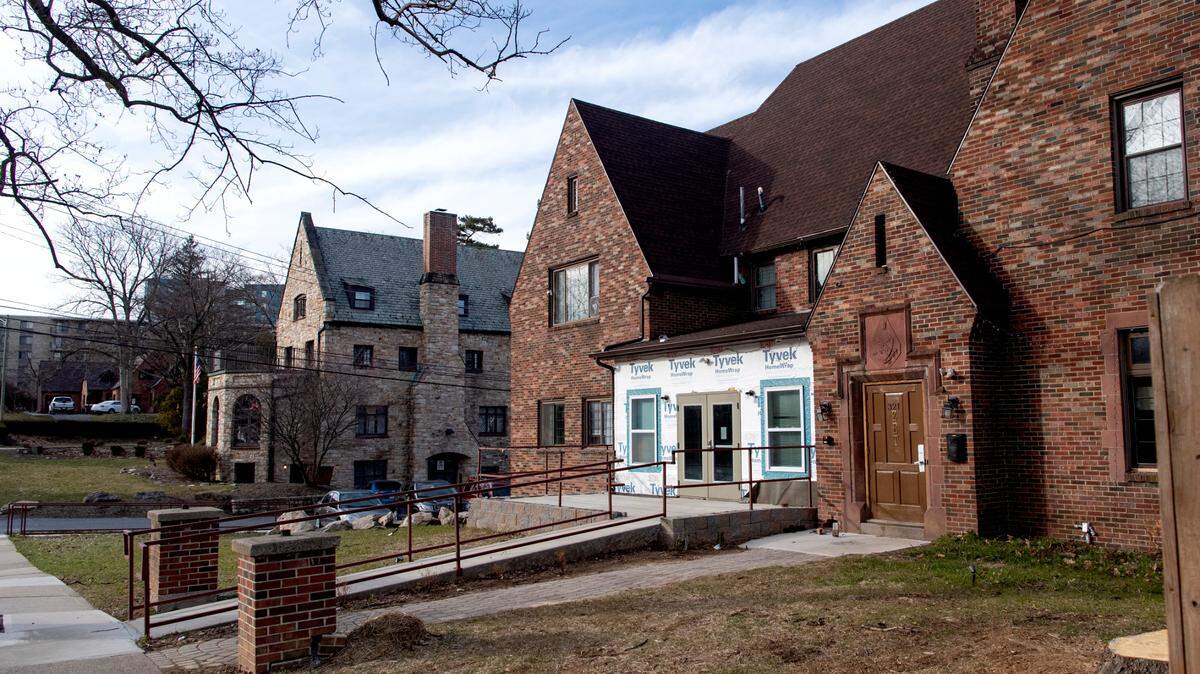
After a five-month wait, local landlord Dean Spanos can finally resume construction at his State College property on 321 Fraternity Row, the 19-bedroom home to Zeta Beta Tau.
But not everybody is happy about it.
The State College Borough Council voted 5-2 Monday night to approve an amended construction plan — one with a new sunroom and different handicap ramp — despite opposition from a borough committee that oversees the historic district. If it wasn’t approved, the Spanoses essentially implied Monday they would take the case to court.
The Spanoses never anticipated this delay, after all. Neither did the borough, at first. The property owners applied for, and received, a permit from the borough and began renovations in the fall.
When work was nearly finished, and with everything running smoothly despite the pandemic, the borough realized it made a mistake. The permit never should have been issued without input from that committee. Construction was immediately stopped.
“We issued a zoning permit,” acknowledged borough planning director Ed LeClear on Monday night. “We did so in error.”
Because the property the Spanoses purchased in 2019 is part of the Holmes-Foster/Highlands historic district, any construction plans must first go through the Historical Architectural Review Board. The new owners were unaware of that procedure, and the borough should’ve referred them to the HARB before issuing any permits.
So, until the HARB approved of the renovations, construction could not legally resume. And the HARB quickly denied the original construction plans — which were already about 90% completed — because they violated a number of guidelines designed to maintain the historic integrity of the neighborhood.
Frustrated but determined to finish construction, the Spanoses hired a new architect with a background in historic preservation. The plans were changed at the expense of the Spanoses: The long handicap ramp that was extended to the sidewalk would be removed and replaced with a more subtle zig-zag pattern parallel to the building; the newly enclosed porch would feature large windows and brick to complement the front of the house, rather than the clashing gray stone in the original plans.
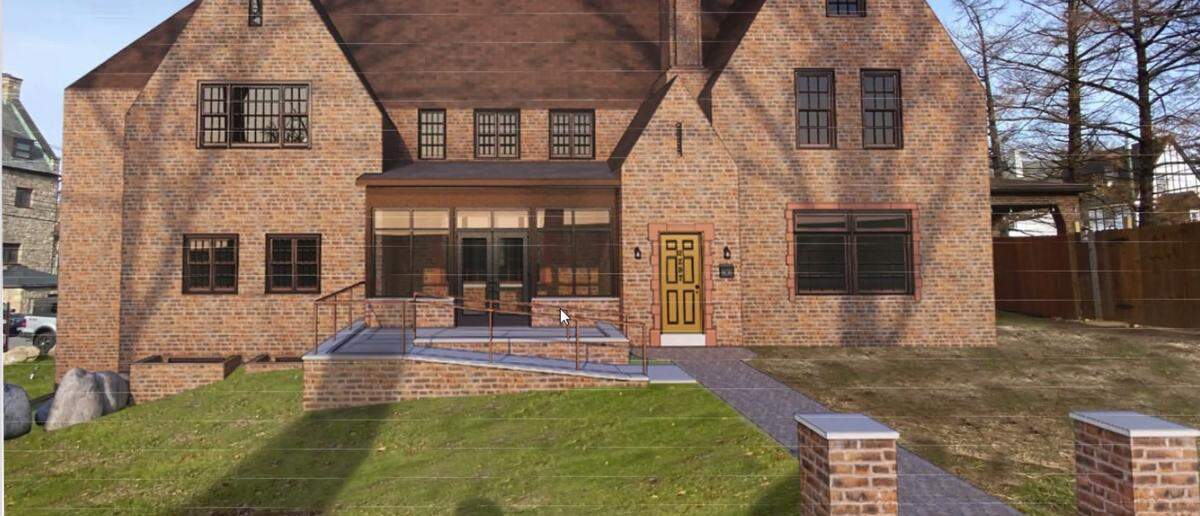
Sure, the changes didn’t fully conform to the HARB’s guidelines. But the Spanoses felt the changes offered a fair compromise.
But, last month, the HARB recommended rejecting the plans a second time.
“Members felt that the second version submitted by the owner was an improvement over the initial version,” HARB Chairman Eric Boeldt said. “But it is obvious that even the second version does not meet the design guidelines of the ordinance.”
Boeldt noted that guidelines insist an addition is best built on the back, or side, of the property as opposed to the front. He also pointed to a half-dozen design guidelines that essentially focus on any addition continuing the aesthetic of the property, from the obscure (maintaining the solid-to-void ratio of doors and windows) to the more obvious (maintaining similar roof designs).
The borough staff and an outside consultant disagreed with the HARB, and the matter was brought before council on Monday. After listening to officials tell the full story, Linda Spanos then briefly addressed council.
“Basically, because of a borough mistake, we are increasing the amount of dollars that we’re putting into this project in order to meet these requirements,” she said. “The issue here is you have to look at what a reasonable person would do in this situation.”
A majority of the council members sided with the Spanoses. Council President Jesse Barlow and Councilwoman Theresa Lafer were the dissenting votes — although, knowing the votes favored the Spanoses, Lafer said she was voting no to show support for the HARB.
But, she said, she still appreciated the Spanoses’ work. And as someone who lives nearby, she had no personal issues with the new design.
“As a neighbor, I will be perfectly happy,” she added.
A State College ordinance outlines that, in the event of any borough errors, the responsibility in cases like this still falls on the homeowner. But the borough solicitor could not guarantee that would hold up in court.
Regardless, despite the delay and accompanying headaches, the Spanoses were finally able to resume construction Tuesday — without a courthouse brought into the equation. And the 10,000-square-foot home shouldn’t have Tyvek HomeWrap in place of its brick much longer.