State College COB overseeing police holds first meeting in ‘watershed moment.’ Here’s what comes next
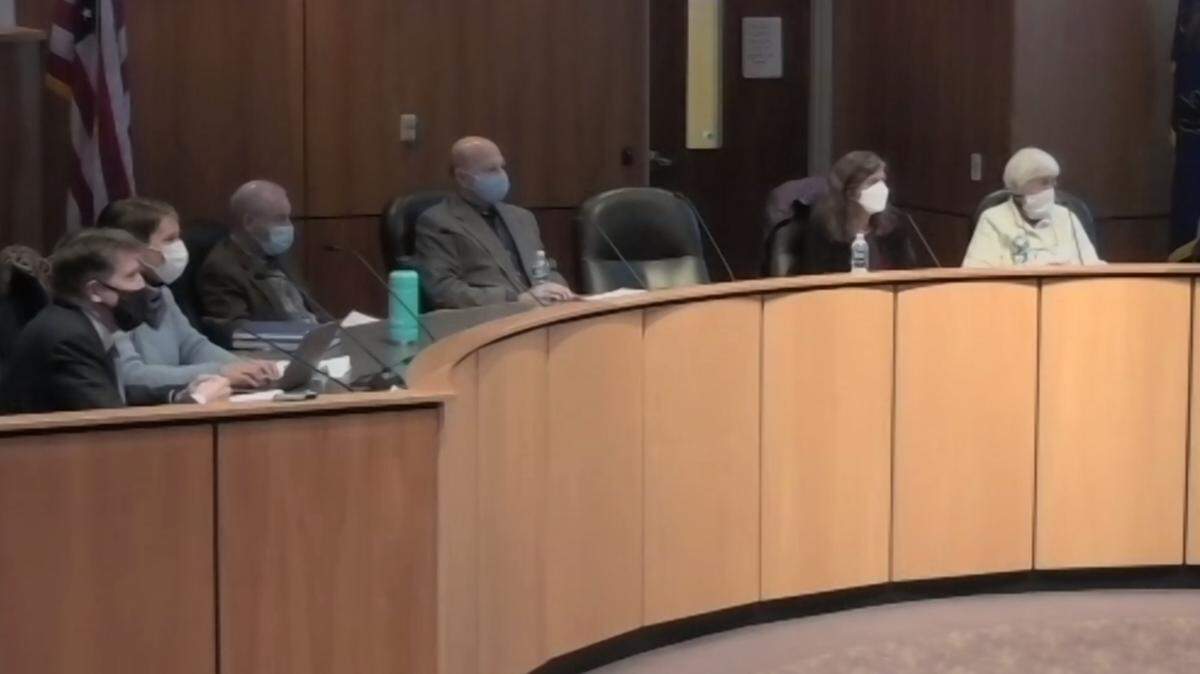
In what State College Police Chief John Gardner termed a “watershed moment for our community,” the borough’s Community Oversight Board — a civilian board overseeing police — met for the first time earlier this week, officially completing the board’s 15-month journey from idea to reality.
The first month of the COB will consist mostly of orientation, as the nine-person board familiarizes itself with its responsibilities. But, by next month, mandatory training like police ridealongs will begin — and the board is slated to discuss the creation of a civilian complaint process, so area residents can choose to submit police complaints to the board or borough instead of directly to the police.
“I think it’s a step we need to take in this community,” Gardner said during Wednesday afternoon’s meeting, referring to the COB. “I’ve got a lot of confidence and faith in the ability of our police department — I think more often than not we get things right — but we’re also open to new and improved ways of doing things, and we can learn from each other.”
By March, board members will begin quarterly meetings with police to talk about use of force and other topics. The creation of committees within the board could soon be discussed. And the board will likely settle on an early course for its priorities.
In short, residents could soon begin to see the first-hand impact of a board created to allow for better communication and understanding between the police department and the community.
“I really believe this will make a major step forward in being more transparent within our community and helping the community to feel more safe and secure within the State College Police Department and their entire service area,” borough manager Tom Fountaine said.
The next meeting will take place 3 p.m. Dec. 14 and is expected to last about 2 hours. The meeting will be overseen by COB chairperson Nalini Krishnankutty, a member of Gov. Tom Wolf’s Advisory Commission on Asian Pacific American Affairs, and vice chair Cynthia Young, an associate Penn State professor of African American Studies; English; and Women’s, Gender and Sexuality Studies. (The two were elected by their fellow board members Wednesday.)
Mark Bergstrom, who chaired a previous committee that studied the idea of the COB, will temporarily serve as the COB coordinator and answer board members’ questions. He will be replaced, no earlier than February, by whomever fills the open position as the borough’s director of equity and inclusion.
Board members include two with military experience, a pastor, a mother who has a child with mental health issues, professors, a legal director, long-time residents and recent residents.
“If you don’t like something, you need to be an agent of change,” said COB member Ron Madrid, a 26-year resident, former Marine and president of the Holmes-Foster Neighborhood Association.
According to Bergstrom, the scheduling of future meetings will be discussed Dec. 14. It’s possible the board could agree on monthly meeting dates, with additional meetings scheduled as necessary and potential committee meetings held as needed.
With just a single meeting on the books, a lot remains on the COB’s to-do list. But it’s taken more than a year to get to this point; from a detailed resolution that was passed on police reform in June 2020, to the creation of a study committee that authored a 62-page report, to eight public work sessions and two public hearings. Council unanimously approved the COB’s creation in August 2021 and announced the board members in November.
Bergstrom was pleased to see that long process finally culminate with Wednesday’s meeting. But he also wanted to make clear that, despite different perspectives on the COB, all members boasted the same common goal — to better the community.
“During the past year of working through the study committee, sometimes you heard during a public hearing animosity on one side or the other,” he said. “And my sense is that everyone that’s come to the table on this are all about doing the right thing.
“This is going to be a helpful process. We’re not out to ‘get’ the (police) department. We’re out to partner with the department, to help the department.”