Could towing rates within State College Borough increase significantly? Council to consider changes
UPDATE: Discussion and voting on the proposed towing ordinance has been moved to a later date, one to be determined, the borough announced at the start of Monday’s council meeting. No reason was given, although the 2022 budget was also set to be voted on Monday night.
If towing companies in the State College Borough have their way, rates within the borough could increase by more than 25% next month — something one tower said is necessary to stay competitive and remain in business.
The decision on whether to raise rates on tows initiated by the borough ultimately falls to borough council, which will consider a proposed amendment to its Private/Public Towing Ordinance at 7 p.m. Monday. Council can choose to follow the recommended increases, lower the increases or scrap them altogether.
The last increase was discussed in 2019 and went into effect in January 2020.
That “seems way too short an amount of time to have that large a jump in costs,” Councilwoman Theresa Lafer said last week.
Under the proposed changes — which would apply to tows that occur after crashes or, for instance, when a vehicle is blocking a private driveway, hydrant or intersection — prices would increase across the board. Basic towing fees for non-crashes would be set at a maximum fee of $225 for vehicles that weigh less than three-quarters of a ton, a significant increase from the current $175. The maximum “drop fee,” or cost to unhook a vehicle before it’s been towed, would be raised to $150 from the current $100.
Daily storage fees would rise from $45 to $60. Towing fees for crashes would increase from $300 to $375. And additional services — like the use of a dolly (from $20 to $50), a protection fee for vehicles with open windows/areas (from $40 to $60) and driveshaft removal (from $60 to $75) — would also see steep increases.
Why the increase?
Borough council opted to raise the maximum fee schedule at a much lower rate back in 2019 — when crash towing increased $50, non-crash towing $25 and storage fees $5. But a representative from Walk’s Towing (827 S. Atherton St.) said, due to increased costs, area towers need to raise their prices more this time around.
“The biggest thing that prompted this is that we’re trying to staff,” Walk’s Towing manager Tom Hipple said during last week’s council meeting. “And I understand three (sic) years seems like a lot for a big jump. My starting payroll is literally up 50% to 75% to start a new employee now.”
Hipple did not want to publicly share Walk’s payroll. But he said he would share it privately, if that was permitted, and that he would share percentage increases on the payroll.
For comparison’s sake, he said one of their staffing competitors at a big-box store is now paying $35,000 annually for starters, compared to $19,000 a few years ago. “We’re in a highly competitive labor market,” Hipple added. “We’re also in a shortage of labor.”
Although Walk’s didn’t broach the subject at last week’s council meeting, the towing company could also take another significant hit financially depending on the outcome of the state attorney general’s pending lawsuit against it. Last November, state AG Josh Shapiro filed a 59-page suit against the State College company, accusing it of deceptive practices — such as allegedly “camouflaging” parking tickets on private property by appearing like government parking tickets.
Walk’s has denied any wrongdoing. Still, a spokesperson from the state attorney general’s office, Mark Shade, confirmed last year the fines could potentially reach up to six figures, depending on how the courts rule.
Regardless, the proposed amendment was devised by the police department only after discussing needs with all area towing services — including Walk’s, John Tennis Towing and Stewart’s Towing.
Borough spokesperson Doug Shontz also added that the borough and police department work to annually update the maximum fee schedule for towing services. But they did not do so last year due to the pandemic.
How do State College’s rates compare?
Council members requested additional information before Monday’s council meeting so they could compare the proposed rates to others across the state.
But, based on a cursory examination by the CDT, the new rates appear to be on the higher end of similarly sized municipalities — in some cases significantly — although rates varied wildly.
On the lower end, for example are Bloomington, Indiana, and York, Pennsylvania, where prices were at least 40% cheaper. In Bloomington, all tows cost a flat rate of $135, while York sets its non-crash tow fee at $105 and its crash tow fee at $165. Storage fees in Bloomington are $25 daily, while they’re $30 in York — but $50 daily after the 10th day in storage.
Pricier areas include Wilkes-Barre and Haverford Township. Depending on the time of day, Haverford Township sets its max tow fee on vehicles up to 7,000 pounds between $150 and $175 — although it also tacks on a $75 administrative fee on all tows, which presumably goes to the municipality. Wilkes-Barre charges between $125 to $200 on light-duty non-crash towing, while crash towing is a minimum of $300. (Haverford Township charges $65 daily for storage, while Wilkes-Barre is $50.)
Although the comparisons are not perfect because some municipalities combine certain services while others charge separately, questions remain about the proposed State College pricing. The proposed drop fees, for example, are 50% higher than those in the aforementioned four areas — as State College towers are pushing for a maximum drop fee of $150, compared to the four municipalities that range between $60 and $100.
It is unknown why local towing services settled on some of their proposed fees. But council requested specific reasons in time for Monday’s council meeting.
(How the cities/boroughs were chosen by the CDT: To get a more accurate cost comparison, the CDT contacted the five boroughs and cities in Pennsylvania with populations between 41,000 and 51,000 and with a size of less than 15 square miles. Officials from Altoona and Harrisburg said they did not have a set maximum for towing fees; Bloomington, Indiana, was also included due to its historic comparisons to State College as a college town.)
What comes next
Borough council is set to discuss and vote on the proposed ordinance and price increases during a meeting 7 p.m. Monday.
Barring a veto by Mayor Ron Filippelli, any ordinance — or price increase — that passes will go into effect Jan. 1, 2022.
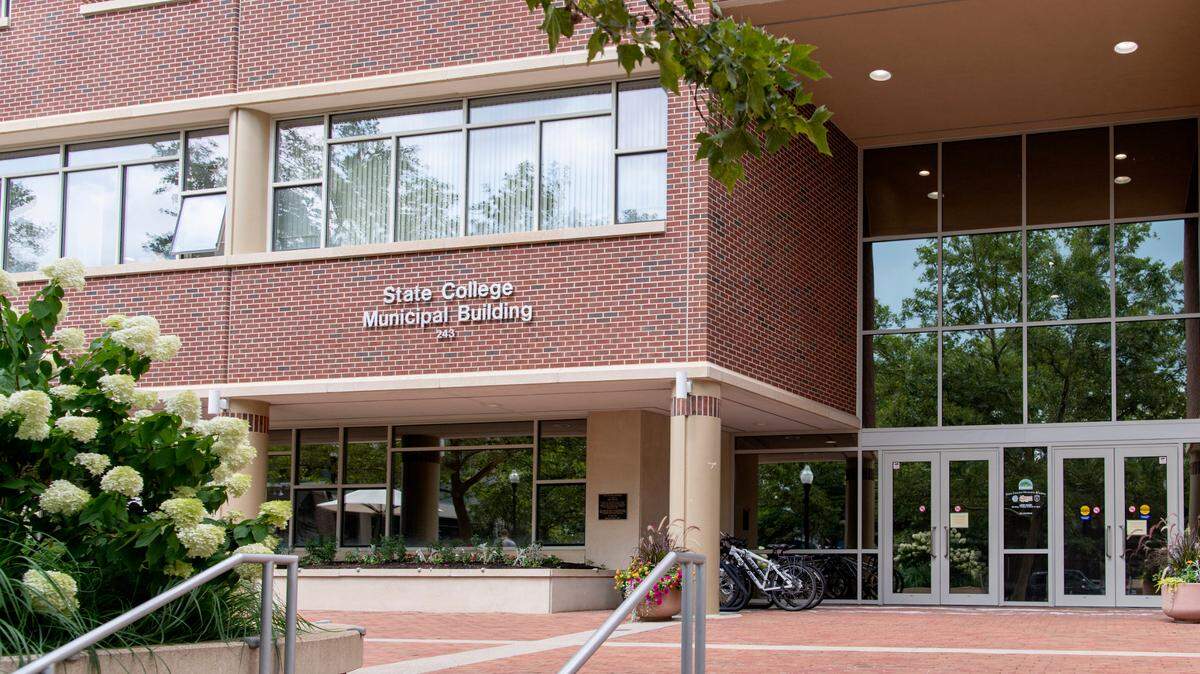
The general public can either weigh in publicly in-person at the Municipal Building during the meeting or via Zoom if attending online.
This story was originally published December 18, 2021 at 3:42 PM.