Where can home burials take place in Ferguson Township? Supervisors are taking a second look
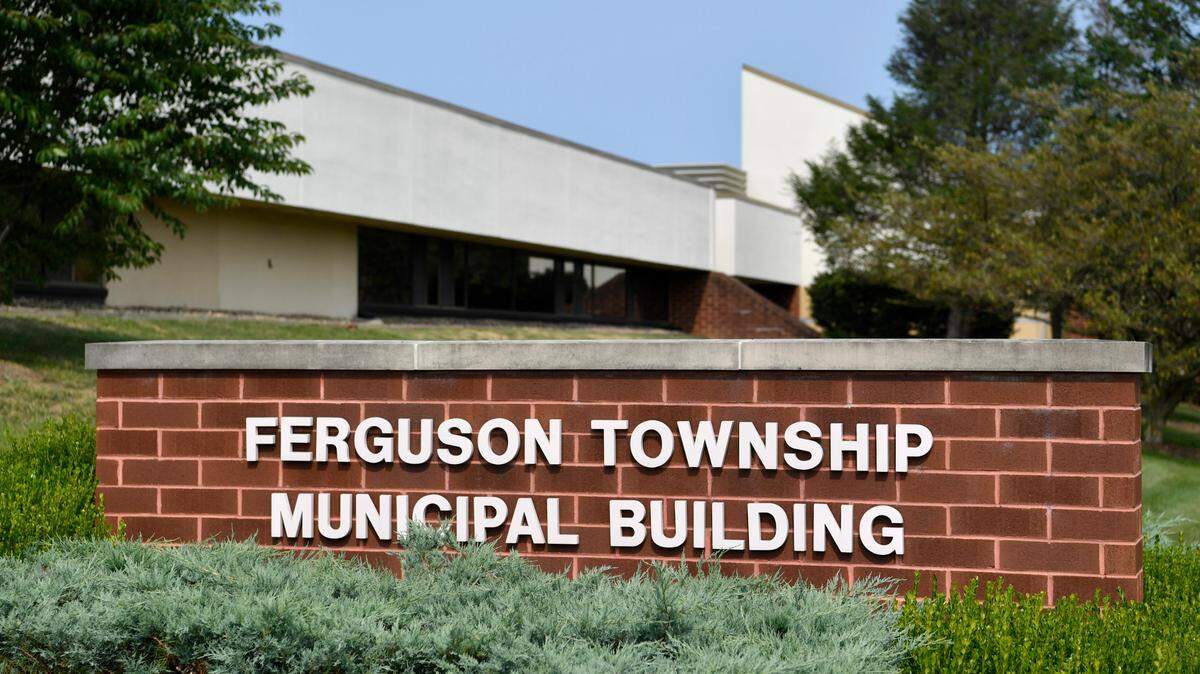
A Ferguson Township resident’s request to give her husband a green burial has sparked a discussion about where and how home burials can take place.
Home burials, in which a burial takes place on your own private property, aren’t regulated at the state level in Pennsylvania, so it comes down to local zoning laws. Ferguson Township’s ordinance doesn’t currently differentiate between cemeteries and home burials, leading township officials to take a closer look at what is — or should be — permitted.
After the death of her husband, former township supervisor Pam Steckler submitted a zoning ordinance text amendment application to permit home burials in the Terraced Streetscape District, as well as for an exemption from needing a concrete grave lining, based on spiritual beliefs.
“Green home burials are much lower impact than ‘cemetery,’ which is the determined definition by zoning. As conservationists, it has always been our desire to replenish and restore the ecological integrity of the land,” Steckler wrote in her application.
Green burials, as defined by the Green Burial Council, are “a way of caring for the dead with minimal environmental impact.” It necessitates the use of non-toxic and biodegradable materials.
“It is, and has been our belief that nature is sacred and that humans are a part of nature. That the natural cycles of birth, growth and death carry profoundly spiritual meaning,” she wrote.
The Terraced Streetscape District, according to Ferguson’s website, is a “mixed-use corridor along West College Avenue (State Route 26) from the boundary of State College Borough (Buckhout Street) to the intersection of Blue Course Drive.” The district is about 45 acres.
The Ferguson Township supervisors reviewed the request during their meeting May 16, and after much discussion, which at times was emotional, sent it to the planning commission. The Planning Commission voted May 23 to recommend the board deny the request, stating it is not a compatible use with the high-density zoning.
Though the planning commission was unanimous in the recommendation to deny (Chair Jeremie Thompson and member Ellen Taricani were absent), the commission voted by majority to recommend the supervisors allow township staff to pursue examining the definitions and regulations of home burials.
In the township’s zoning code, home and green burials are not differentiated or defined, and there is one definition for cemetery.
During the board meeting May 16, Board Chair Laura Dininni questioned: “…Is there a reason why we would not permit them when they’re legal in Pennsylvania?”
Planning and Zoning Director Jenna Wargo said the township’s ordinance doesn’t define home burials from a cemetery.
“Our ordinance doesn’t differentiate between the two, so home burial and cemetery (are) synonymous even though when you say those two things, you think of two different meanings to those words,” Wargo said. “So the home burials aspect, the reason why they are permitted in the (rural agricultural) and (rural residential) zoning districts is for those family plots that we sometimes will get requests for on farms.”
The request also asks for an exemption from needing a concrete grave lining. The cemetery definition within the Source Water Protection ordinance requires the liner, which is there to prevent chemicals from embalming leaking into the soils and waterways, Wargo said.
Dininni suggested the board research the science behind whether the cement lining is truly necessary.
“I originally thought that I was not going to be supportive of this because I had some concerns but talking it through I would be interested in us … learning about the science behind this because I don’t want to be prohibitive,” Dininni said. “I think of the farming community and if they’re going to have a small cemetery, but they’re not going to do the practice of embalming, the cement is a huge overkill and a burden that’s unnecessary.”
Township solicitor Betsy Dupuis said the board needed to consider “all possible requests” and not just the current one.
“Right now, in this particular zoning district, you have relatively smaller lots,” Dupuis said. “If you think about where you do permit it now, you primarily permit it in areas where you have larger lots by your ordinance.”
Supervisor Lisa Strickland said she thought it would be worth looking into the different definitions, the source water protection and where these burials are allowed.
“I think with this particular application within the TSD I am concerned about those small lots. I can see Betsy’s point about where cemetery use is permitted already are these large lots and the TSD we’re looking at quite small lots,” Strickland said.
Supervisor Patricia Stephens agreed, stating the lots are small and said future use of the land has to be considered, too. Supervisor Tierra Williams didn’t share her opinion and Supervisor Hilary Caldwell was not present during the discussion.
Dininni said for the current request, she would be comfortable allowing a principal use with conditions in any zoning district, pending information from staff that the Source Water Protection wouldn’t be compromised, with or without the containment unit. She also suggested they talk with a local expert, like the State College Borough Water Authority, about their thoughts on the Source Water Protection in terms of this topic.
Steckler questioned the timeline of these actions, as she needed to make decisions quickly. Dininni said the next time the board could consider the request would be during its June 7 meeting.
“I guess the only ... thing I have to offer is if the timing doesn’t work, I think (it) really has highlighted a deficiency. You know, I know a lot of people that are looking for green burial sites, and they’re just not to be found,” Dininni said. “And I think it’s just another thing that, you know, hasn’t – even though it’s very beneficial to society – it hasn’t caught on yet in the mainstream. And so we’re early adopters in that. So I guess, in Bill’s legacy, we’re going to work on the problem but it may not work out for timing for this particular applicant. So I do apologize.”
Steckler responded: “I do hope that this starts something. I guess it’s not going to happen for me, but I hope it will happen for the (next) person.”