
‘We can’t get tired’: After abortion ruling, Centre County residents look to the future
On Friday, the U.S. Supreme Court sent shock waves across the country when it overturned Roe v. Wade, revoking the federal constitutional right to an abortion and leaving it up to the states. Now, following an initial round of protests across the country, including in State College, community members are left to figure out what’s next.
Across the board, protesters in downtown State College on Friday called for women’s health proponents to vote for progressive candidates in the next local and national elections. However, voters like Marty Coyle say activism can’t stop at the ballot box.
“We need to vote. That’s always the first answer,” said Coyle, who attended Friday’s protest alongside his 6-month-old son. “People need to show up locally and make their voices heard. Organizing locally is how you fight something like this. You can’t show up to a ballot box once a year and expect to fix these kinds of problems. The more people show up locally, and the more votes we have, the more change we can have.”
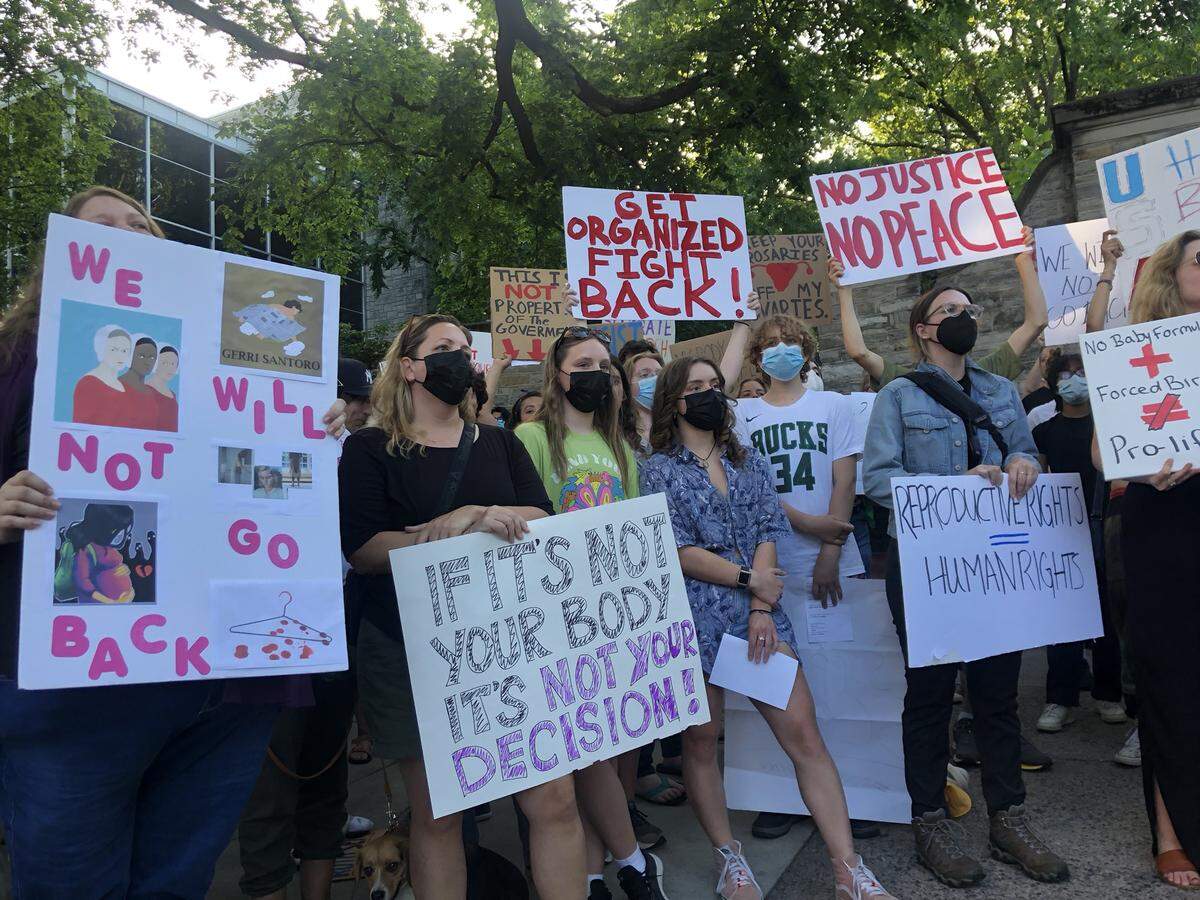
A number of protesters at the Allen Street Gates agreed that they shouldn’t need to be there in the first place. Many said that progressive politicians had nearly 50 years to codify Roe v. Wade’s ruling — a process that generally involves converting a federal agency’s rule into law. Such a step would require 60 votes in the U.S. Senate, which remains difficult with a slim Democrat majority. The Women’s Health Protection Act, which would have created new legal protections for accessing and providing abortion care, failed 49-51 in the Senate in May.
Younger activists at the protest hoped that future politicians will work to bring abortion care and access back to the federal level.
“We need to vote people into office that will codify Roe v. Wade into law, hopefully. I think it’s hard to just protest,” said one State College Area High School graduate who now studies at Lehigh. “Voting has the most power.”
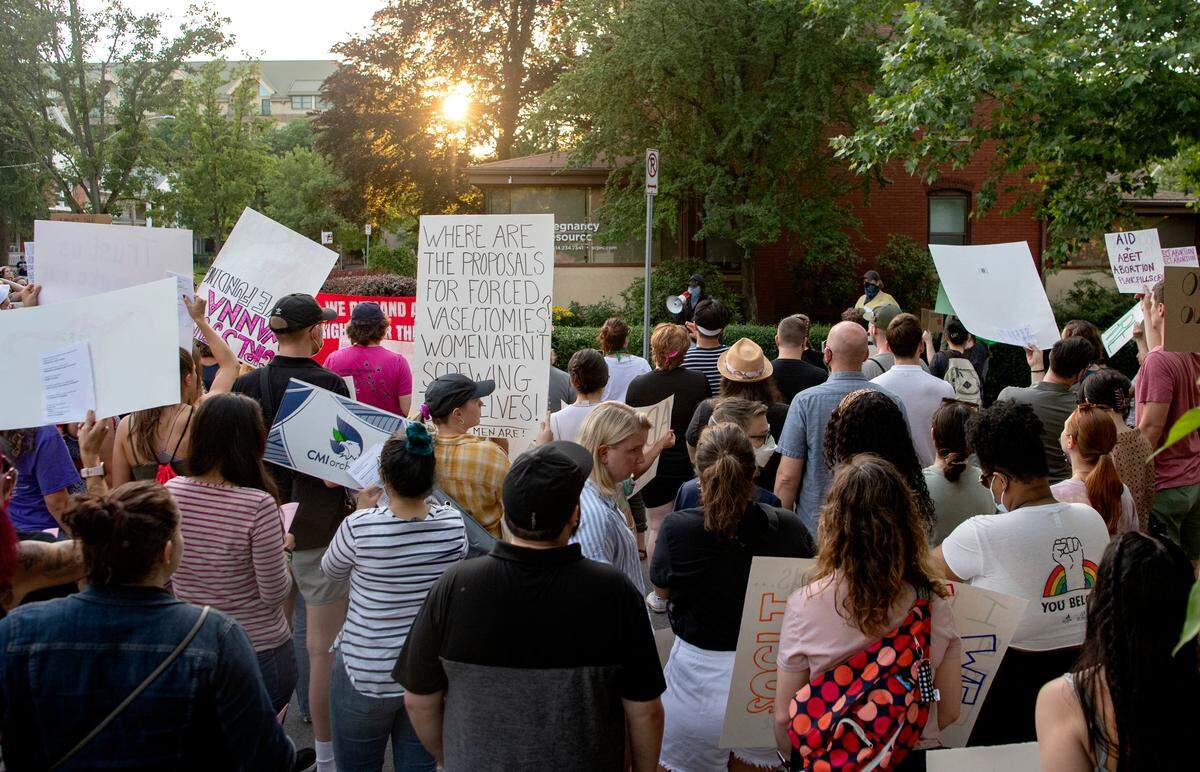
Voting in Pennsylvania will become increasingly important for abortion care advocates during November’s midterm elections. Pennsylvania is one of 35 states with protected abortion rights for now, but that could change if conservative candidates take office in a few months.
Much like outgoing Governor Tom Wolf, Democratic gubernatorial candidate Josh Shapiro has sworn to protect Pennsylvania’s access to abortion care if he assumes office. Republican candidate Doug Mastriano said he would sign a bill banning abortion at six weeks with no exceptions for rape, incest or the life of the pregnant person.
On Friday, protesters like Rachel Fields encouraged concerned citizens to branch outside their comfort zones and run for office to kick-start change in their communities.
“Running for office is one thing you can do,” said Fields, who once served as the mayor of a small town in West Virginia. “You can make a difference in your town, the local community, and work your way back up. All of us have a voice, and it’s time to be heard.”
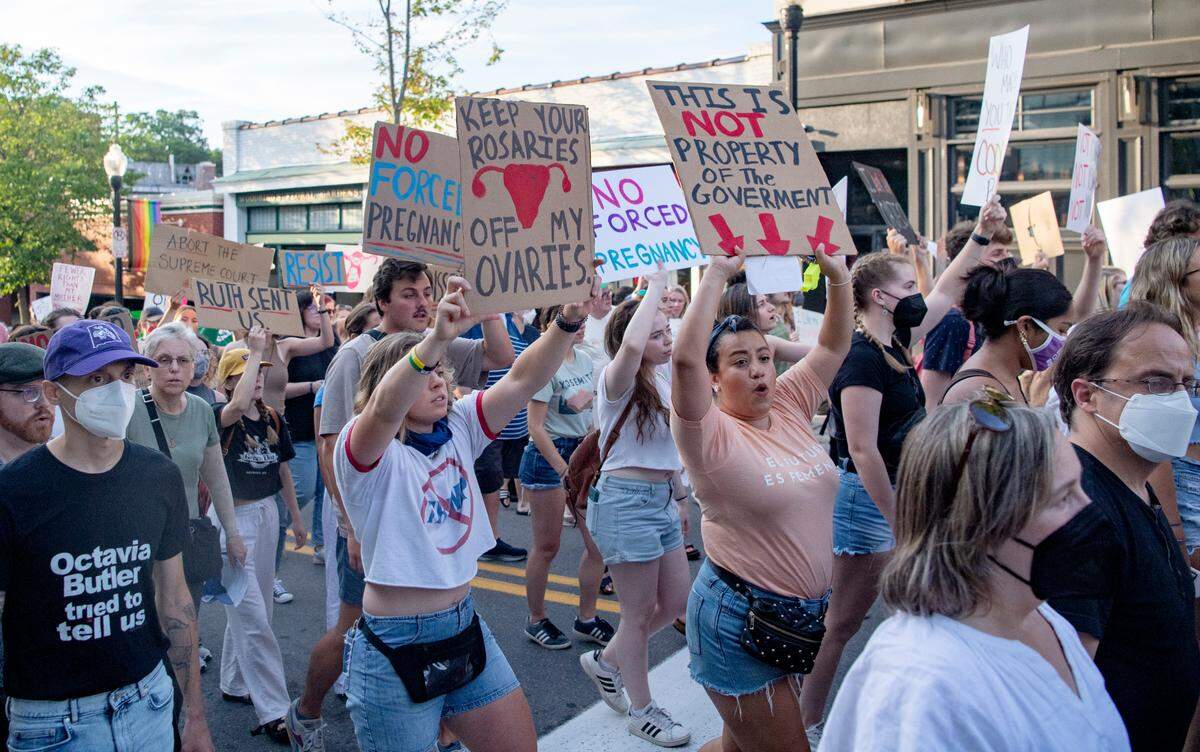
Some activists at Friday night’s protest supported more radical changes, including shakeups to federal institutions like the Supreme Court.
“It goes way beyond voting,” said Elisa Edgar, a senior at State College Area High School. “We need to organize and rethink the entire court system. How can we let nine people decide millions of people’s rights? We need to start doing a lot more than voting. We need to be protesting and organizing, and we can’t get tired.”
Nationally, access to abortion has significant support among everyday Americans. A recent Pew Research Center survey found a 61% majority of U.S. adults feel abortion should be legal in all or most cases, while 37% say abortion should be illegal in all or most cases.
Now, after abortion care received a major blow from the nation’s highest court, Centre Region activists like Jonah Downs say it’s on local communities to stay organized and focused — especially once the midterm elections roll around on Tuesday, Nov. 8.
“Local elections also matter,” Downs said. “They’re more important in most cases than federal or state races. We need to get out in our own communities to spread awareness and create change, too.”
This story was originally published June 25, 2022 at 11:51 AM.
%202.JPG)