
‘We need to think creatively.’ What could future housing, development look like in State College?
High-rises, the loss of mom-and-pop shops and an influx of student housing — any resident or visitor to State College knows how much it has changed over the past 10 years. What isn’t as well known is the process taking place behind the scenes to direct what the borough looks like in the future and how to work with what’s there now.
The borough is five years into a comprehensive examination of its zoning codes and potential changes that could take effect if approved and adopted by local officials. Those efforts have picked up over the last year as challenges stemming from the COVID-19 pandemic have subsided.
Following previous work sessions and committee meetings, zoning adjustments would ideally strike a balance between competing objectives, including shorter, less dense buildings, more affordable housing for non-student residents and buildings that are “of a high quality” and energy-efficient. Ed LeClear, State College’s planning director, said officials will need to find compromises to produce new zoning codes that could confidently attract developers.
“When you put all of that together, there isn’t enough rate of return for the market to build that,” said LeClear. “Instead, we needed to take a step back to figure out which policy objectives are most important and examine the trade-offs. That’s the process we’re in right now.”
The road ahead for a zoning rewrite that LeClear said is shaping up to be the most comprehensive code adjustment since 1959 is long and winding, but it’s not too late to get involved or understand what’s on tap.
What do zoning adjustments hope to change?
Broadly, zoning codes govern what can and cannot get built within a municipality and how land owners can use and manage their properties. State College’s zoning ordinance contains nearly two dozen different districts and classifications that each present different parameters and restrictions for development.
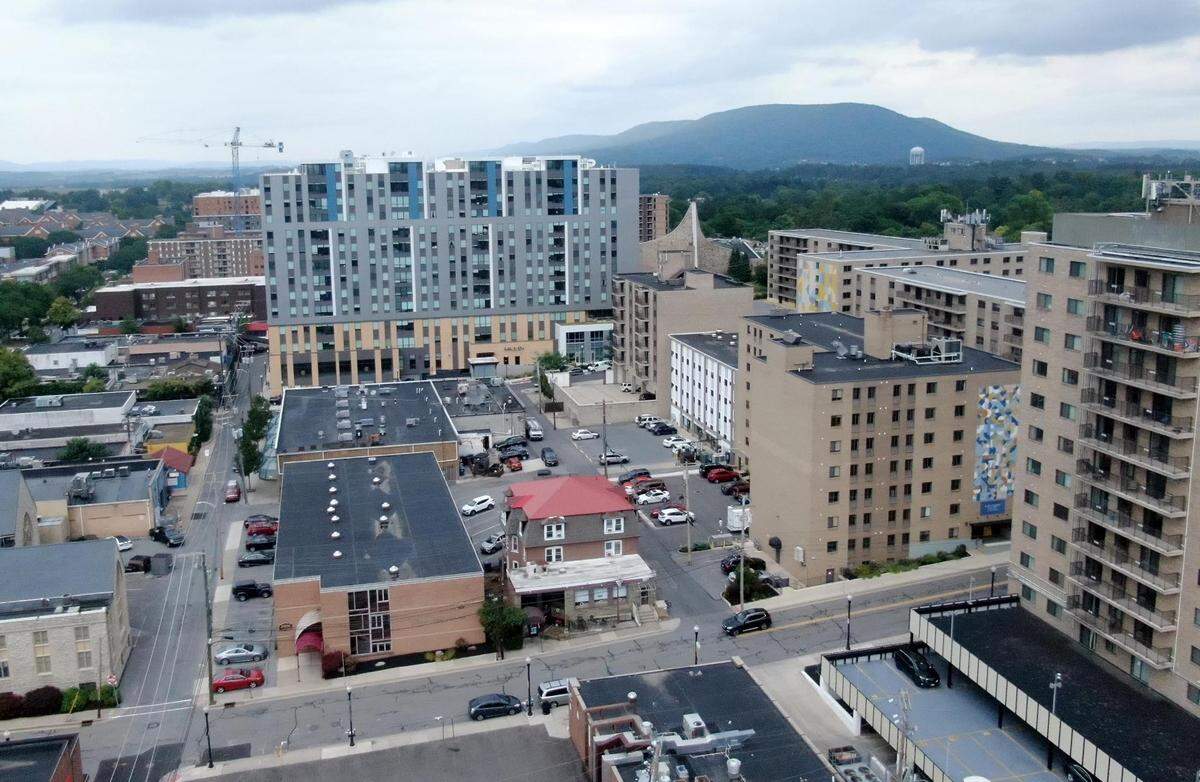
While the bulk of State College’s current zoning ordinance originated in 1959, codes have been amended 223 times since then, according to LeClear. The adjustments, some big and some small, have given way to larger development in the borough’s downtown district, particularly through high-rise apartment buildings and luxury student housing.
LeClear said it’s up to local officials to help create development parameters that incentivize affordable housing that caters to more demographics than just Penn State students.
“I think the holy grail is, ‘How do you build new, modern residential or multi-family residential that is affordable for non-students?’” LeClear said. “Right now, we can’t prohibit student rentals in multi-family buildings. We can limit them in single-family homes, and we do that. But we don’t legally have the ability to say, ‘You can build a five-story home and only house non-students.’ The only way to get to that is to incentivize it.”
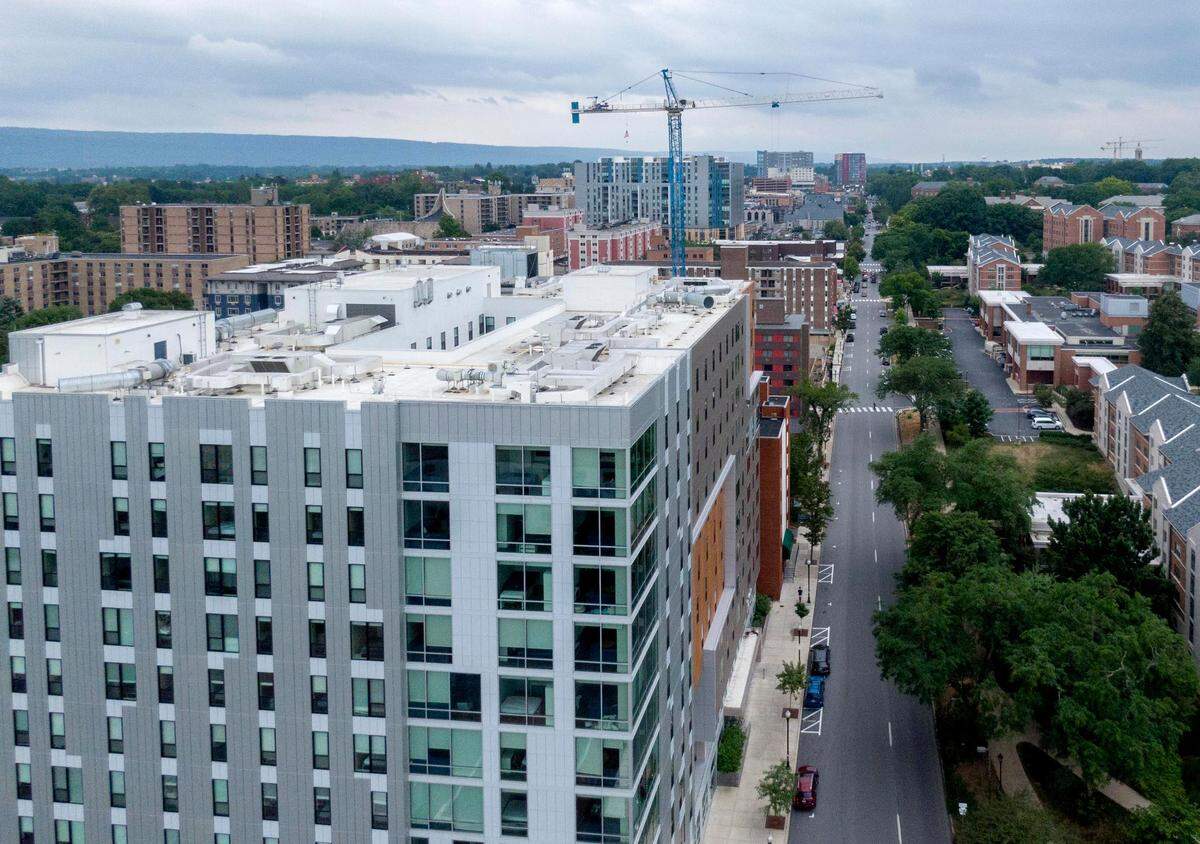
LeClear noted that some properties in downtown State College already serve as a model for potential non-student development incentives. The Rise, located at 532 E. College Ave., received clearance to add two stories to the top of its building if it limited occupancy on those floors to graduate students or professionals, a provision originated through a deed restriction.
The borough’s downtown district will always be attractive for developers, LeClear said, thanks to its proximity to Penn State’s campus. He said it’s now up to local officials to examine zoning codes and create requirements that could lower density while providing more energy-efficient and affordable housing.
State College residents like Evan Myers, who previously served two terms on the borough council and spent seven years on the planning commission, hope that new zoning code is specific and thoughtful. Myers said it’s difficult to anticipate how development codes will resolve problems or present new challenges.
“One of the monikers I’ve found to be true is, ‘What gets zoned is what gets done,’” Myers said. “Zoning is like water. Water runs downhill because it finds the path of least resistance. When you pass zoning laws, it’s the path of least resistance.”
“When you want to use zoning from a prescriptive standpoint, you need to understand what that particular change or zoning code might allow,” he continued. “Those things might happen, and we must be prepared for that.”
Myers, who recently stepped away from the borough council after reaching a back-to-back term limit, is not directly involved with State College’s recent efforts to adjust zoning codes. However, he hopes that the project will increase pedestrian-friendly infrastructure and focus on more than just high-rise buildings.
“There’s a great opportunity here, I think, in working on ways to make downtown State College and the surrounding areas more friendly to pedestrians,” Myers said. “We need to think creatively about zoning. We shouldn’t settle for the same old stuff. We’re often arguing around the margins and not focusing on some of the real problems at hand.”
Maintaining State College’s ‘feel’
As more downtown high-rises and shopping centers come to fruition, some fear State College is losing its charm. Those concerns aren’t lost on the borough’s elected and appointed officials. LeClear says he receives those critiques often and encourages local leaders to balance their goals as the zoning rewrite process continues.
“You have all these competing objectives,” LeClear said. “You want to keep the scale, but you also want to grow. You want to keep the small-town college feel, but you also want to improve housing for students. There’s conflict when trying to find and meet all of those needs.”
LeClear cautions against thinking zoning is a one-stop shop for fixing State College’s developmental problems, though. He says new codes need to be “married” with other subsidies and programs, like the State College Community Land Trust, to have a true impact in the community.
“When you see big buildings going up, it feels scary. It’s a big change,” LeClear said. “I completely understand the emotional feel and the criticism that comes with that. But they’re here, and we now need to figure out how we can fill that commercial space and keep things vibrant.”
With just seven open parcels remaining in the borough, local officials are working to help State College absorb what’s already been built, LeClear said. He added the borough is actively working to fill vacant commercial spaces at the bottom of newly developed properties, including The Maxxen and The Standard.
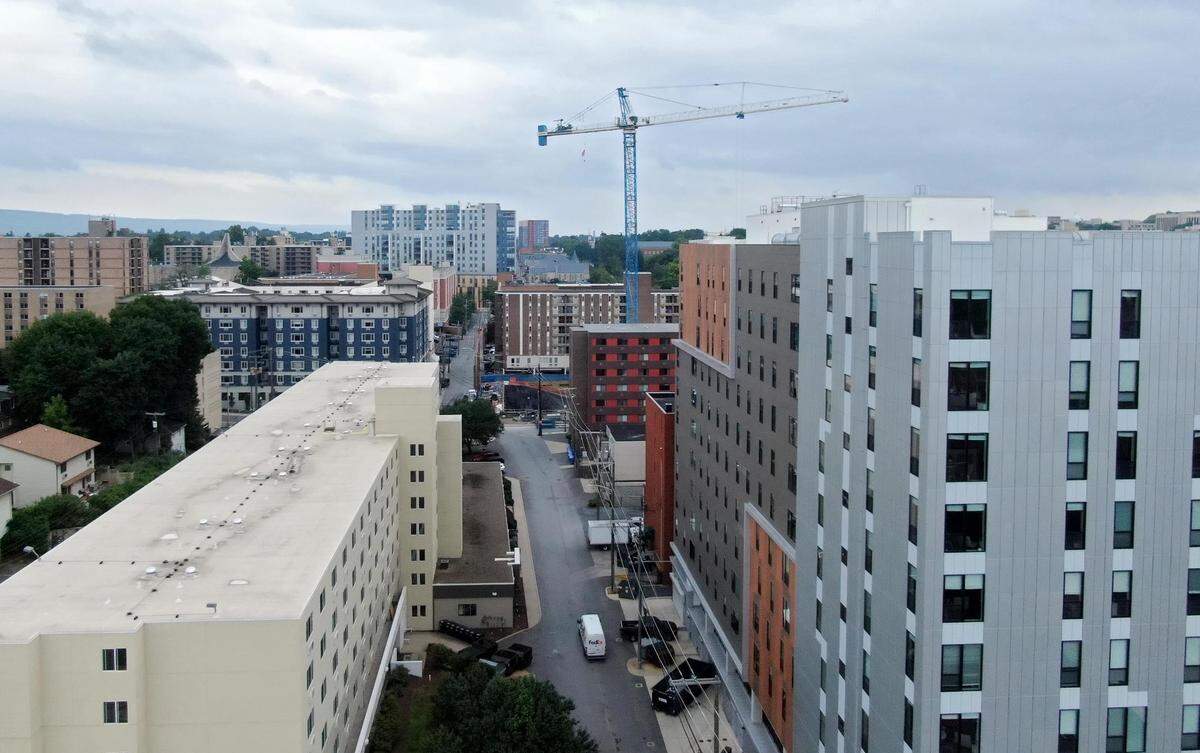
LeClear said the borough has met with commercial brokers to discuss those vacancies, but more time is needed to fill those storefronts.
“COVID-19 certainly played a role in not filling those,” LeClear said. “I think the other aspect of it is that a lot of those properties were built by one company and sold very quickly, so a couple are on their third or fourth owner after existing for only a couple of years. There’s a lot of viewing of these as just an investment. Part of the issue is just a lack of focus.”
As State College’s mayor, Ezra Nanes says he hears concerns about the borough’s changing landscape nearly every day. Moving forward, Nanes wants to encourage local government officials to prioritize zoning codes that would enable the community to grow without placing its focus solely on large-scale development.
“We don’t need to only write our zoning so that we can incentivize large-scale developers to build,” Nanes said. “There are other kinds of activities we want to see, including thriving local businesses and healthy neighborhoods. We can’t limit that scope and become narrow.”
Both Nanes and LeClear implied that State College’s student housing market may reach a point of oversaturation in the coming years. In turn, amended zoning codes could help the borough more adequately meet community needs that have changed over time.
“It’s not that we don’t want to have higher density,” Nanes said. “Sometimes, building larger structures can allow more people to live closer to where they work or study. We want to shift things away from necessarily having more consolidation for luxury student housing because, it seems, it’s starting to not meet the needs of what the community actually wants.”
What’s the rewrite’s timeline?
Although State College’s work to rewrite its zoning codes began about five years ago, it took two or three years off due to the COVID-19 pandemic, LeClear said. The borough held a joint meeting between its planning commission, borough council and zoning advisory committee in June to review previous findings and broadly explain the next steps in the rewrite process.
Currently, the borough is working with a consultant team to examine trade-offs between policy objectives that could result from new zoning codes. State College officials would then begin writing code before sending a draft to the borough council for approval and adoption.
LeClear said he hopes to see a completed draft in 2023, but when new codes may be adopted depends on the borough council.
Nanes, who became mayor last November, said passing a rewritten zoning code is among the borough’s top priorities.
“As a council, we’ve pushed for and prioritized it, and we want to see it finished,” said Nanes, who presides over borough council meetings but cannot vote. “I think it’s understood to be a high priority, but it’s a complex framework that takes time to fully iron out.”
How can you get involved?
While it’s ultimately up to elected officials to adopt zoning ordinances, everyday citizens can play a role in shaping changes by speaking up before it’s too late.
“The place to have the most impact on future development is at the zoning adoption stage, the actual creation and implementation. That sets the rules,” LeClear said. “People typically get engaged in a development process after something’s been submitted, plans are approved, or someone sees the building going up or demolition happening. By that point, it’s far, far too late to have any meaningful impact on the project itself.”
The borough’s planning commission meets on the first Wednesday and third Thursday of each month. Scheduled meetings are generally available in a hybrid format with attendance open to the public at the State College Municipal Building or through Zoom. Each meeting is televised locally on C-NET and posted online for streaming shortly afterward.
The borough’s zoning hearing board also meets publicly twice a month and when cases must be heard.
Outside of public meetings, LeClear said his team wants to provide more resources that can keep State College residents informed on all things zoning. The borough already hosts online tools that can provide supplemental information, including interactive maps, but there’s room for growth.
Moving forward, LeClear hopes more resources and awareness will allow State College’s zoning rewrite to become a process that any resident can join.
“Zoning is really the key to shaping long-term development and marrying that with a market that wants to build it,” LeClear said. “In one way or another, everyone can be a part of that process.”
This story was originally published July 31, 2022 at 6:00 AM.
%202.JPG)