A year later and no construction on the Nittany Mall casino. What’s new, what comes next?
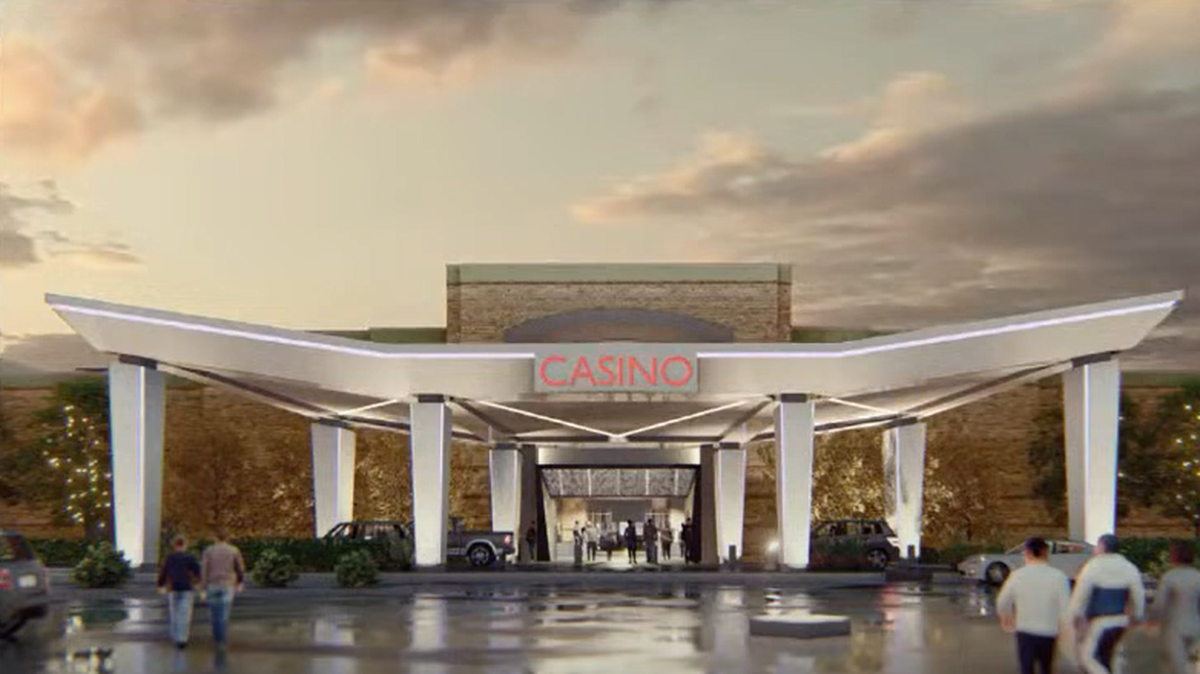
Despite several remaining obstacles, the timeline for the proposed mini-casino at the Nittany Mall is coming into better focus — and, based on public documents and interviews, the earliest the state can approve the project is likely November.
According to a scheduling order filed last month, certain parties that want to intervene and oppose the casino license are tentatively slated to be heard Oct. 19 by the Pennsylvania Gaming Control Board (PGCB), meaning the PGCB cannot rule on whether to approve the license before its Nov. 16 meeting. Technically, if no one intervenes by Aug. 26, that deadline could move up — but, considering a losing bidder previously filed a lawsuit alleging the winner had ineligible partners, formal opposition is expected.
“This marks a final stage of the process that can lead to the board’s opportunity to decide on this project,” PGCB spokesman Douglas Harbach said.
The filings come more than a year after construction was initially expected to start on the $120 million mini-casino, which will feature up to 750 slot machines and 30 table games with plans to include sports betting. Although construction cannot begin before formal approval, the PGCB has still pushed back on characterizations that there’s been a delay.
It really depends on one’s perspective. Before the board rules on whether to grant a casino license, a routine investigation and all-encompassing report must first be completed — and the time it takes for those can obviously vary. It took 23 months, from the date of the winning bid, for Hollywood Casino York to receive formal approval, 19 months for Live! Casino Pittsburgh and 14 months for Hollywood Casino Morgantown.
By comparison, the proposed Centre County casino is on its 23rd month. Because the report is confidential, it’s also not clear why this investigation might’ve required more work.
“The information gathered for this project is as deep for any other project that we’ve had over the years to award a casino license,” Harbach acknowledged, adding the board has “no plans” to allow the losing bidder’s ongoing lawsuit — which it said had no merit — to slow the process. “We had left the comment period open for quite a long time and also are obviously doing a very deep dive of our own on this. So everyone should be assured we are doing our due diligence.”
The initial construction timeline was published by gaming industry giant Bally’s Corporation, which partnered with Penn State alum Ira Lubert’s SC Gaming OpCo, the winning bidder for the September 2020 casino auction. Bally’s did not return a message seeking comment on how they devised their earlier timeline — or if they had a new one — but the original estimated that construction would take about a year, once it begins.
Officials at College Township, the location of the proposed casino, said they have also not heard of any updated construction timeline. Their knowledge of the overall timeline — approval likely not coming before November — also reflected last month’s public filings.
“We certainly know the public has a lot of interest in this, and College Township Council has been reviewing the correspondence as it comes in,” assistant township manager Mike Bloom added.
According to officials, the casino is expected to employ between 350 and 400 full-time equivalent positions. And, according to a consultant, College Township would likely stand to receive about $1.6 million during the casino’s first year of operation. (For comparison’s sake, the township’s annual General Fund Budget is about $10.5 million.)
A PGCB spokesperson previously told the CDT that the host municipality receives 2% of gross revenue from slot machines and 1% of table games. The same goes for the county. However, sports wagering revenue does not specifically go to a municipality or county.
Supporters of the proposed casino point to the economic benefits and the potential revitalization of the Nittany Mall, while more than 1,4000 have signed an online petition opposing the casino. Critics point to the potential for crime, strain on services, gambling issues for the vulnerable (e.g. Penn State students) and a community’s overall well-being.
The PGCB has so far denied only one mini-casino license, in Beaver County, and that came only after the winning bidder acknowledged it couldn’t finance the project.
This story was originally published August 2, 2022 at 2:23 PM.