Short-term rentals, Airbnb & problems: State College Borough Council to mull over solutions
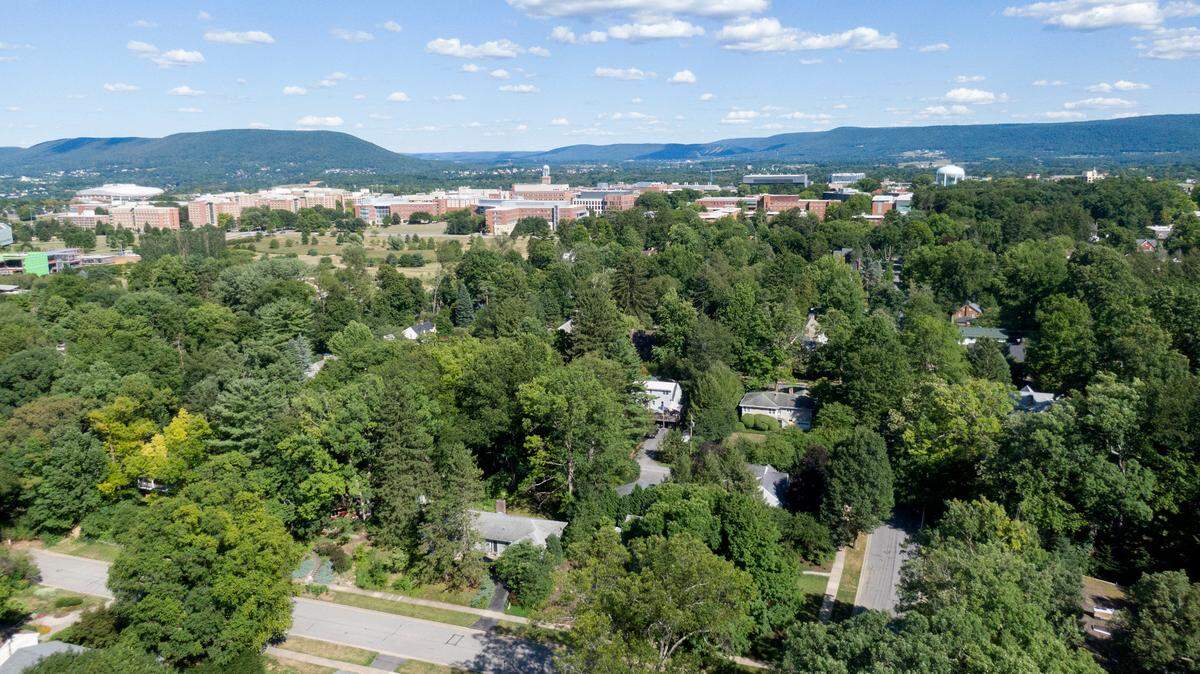
Stefan Lewellen and his wife still can’t forget the sight that filled their quiet College Heights neighborhood in State College earlier this year.
About two dozen college-aged students descended on the Hillcrest Avenue property next door, with neighbors describing trash and beer cans littering the lawns and street, public urination, smells of marijuana — and enough noise that Lewellen’s family couldn’t even get their 1-year-old down for a nap the next afternoon. That was only the start.
For four months, Lewellen, his wife Jenn Baka and their two children endured parties of varying sizes in a neighborhood usually filled with families, professors and retirees. They would soon learn the offending homeowner, who doesn’t live in Pennsylvania, had discontinued leasing his five-bedroom house to long-term renters in favor of renting it more like a hotel, a few days at a time through a lucrative short-term rental website like Airbnb.
Across the borough, and in surrounding municipalities, the creep of short-term rentals has sparked growing concern. About 200 properties in the borough have so far been identified as the type that operate like hotels, renting a few days at a time, with some becoming a nuisance and others remaining quiet. Some homeowners are simply looking to supplement their income, renting out an extra bedroom or two on football weekends while remaining in their home; others are looking to operate houses entirely like hotels 24/7 while living elsewhere.
“My view is that people should be able to do what they want with their home, as long as it doesn’t create negative externalities for the community,” Lewellen said. “And the problem with these sort of continuous Airbnb rentals is that you’re turning a house into a ‘tourist house.’ And that does create negative externalities for the community.
“And I think our case is one example of some of the bad things that can happen to a neighborhood.”
State College Borough Council is set to vote Monday night on a series of restrictions that would make it harder to operate those Airbnb — or short-term rental — properties in the borough. But the issue is far from black and white.
In trying to stop the worst offenders, the borough could also end up punishing vulnerable people whom even Lewellen made it a point to defend.
One Airbnb owner, a retiree who requested their name not be used, rents out part of their home to help supplement a fixed income. They rent out extra bedrooms, rarely leave the property and make sure to tell their guests to be loud downtown but quiet around the house.
If borough council passes the proposed ordinance how it’s written, that retiree likely won’t be able to remain in the place they’ve called home for decades.
“Even though I love State College, I might have to leave because I can’t afford it,” they said.
A complicated issue
The problem with the short-term rental debate is that there are not just two sides. Every Airbnb operator — or operator via similar website like Vrbo, Booking.com, Plum Guide, etc. — has a unique story, and they range from “house rich, cash poor” retirees to property-management companies and others who own multiple homes just for Airbnb.
The payoff is alluring. According to AllTheRooms, which provides analytics and data for short-term rentals, a two-bedroom and two-bathroom property in State College — with four guests and 38% occupancy — can potentially generate more than $45,000 in annual revenue.
State College residents and husband/wife team Josh and Lizzie Parra own or manage at least a half-dozen short-term rental properties. They said they understand concerns from families like Lewellen and Baka, and that’s why anyone who spends a night or two at their properties is required to be at least 25 years old. On top of that, because they’re local, they’re able to drive by the properties to see if there are any outward issues.
To Lizzie, who grew up in the borough, an Airbnb property that remains respectful to neighbors and is well-maintained remains more ideal than a property owned by those who only come up during football weekends and don’t maintain the property. Her husband agreed.
“As long as you’re maintaining the property and monitoring it and making sure that it’s not going crazy, then if you can afford to purchase a property here and pay the taxes, then I don’t see a problem with it,” he added.
Others, even the Airbnb retiree who spoke to the CDT, disagreed.
“I get that people want to make a living doing this,” the retiree said, “but, in a small town like this, you’re taking away homes that people can afford and there’s no place for them to live.”
What could change?
Although borough council first passed an ordinance related to short-term rentals last year, enforcement hasn’t yet started — due to the complexity and time-consuming nature of the issue.
But, if borough council takes action Monday, homeowners will be tentatively required to submit their short-term rental applications online by mid-October. Violations, which will start at $300, will then be enforced.
Some of Monday’s biggest proposed changes:
- Adding an activity cap on the number of nights a property may be rented for short-term rental use to no more than 60 nights a year
- Requiring one off-street parking space per bedroom rented to be located on the property
- Adding a limit of nine rooms that may be rented at a time as short-term rental use
- Requiring an annual activity log to be submitted at the time of short-term rental license renewal
- Increasing the short-term rental license fee to $300 from the current $175
In conversations with borough officials, Airbnb operators and community members, the most debate appears to center on the activity cap. The Parras told the CDT they’re occupied more than 220 days annually, so a 60-day cap would significantly reduce their business. The retiree also pointed to that cap as being the rule change that would likely force them out.
On the other side, even community members aren’t satisfied with the limit. But many think it should be lower, like College Township’s 45 nights. Some even prefer caps below that.
“We’d probably like to see that closer to 30 nights,” said Jared Oyler, who also lives next to the problem property on Hillcrest Avenue, which has been quiet since late June. “You want to make sure you have enough nights that a user can rent during the big football weekends and things like that. ... So we’d like to see it lower, but I still think it’s good to have a cap on there.”
Parra offered a different idea.
“If they want to propose something like that, it should be more of a penalty for people that keep violating the proposed regulations that they’re putting in place,” he said. “I don’t think they should put that on everybody who may be relying on that source of income.”
Some properties might even find issues with regulations in the existing ordinance, once it’s enforced. In the current ordinance, for example, a person whose name is on the lease must live in the unit for at least eight months a year.
It’s not yet known how many properties fall short of that requirement, or others, but the borough has hired a national short-term rental monitoring agency, Granicus Host Compliance, to help identify them.
“As we go through the short-term rental license implementation, I think we’re prepared — our staff is prepared — to take enforcement action on a number of the properties,” borough planning director Ed LeClear said.
What comes next?
Borough council heard a public presentation on the proposed changes Aug. 1, with five community members — and no Airbnb operators — choosing to speak publicly. Council will now meet at 7 p.m. Monday with a planned vote on whether to accept the changes to the short-term rental ordinance.
The council meeting will once again be a hybrid one, available both online via Zoom and in-person at the State College Municipal Building.
According to the anticipated timeline released earlier this month, Granicus is expected to provide staff training through early September; a community information campaign and an initial mailing about the ordinance will go live by mid-September; and the online deadline for homeowners to submit their short-term rental license application will likely come in mid-October.
This story was originally published August 14, 2022 at 4:17 PM.